 Submit a photo
Ninety seconds on Mycenae
From 1 November to 31 March Mycenae opens daily from 8.30am to 3.30pm. In April it opens from 8am to 7pm, and from May to August from 8am to 8pm. The close then moves earlier in steps through September and October, reaching 6pm from 16 October.
Entry is free on 6 March, 18 April, 18 May, the last weekend of September and 28 October. From 1 November to 31 March it is also free on the first and third Sunday of each month.
Yes. The Ministry of Culture lists one ticket covering the archaeological site, the museum and the Treasury of Atreus, so keep the ticket from the citadel to show at the tomb.
Mycenae is about 23 km north of Nafplio, around 30 minutes by car or taxi. Parking is free outside both the citadel entrance and the Treasury of Atreus.
Not the original. The gold mask, found in 1876, is on display at the National Archaeological Museum in Athens. Other significant finds from the site are shown in the museum at Mycenae.
Massive stone walls still ring the hilltop citadel, and you enter it under a gate carved with two lions. The same ticket opens the Treasury of Atreus, the most impressive Mycenaean beehive tomb.
The Lion Gate is the ceremonial entrance to the citadel. In the triangle over the door, two lions face each other in relief, a symbol of the power of the Mycenaean rulers. The triangle is a gap left in the wall to take weight off the stone beam below; the lion slab fills it.
Legend credits the huge walls to the Cyclopes, which is why the stonework is called Cyclopean.
Grave Circle A is a royal cemetery of six large shaft graves, which held gold objects and other works of art. At the northeast corner, a corbelled passage runs down outside the walls to an underground cistern about 18 metres below, cut through the rock and fed from a spring so the citadel had water in a siege.
The Treasury of Atreus stands on Panagitsa hill. A long passage lined with cut conglomerate blocks leads to a round chamber more than 13 metres high, under a pointed stone dome.
A single lintel stone of about 120 tonnes sits over its door. The tomb is also called the Tomb of Agamemnon, though it most probably belonged to neither Atreus nor Agamemnon, and little of what it held survives.
Past the museum on the left, the main path turns uphill toward the Lion Gate. Stop at the gate long enough to look up at the relief before you go through.
Inside, the Granary stands on the right, with Grave Circle A just south of it. A broad ramp then climbs from the gate to the palace on the summit, the biggest stop on the hill.
Back outside the Lion Gate, Grave Circle B lies to the west, with fourteen shaft graves. The Treasury of Atreus is a short walk or drive further south down the main road, with its own entrance and ticket check.
There is little shade on the hill, so carry water and wear a hat and sunscreen. Shoes with a good tread help too, because polished stone can be slick.
Ask at the ticket office whether the cistern stairway is open. If it is, the steps are narrow and cut into the rock, so bring a light and watch your footing.
The museum is air-conditioned, so save it for the hottest part of the day. Card payment is usually accepted at the ticket office, but carry some cash as a backup.
Explore the rest of Nafplio
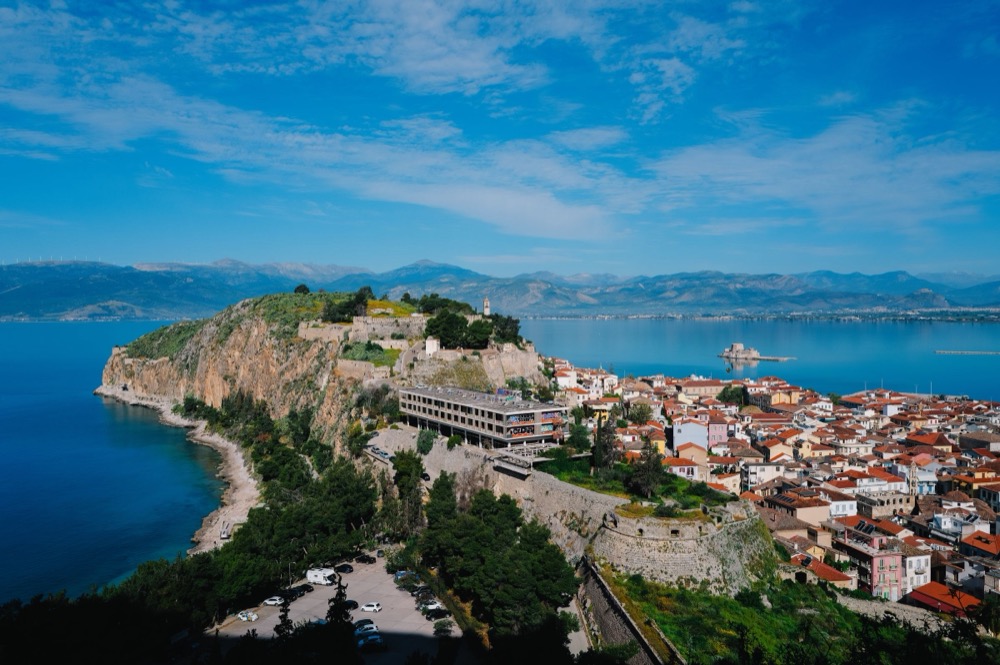
Venetian fortresses crown two hills above a marble-paved old town on the Argolic Gulf, the first capital of modern Greece. It makes the…
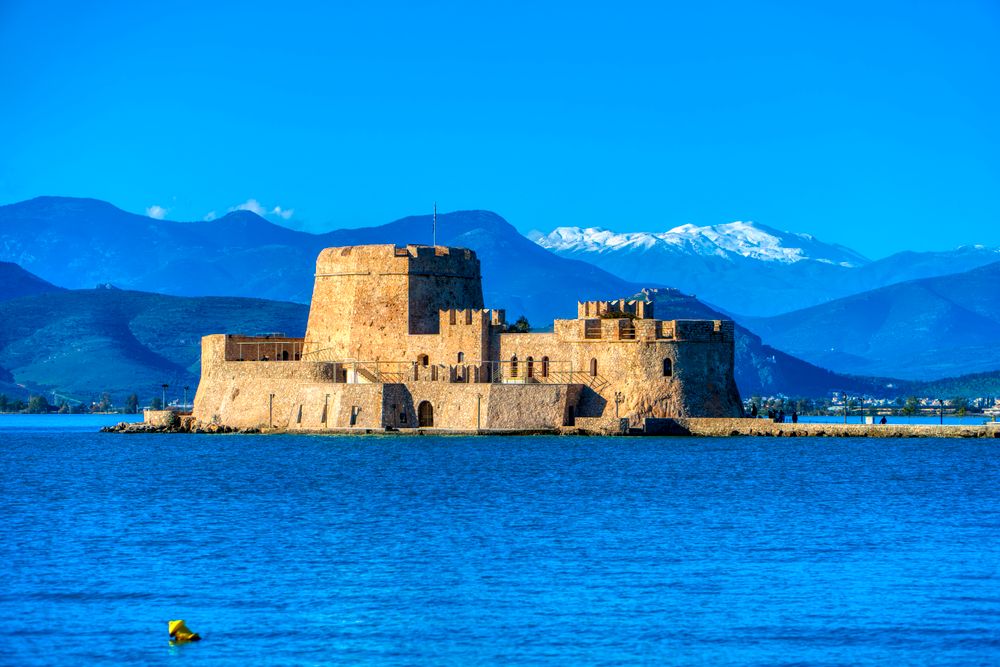
A small Venetian water castle fills an islet in the harbour, built to guard the narrow entrance to the port. It is the view from every…
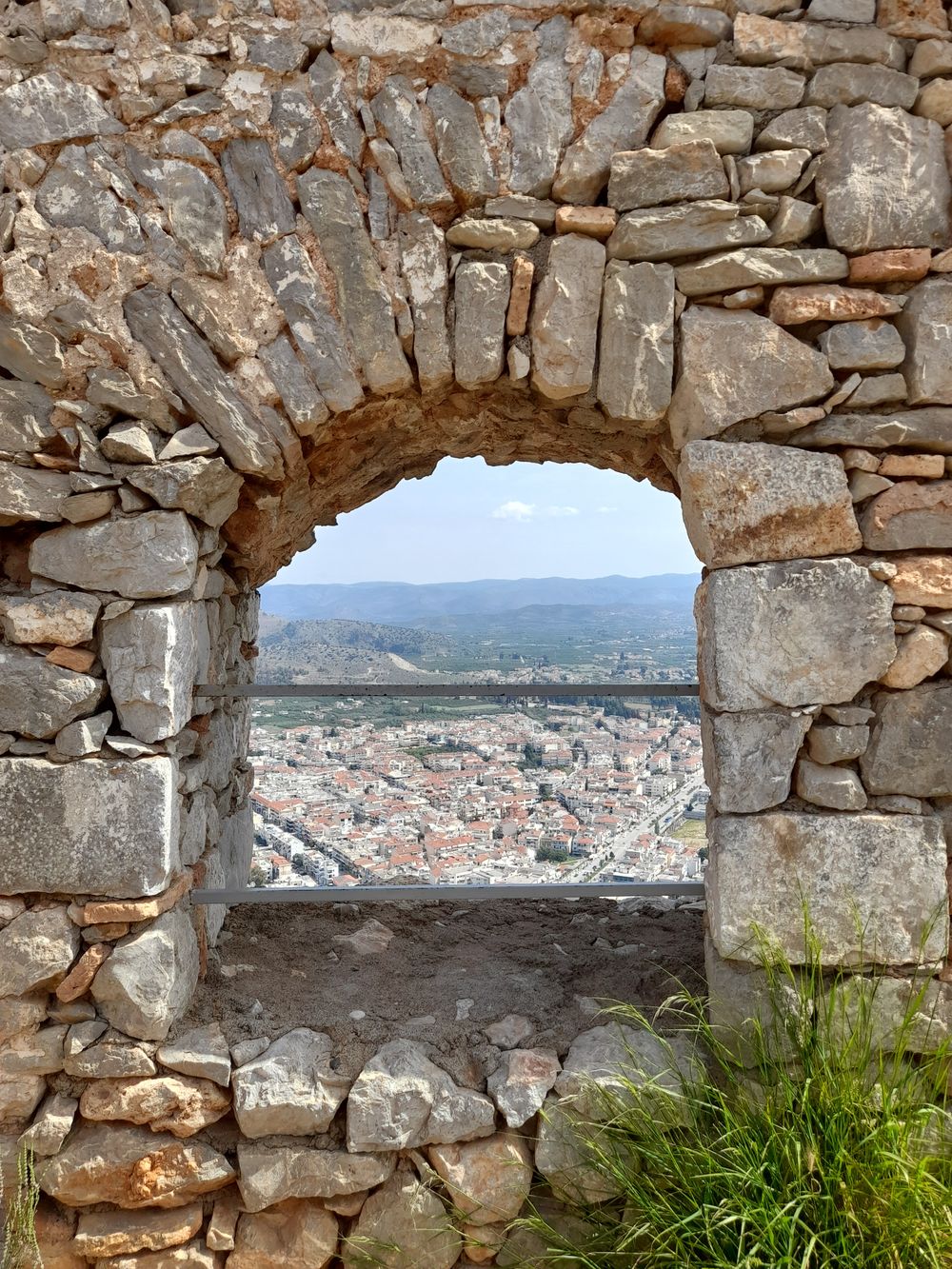
Eight bastions linked by walls cover the summit of the hill above the old town, built by the Venetians in the early eighteenth century. A…
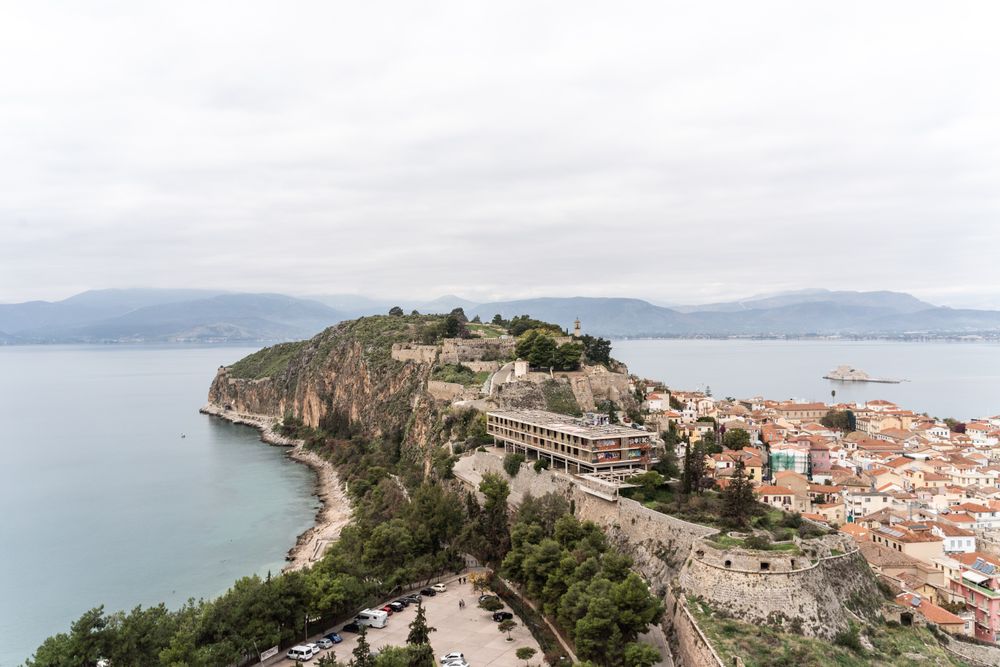
The rocky peninsula directly behind the old town carries the oldest walls in Nafplio, layered by Byzantines, Franks, Venetians and…
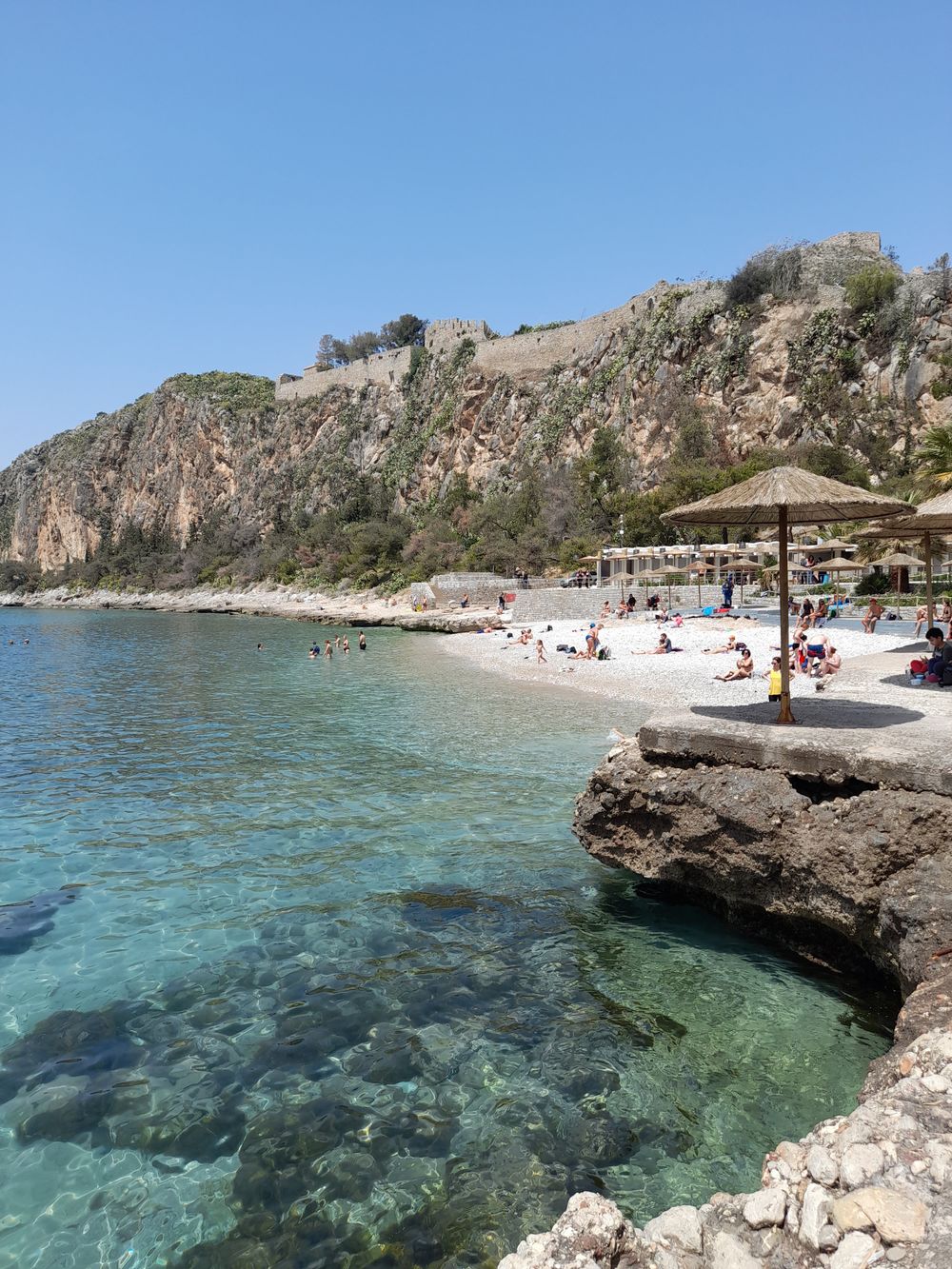
A pebble beach and swimming platforms sit in a cove below Palamidi, a short walk south of the old town. A level promenade path runs from…
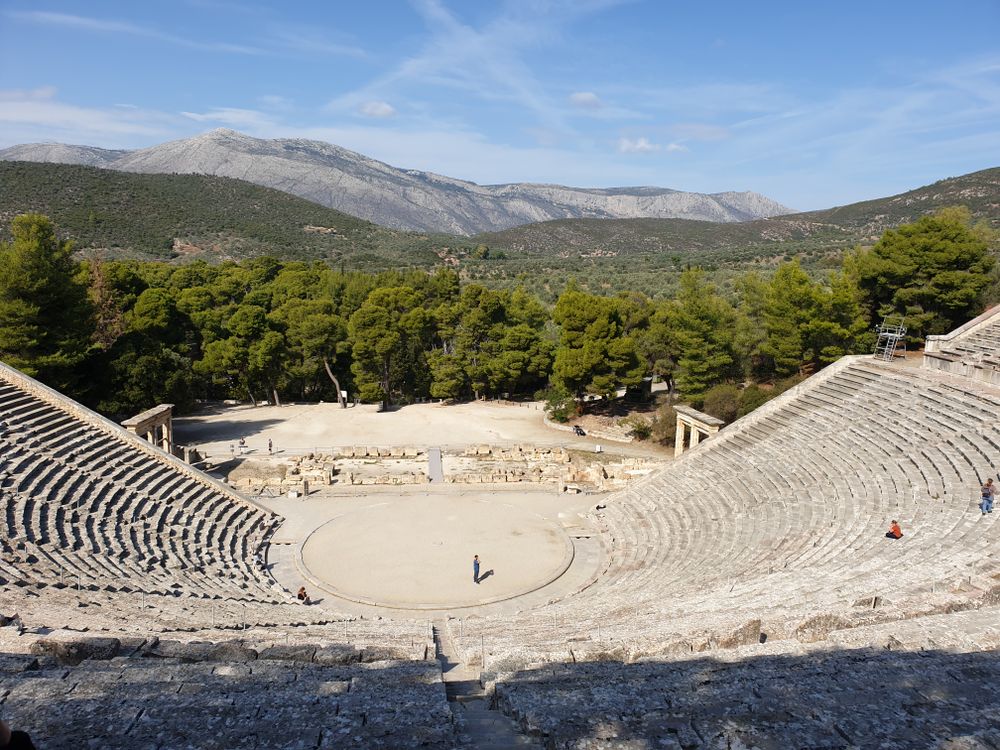
The theatre of the healing sanctuary of Asclepius holds its stone tiers almost intact, and a dropped coin on the stage carries to the top…
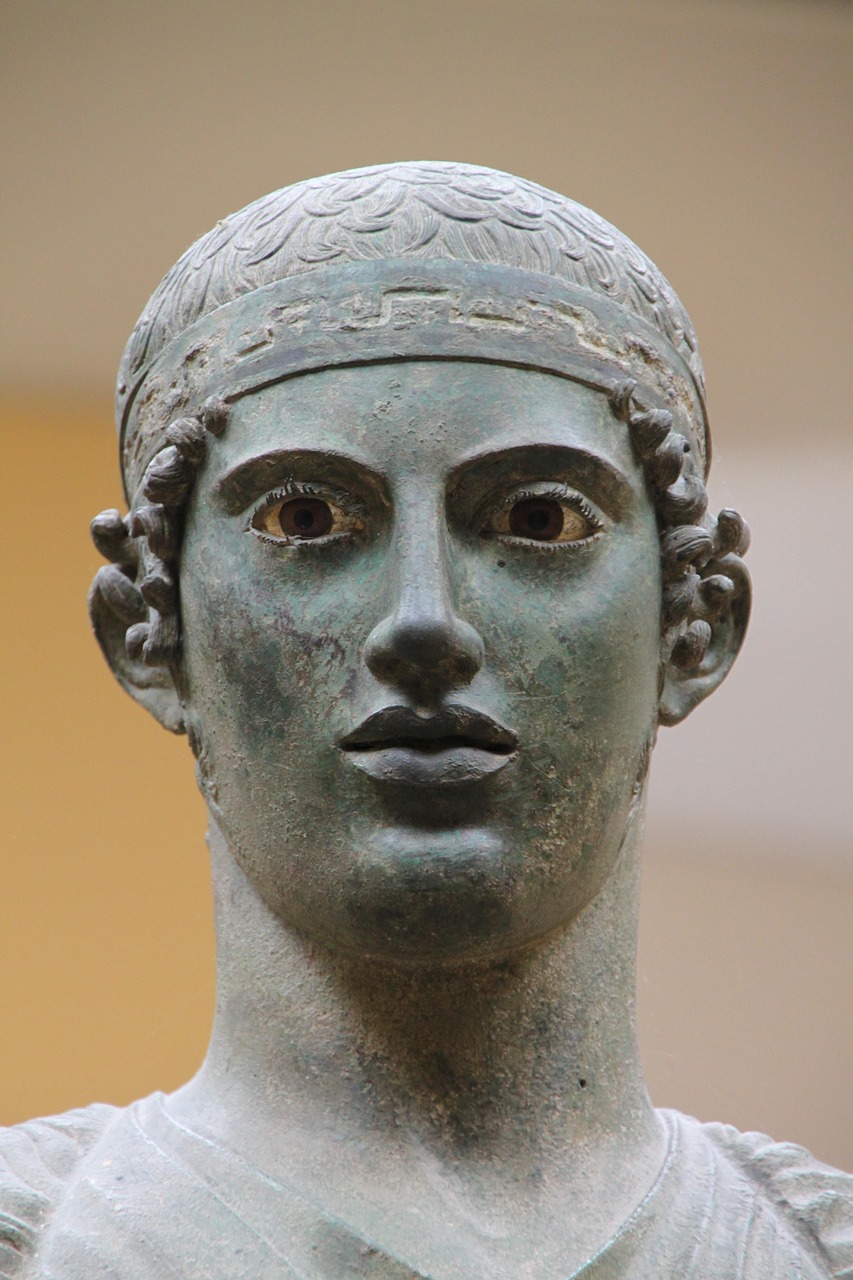
Beside the entrance to the ruins and essential to them. The bronze Charioteer, cast in the 470s BC to mark a victory in the games, stands…
No cars and no scooters run on this rocky Saronic island, so stone mansions, a horseshoe harbour and mule paths look much as they did two…
The official pages this guide was checked against.
Last updated