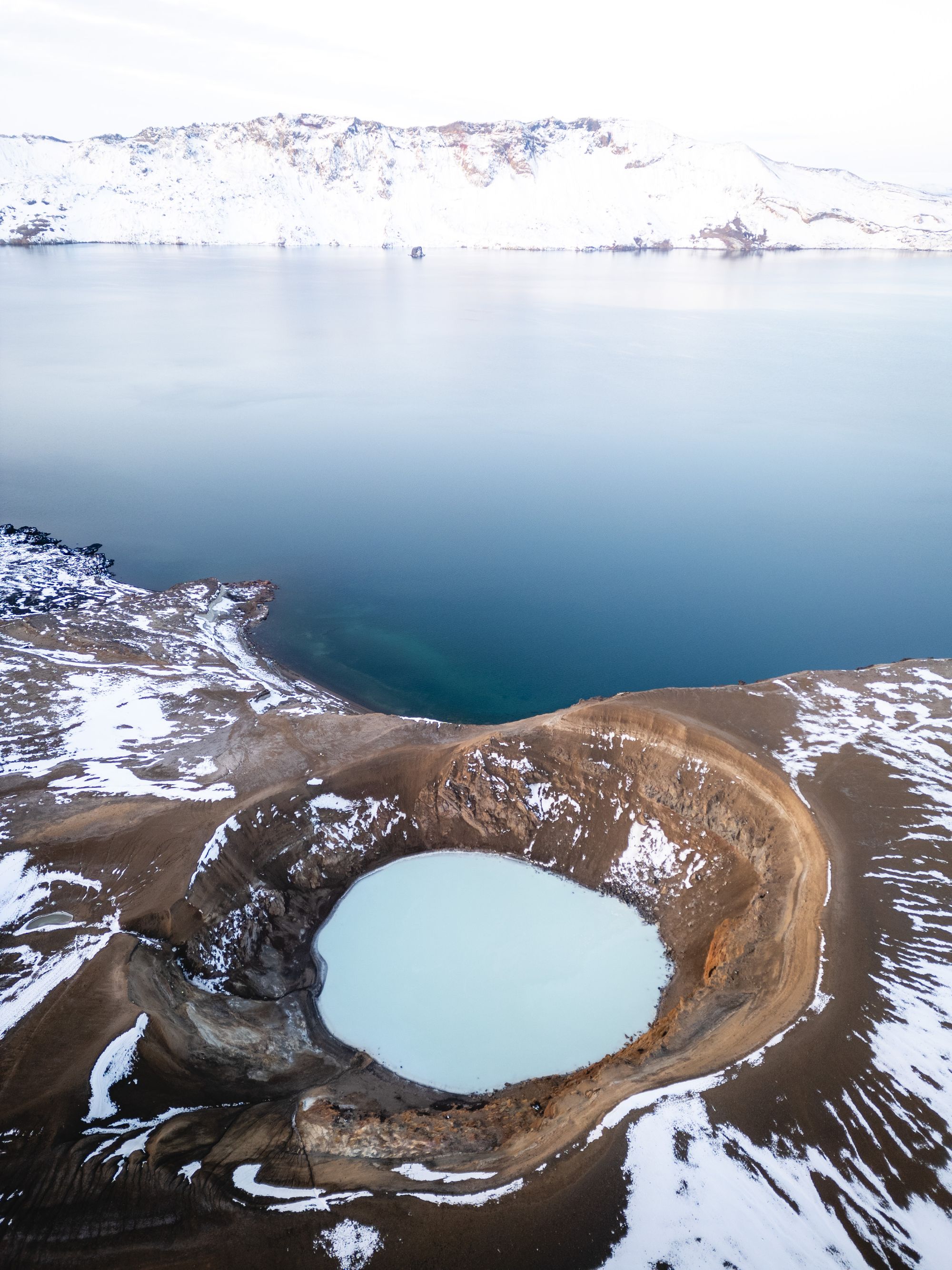
Ninety seconds on Askja
Best done in high summer, a day at Askja takes you across a lava desert to two lakes in one caldera: deep blue Öskjuvatn and the milky crater of Víti.
The ground you cross first is the caldera floor, a wide bowl of old lava with almost nothing growing on it. The peaks of the Dyngjufjöll ring it, and the rim rises to roughly 1,300 to 1,500 metres above the sea.
Öskjuvatn opens up ahead, a dark blue lake in the south-east corner of the caldera and, at more than 200 metres, the deepest in Iceland. Both lakes are young: Öskjuvatn filled the hollow left when the roof of the magma chamber sank after the eruptions of 1875, and Víti was blasted open at the end of the same eruption.
Víti stays hidden until you are almost on its rim. It is a maar, an explosive crater, and at its bottom lies a pool of warm, milky blue geothermal water about 60 metres deep. From the rim you see the pale crater and the dark lake beyond it in one view.
Driving in takes three to four hours and fords glacier rivers. Most tours break it at Herðubreiðarlindir, a spring-fed oasis at the edge of the lava.
At the Vikraborgir car park, where the toilets are, find the ranger before you set off. In high season one is on site every day and can tell you whether the path and the crater are safe that day.
The marked path then crosses the caldera floor, an old lava field that sounds hollow as you walk, and ends at the rim of Víti. The walk round the rim is short, and near the path stands a monument with a visitors' book you can sign.
Going down to the shore of Öskjuvatn is the hard part, because the path follows a river bed that is slippery even in good weather. On the way back, tours often stop at the Dreki huts for a short look into the Drekagil gorge.
A tour is the simplest way in: the company does the highland driving, and the guide times the walk for the clearest part of the day. If you drive yourself, you want some experience of crossing rivers.
At the caldera the path is marked, and in high season the ranger leads organised walks if you want a guide there. Every company that sells tours in Iceland must hold a licence from the Icelandic Tourist Board, so check that yours has one.
If you drive, do not attempt a ford you are unsure of. Cross slowly in the lowest gear and do not change gear in the water, because no insurance covers damage from a river crossing.
If the ranger says the water is fit for a swim, take the sloping path down with care, as it is very slippery when wet. The mud at the bottom is hot, especially on the eastern bank, and stones can fall from the crater walls.
Pack food and warm, waterproof layers for the whole day, since there are no shops, restaurants or fuel at Askja. Storms and even blizzards can set in suddenly in July and August.
Mývatn, and further afield
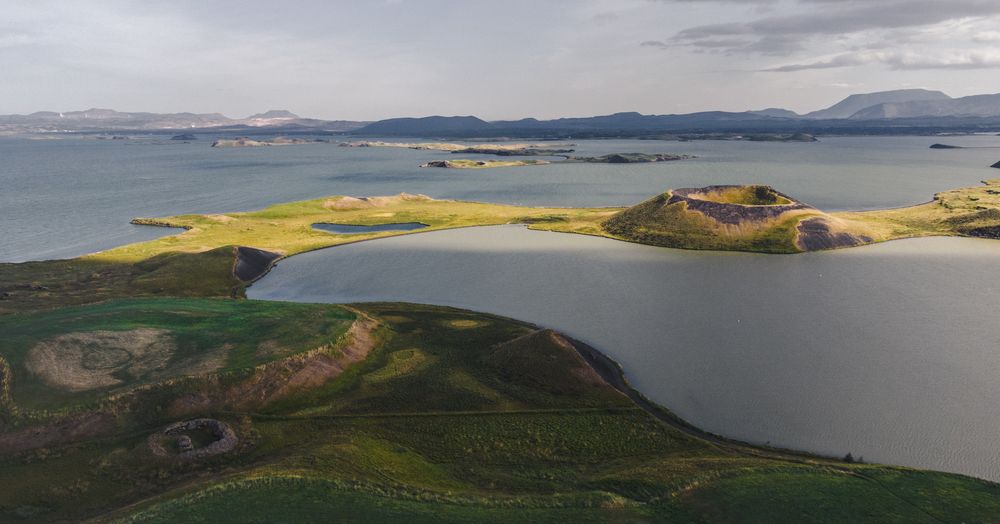
Staying by the lake means reaching the volcanic sights before the tour buses: a crater rim, steaming mud pots, lava pillars and a cave pool…
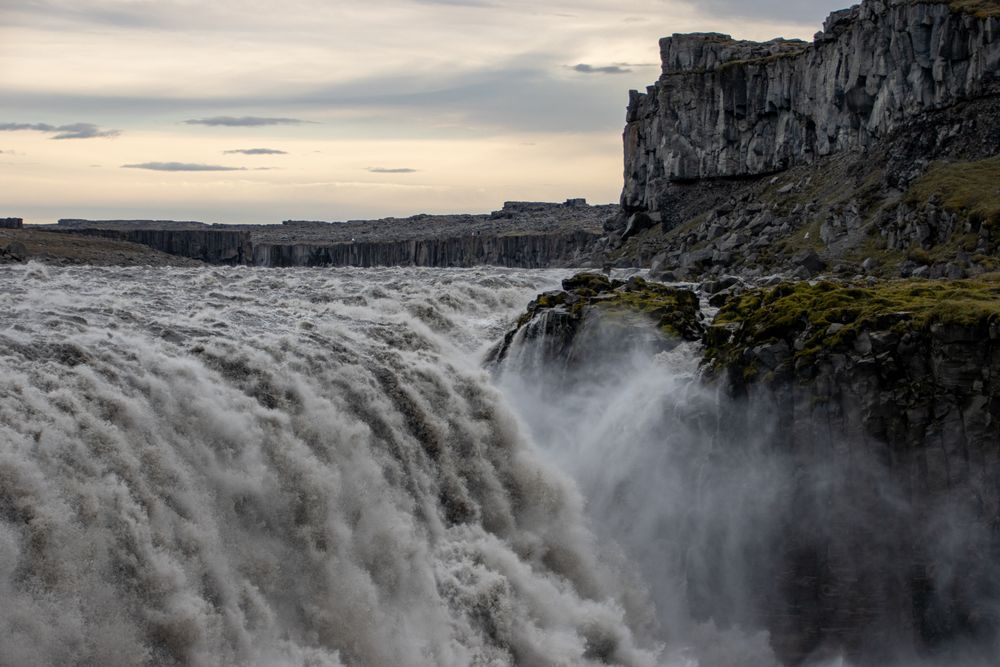
Jökulsá á Fjöllum falls 44 metres over a lip 100 metres wide, carrying an average 193 cubic metres a second of grey, sediment loaded…
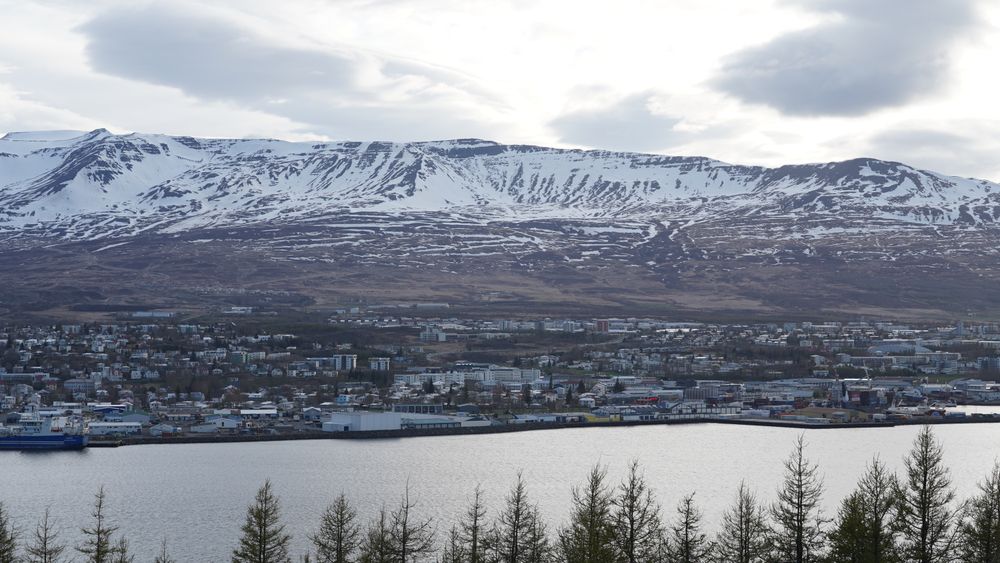
Base yourself here and most of north Iceland becomes a day trip from one bed: whale boats leave from the harbour, Goðafoss is about 40…