 Submit a photo
The Jidai Matsuri 2027 falls on Friday 22 October. Heian Jingu holds it on 22 October every year, so the weekday changes from year to year.
In 2026 the procession left the Kyoto Imperial Palace at noon, passed Karasuma Oike at 12:50pm and Kawaramachi Oike at 1:20pm, and reached Heian Jingu at about 2:30pm. These are the times for its front, and the whole procession takes about two hours to pass any point. The 2027 programme comes nearer the date.
The 2026 route ran from the Kyoto Imperial Palace past Karasuma Marutamachi to Karasuma Oike, along Oike-dori to Kawaramachi Oike, then by Kawaramachi Sanjo and the Sanjo Ohashi bridge to Sanjo Jingu-michi and Heian Jingu. The procession itself stretches about 2 kilometres.
Kyoto Gyoen is where the procession sets off, so it passes there first. Oike-dori west of Kawaramachi and Jingu-michi, the approach to the shrine, are two more places to watch. Popular spots are taken one to two hours ahead.
No: watching from the kerb is free. Paid seats are sold by the Kyoto City Tourism Association, online and at convenience stores. In 2026 a lottery ran in July and general sales opened on 8 September, and by the time of the seat page only the Oike-dori general seats were left.
Rain or storms on 22 October move the procession to the next day, and rain on the 23rd as well cancels it. The decision is made early on the morning of the day. Paid seats are refunded if the procession is cancelled.
For the start, the Karasuma Line runs to Imadegawa, about ten minutes from Kyoto Station, or to Marutamachi. Karasuma Oike station is at the west end of the Oike-dori stretch. Heian Jingu is reached from Higashiyama on the Tozai Line.
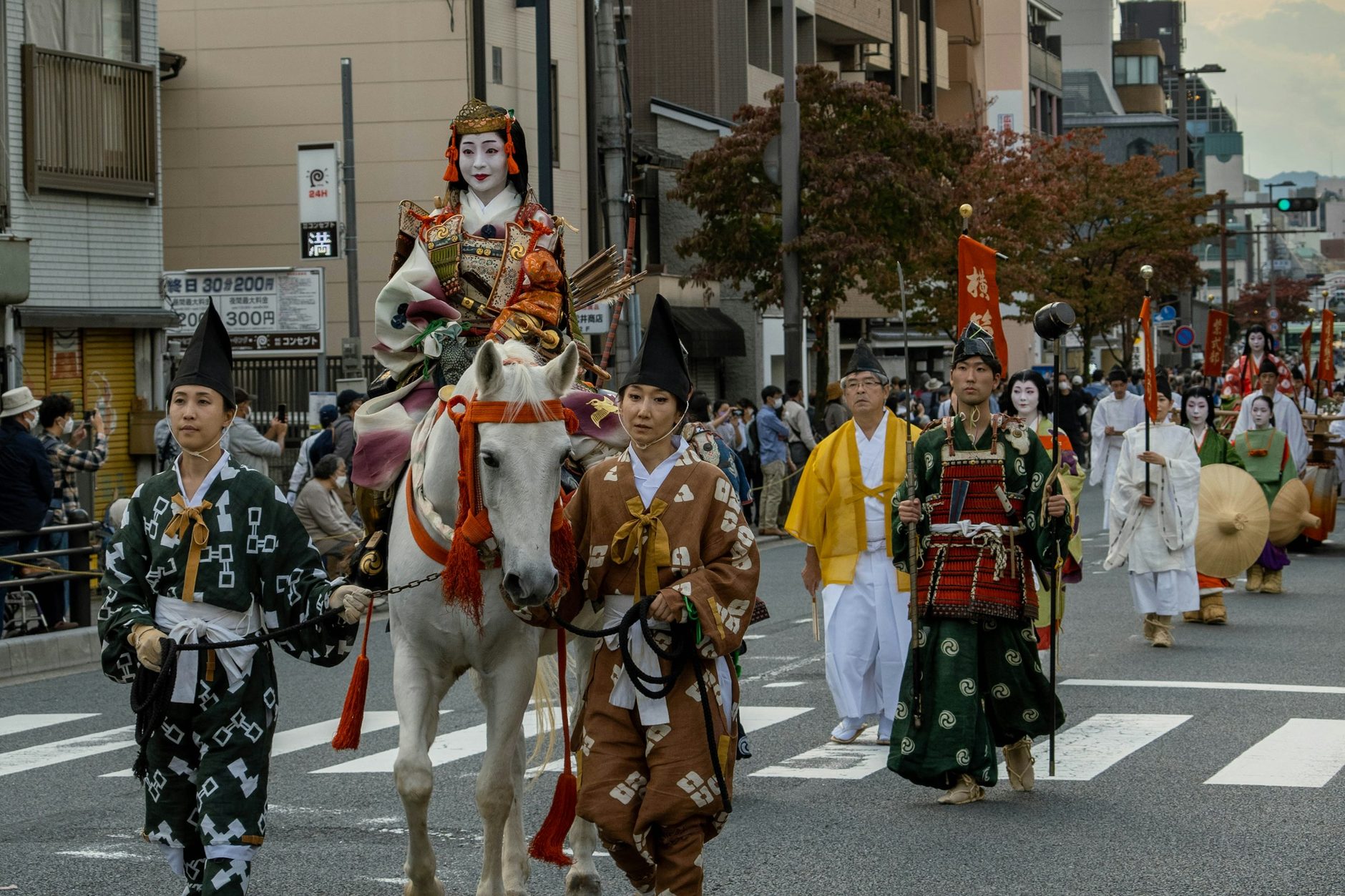
About 2,000 marchers in 20 groups, covering eight eras from the Meiji Restoration back to the Enryaku era. The figures include Saigo Takamori, Oda Nobunaga, Kazunomiya, Tomoe Gozen, Sei Shonagon and Murasaki Shikibu. Near the end come the two palanquins carrying the spirits of Emperor Kanmu and Emperor Komei.
When the whole procession has arrived, the palanquins are set in the Daigokuden. A representative of the Enryaku court officials then reads the festival prayer. In 2026 this ceremony began at 4pm.
Yes. Yuki Shrine in Kurama holds its fire festival on the night of 22 October every year, running from 6pm until after midnight. Cars are barred between Kibuneguchi and Kurama Onsen from 3pm, so the organisers ask visitors to come by public transport.
Every 22 October about 2,000 marchers in the dress of eight eras walk from the Imperial Palace to Heian Jingu, the shrine in the east of Kyoto. It is the shrine's grand festival, and the marchers escort two palanquins carrying the spirits of its deities, Emperor Kanmu and Emperor Komei.
The procession runs backwards through Kyoto's years as capital, the newest era first and the oldest last. It opens with the Meiji Restoration and ends with the Enryaku era, when Heian-kyo, the city that became Kyoto, was laid out.
22 Oct 2027
If you are in Kyoto on 22 October, you can watch a two-kilometre costume procession from the kerb for free, along the route between the Imperial Palace and Heian Jingu.
22 Oct 2027. Times are approximate and can change from year to year.
These are the 2026 times; the 2027 programme comes nearer the date. The procession sets off from Kyoto Gyoen, the park round the palace, passing Sakaimachi Gomon at 12:15 and Karasuma Marutamachi at 12:30.
The front reaches the Karasuma Oike crossing, at the west end of the Oike-dori stretch.
From the east end of Oike-dori, the front passes Kawaramachi Sanjo at 1:30 and crosses the Sanjo Ohashi bridge at about 1:40.
The front reaches Sanjo Jingu-michi, the start of the approach to the shrine.
The front arrives at Heian Jingu, with the rest of the procession still on its way behind it.
In 2026 this began at four, once the whole procession was in. The palanquins are set in the Daigokuden, the shrine's great hall, and the festival prayer is read.
Listen for flutes and drums first: the loyalist corps of the Meiji Restoration plays at the head. Behind them, figures from Japan's history textbooks pass on horseback or in ox carriages, among them Saigo Takamori, Katsura Kogoro and Oda Nobunaga, with Toyotomi Hideyoshi's procession to court.
Watch for the women's groups too, with the princess Kazunomiya, the warrior Tomoe Gozen and the Heian court writers Sei Shonagon and Murasaki Shikibu, who wrote The Tale of Genji. Sei Shonagon wears the full court dress and Murasaki the plainer one, which is how you tell them apart.
On Oike-dori, the west side between Karasuma Oike and Kawaramachi Oike puts you close to the marchers. On Jingu-michi, the approach to the shrine, past years have had no barrier at the kerb.
At the popular spots, Kyoto Gyoen among them, take your place about an hour and a half before the procession is due.
Base yourself near a Karasuma or Tozai Line station in central Kyoto. The Karasuma Line serves the palace end of the route, and the Tozai Line reaches Higashiyama, the stop for Heian Jingu. For the Kurama Fire Festival the same night, go by public transport: cars are barred from the Kurama road from 3pm.
Explore the rest of Kyoto
Old classrooms and corridors in a former primary school in central Kyoto are lined with open shelves of manga, and readers take a volume…
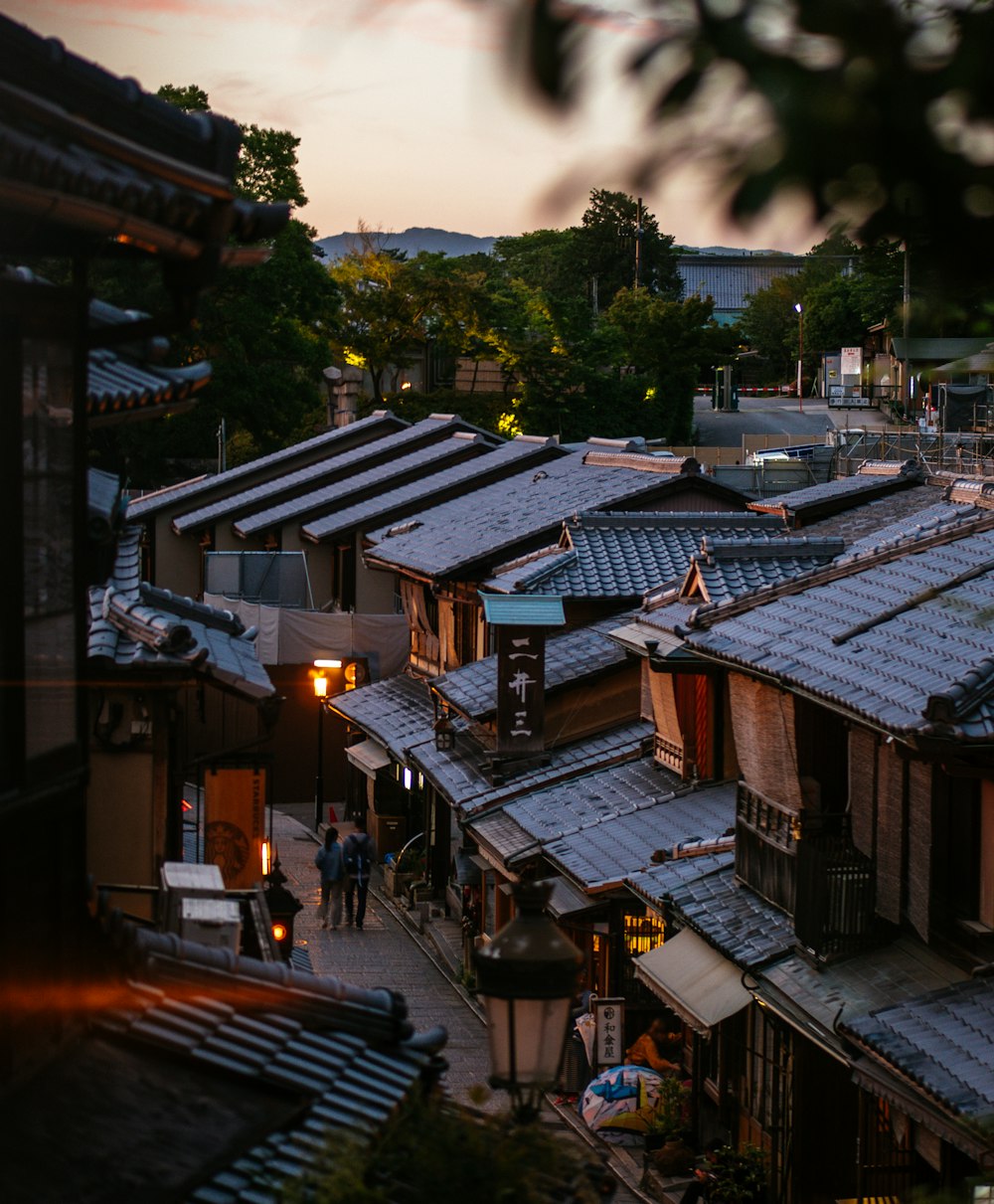
Kyoto's geisha district, with the wooden ochaya teahouses of Hanamikoji and the willow-lined Shirakawa canal behind them. Minamiza is the…
A national museum of twentieth-century art on the Lake Biwa Canal in Kyoto's Okazaki district, in a building by Maki Fumihiko. Its…
Last updated