 Submit a photo
Ninety seconds on Kifune Shrine
Yes, into the evening. From 1 May to 30 November the main shrine is open from 6:00 to 20:00, and the approach lanterns are lit from sunset until closing. The autumn leaves are lit from 1 to 24 November, from sunset to 20:30.
Yes. Kifune Shrine charges no entry fee and is open all year. The one leg to pay for is the bus up from Kibuneguchi Station, which the Kyoto Subway and Bus one-day pass does not cover.
The rail leg is the Eizan Railway Kurama Line from Demachiyanagi Station to Kibuneguchi, a ride of about 30 minutes. Kyoto Bus No. 33 then runs from the stop outside Kibuneguchi Station up to the Kibune stop. By road the shrine is about 40 minutes north of Kyoto Station, but parking is limited and the shrine recommends public transport.
About 40 minutes covers the main shrine and its lantern steps, and the two upper shrines add to that. Arriving on foot over the mountain from Kurama adds up to two hours of walking, more with stops.
Yes. Seals are issued at the shrine's goods shop, which also sells amulets and opens from 9:00 to 17:00. The shop keeps longer hours during the illumination period.
Yes, snow can fall here in winter and change the look of the shrine completely. When it lies, the stone stairs and the paths turn slippery, so shoes with good grip are the safer choice.
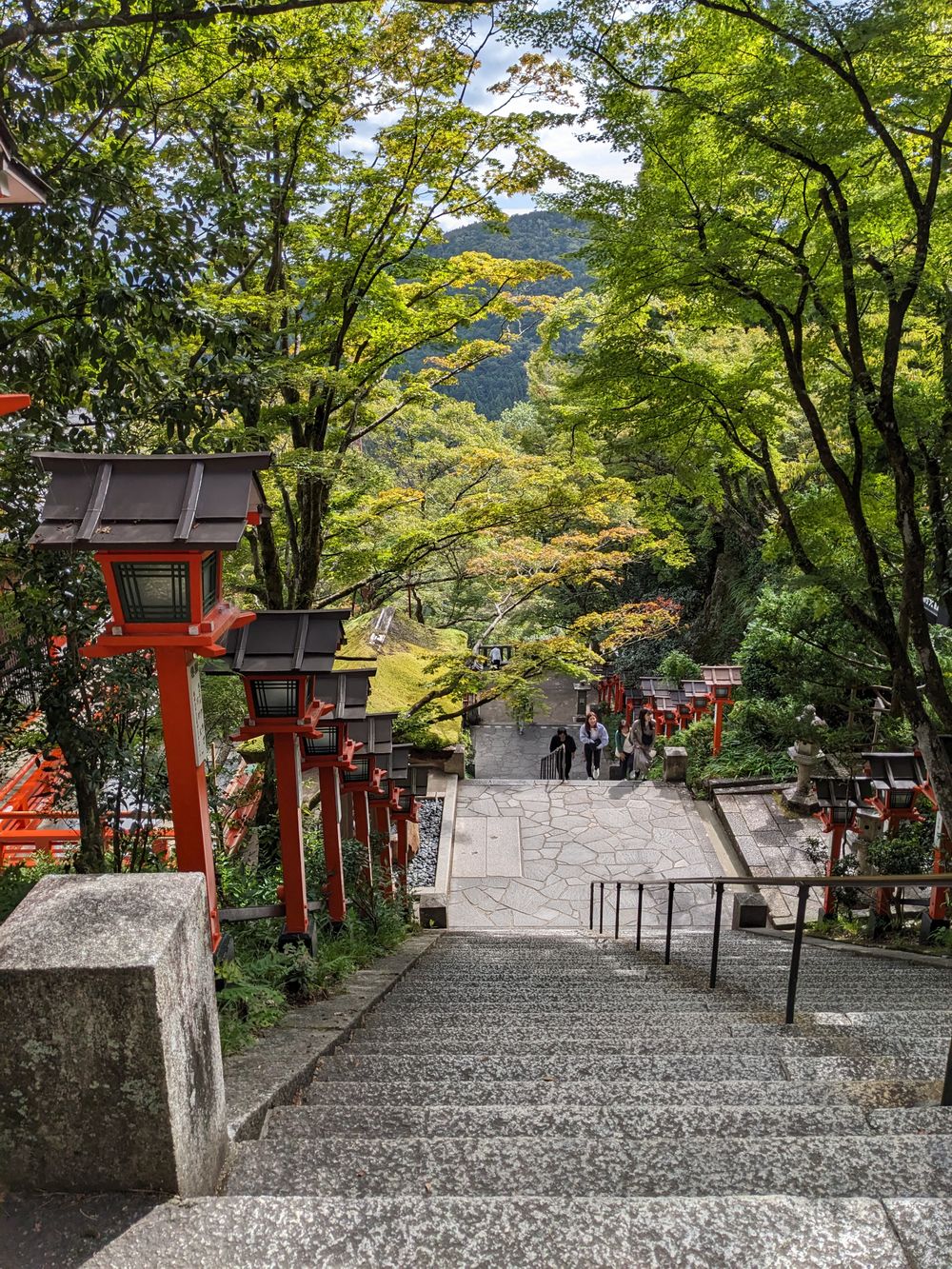
There are red wooden lanterns all the way up the stone steps of Kifune Shrine, in the hills north of Kyoto, and the road beyond them leads you on into old forest.
The main shrine sits at the top of a long, well-worn stone staircase. That climb is the sight the shrine is best known for.
Kifune is dedicated to the god of water and rain, honoured here as the source of all life, and it heads some two thousand water shrines across Japan.
At the main shrine the fortune slips, called mizuura-mikuji, are drawn blank. Floated on the small pool of sacred spring water beside the shrine office, a slip shows its writing as the paper soaks.
In summer, restaurants along the stream below the shrine build platforms over the water, called kawadoko. Kaiseki dinners are served on these platforms, with the clear river water running underneath the diners.
It is a short walk from the Kibune bus stop to the main shrine, so climb its steps first. A full visit, called sansha-mairi, takes in three shrines: the main shrine, Yui no Yashiro and the rear shrine.
From the main shrine, follow the road further up the valley, past tall old cedars, to Yui no Yashiro, set in forest, and on to the rear shrine. Walk back down the same road to the bus stop.
Walking from Kurama-dera, you come down into Kibune near the shrine. A marked trail of about 3.9 kilometres joins the two over the mountain.
Scan the QR code on your water fortune to read it in English, Chinese or Korean. The slip comes away soaked, so bring a sealable bag if you want to keep it.
On the walk down to the station, keep to the side, as cars and buses use the main road. Coming over the mountain from Kurama, download a map first, because phone signal drops near the top.
Explore the rest of Kyoto
High in the cedar forest north of the city, this mountain temple is half an hour from Demachiyanagi on the Eizan line. A stepped path…
Behind the walls of this Zen complex in north Kyoto, more than twenty subtemples line a grid of stone lanes, and a handful open their…
A three-storey pavilion over a still pond, its upper two floors covered in gold leaf and topped by a gilt phoenix. A single garden path…
The official pages this guide was checked against.
Last updated