 Submit a photo
Ninety seconds on Yasaka Shrine
Keihan Gion-Shijo Station lies about five minutes' walk west of the shrine, and Hankyu Kawaramachi Station about eight. From Kyoto Station, city buses 100 and 206 reach the Gion stop in roughly 20 minutes, a short walk from the entrance. A taxi from JR Kyoto Station takes around a quarter of an hour.
Yes. The grounds are open at all times, so a late-night walk through is possible. The shrine office, which handles prayers and enquiries, works from 9am to 5pm.
Yes, entry to the grounds costs nothing and there is no ticket. Worship at the halls, the sub-shrines and the spring is free as well.
Gion Matsuri is the shrine's own festival and runs from 1 to 31 July. Its peaks are Yoiyama on the 16th and the float processions on the 17th and 24th, when the portable shrines are also carried out through the city.
Okera Mairi is the shrine's New Year fire rite. At 4am on 28 December the chief priest strikes the fire with a hinoki mallet and mortar, the Joya-sai rite starts at 7pm on 31 December, and the Okera-sai, prayers for health and happiness, follows at 5am on 1 January. Families cook zoni soup over the embers.
Yasaka's dance stage is lit by hundreds of lanterns after dark, and a short walk round the main hall brings you to a small spring known as the beauty water.
Rows of paper lanterns hang around the dance stage in the middle of the grounds, each one donated by a local business.
The main sanctuary enshrines Susanoo-no-mikoto at its centre, with Kushiinadahime-no-mikoto and eight children of Susanoo beside him. Shrine maidens perform kagura, the Shinto music and dance, at this hall.
Utsukushi-gozensha, a small sub-shrine east of the main hall, is dedicated to three goddesses associated with beauty. Its spring sits right beside it.
The shrine has a long bond with the city's geiko. At Setsubun in early February, the dancers of Ponto-cho and Miyagawa-cho come here to dedicate dances in the afternoon.
Gion, the geiko district next door, makes the walk to do before you arrive: its evening route of teahouse lanes and canal ends at the shrine.
Yasaka's main sanctuary is where to start, with a prayer, before you cross to the dance stage and stand under its rows of lights.
Next, walk round to the east side of the main hall for Utsukushi-gozensha and its spring. Come back to the stage at dusk if you arrived in daylight.
Leave by the back of the grounds, which open straight into Maruyama Park. The park is a casual refuge from the crowds of central Kyoto, and its towering weeping cherry is the sight to find there. Or head south toward Kodai-ji instead.
Use the spring water on your skin only, since it is not drinking water.
For the shrine at its most ceremonial outside July, come on the evening of 14 June, when kagura is dedicated from 7.30pm to 9.30pm. In May or June the new leaves are out and the grounds are quieter than in cherry season.
Explore the rest of Kyoto
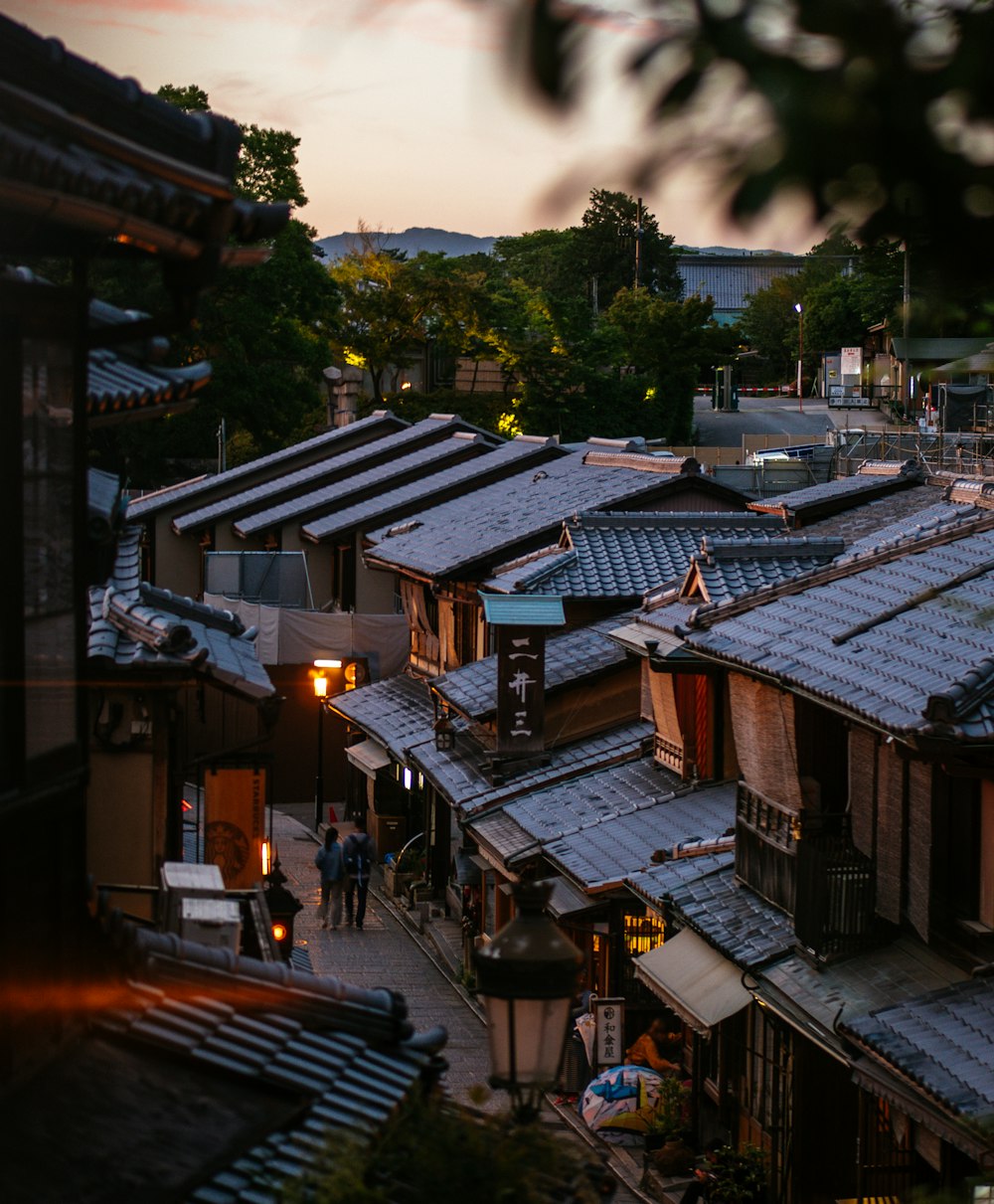
Kyoto's geisha district, with the wooden ochaya teahouses of Hanamikoji and the willow-lined Shirakawa canal behind them. Minamiza is the…
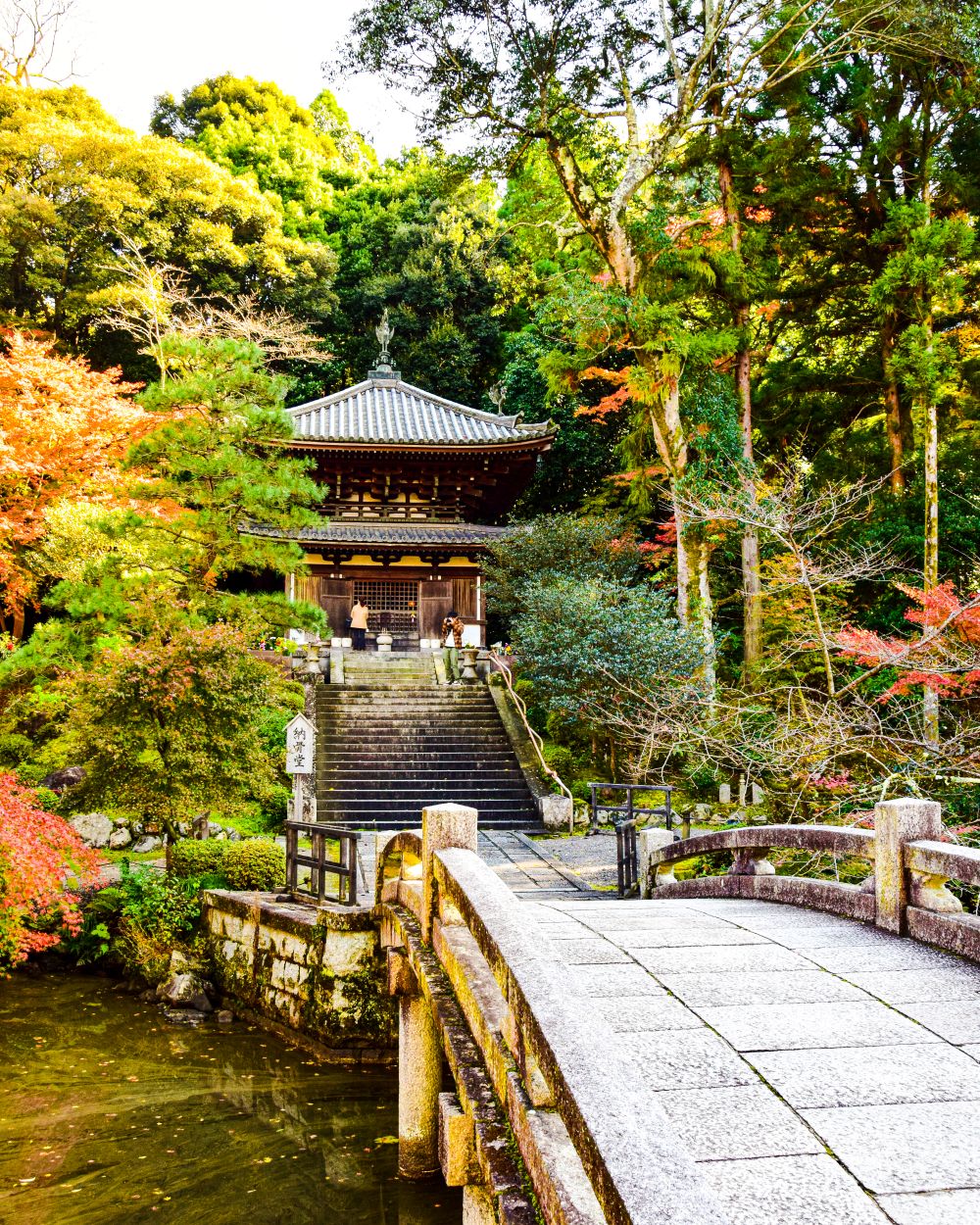
Steep steps climb through a huge two-storey wooden gate to this head temple of Pure Land Buddhism above Maruyama Park. The main hall is…
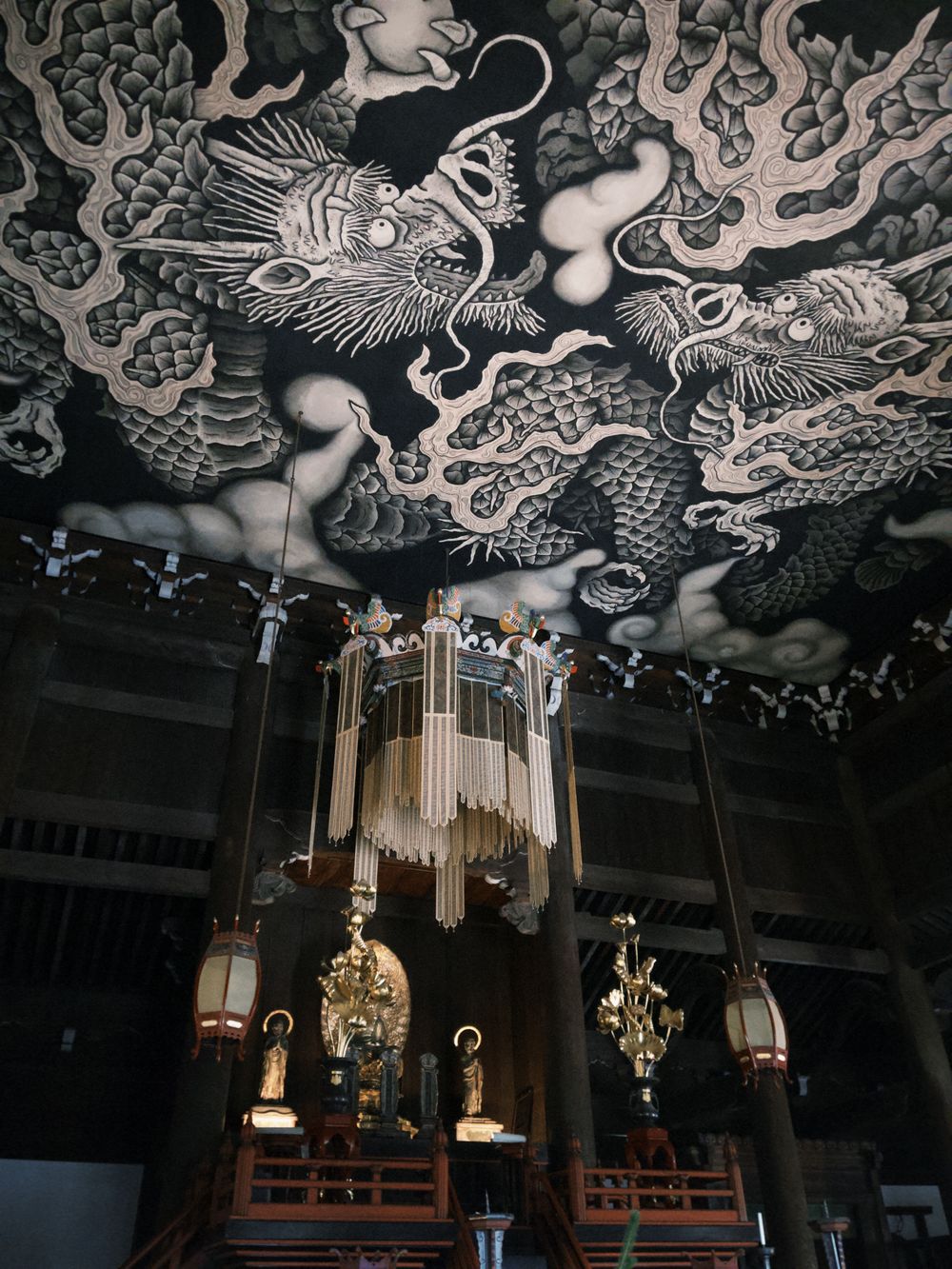
Kyoto's oldest Zen temple sits behind Gion's teahouse streets, a minute from Hanamikoji, and inside it is calm. Twin dragons are painted…
The official pages this guide was checked against.
Last updated