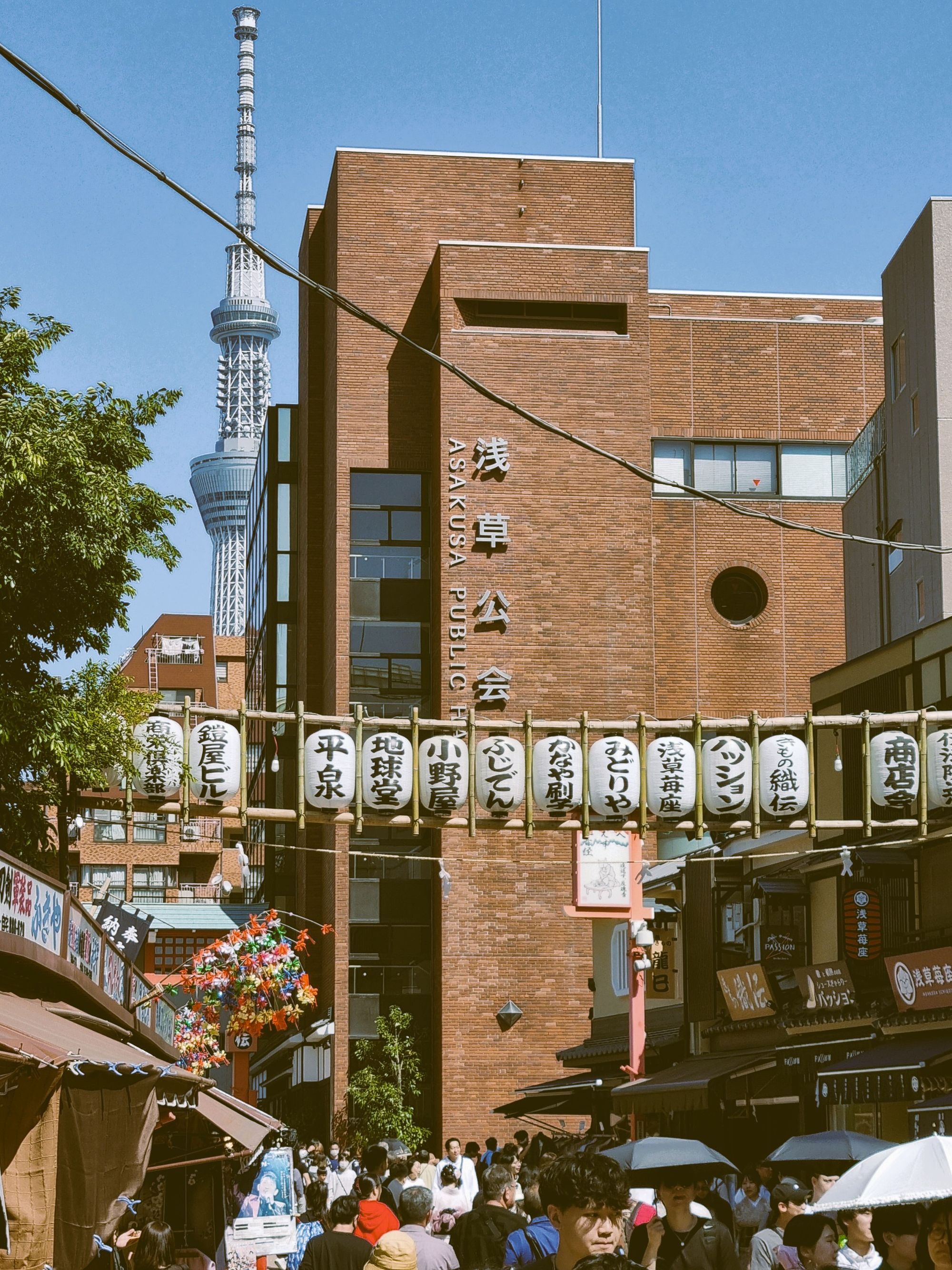
Ninety seconds on Asakusa
The old Edo atmosphere is why you come to Asakusa: a temple quarter of gates, stalls and incense smoke beside the Sumida River. You can walk all of it in a morning and come back for the river in the evening.
Kaminarimon, the Thunder Gate, is the first thing you see from the street, with a hand-painted red lantern of about 700 kilograms hanging beneath its centre. From there Nakamise, a street of about 90 stalls some 250 metres long, runs north to the inner gate and the main hall.
Almost everything you see is a postwar rebuild, because the temple burned in March 1945. The Kannon statue inside the main hall, which by legend two fishermen netted from the Sumida River, has never been put on view.
Just east of the hall stands Asakusa Shrine, which is Shinto rather than Buddhist. It honours those same two fishermen, and a few minutes beyond it the riverbank of Sumida Park hosts festivals in spring.
Before most of the Nakamise shutters go up at nine, ideally at about 7am, walk from Kaminarimon straight through to the main hall. To pray there, put your palms together in the Buddhist way and offer a short prayer. As you enter the grounds, look for the fortune slips printed in English and draw one.
Next, step east to Asakusa Shrine, then walk on to Sumida Park, where cherry blossom lines the river in spring. Come back up Nakamise once the shops are open.
Then return after dark. The gates, main hall and pagoda are lit every evening from sunset until about 11pm, long after the hall itself has closed.
Come on a weekday if you can, because a Saturday afternoon on Nakamise can be several times busier than a Tuesday morning. A rainy day thins the crowds sharply.
Do not eat as you walk along Nakamise; eat beside the shop you bought from, then move on. Do your shopping in daylight, because many of the shops start closing after 5pm. Photography is allowed throughout the grounds.
Explore the rest of Tokyo
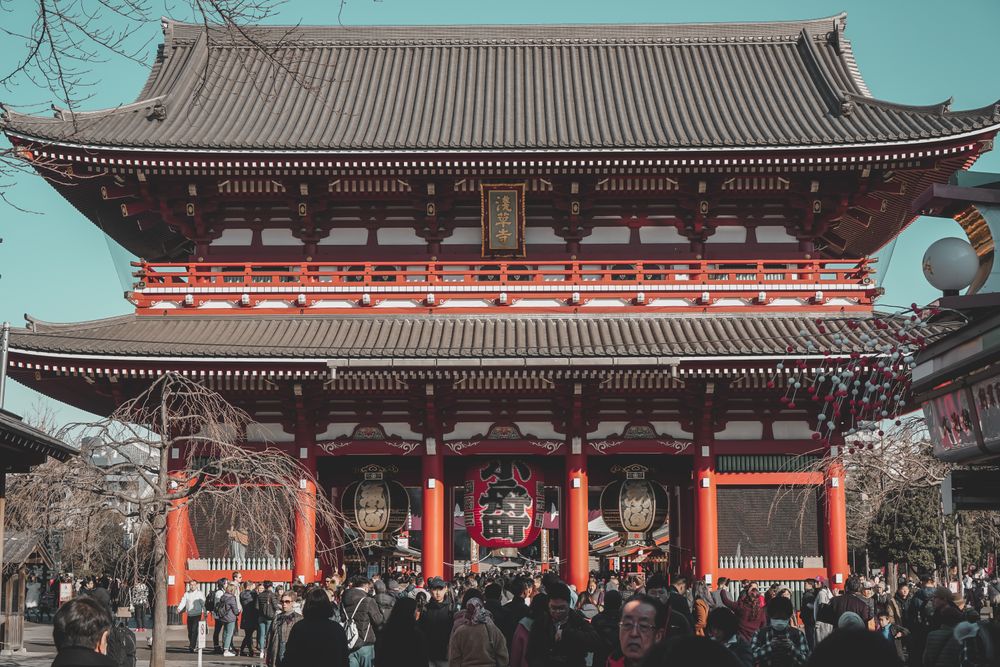
Asakusa's great Buddhist temple, built around a statue of Kannon that tradition says two fishermen pulled from the Sumida River; the main…
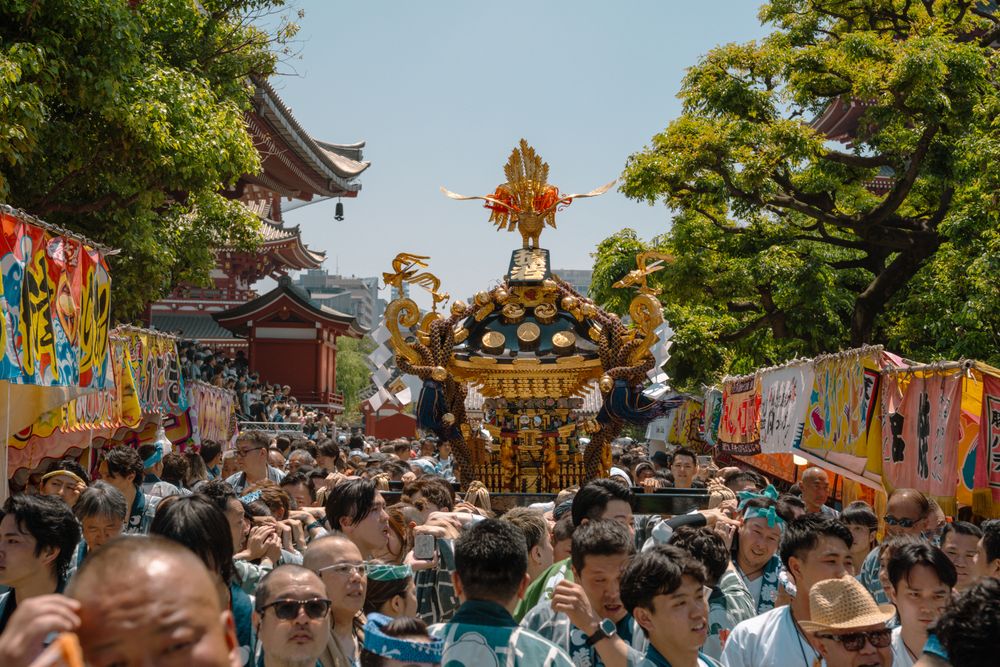
Over a Friday, Saturday and Sunday in mid-May, Asakusa's neighbourhoods carry their portable shrines through the streets round Senso-ji and…
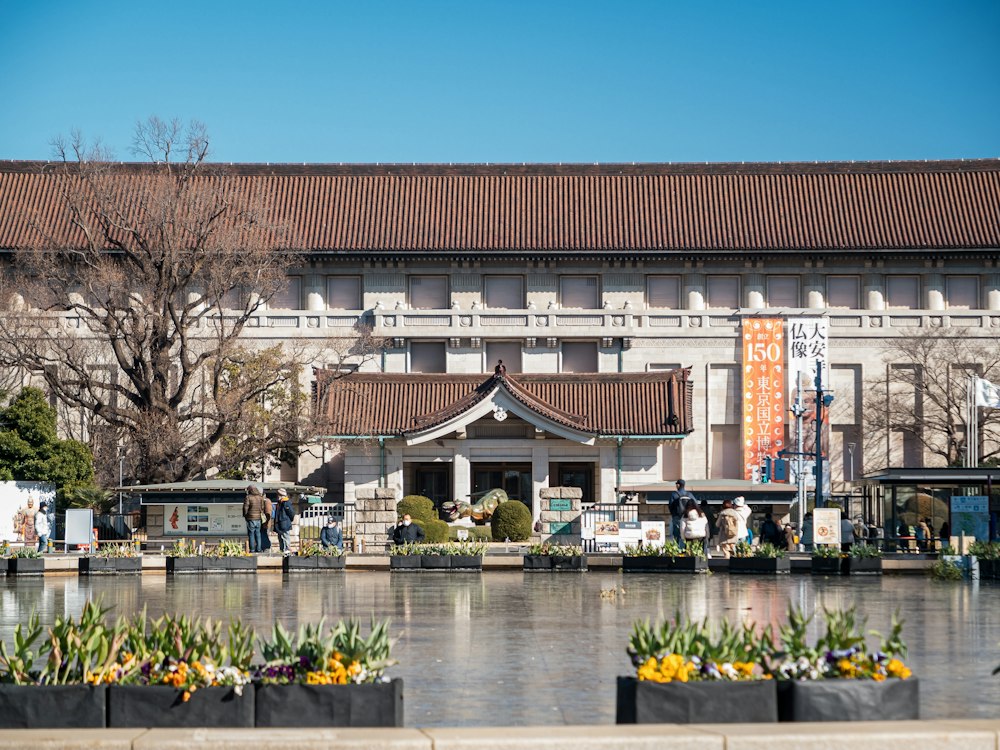
Five buildings of Japanese and Asian art at the north end of Ueno Park, set around a large garden with old teahouses.