 Submit a photo
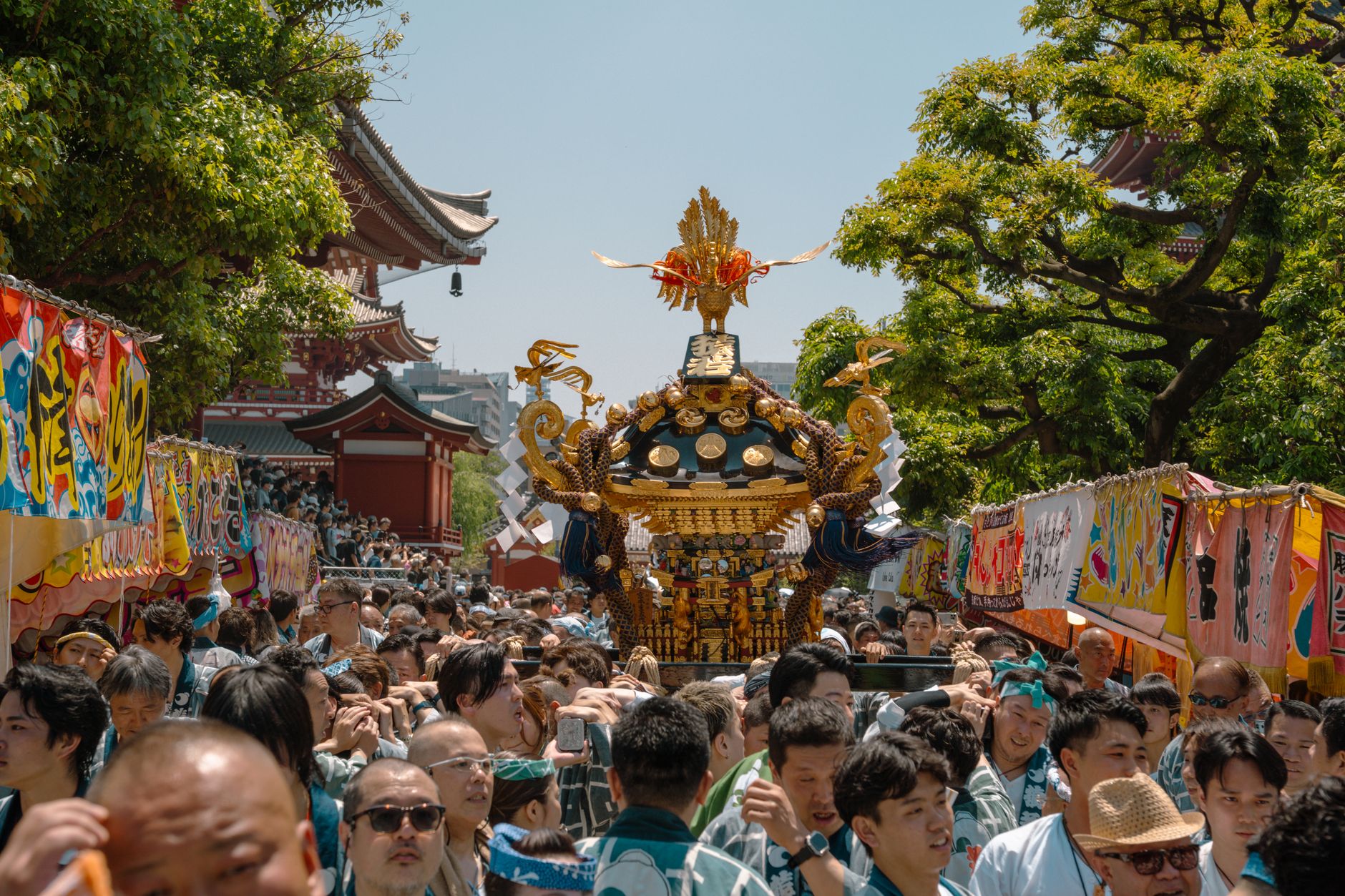
Sanja Matsuri 2027 runs from Friday 14 to Sunday 16 May at Asakusa Shrine in Tokyo, beside Senso-ji temple. It always falls on the weekend nearest the third Saturday of May. Sunday 16 May is the main day, when the three main portable shrines leave the grounds.
On the 2027 programme, Friday 14 May opens with the grand procession at 1pm, followed by the binzasara dance at 2:20pm and 3pm. Saturday begins with a ceremony at 10am, the neighbourhood mikoshi move off from noon, and the shrine maidens dance at 5pm. Sunday runs longest: from 7am the shrine's own mikoshi tour the parish, returning between about 7pm and 8pm to close the festival.
By subway to Asakusa. The shrine stands at 2-3-1 Asakusa, Taito City, about seven minutes on foot from Asakusa station on the Ginza Line, which the Toei Asakusa Line also serves; the Tsukuba Express station is ten minutes away. On the Sunday, Tawaramachi on the Ginza Line is the quieter stop. Traffic is barred from Kaminarimon-dori that day between 10am and 7pm, and from Umamichi-dori between 10am and 5pm.
No, it is a shrine festival. Asakusa Shrine runs it with the 44 neighbourhoods of its parish, and each neighbourhood association carries its own mikoshi. The yakuza reputation comes from long-standing accounts of gang members showing off their tattoos on the mikoshi. Tattoos on display are no part of the official programme, and there is no set time or place to see them.
It changes each day. Friday's grand procession runs along Yanagi-dori, Umamichi-dori and Kaminarimon-dori, passes under the Kaminarimon gate and walks up Nakamise to the shrine. On Saturday the mikoshi gather in the square behind Senso-ji's main hall, leave one at a time for a blessing at the shrine, then head home to their own streets. On the 2026 Sunday routes, Ichinomiya took the west of the district, Ninomiya the south and Sannomiya the east.
Sunday, for the shrine's own three mikoshi, out from early morning until after dark. Saturday is the day for numbers, with about a hundred neighbourhood mikoshi from 44 districts, while the Friday procession is the calmest sight of the weekend. On the Sunday, choose which of the three to watch, since each follows its own route.
Very. The shrine counts about 1.8 million visitors over the three days, which puts it among the leading festivals in Japan. From the afternoon the streets around Senso-ji are packed, and the narrow lanes beside the temple are the tightest of all. At the 7am Sunday start, onlookers must watch from beyond the temple gates.
Only in part. Rain cancels two events: the 1pm grand procession on Friday and the 3pm repeat of the dance at the shrine's dance stage. The 2:20pm performance still goes ahead, inside the shrine hall.
Yes. On the Saturday the Konomiya, the children's mikoshi, is carried out at 11:30am on the 2027 schedule. It is the gentlest way to watch a mikoshi procession close up, well away from the crush of the Sunday morning start.
To stir the god inside. The shrine calls it tamafuri: swinging the mikoshi up, down and side to side, and jolting it roughly on purpose, raises the spiritual power of the god riding in it. That power is invoked for good harvests and to ward off disease in the streets the mikoshi passes.
A rice-planting dance, a form of dengaku performed to pray for a rich harvest of the five grains. The binzasara itself is a clapper of 108 thin wooden slats strung together. Listed as an intangible folk cultural property of Tokyo, the dance is offered on the Friday after the grand procession.
It is the annual festival of Asakusa Shrine, and its name, sanja, refers to the three men the shrine honours: the brothers Hinokuma Hamanari and Hinokuma Takenari, fishermen who drew a statue of Kannon from the Miyatogawa, today's Sumida River, in their net, and Haji no Matsuchi, who enshrined it and so founded Senso-ji. The festival has been held since the Edo period.
Sanja Matsuri is the festival of Asakusa Shrine, named for the three men it honours, the founders of Senso-ji: two fishermen brothers who, the story goes, pulled a statue of Kannon from the Sumida River in their net, and the local man who enshrined it.
A mikoshi is a portable shrine that a god rides in while it is carried through its neighbourhood. In Shinto belief the procession blesses the streets it passes, which is why each district carries its own.
14 to 16 May 2027
After the shrine's three great mikoshi (portable shrines) set out on the Sunday, each spends the day on its own route round Asakusa, coming home after dark.
14 to 16 May 2027. Times are approximate and can change from year to year.
Musicians, dancers and geisha in old-style dress walk through Kaminarimon, the temple's outer gate, and up Nakamise, its shopping street, to the shrine. Cancelled if it rains.
A rice-planting dance in the shrine hall, then again at 3pm on the shrine's dance stage, which is cancelled if it rains.
Each neighbourhood's mikoshi gathers behind the main hall of Senso-ji temple, is blessed at the shrine in turn, then is carried back round its own streets.
On the dance stage in the shrine grounds.
The three main mikoshi are carried out of the grounds. Spectators are kept outside the temple gates.
Each takes a different part of the district and is carried round its streets all day.
The three mikoshi come back into the shrine after dark, and the festival ends.
About a hundred mikoshi, the portable shrines of Asakusa's 44 neighbourhoods, are carried to the shrine on the Saturday. The bearers shake them hard on purpose: the belief is that it wakes the god riding inside.
Asakusa Shrine stands right beside Senso-ji, Tokyo's oldest temple. Close to 1.8 million visitors come over the three days.
If you want room, come on the Friday: the 1pm procession is one of the calmer sights of the weekend. On Saturday, after the noon blessing, each neighbourhood takes its mikoshi home through the local lanes, which are quieter places to watch one go by.
On Sunday you cannot get inside the temple gates for the morning start. Pick a spot on the route and let a mikoshi come to you, instead of chasing one through the lanes.
Many of the food stalls take cash only. Give the bearers room and follow the marshals; they move fast and do not stop, so step to the side of the street to take a photograph.
Stay in Asakusa, within walking distance of the Sunday morning start, and book months ahead. The Gate Hotel Kaminarimon stands beside the temple's main gate. The five-day plan adds Thursday 13 May to arrive and Monday 17 May to leave.
Add the five days to your plan
Explore the rest of Tokyo
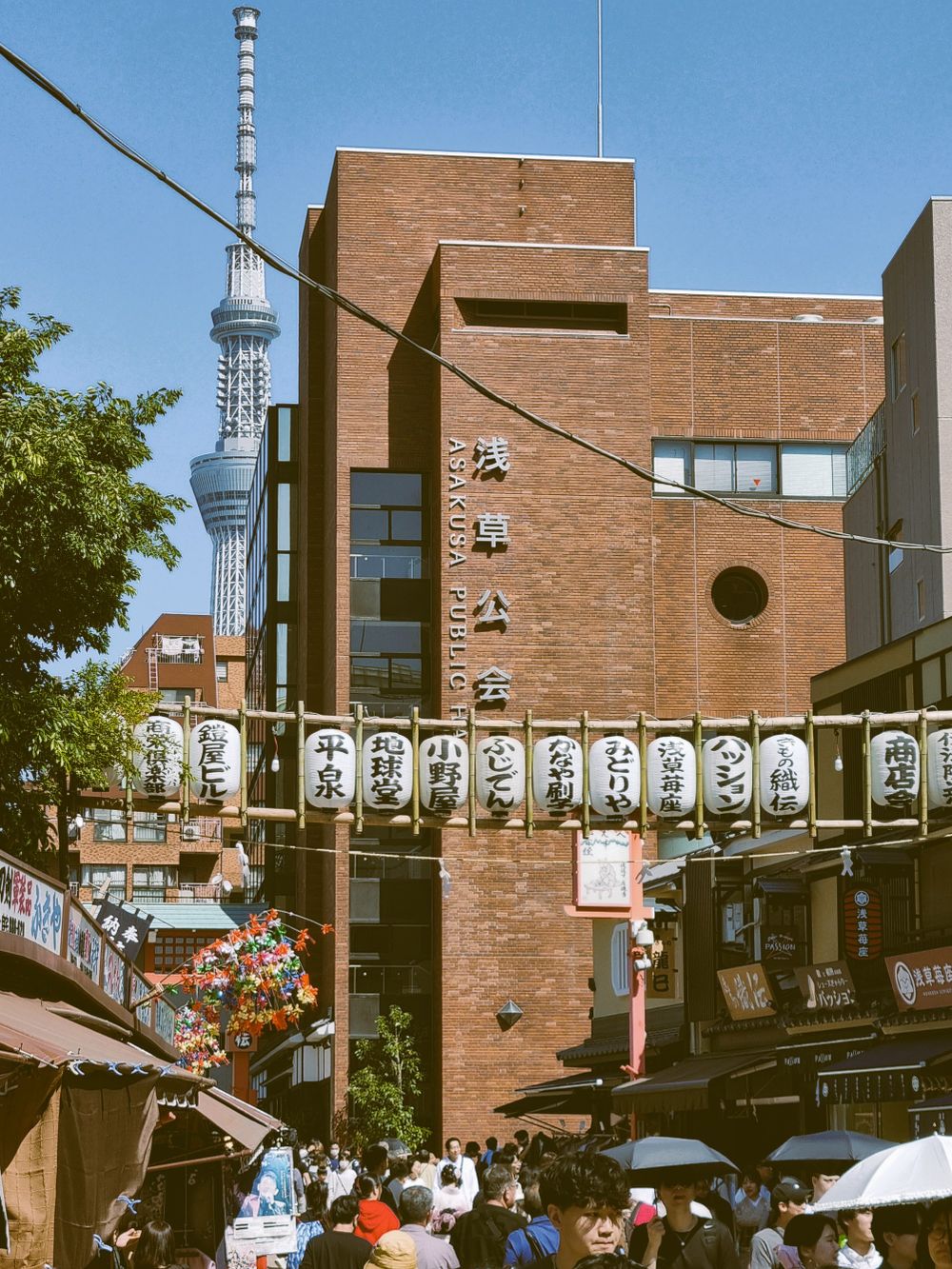
Asakusa is the temple quarter of old Tokyo, built around Senso-ji and approached through the Kaminarimon gate and the shopping street of…
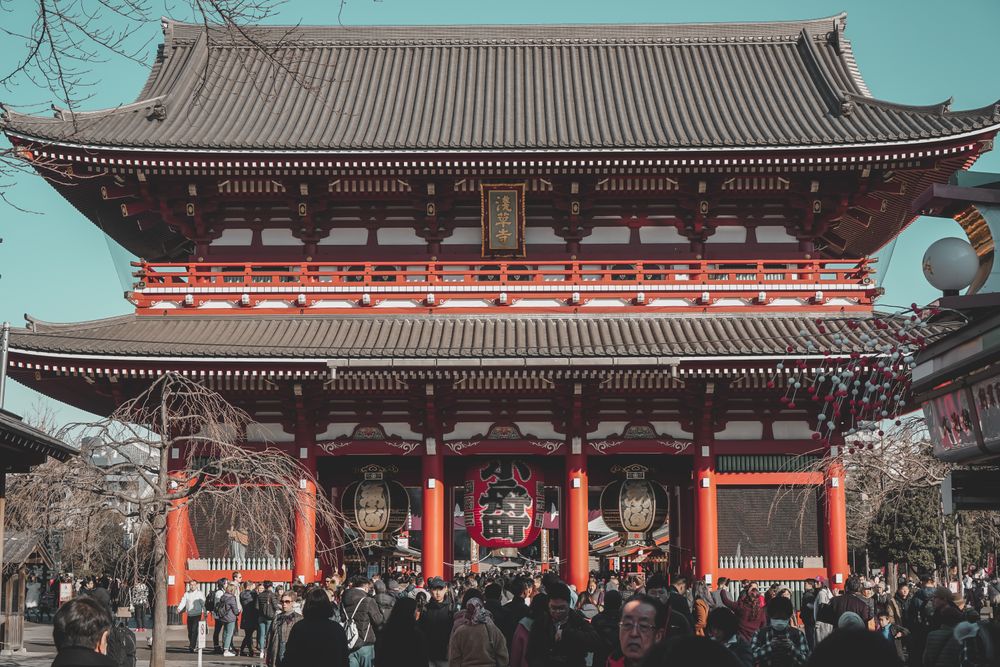
Asakusa's great Buddhist temple, built around a statue of Kannon that tradition says two fishermen pulled from the Sumida River; the main…
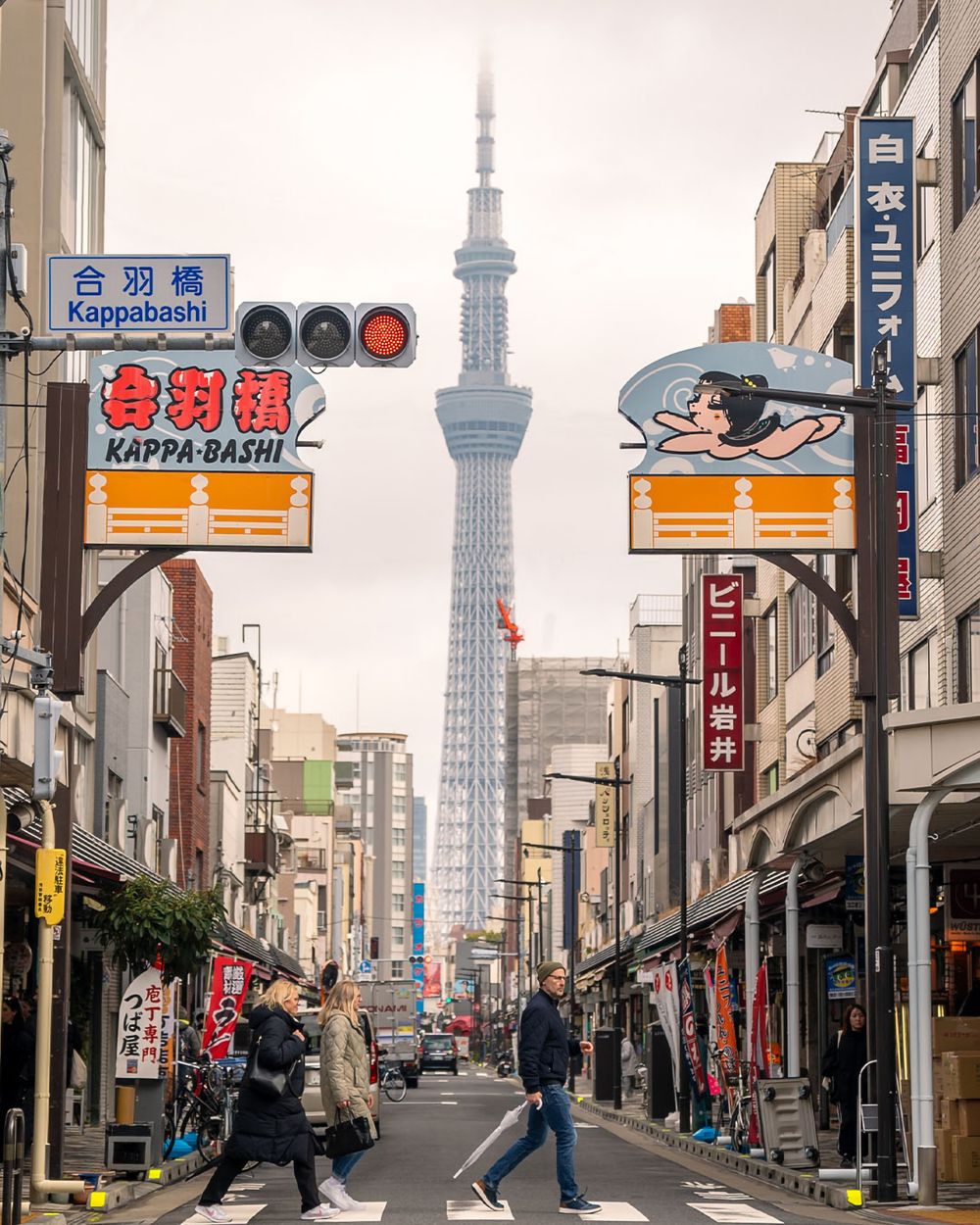
Restaurant suppliers line this street between Ueno and Asakusa, selling knives, lacquer bowls, noren curtains, paper lanterns and the…
Last updated