 Submit a photo
Ninety seconds on Deadvlei
From Sesriem, the paved road runs through the park gate to the 2x4 car park, where the tar ends. The last stretch to the Deadvlei car park is about 5 km of deep sand, which takes a shuttle or a high-clearance 4x4. From there the pan is roughly a kilometre on foot.
Not for every vehicle. A ministry notice in May 2026 lets self-driving 4x4 visitors continue to Deadvlei, and the shuttle is an optional convenience. Sedans must stop at the 2x4 car park, and shuttle tickets are bought at Sesriem Campsite.
Light is best in the two hours that follow the gate opening, and again in the late afternoon. The walk is also cooler at those times than in the middle of the day.
The walk from the 4x4 drop-off to the pan is about 1 km over soft sand in full sun. There is no shade anywhere on the route, so walkers need water, a hat and cover from the sun.
No. Visitors are asked not to touch the dead trees, and the park urges everyone entering the pan to respect its rules. Posted signs along the path to the pan ask visitors to leave the trees alone.
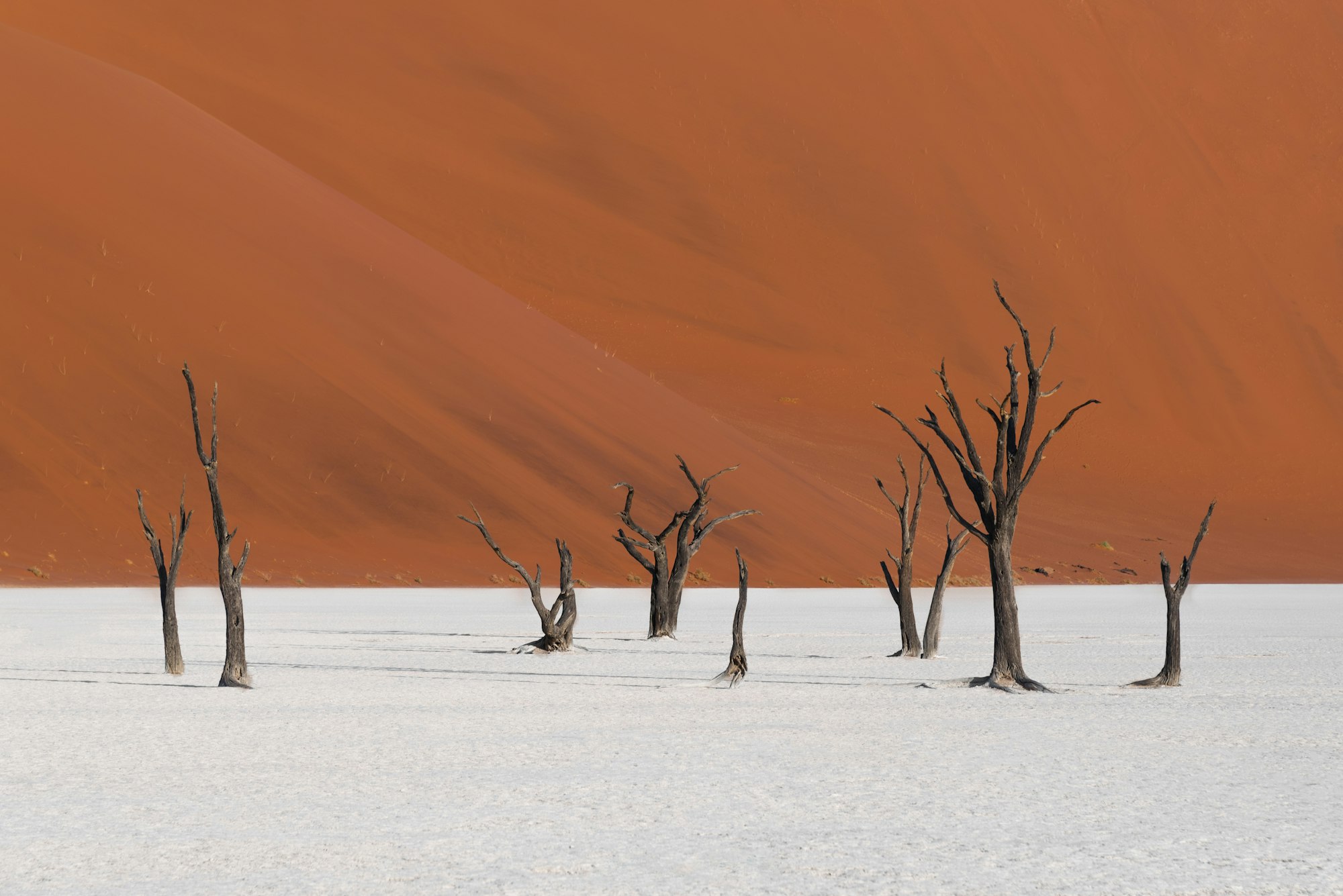
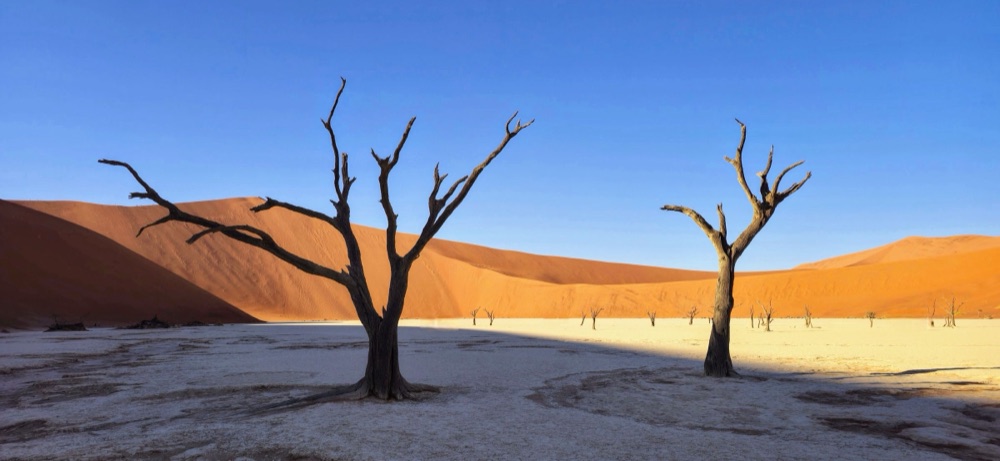
Bare camel thorn trees that died centuries ago stand on a flat white clay pan ringed by orange dunes. Their skeletons remain because water stopped reaching the pan and the climate is too dry for them to decay.
Come for the dead camel thorn trees standing dark on a white clay floor below orange dunes, best seen in low light, when they throw long shadows across the pan.
Stand at the edge of the pan and the whole view is three colours. The floor is flat white clay, the trees on it are dark and bare, and orange dunes close it in on every side.
The trees are camel thorns that died centuries ago, when the climate changed and the dunes cut off the river that fed this pan. The air has stayed too dry for them to rot, so they still stand where they grew.
Until the sun clears the high dune, the pan and its trees stay in shadow. They come into the light only as the sun climbs above the crest, so the scene changes through the first part of the morning.
Deadvlei is a separate pan from Sossusvlei, the one at the end of the road, which has its own page and its own dunes to climb. Here the dunes sealed the pan off from the river entirely, and the dead trees are left standing on the clay.
The shuttle comes first. Buy a ticket at Sesriem Campsite and ask where today's shuttle leaves from, or drive the sand yourself in a high-clearance 4x4 if the gate confirms you may.
Either way you end at the Deadvlei 4x4 car park. From there the pan is about a kilometre away on foot, over soft sand with no shade at any point.
On the pan, walk out among the trees across the white clay and take your photographs from the ground. Head back to the car park before the heat builds, then ride or drive out.
Sleep inside the park gate if you can, since in-park camps let you set off before the main gate opens and reach the pan while the morning is still cool.
Carry more water than you think you need, and wear a hat, long sleeves and sunglasses for the open sand. Plan to be walking out by mid-morning, when the pan turns hot.
Explore the rest of Sesriem
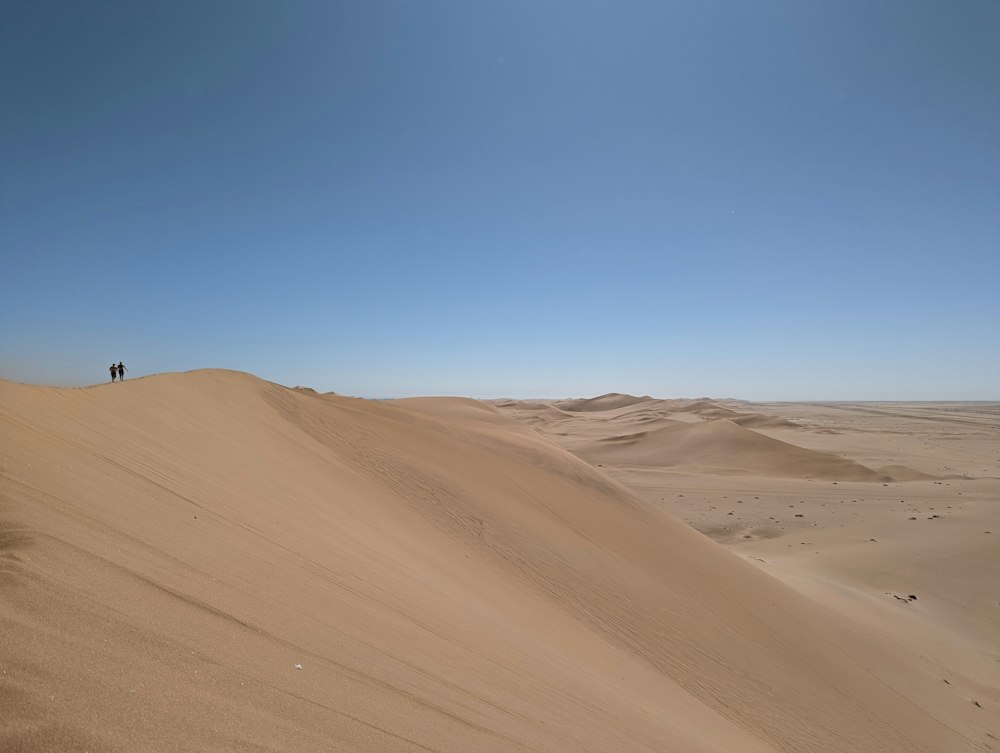
A pale clay pan at the end of the road through the Namib-Naukluft, closed in by high orange dunes that stop the Tsauchab River. Big Mama…
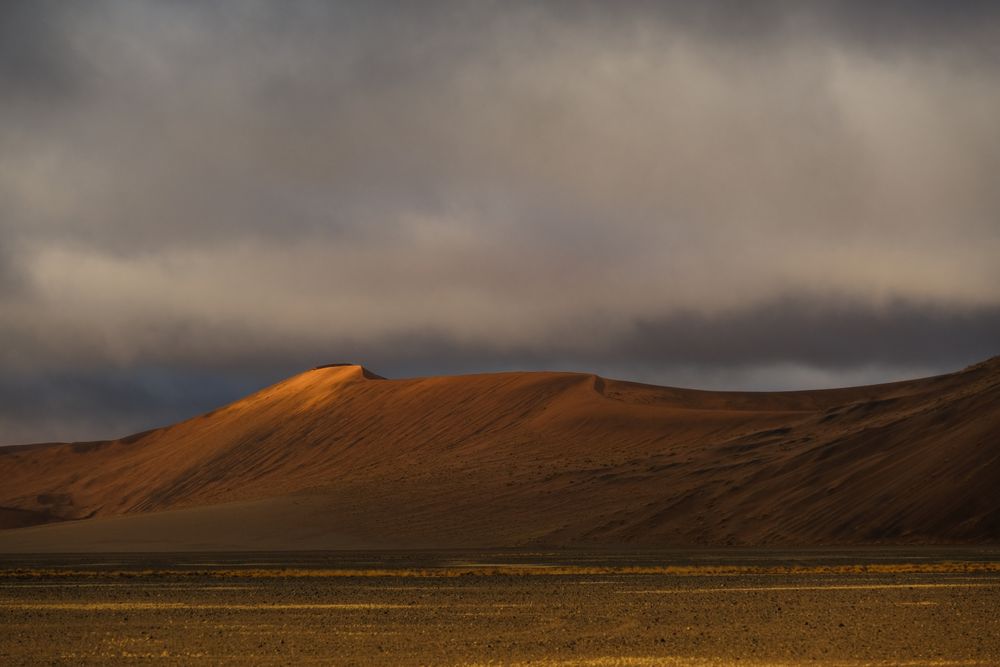
UNESCO inscribed this dune field in 2013 under all four natural criteria, making it Namibia's second World Heritage site after…
A permit office, a fuel station, a shop and a scatter of lodges and camps make up this hamlet at the gate of the Namib-Naukluft park. A tar…
The Tsauchab has cut a slot about a kilometre long into conglomerate a short drive from the gate, narrow and deep enough that its floor…
Last updated