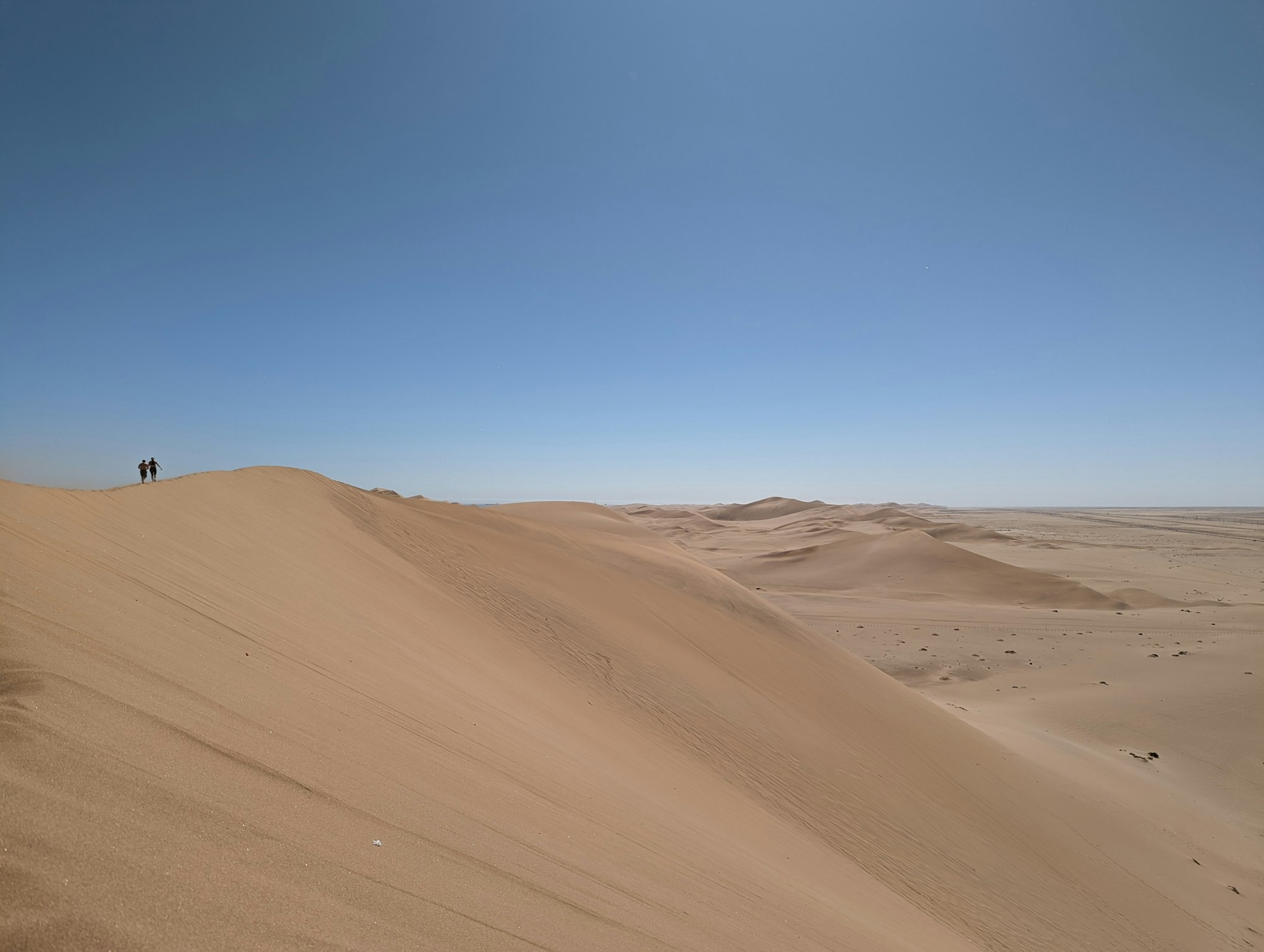
 Submit a photo
Ninety seconds on Sossusvlei
Sossusvlei is a clay pan in Namib-Naukluft National Park, about 66 km past the park gate at Sesriem. Tall orange-red dunes surround the pan on almost every side.
Cars without four-wheel drive must stop at the 2x4 parking area. Beyond it, the deep sand to the pan is crossed on foot, as plenty of visitors choose, or in the paid 4x4 transfer.
The main gate into the park opens at dawn and closes at dusk. Guests staying inside the park at Sesriem use the inner gate, which opens an hour before dawn and closes 30 minutes after sunset.
The climb up Big Daddy takes between 45 minutes and two hours, depending on pace. Add up to half an hour for the walk across the pan from the road to the foot of the dune.
Sunrise and sunset bring the strongest, fastest-changing colour on the dunes. Climbs belong to the early morning, above all from December to February, when temperatures can top 40°C and a climb after 10am is unsafe.
Yes. Only permit holders may pass the park gate, and permits are sold at the parks office in Sesriem. A permit can be bought the day before the planned trip into the desert.
Sossusvlei is a pale clay pan where the dunes stop the Tsauchab River, and you climb those dunes straight from its floor. Big Daddy, the biggest, is a long haul through soft sand, and its crest shows you Deadvlei and the whole dune sea.
The pan is a flat oval of clay under a crust of salt-rich sand, pale against the orange dunes that ring it. Its name, part Afrikaans and part Nama, roughly means dead-end marsh. Strictly it belongs only to this pan, where the dunes close in and stop the Tsauchab River.
The river gets this far only rarely, sometimes with several years between floods, and then the clay floor becomes a lake among the dunes.
Big Daddy, at about 325 metres, is the highest dune in the area, and it faces Big Mama across the same basin. Big Mama rises from the pan's eastern edge, lower than its neighbour but climbed by far fewer people. From Big Daddy's crest the dune sea opens in a full circle, and you look straight down onto the Deadvlei salt pan.
The wind pushes on these dunes from all directions, so they barely move. Each has a steeper leeward face, and early in the day the low sun throws that face into dark shadow and draws the ridge above it as a sharp line. Near sunrise and sunset the colours are at their strongest and change by the minute.
Dune 45 takes its name from its place 45 km along the road from Sesriem. It stands beside the tar, so you can climb it in any car.
From the Sesriem gate, the drive in runs past Dune 45 to the 2x4 car park at the end of the tar. There you cross the sand to the pan, or walk it with a hat and water.
Do the climbing first, while the sand is still cold. The walk from the road to the base of Big Daddy takes up to half an hour, and the climb is slow, with each step in the soft sand sliding half back. You can walk down the far face into Deadvlei, which has its own page.
For a shorter climb, take Big Mama from the eastern edge of the pan: about 30 minutes up on firmer sand, with far fewer climbers on it. Then sit out the midday heat at the pan, where trees shade the picnic tables beside the parking.
Buy your park permit at the Sesriem parks office the day before you go in. Staying inside the park lets you through the inner gate an hour before dawn, in time to be on a dune at sunrise.
Carry two to three litres of water each and all your food: nothing is sold on the pan, and the only water in the park is at the rest camps. Wear closed shoes, not sandals, for the walk across the sand.
After rare rain the sand track in the riverbed floods. Leave the car at the 2x4 car park then and walk in, because 4x4s bog down in the wet sand.
Explore the rest of Sesriem
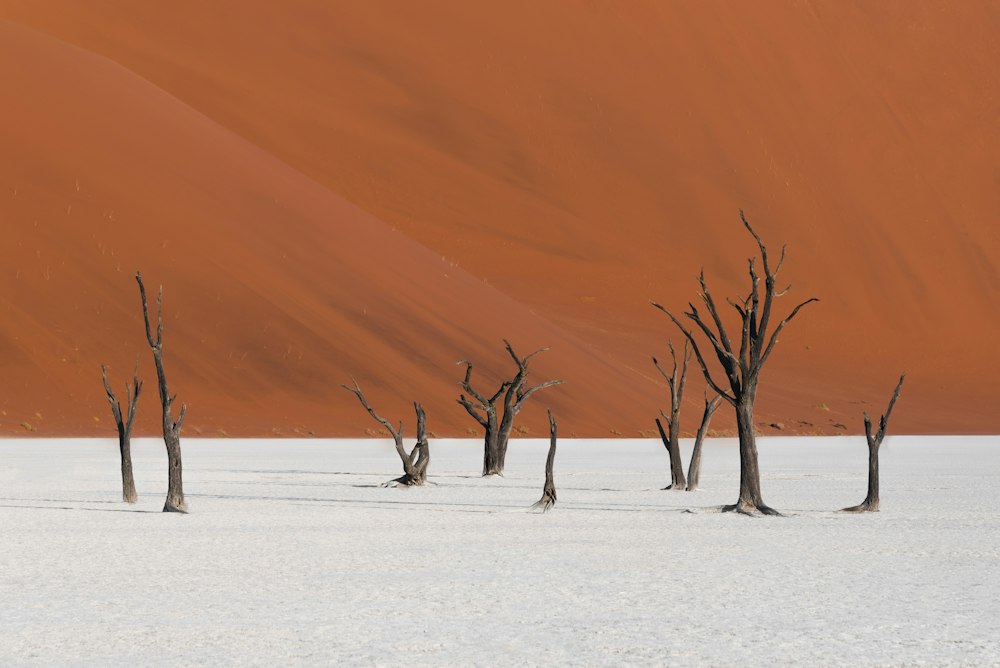
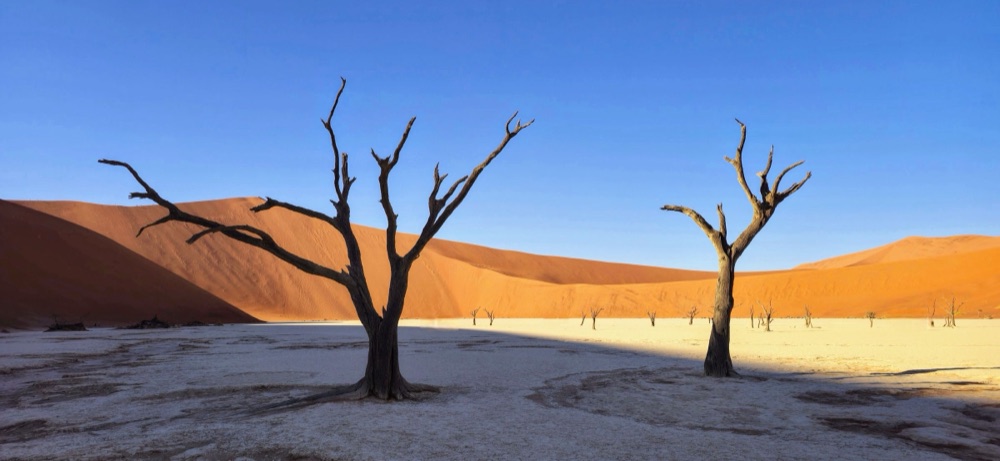
A white clay pan near Sossusvlei where camel thorn trees, killed when the dunes cut off the river, still stand dark and bare because the…
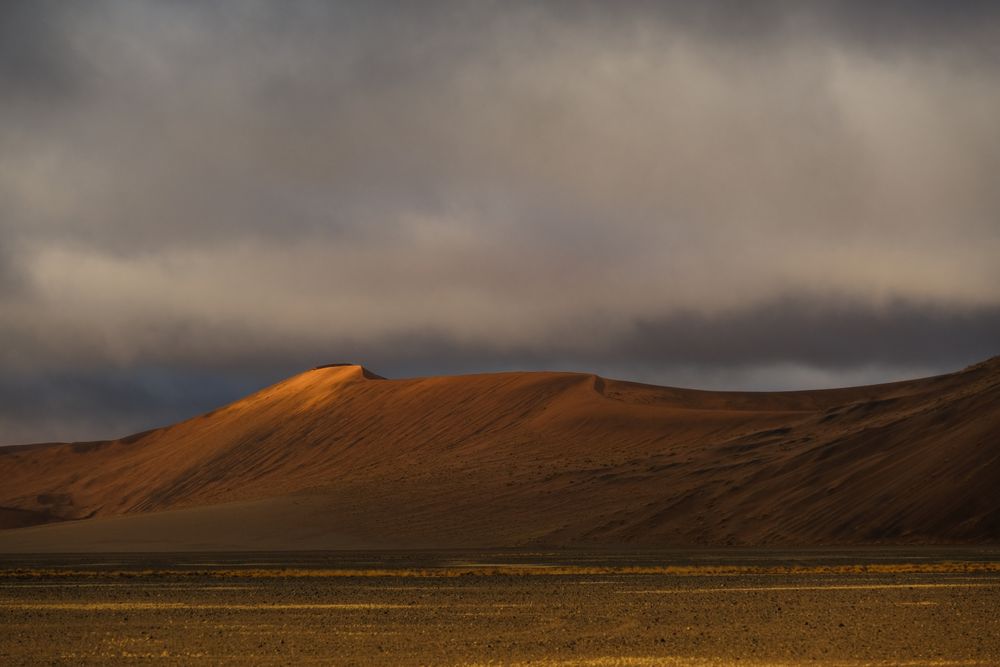
UNESCO inscribed this dune field in 2013 under all four natural criteria, making it Namibia's second World Heritage site after…
A permit office, a fuel station, a shop and a scatter of lodges and camps make up this hamlet at the gate of the Namib-Naukluft park. A tar…
The Tsauchab has cut a slot about a kilometre long into conglomerate a short drive from the gate, narrow and deep enough that its floor…
Last updated