
You stand on the original ground of the largest German Nazi camp, where about 1.1 million victims were murdered, most of them Jews. Give time to both parts, the main camp and Birkenau, to grasp what happened here.
Landmark, Kraków. Meridian Dispatch.
Yes. Entry is by personal pass reserved online, and none are handed out at the entrance. Guided places can be booked up to three months ahead, and free passes without a guide up to seven days ahead.
Yes, in limited hours. Independent entry starts at 13:00 in December, 14:00 in January and November, 15:00 in February, 16:00 in March and October, and 17:00 from April to September. Visitors with a disability card, and a companion, may enter at other hours.
The gates open at 7:30 every day except 1 January, 25 December and Easter Sunday. Visitors must leave by 15:30 in December, 16:30 in January and November, 17:30 in February, 18:30 in March and October, 19:30 in April, May and September, and 20:30 from June to August.
Lajkonik buses leave from the MDA bus station beside Kraków Główny and run straight to the museum car park in about an hour and a half. Trains stop at Oświęcim, roughly 1.5 to 2 kilometres from the museum, and local buses cover that stretch.
Nothing above 35 by 25 by 15 centimetres may be taken in. Larger items go in the paid lockers at the car park or stay in the vehicle. Scanners are used at the security check, and refusing inspection means no entry.
Yes, for private use, without flash or a stand. Two places are off limits to cameras: the room in Block 4 holding the hair of victims, and the basement of Block 11. Drones are banned over the whole memorial.
The museum recommends the visit from the age of 14. A supervised childcare facility operates near the memorial for families who want to leave younger children while the adults go round.
The museum advises at least 90 minutes at each camp for anyone going independently. Its standard guided tour takes about three and a half hours, and a shorter version of around two and a half hours runs before closing.
The official site of Auschwitz-Birkenau Memorial and Museum is auschwitz.org.
auschwitz.org →The main camp in Oświęcim was laid out around brick buildings that stood before the war. The permanent exhibition fills five of the blocks, with documentary photographs, camp garments, bunks and belongings taken from Jews deported here.
Block 11 was the camp jail. Its cells are in the basement, and in the yard beside it is the Execution Wall, where the SS shot several thousand prisoners, mostly Poles held for political reasons.
The first crematorium still stands. Its largest room was a morgue, later turned into a gas chamber; two furnaces and the chimney are reconstructions using original parts.
Birkenau is far bigger, almost two square kilometres of fences, roads and prisoner barracks. Here are the railway ramp and the ruins of the gas chambers, the last of them blown up by the SS in January 1945. Where a hut is gone, a numbered stone marks its place.
Look for the photographs set up along the grounds: many stand on the spot where the deportees in them were pictured on arrival. Other stones, in the places where ashes lie, carry a short text in memory of the dead.
In the former bathhouse, known as the Sauna, a glass walkway protects the original floor. You follow the rooms in the order new arrivals did. One room holds family pictures of deported Jews, found on the site after liberation.
Under every kind of pass, you start at the visitor centre of the main camp, on Więźniów Oświęcimia Street. Be there 30 minutes ahead of your slot, as every bag is screened.
Most daytime hours are reserved for guided groups. You are put with up to 29 others, given a headset and taken through the brick blocks and their displays first.
The museum shuttle then carries the group to Birkenau. There you see the unloading platform, a barrack and the ruins of one of the large gas chambers and crematoria.
Without a guide, you get in only in the last hours of the day, set month by month. Start at the main camp in the same way.
Move between the two parts on foot, along Jaracza, Leszczyńskiej and Męczeństwa Narodów streets, or by taxi from the rank at the entrance. The bus is meant for the guided groups.
Dress as you would for a cemetery, and speak quietly. Candles may be lit in two spots only, the Execution Wall and the International Monument at Birkenau.
In winter, book the guided visit: independent entry opens so late that there is not enough time left for both camps. Wear solid shoes, as the ground is rough and some interiors are dim.
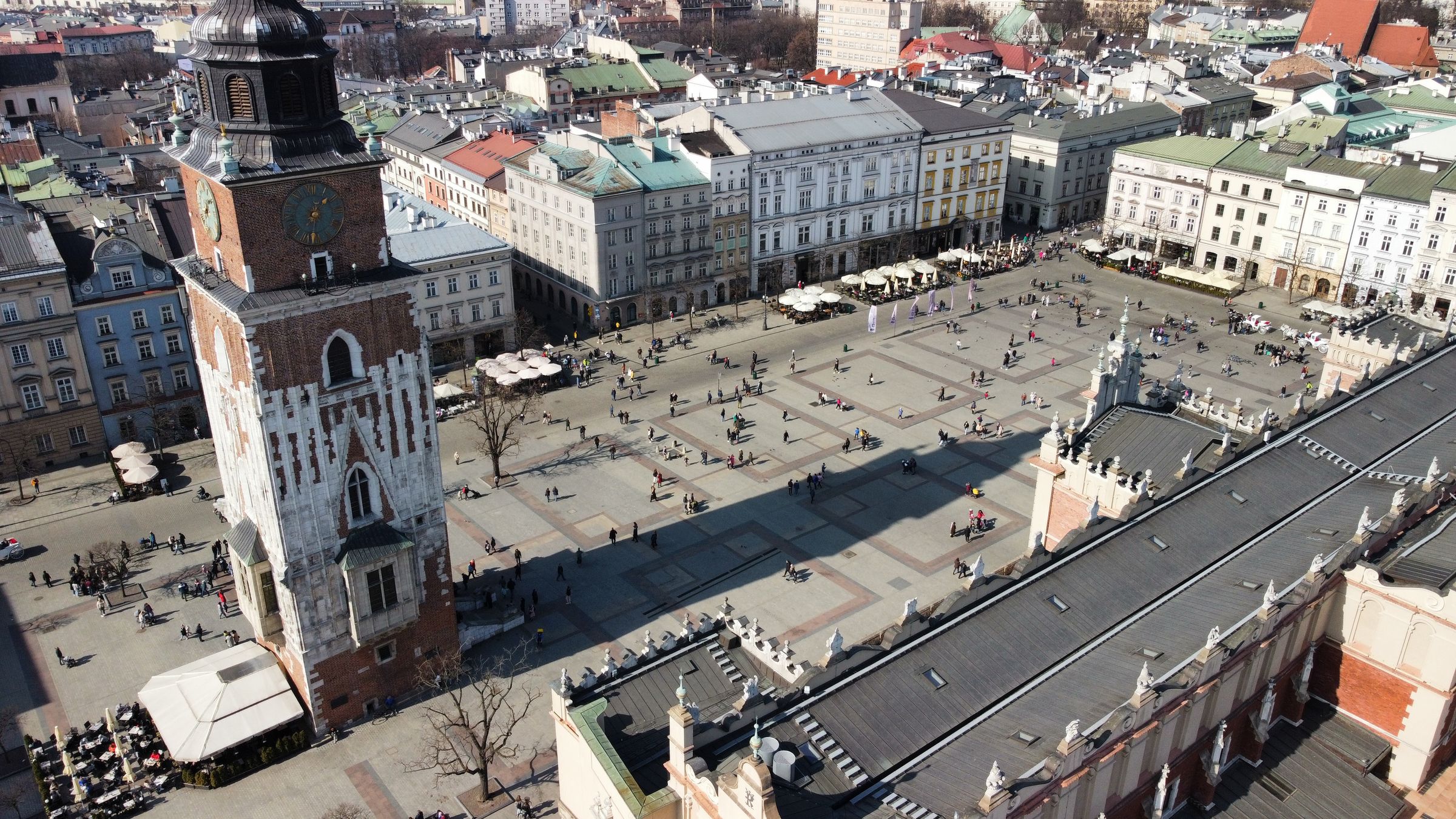
In Kraków you can walk from a royal castle to a medieval market square, with the old Jewish quarter of Kazimierz just below the castle hill. The Wieliczka salt mine and the Auschwitz memorial are each a day trip by train or bus.
Read the Kraków guideExplore the rest of Kraków
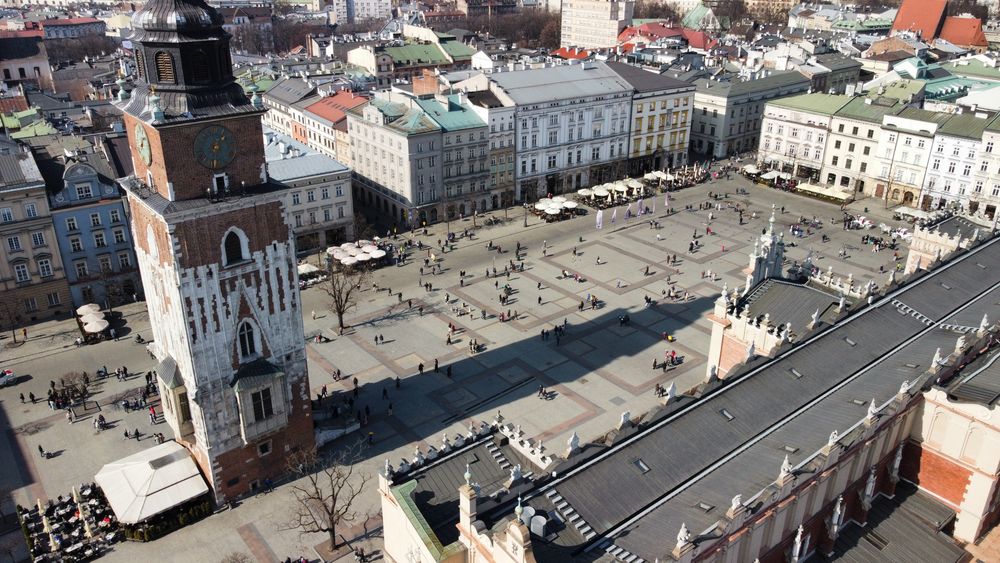
Stand in the Main Market Square on the hour and you hear the hejnał, a trumpet call from the tower of St Mary's Basilica. Stay in the Old…
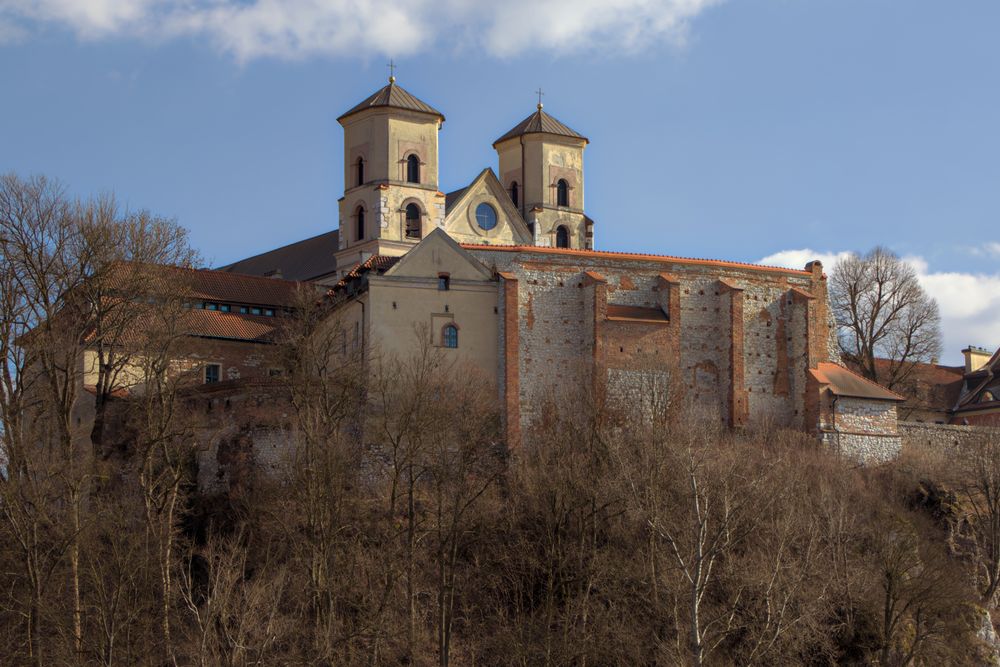
The oldest men's monastery still standing in Poland, this Benedictine abbey sits like a fortress on a limestone cliff above the Vistula,…
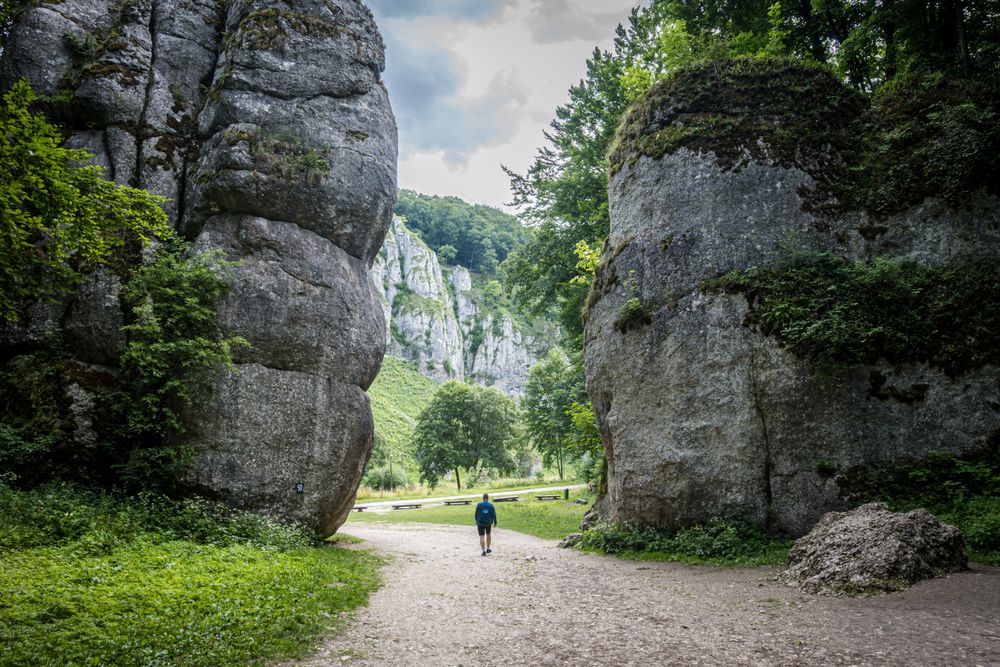
Poland's smallest national park, protecting the limestone cliffs, forests and hundreds of caves of the Prądnik and Sąspówka valleys. Marked…
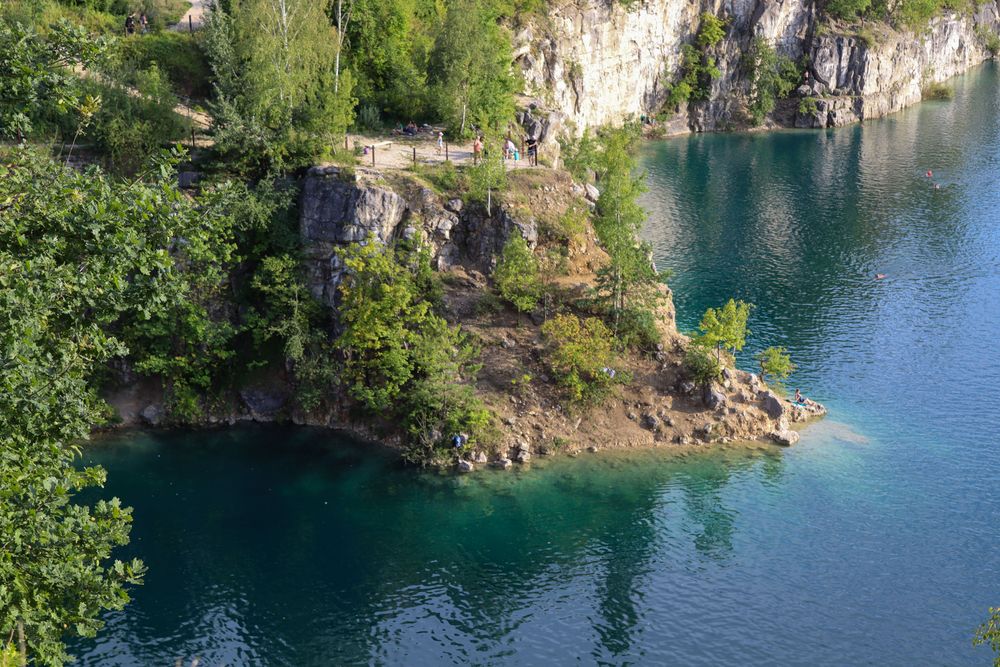
From June to the end of September, lifeguards watch the swimming pools floated on the lake in this former limestone quarry south-west of…
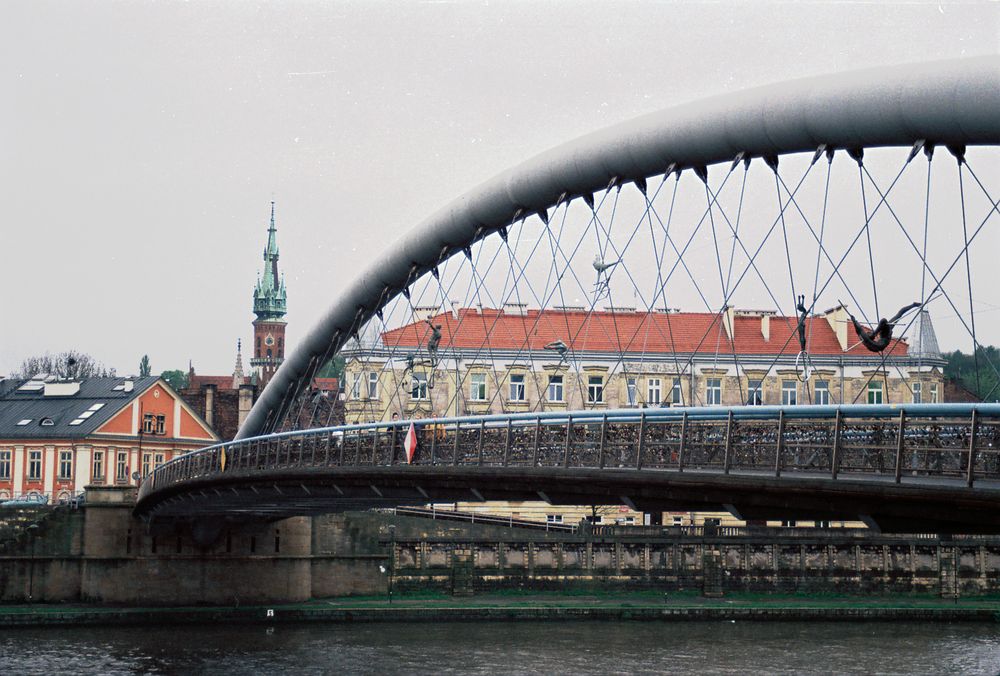
Promenades run along both banks of the Vistula between the Old Town, Kazimierz and Podgórze. The busiest stretch is Czerwieński Boulevard,…
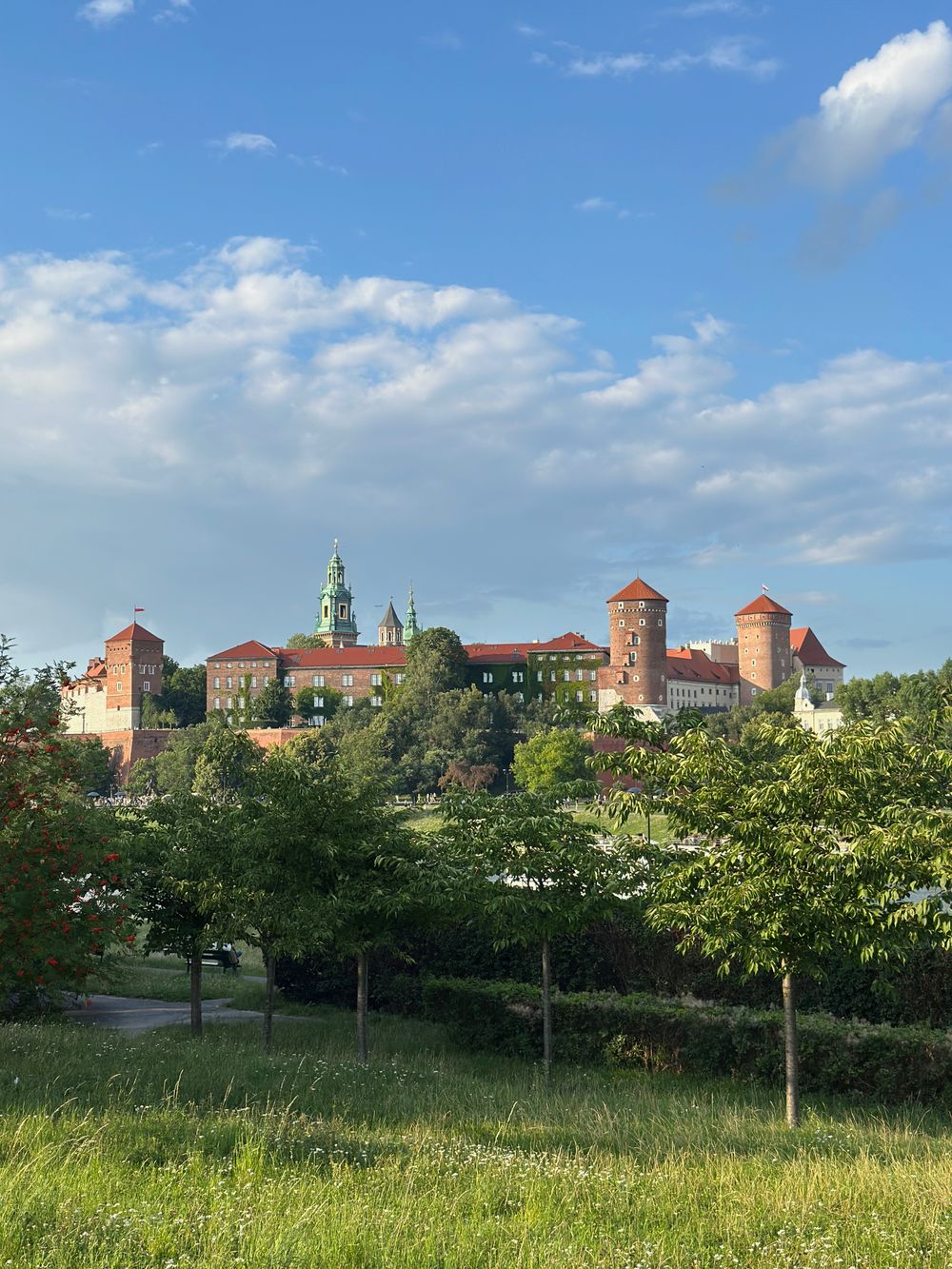

The royal residence on a limestone hill above the Vistula, rebuilt in the early sixteenth century around an arcaded Renaissance courtyard.…
Plac Kossaka 6 holds a 19th-century town house on the left bank of the Vistula, close to Wawel Castle and about five minutes on foot from…
A small hotel in two joined Gothic and Renaissance houses on Kanonicza, the cobbled canons' street running down to Wawel. Several rooms…




Save Auschwitz-Birkenau Memorial and Museum to your Poland trip in the Meridian Dispatch app and build the day around it, with the best of Kraków pinned on one map.
Download on the App StoreLast updated