 Submit a photo
Ninety seconds on the Rhine Falls
Two train stations serve the falls, one on each bank. Dachsen has the station for the castle side on the south bank. The free north bank lies about eight minutes on foot from Neuhausen Rheinfall station, and a longer walk of roughly eighteen minutes from Neuhausen station.
Yes. In the warmer seasons, boats cross the basin to the Rheinfallfelsen, the rock standing in the middle of the falls. A round trip lasts about 30 minutes, roughly 20 of them on the rock itself. Its stairs are steep and slippery, so they are not safe for small children.
Yes, at weekends. Boat tours run daily from March to October, and from 2 to 29 November 2026 a limited weekend service sails from 11 am to 4 pm, with weekday charters on request. No boats run from 24 December to 3 January.
Schlössli Wörth, on the north side, has no entrance fee. The castle site on the south bank is ticketed, and the ticket includes the Historama exhibition and the viewing platform.
The site has no closing time: it can be visited on all 365 days of the year, at any hour, and the viewing platforms stay open overnight. The water is lit up after dark.
The boat to the rock in the middle of Europe’s biggest waterfall by volume lands you on the stone itself, with the Rhine pouring over on either side. Walk both banks as well, because each shows you the falls from a different angle.
Across the full width of the river, huge volumes of water pour over the rocks in a single drop. Halfway across stands the Rheinfallfelsen, a tall rock that splits the falls in two. It is what is left of the original limestone cliff, still standing since the falls formed in the last ice age.
That rock is the one you can stand on. In the warmer months boats leave the basin below the falls and land you at its base, and a steep stair climbs to a small viewpoint on top. The trip takes about half an hour, with around twenty minutes of it on the rock.
The two banks show you different falls. On the south side, below Schloss Laufen, a footpath drops past a run of platforms to the Fischetz, very close to the water, and each platform frames the middle rock from a new angle. The north bank at Schlössli Wörth gives you the opposite view, across the basin.
Inside the castle, the Historama tells the story of the falls, including an engineer’s plan in 1821 to remove them altogether. It is included in the castle ticket, so give it a few minutes on your way down.
Both banks have their own station, so start on whichever side your train reaches. From Schloss Laufen am Rheinfall station you are at the castle gate: buy your ticket there, then take the footpath down through the platforms to the Fischetz. The steps are steep and get slippery in the spray, so take them slowly when they are crowded.
From the landing stage at the bottom, a ferry crosses to Schlössli Wörth about every quarter of an hour. The boat to the middle rock is a separate trip, so check that the one you board is going to the rock and not only across.
Finish on the north bank and walk up to Neuhausen Rheinfall station for the train back. If you can, stay past dusk: the falls are lit after dark and the viewing platforms are open 24 hours.
The boats sail in rain or shine and the spray reaches the platforms, so bring a waterproof and a cloth for your camera lens.
Keep small children close: the boats have low sides and lurch as they near the falls. You can bring your own snacks and drinks, leave bags in the lockers at the Info Shop, and bring a dog anywhere on the site.
Explore the rest of Schaffhausen
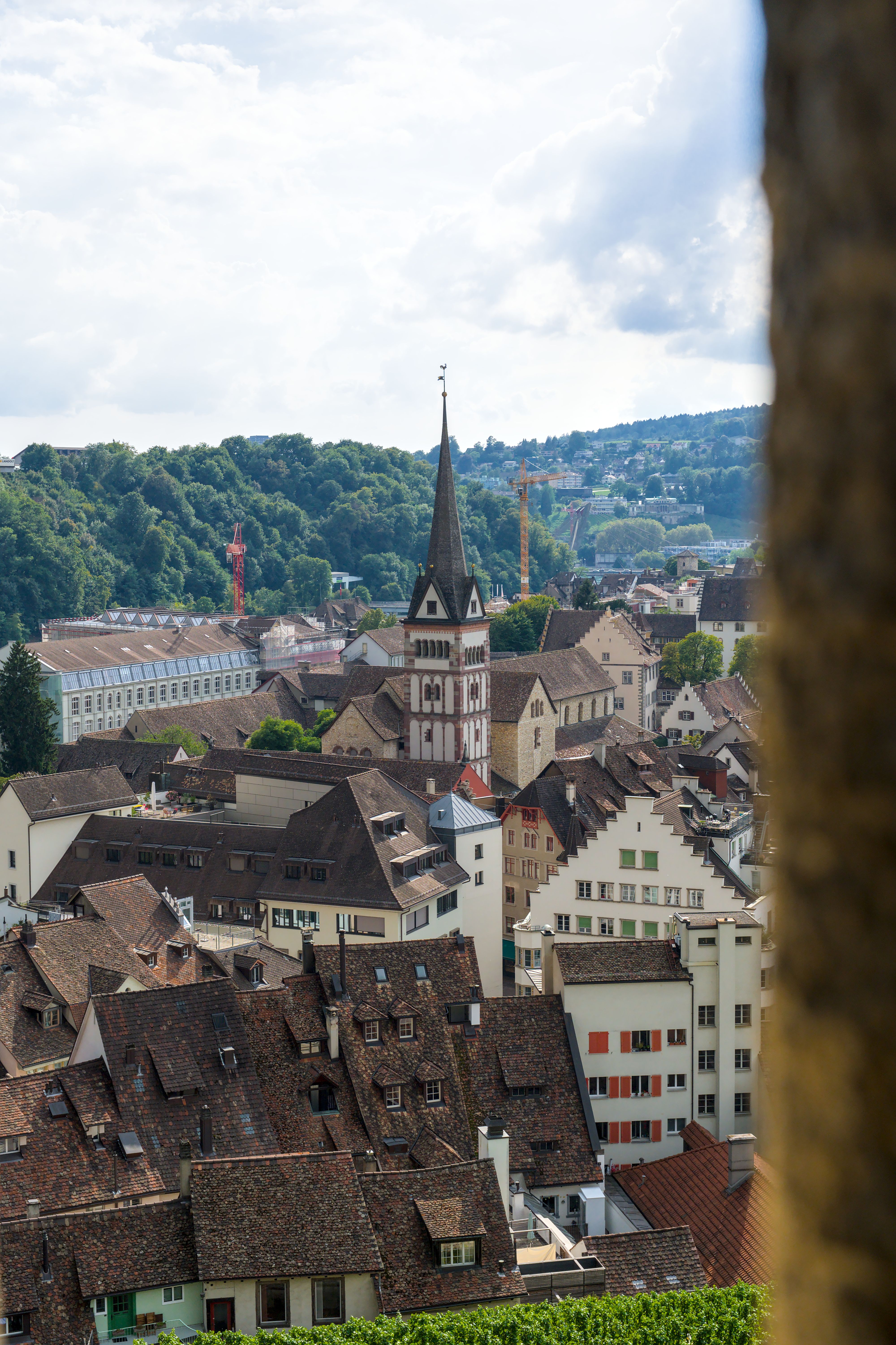
Oriel windows crowd an old town under a round fortress, on the north bank of the Rhine and almost surrounded by Germany. It grew up because…
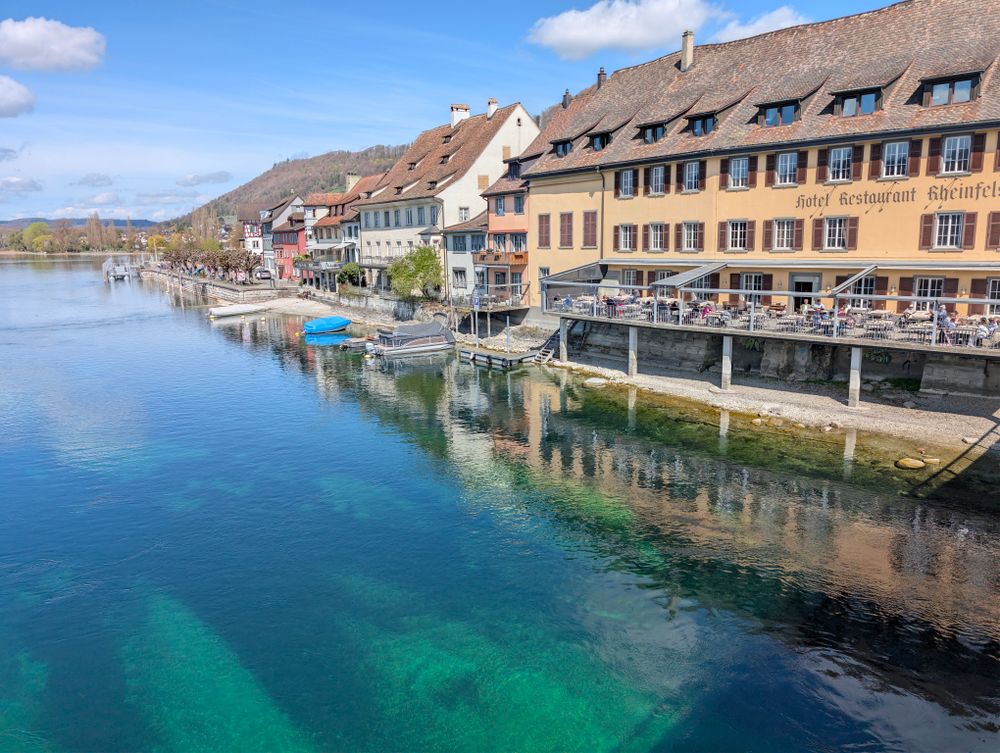
Halfway between Schaffhausen and Konstanz, where the Rhine leaves the Untersee, this small town has a pedestrianised centre whose houses…
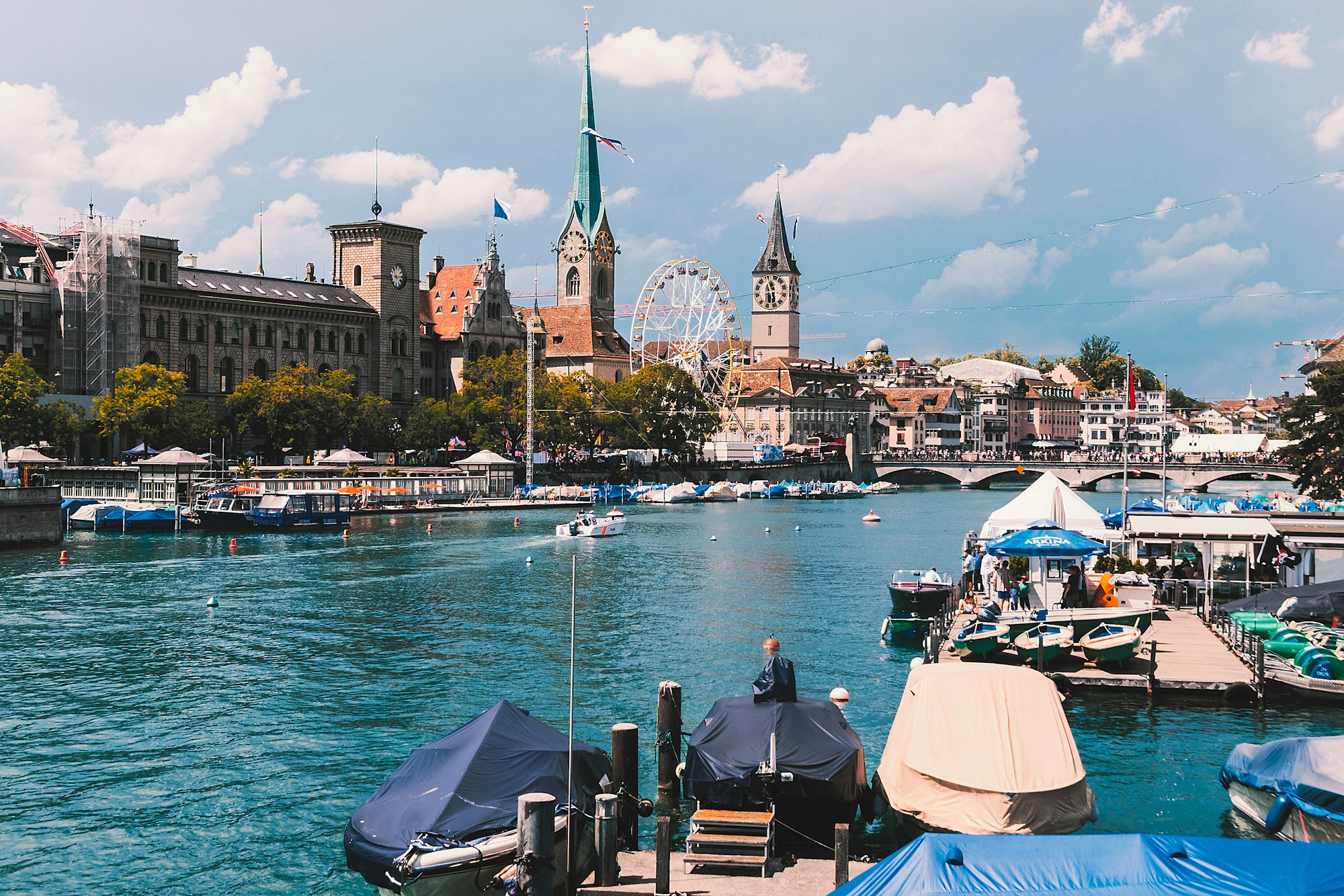
The largest city in the country and its financial centre, at the north end of its lake with the Limmat running out through the middle. It…
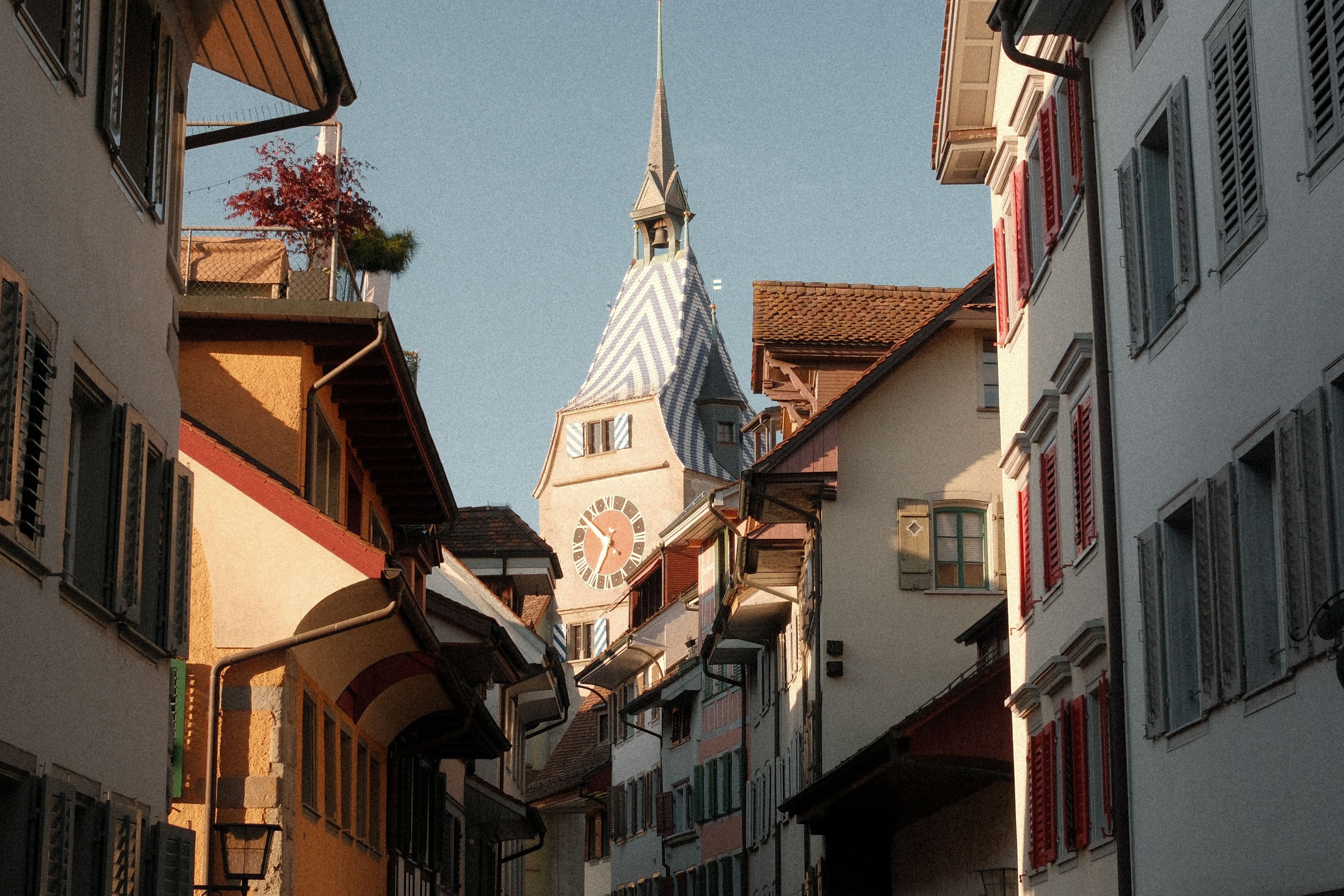
A small lakeside town half an hour from Zurich with an intact medieval core, a clock tower with the cantonal colours on its roof, and a…
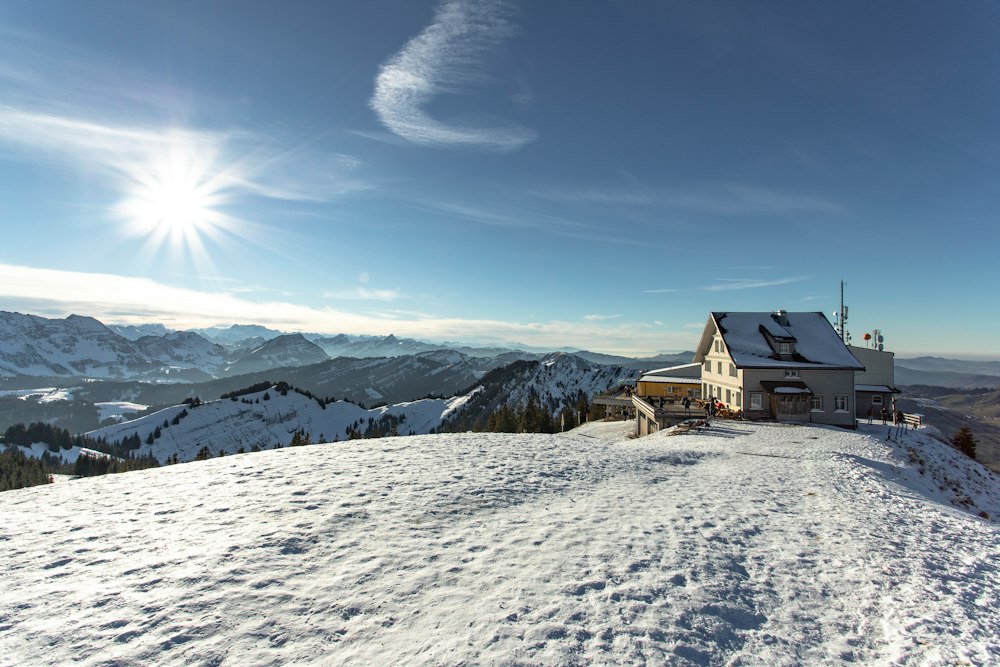
A bicable cable car climbs from Jakobsbad, right beside the Appenzeller Bahnen stop, to the Kronberg summit, with the Säntis and the…
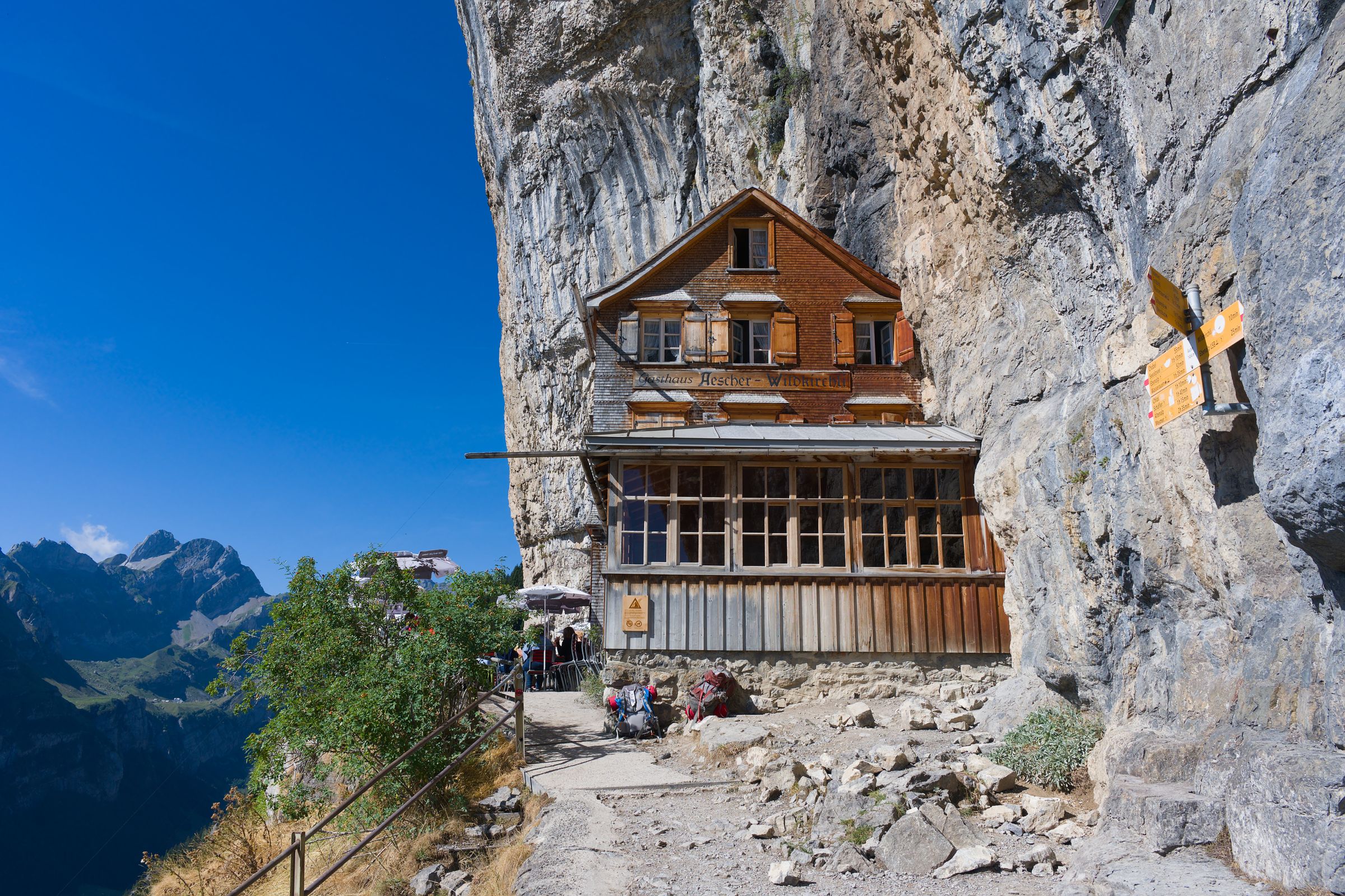
Painted house fronts, a narrow-gauge station and the Alpstein rising straight off the farmland make this small cantonal capital the base…
In Urnäsch, a short train ride from Appenzell, three joined houses hold the costumes, bells and herdsmen's rooms of Appenzell customs that…
Beside the town hall on the Hauptgasse, the museum holds the canton's hand embroidery, festival costumes, painted farm furniture and the…
The official pages this guide was checked against.
Last updated