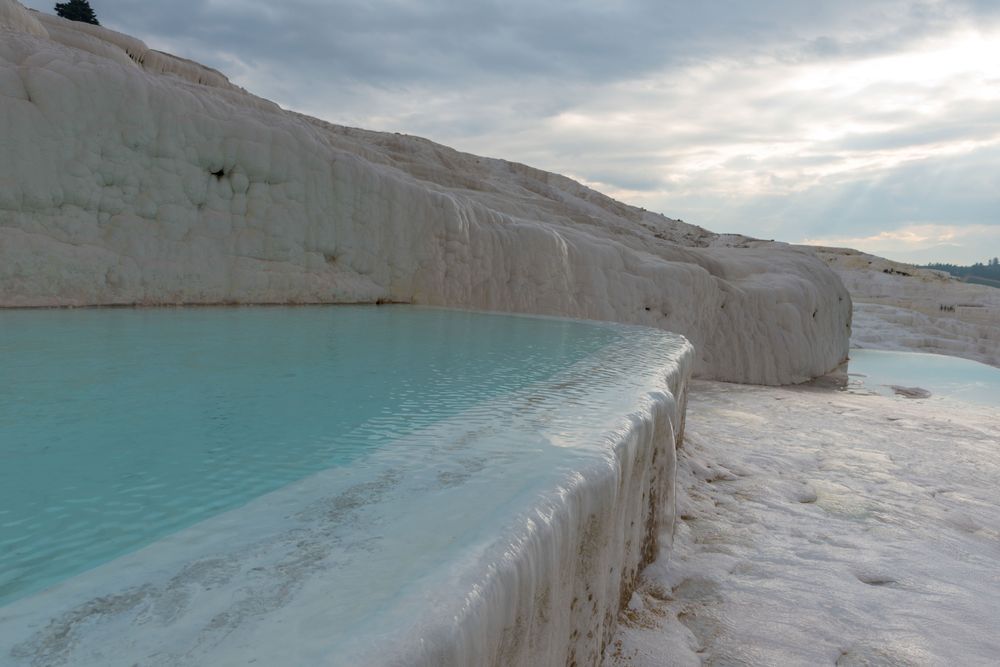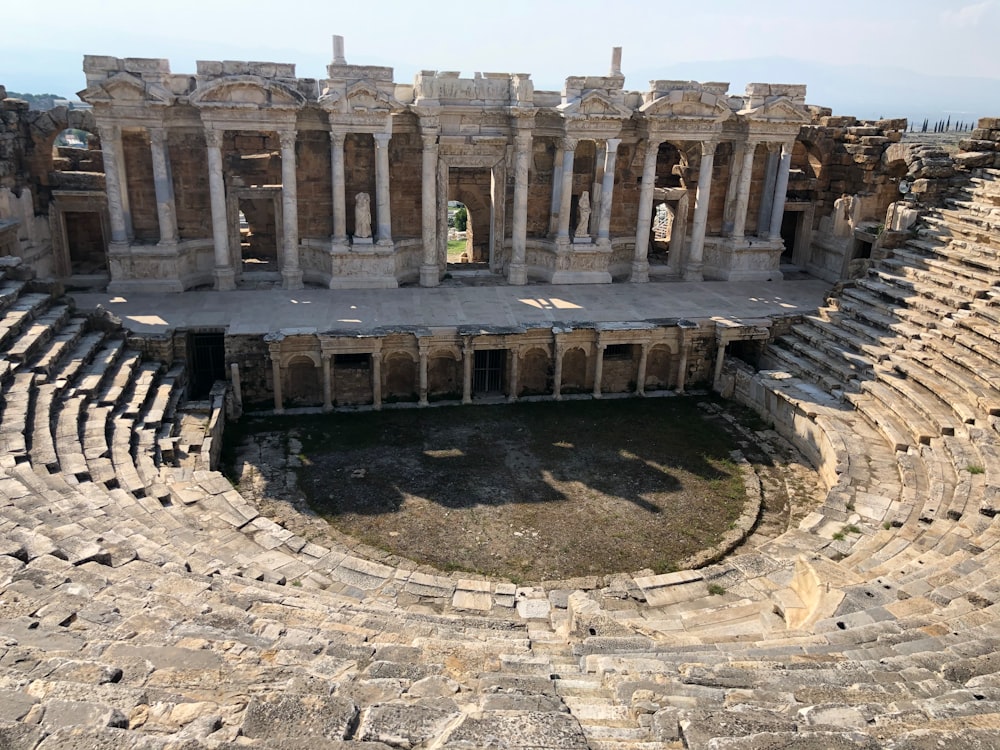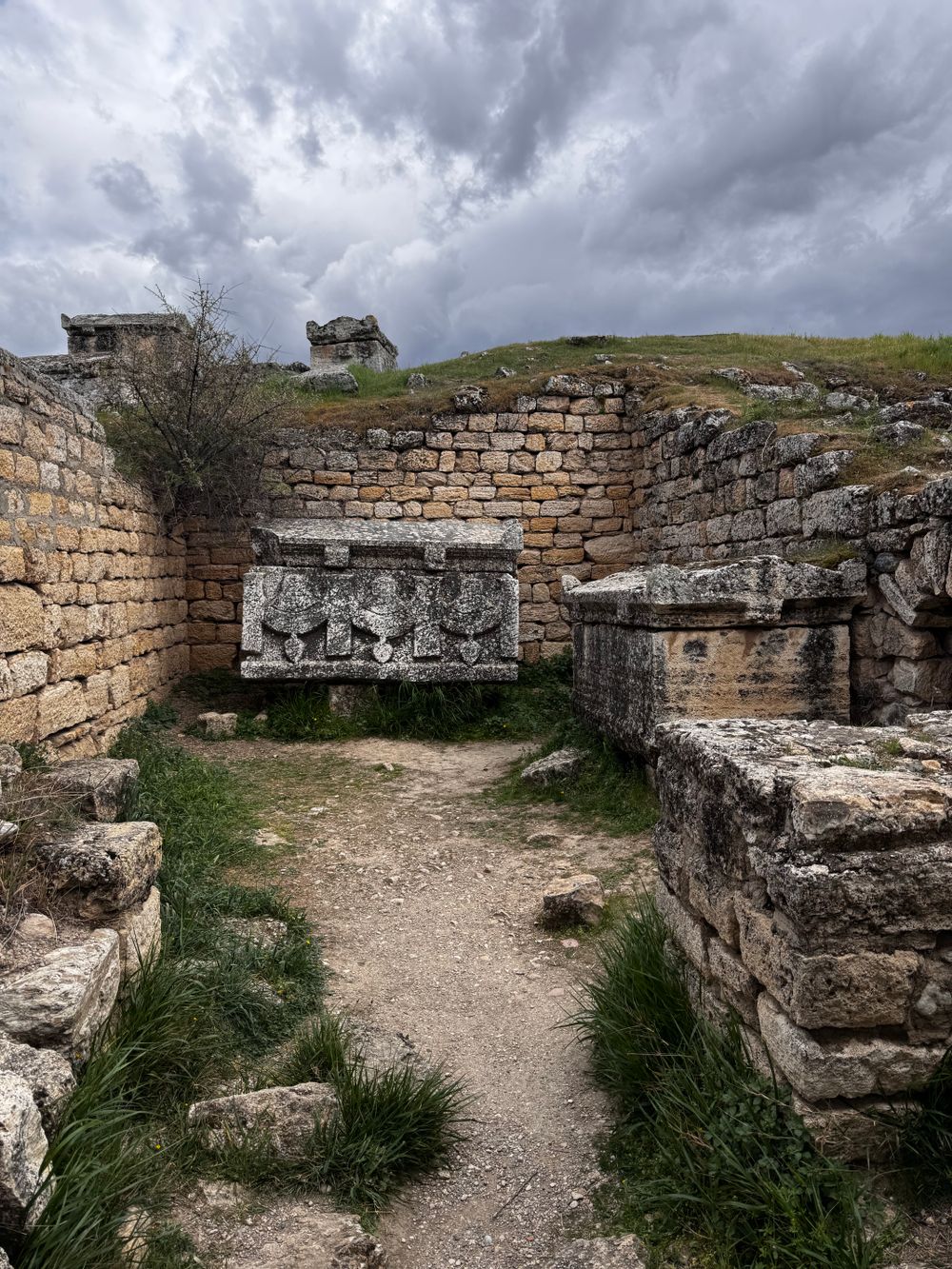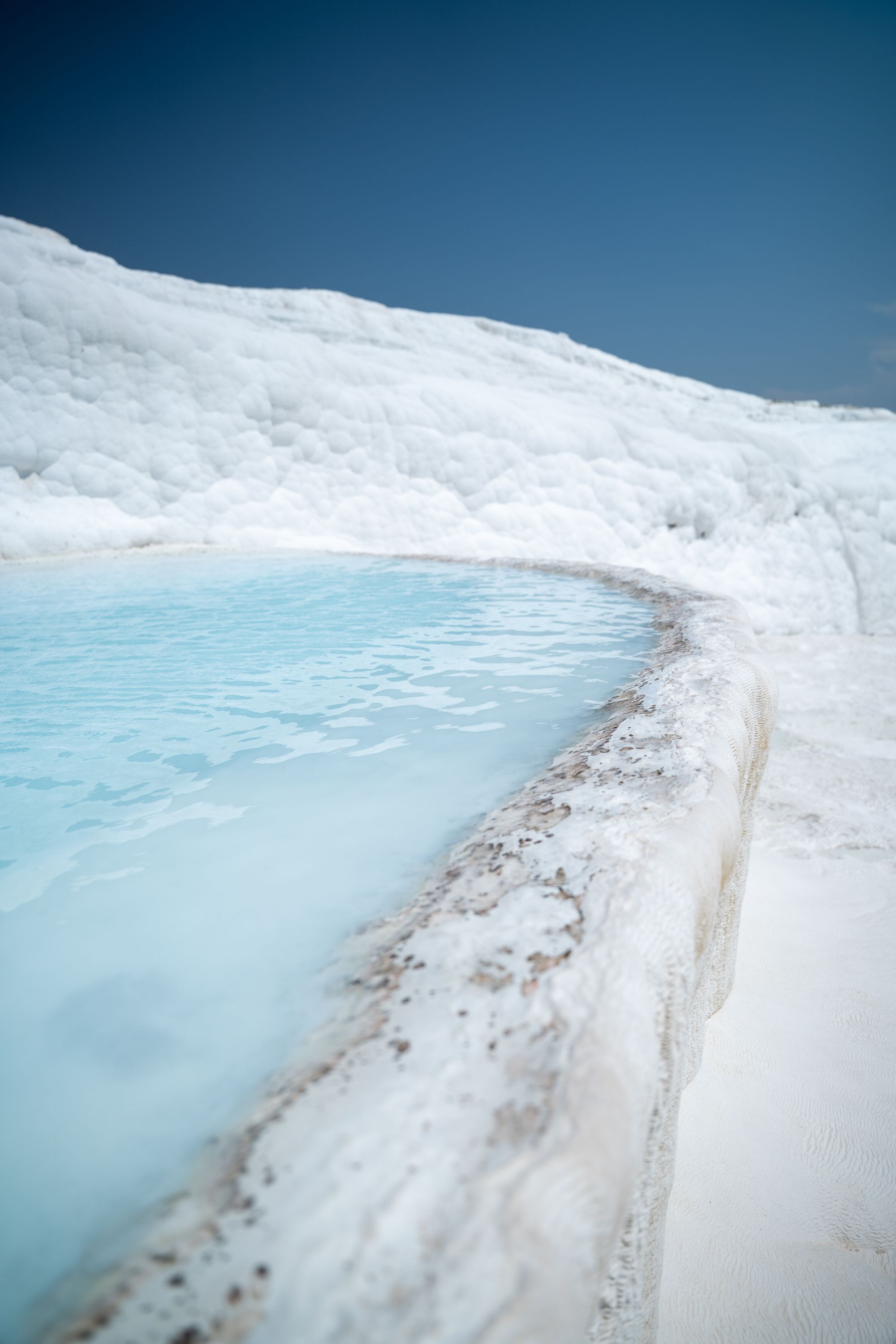
A hillside of white calcium terraces laid down by hot springs over thousands of years, warm mineral water pooling in scalloped basins down the slope. The open section is walked barefoot, shoes banned to protect the stone, and the terraces share a single ticket with the Hierapolis ruins above.
Come in the last hours before closing, when the terraces turn gold and the coach parties have gone; shoes come off at the barrier and the wet calcite stays slippery the whole way up.
From the main road it reads as snow, a white slope stopped halfway down a green Anatolian hill, and it takes a second look to understand that nothing up there is cold. Pamukkale means cotton castle, and the name is the only soft thing about it. The white is stone. A whole hillside of stone, poured in shelves and scalloped basins and shallow pools of water so blue it looks tipped in from a tin. UNESCO listed the hill and the ruined city on top of it as one World Heritage Site in 1988, one entry for the two of them.
The site museum of Hierapolis, housed in the restored Roman bath complex, holding sarcophagi, statuary and small finds from the city and the
A warm spring-fed pool scattered with fluted marble columns that an earthquake toppled centuries ago, widely known as Cleopatra's Pool. Bath
A shrine to Pluto built over a cave that breathes volcanic carbon dioxide, lethal to the sacrificial animals led in, which the priests of Hi
Every other travel app asks you to start logging. Meridian Dispatch opens with years of your travel already written, from the photographs you already took.