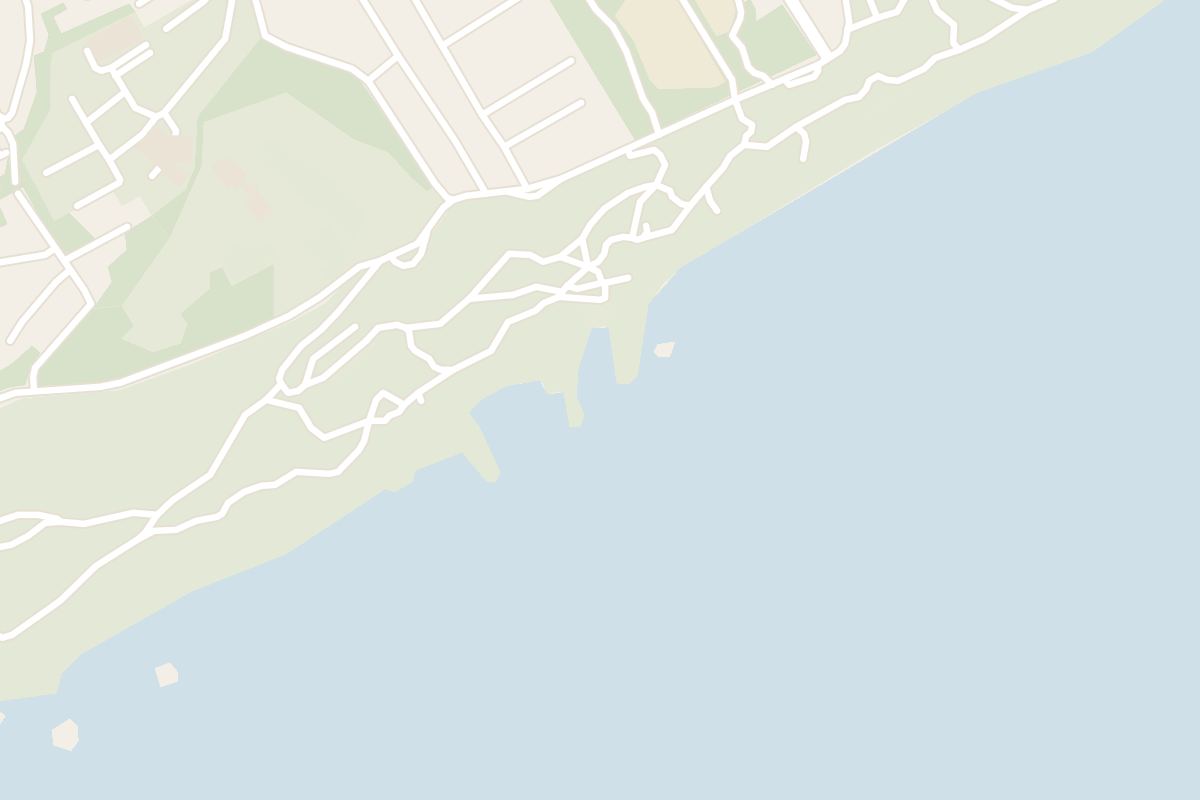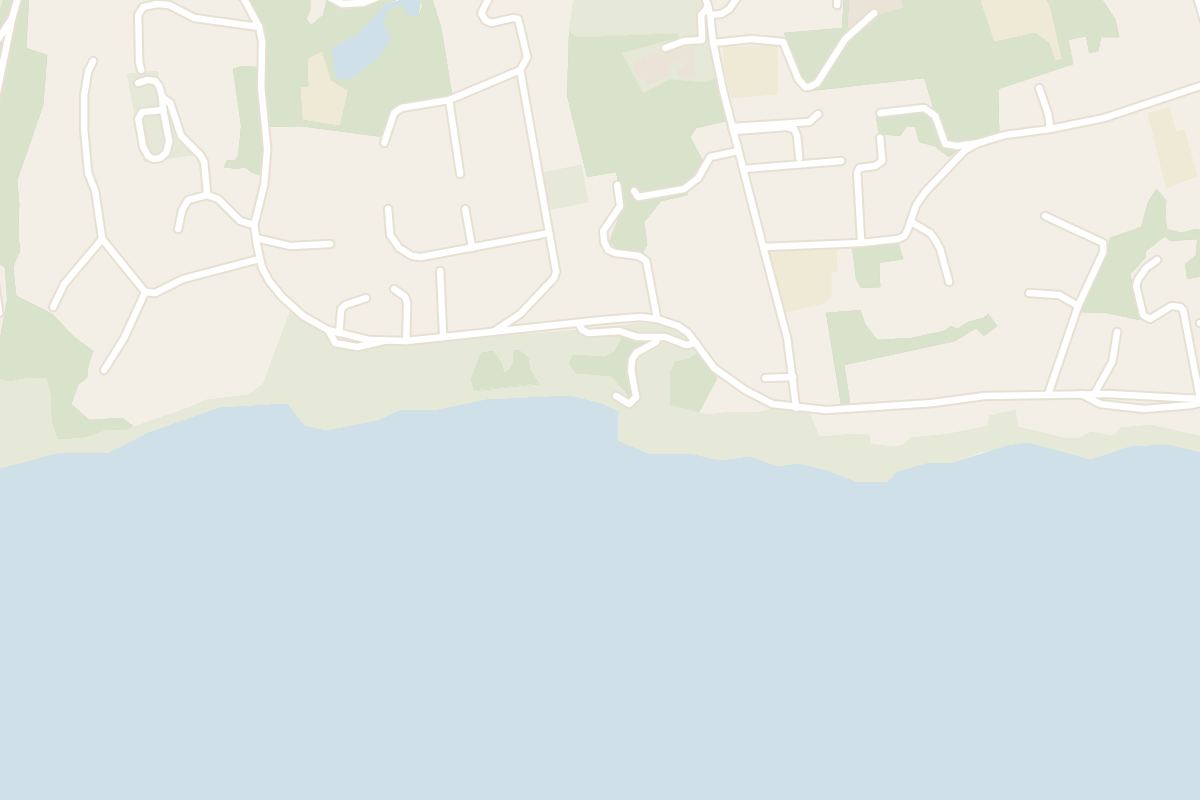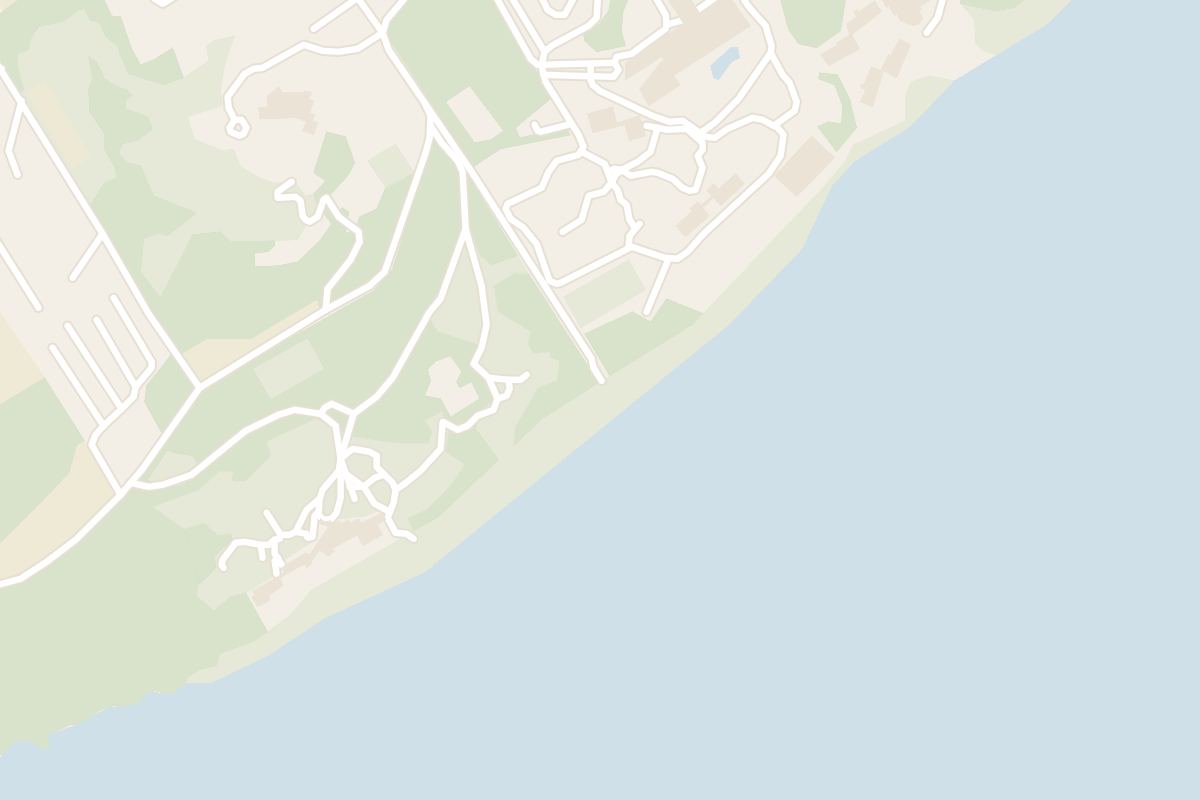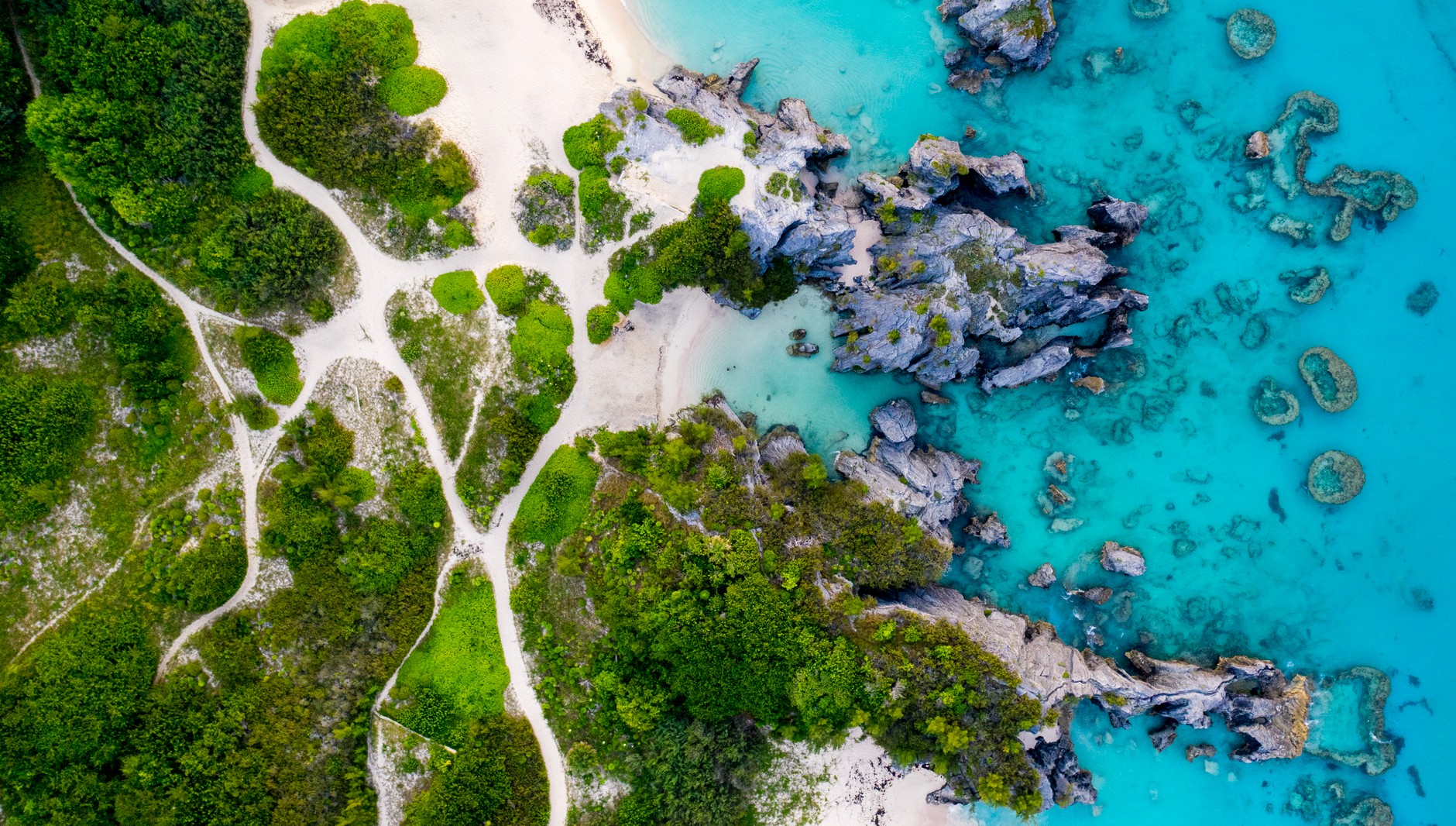
Walk to the eastern end of Horseshoe Bay, past the last of the rented loungers, and a path goes up into the dunes. It is sand and it is signed. It runs about a mile and a quarter through South Shore Park and comes out at the western end of Warwick Long Bay, and the crowd falls away sharply past the first headland.
That is the whole argument for doing it. Horseshoe Bay takes almost everybody, because it has the car park, the cafe, the lifeguards and the coach drop. The coves behind it have none of those things and are reached only on foot.
Time it before the ships. Cruise passengers come across from Dockyard, and on a day with more than one ship in, Horseshoe Bay is covered in umbrellas by half past ten. Be on the sand before nine, or walk on past the lifeguard station, where the loungers stop and the crowd thins.
Horseshoe Bay earns its reputation and its queue. It is a deep curve between two headlands with a long shelf of shallow water, chair and umbrella hire, a snack bar and washrooms, and it is the beach every cruise passenger is told to go to. Entry and parking are free; the loungers are not.
It is also the one beach on the island with a lifeguard all year. Six contracted RNLI lifeguards have held Horseshoe Bay year round since September 2025; everywhere else the guarded season runs 1 May to 31 October, roughly ten to six, and only at Clearwater, Turtle Bay and John Smith's.
One correction before setting off. Port Royal Cove, the sheltered pool everyone calls Baby Beach, is not on this walk: it sits about forty yards the other way, west of the main beach, behind rock that keeps it flat when the bay is breaking. It is where Bermudian parents take small children and it is worth the two minutes in the wrong direction.
If you have time before the walk, the rocks at the western end of Horseshoe Bay hide small caves worth a scramble, and the headland above them is the place to be at sunset.
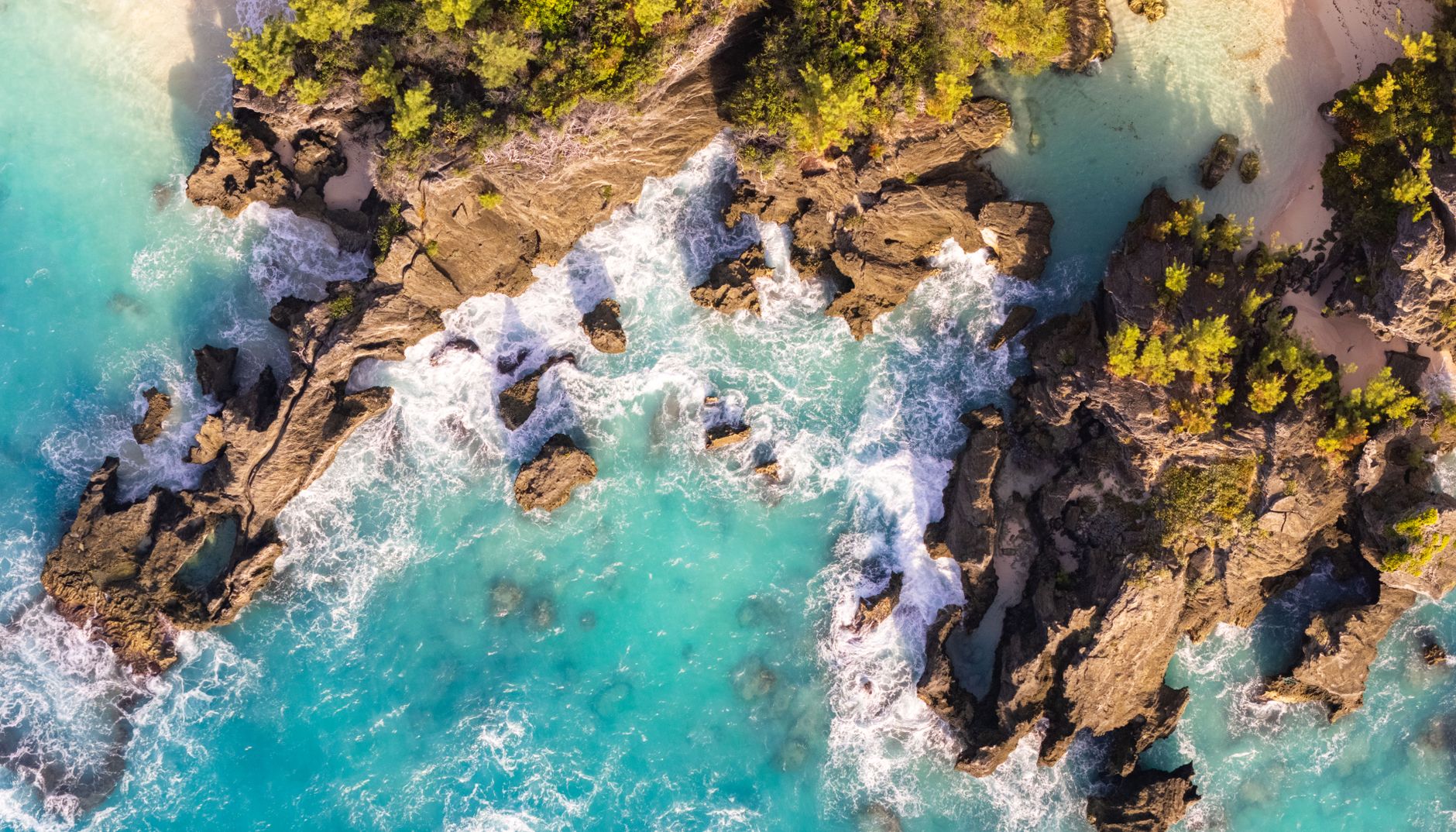
Going east, the path passes Butts Beach, Peel Rock Cove, Middle Beach, Wafer Rocks, Angle Beach and Hidden Beach before it reaches Chaplin Bay. None of them is signposted from the road and none has any facilities, which is the whole of their appeal.
Wear water shoes. The path itself is easy, wide soft sand that climbs only as far as the Elephant Head headland, but getting down into most of the coves means crossing jagged limestone.
Chaplin Bay is a pair of small beaches divided by a reef formation that breaks the surface between them. It is at its best at low water: the sand all but disappears on a high spring tide, and in a storm it goes entirely.
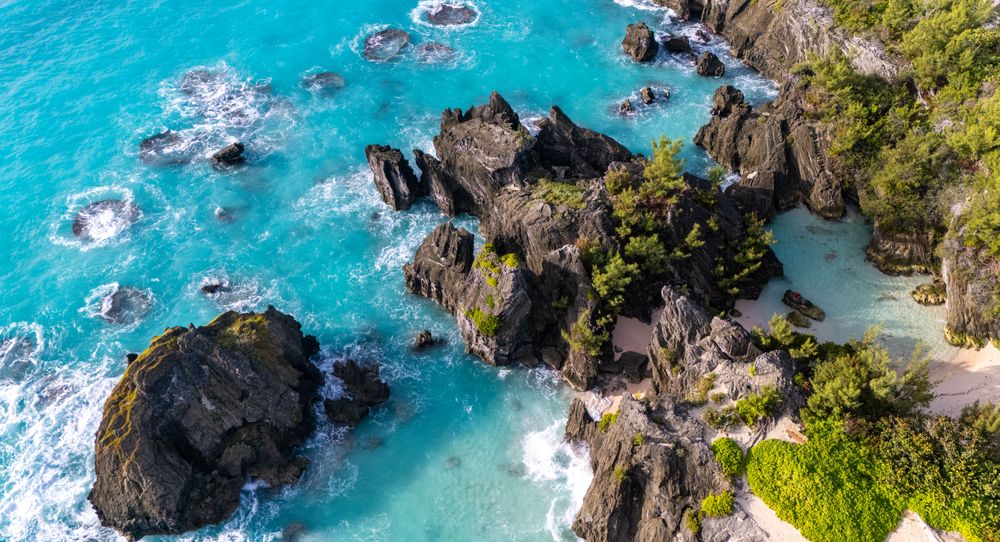
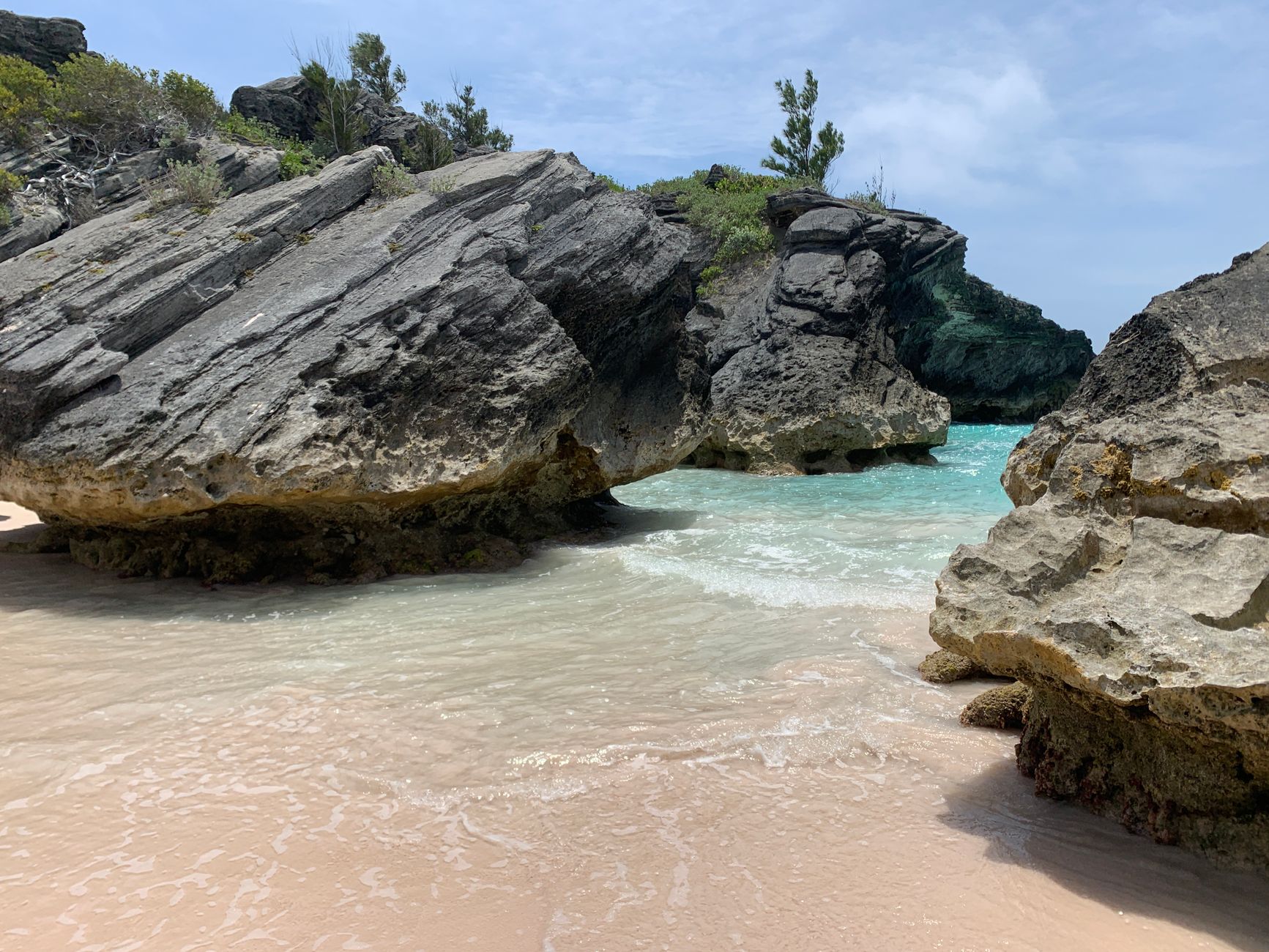
Then Stonehole Bay, and then Jobson's Cove, which is the one people photograph and cannot find. It is a near enclosed pool ringed by rock, with a gap to the open sea narrow enough that the water inside barely moves. On a day when the surf is up along the rest of the coast it is the only swimmable water in sight.
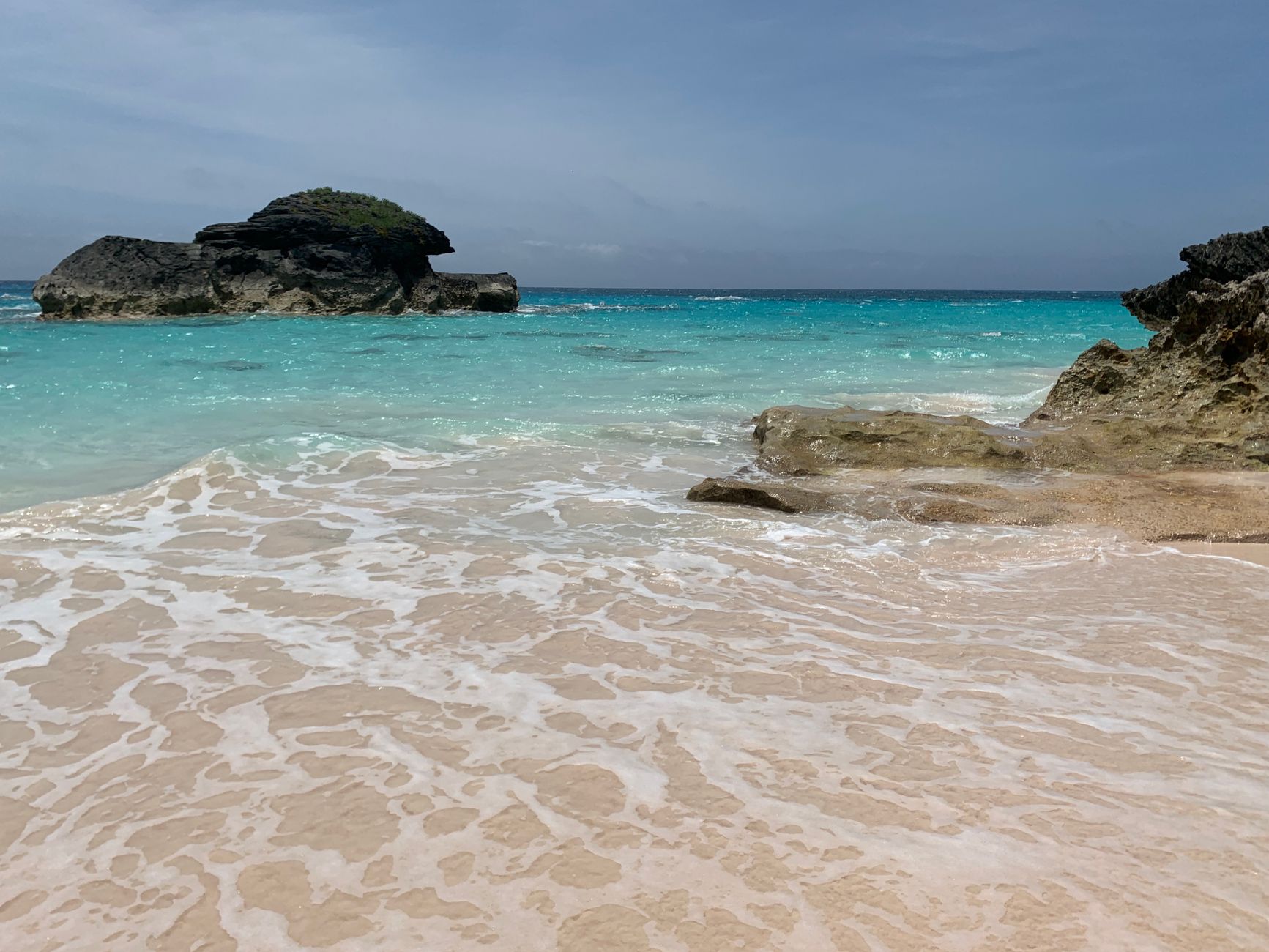
Warwick Long Bay closes the walk: about half a mile of open sand backed by low dunes, with a black reef standing out of the water some sixty metres offshore. That reef flattens most of the swell, so the swimming is calmer than the exposure suggests, though the shelf drops away close in at some points along it.
There are car parks at both ends, washrooms at the western one and a playground at the eastern. Anyone who has walked the path from Horseshoe arrives at the eastern end, which matters for the bus later.
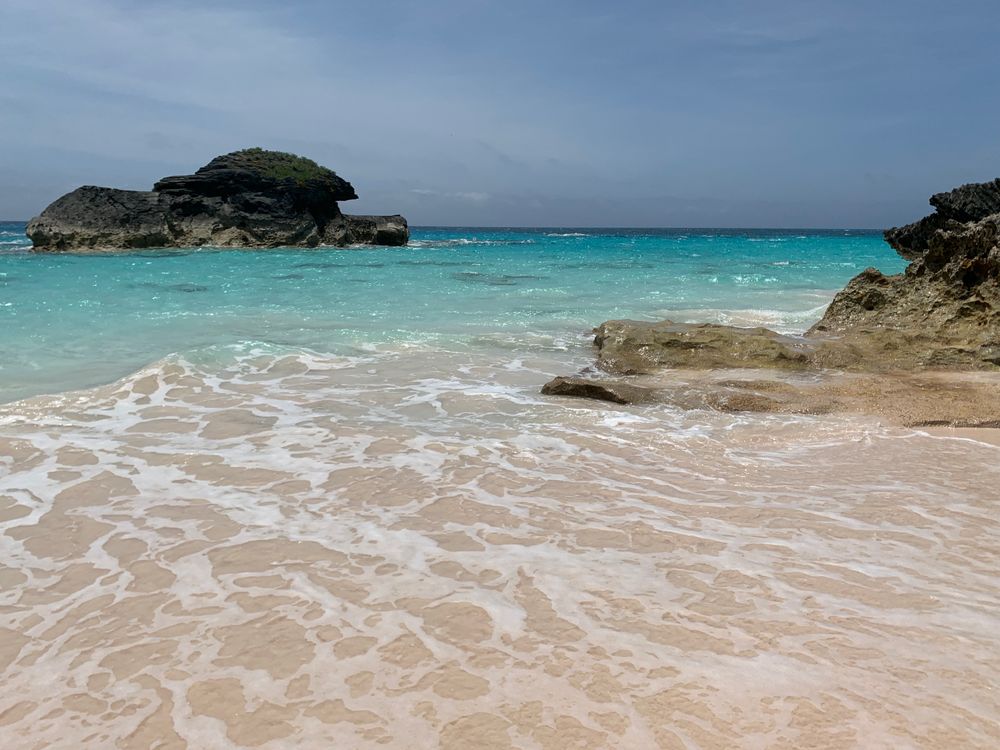
The colour in the sand is the broken shell of a single celled animal that lives on the shaded underside of the reef, ground up and washed ashore.
The animal is a foraminiferan that grows in red lumps under the coral, on faces the light does not reach. When it dies the fragments wash in with the white sand, and Bermuda is one of the few places where enough of it arrives to tint a whole beach.
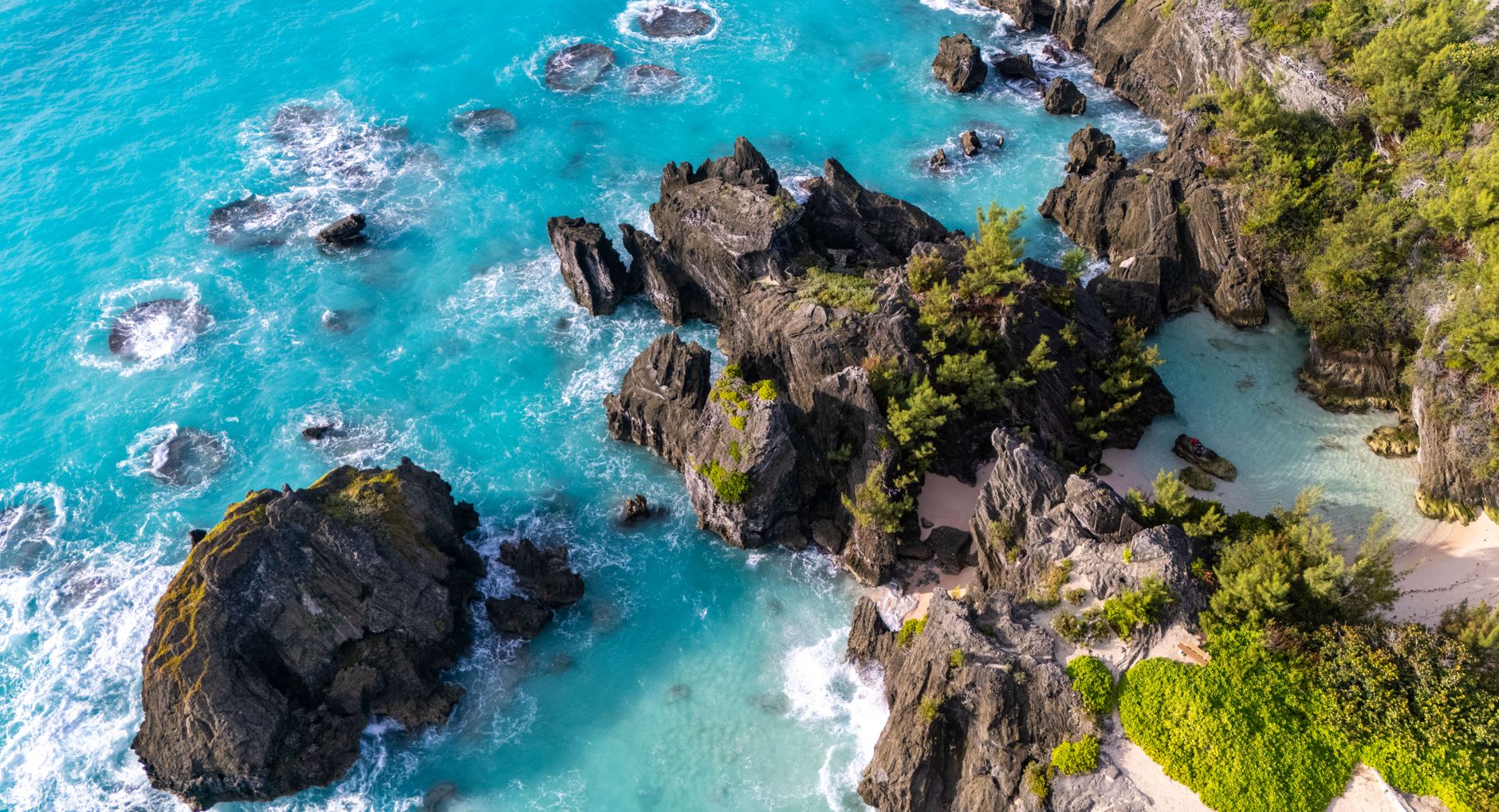
The boilers are the reason to bring a mask. They are ring-shaped reefs that break the surface offshore, built not by coral but by algae growing around a worm-shaped snail, and almost nowhere else builds a reef this way.
The best of it from the shore is at Church Bay, further west in Southampton, where the reef comes closer inshore than anywhere else on the coast and a competent swimmer can reach it from the sand. The bay is small, the entry is steep and rocky, and it wants a calm day. Parrotfish, angelfish and Spanish hogfish are the usual company. There has been a concession selling snacks and renting gear on and off, but it is seasonal and tenant dependent, so carry your own gear and assume nothing is open.
Look up as well. The cliffs along this coast are longtail country from about March to September: white-tailed tropicbirds nest in holes in the rock face and come out over the water on two trailing tail feathers. They are the reliable wildlife sighting on any of these beaches, and they are on the Bermudian coinage.
Season decides more here than most people expect of an island this warm. The sea runs about 26 to 29 degrees in late summer and drops to about 18 to 20 in winter, so the swimming months are roughly May to October. The beaches are emptiest exactly when the water is coldest.
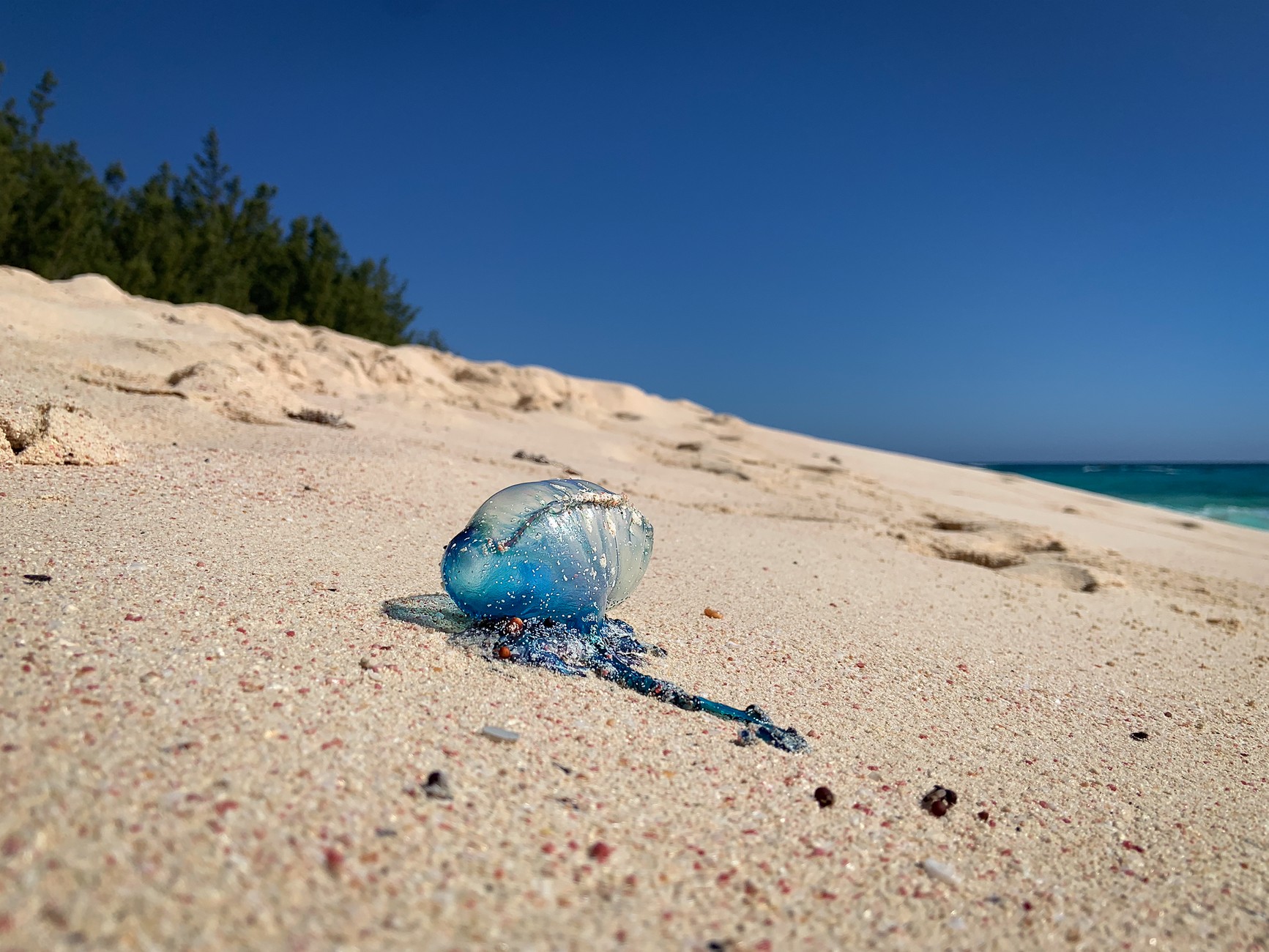
Two hazards are worth the sentence. The Portuguese man-of-war blows onto this coast on a southerly, and the tentacles still sting after the animal is dead on the sand; the advisories cluster in spring, from about March to July, and Horseshoe Bay has flown two red flags and closed to bathers on individual days when they are in. The second is the surf itself, on a shore that faces open Atlantic with no guard outside the season at all but one beach.
Getting to any of it starts with a fact that surprises visitors: Bermuda has no rental cars. The options are a scooter, a taxi, the bus, or a rented two seat electric minicar, the only four wheels a visitor may drive.
The bus is the right answer for this stretch, with caveats. Route 7 runs west out of Hamilton along South Road and serves Elbow Beach, Warwick Long Bay, Jobson's, Chaplin, Horseshoe and Church Bay, but it comes in two forms: many 7s terminate at Barnes Corner and only the Somerset and Dockyard workings carry on past Southampton. Read the destination board, not the number.
Fares are zonal, and for a beach day on its own a day pass rarely pays for itself; it earns its keep if the ferries are in the day too. Drivers take exact change and no notes, so buy tokens or tickets before you set out, or pay through the Shorelink app, which also carries live bus and ferry tracking.
Two practical things the timetable will not tell you. The Horseshoe Bay stop is on South Road at the top of the hill, about a third of a mile above the sand, and the climb back up at the end of a hot afternoon is the standard complaint about this beach. And the fleet is thin: in April 2026 fewer than fifty buses were running island wide and thirty seven runs were cancelled in a single afternoon, with cancellations still being posted daily through the summer.
Do the walk one way and let the bus close the loop. Going west to east means getting off at Horseshoe Bay and picking the bus up again on South Road above Warwick Long Bay, which is a different stop, and it saves the return along the sand. Elbow Beach, further east on the same route, is worth knowing about only so as not to plan around it: the hotel has been shut since 2020 and a redevelopment is due to start demolition this year, so there is no beach service behind the sand.
Take water and take shade seriously. There is none on the dune path, none on most of the coves, and the sand is pale enough to throw a good deal of the light back up at anyone lying on it. Jobson's fills by mid-morning in summer, so walk early and leave the long open beach for last. The pink reads strongest in the first and last hour of daylight, when the sun comes along the beach rather than down onto it.
End to end, with stops, the walk takes most people between twenty five and thirty five minutes of actual movement and most of a day if it is done properly.