
Between the old city's north and south gates you walk past 29 monuments of the 10th to 19th centuries. Go inside the Qalawun complex for its gilded ceilings and carved stucco.
Landmark, Cairo. Meridian Dispatch.
As of November 2026, the ticketed monuments open from 09:00 to 17:00 every day of the week, Friday included, and these hours are the same in summer and winter.
Tickets are for the monuments, though Bab al-Futuh, the Al-Hakim Mosque and Al-Aqmar are free to enter. The ministry's combined ticket covers the Qalawun group, the Barquq mosque, the Al-Nasir Muhammad and Al-Kamil schools, Hammam Inal, the Amir Bishtak Palace, the Suleyman Agha mosque and the Maimonides Synagogue. The booth near Qalawun sells it.
At least 30 minutes from gate to gate without stopping. Going inside Qalawun and a merchant's house, climbing the Bab Zuweila minarets and pausing for tea takes three to four hours.
The northern section is for pedestrians only, with 08:00 to 23:00 the listed hours. The southern section allows cars, so walkers share the road there.
Daytime for the interiors, evening for the atmosphere. The monuments are floodlit after dark, when the day's heat has gone and the cafes fill, but the tombs and schools are shut by then.
Taking pictures with a mobile phone is free of charge in the ticketed monuments, as of November 2026. Anyone with another camera or a tripod should ask at the booth first. A guide is optional, and visitors are free to go round independently.
An 11th-century gate in the old city wall stands at each end of the street. Look up inside Bab al-Futuh: the platform joining its rounded towers has shafts for pouring boiling oil on attackers.
The front of the Al-Aqmar Mosque, built in 1125, follows the line of the street while the prayer hall behind it turns towards Mecca.
The Qalawun complex is a religious school and a tomb off one dark corridor with a wooden ceiling. A hospital once stood here too. Its front runs for 67 metres, with pointed panels framing the windows, much like Gothic work.
Inside, marble mosaic covers the walls and glass mosaic decorates the prayer niche. The tomb lies on the street side, where Sultan Qalawun and his son al-Nasir are buried here.
Next door stands the school of Sultan Barquq. The Sabil-Kuttab of Katkhuda, free-standing on three sides, combined a public drinking fountain and an elementary Quran school.
The walk from Bab El Shaaria metro to Bab al-Futuh takes 10 to 15 minutes. A ride-hailing car is easier. Pass through the gate and stop first at the Al-Hakim Mosque beside it.
Head south to the Darb al-Asfar alley, where the merchant's house Bayt al-Suhaymi stands a few metres off the main road. Al-Aqmar comes next, then the Sabil-Kuttab of Katkhuda.
Next come Hammam Inal, the Al-Kamil school, Barquq, Al-Nasir Muhammad and Qalawun, all on the combined ticket. Walk on to the booth near Qalawun to buy it before you go into the others. Side alleys past here lead into Khan el-Khalili.
The southern leg begins across busy Al-Azhar Street and passes the Al-Ghuri buildings on the way to Bab Zuweila, where you can climb the minarets built on the gate towers for a view back along your route. The gate shuts at 17:00.
Wear slip-on shoes, because you take them off again and again at the mosques. Cover your shoulders and knees, and carry a light scarf if you are a woman, for covering your hair in the active mosques.
Listen for the coppersmiths at Nahassin, who hammer pots and lanterns as you pass. Shopkeepers will call to you, and a polite "la, shukran" is enough to walk on.
To continue towards the Cairo Citadel, turn left at the southern gate onto Darb al-Ahmar, which leads to the square just north of the fortress.
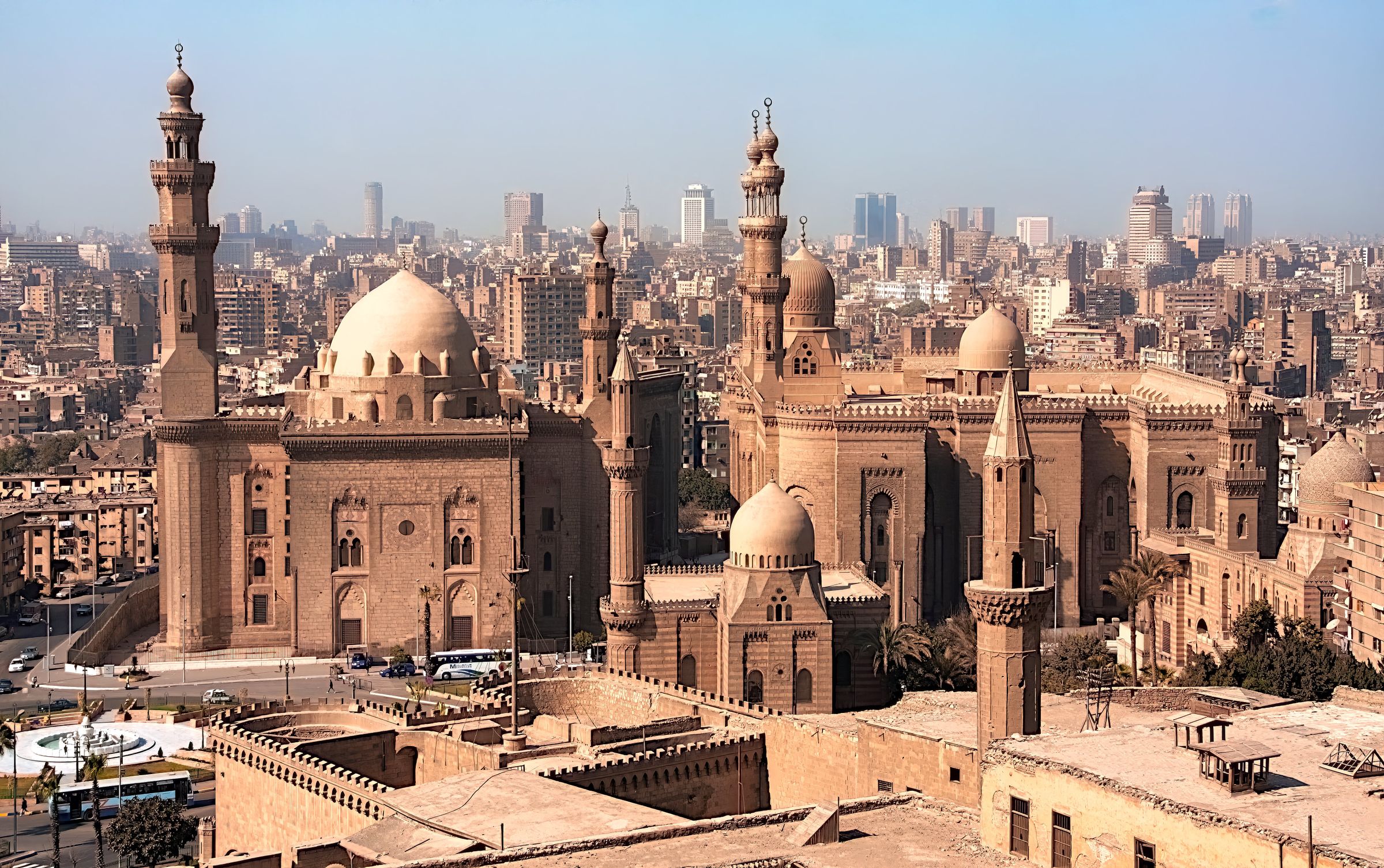
Book four days in Cairo and spend three of them in the old city, staying downtown or in Zamalek, because the pyramids at Giza need the fourth to themselves. On the Citadel day, climb the minaret of Ibn Tulun for the view.
Read the Cairo guideExplore the rest of Cairo
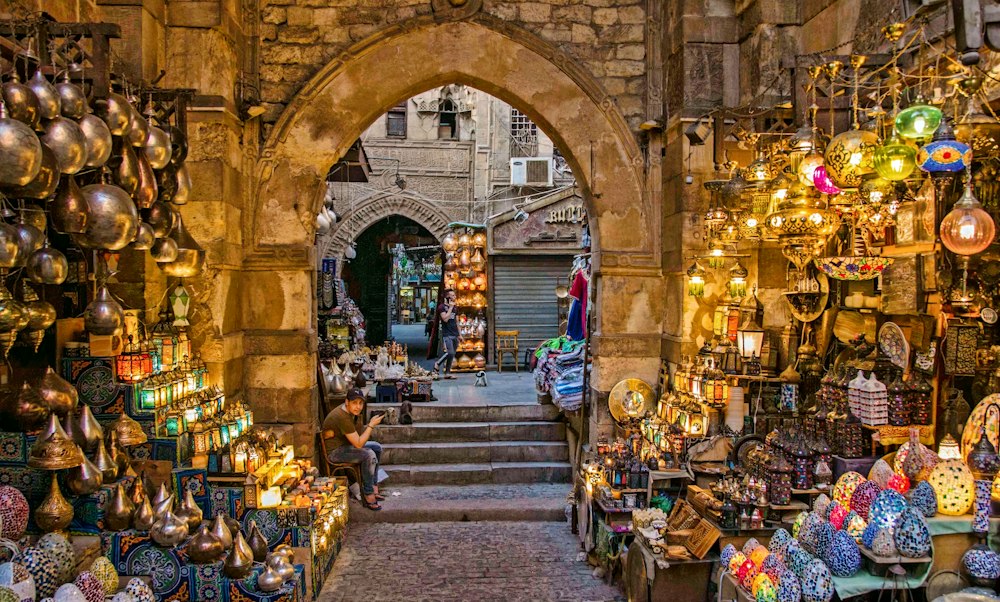
A trading quarter since a Mamluk emir built a caravanserai here in 1382. The lanes nearest the Hussein mosque sell souvenirs; a few turns…
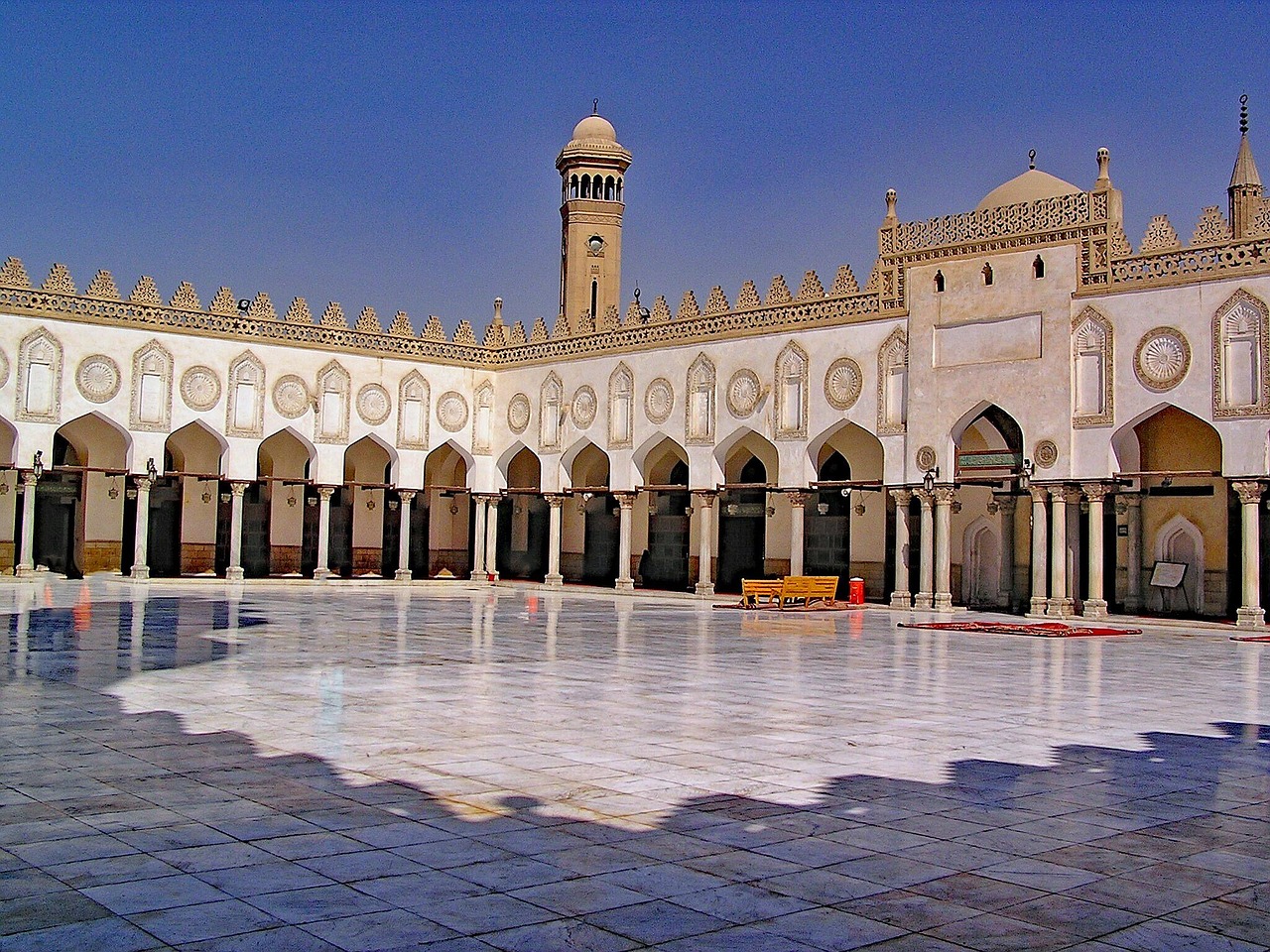
Founded in 970 as the new Fatimid city's congregational mosque, with a school attached that grew into one of the oldest universities in the…
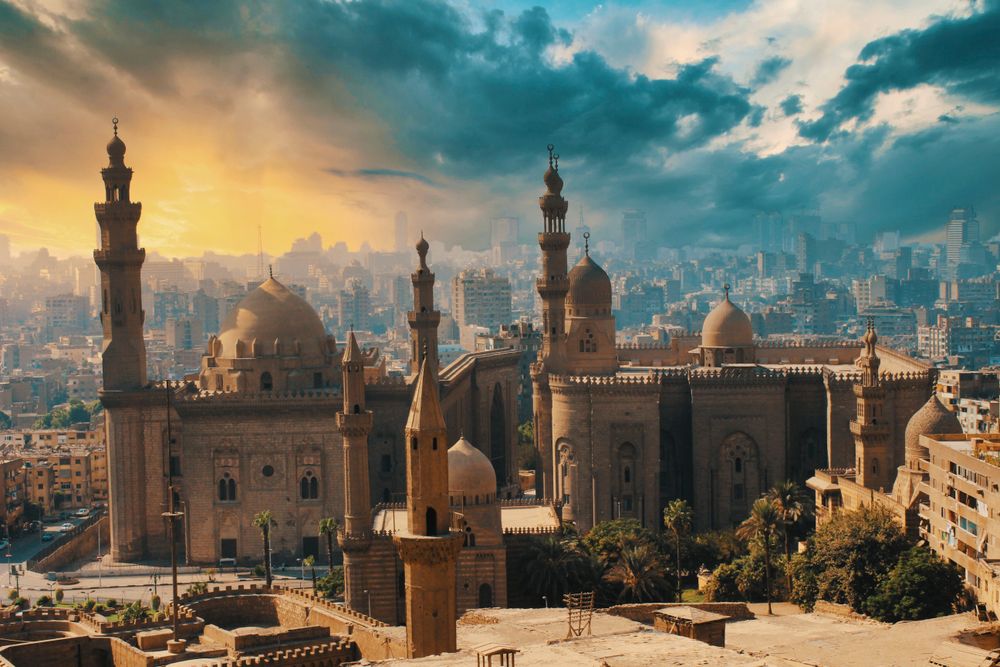
A Mamluk sultan began this colossal school-mosque in 1356, paid for in part with estates left ownerless by the Black Death, and was…
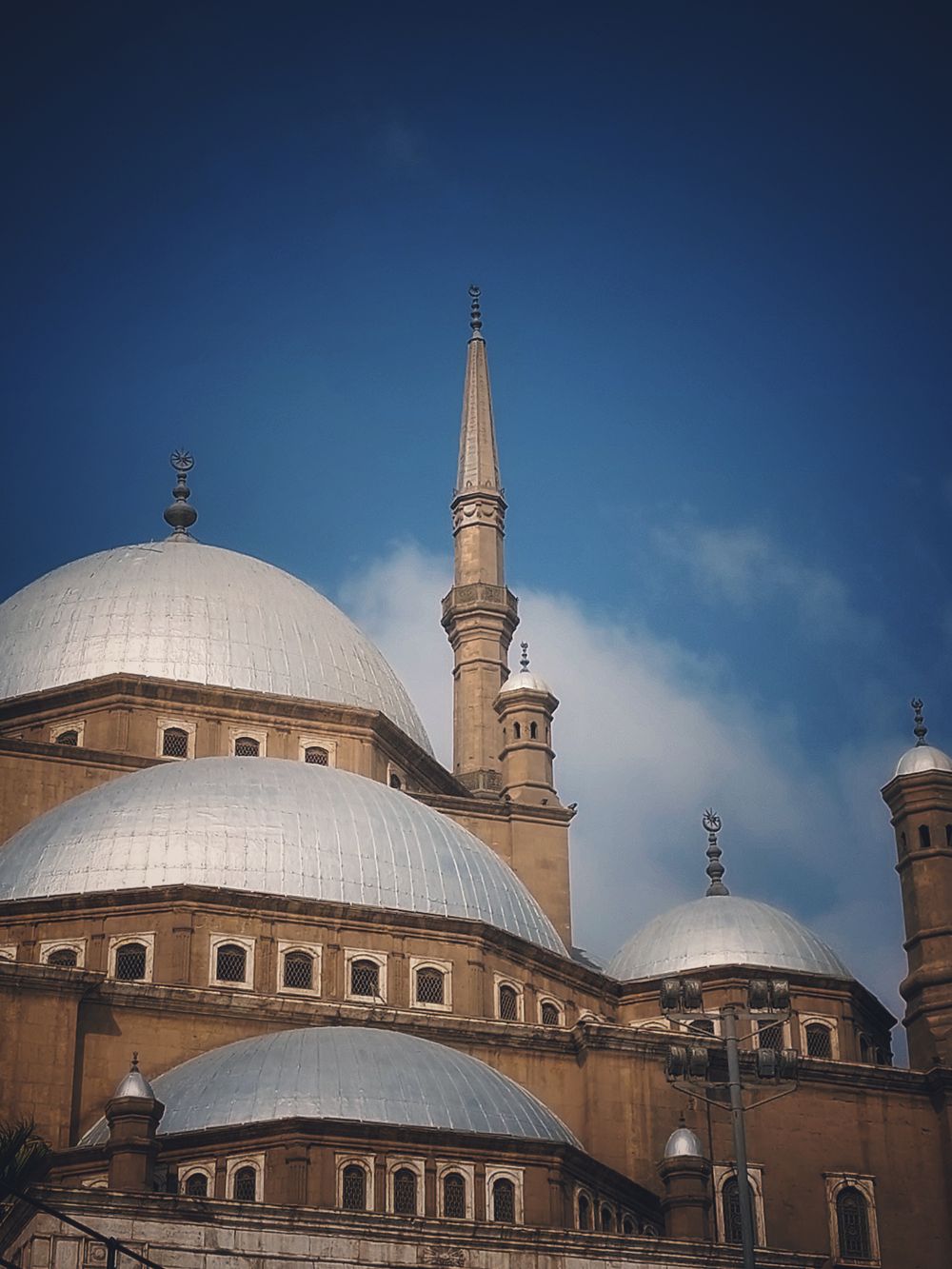
Saladin began these walls in 1176 on a spur of the Muqattam hills, and Egypt was ruled from inside them for nearly seven hundred years. The…
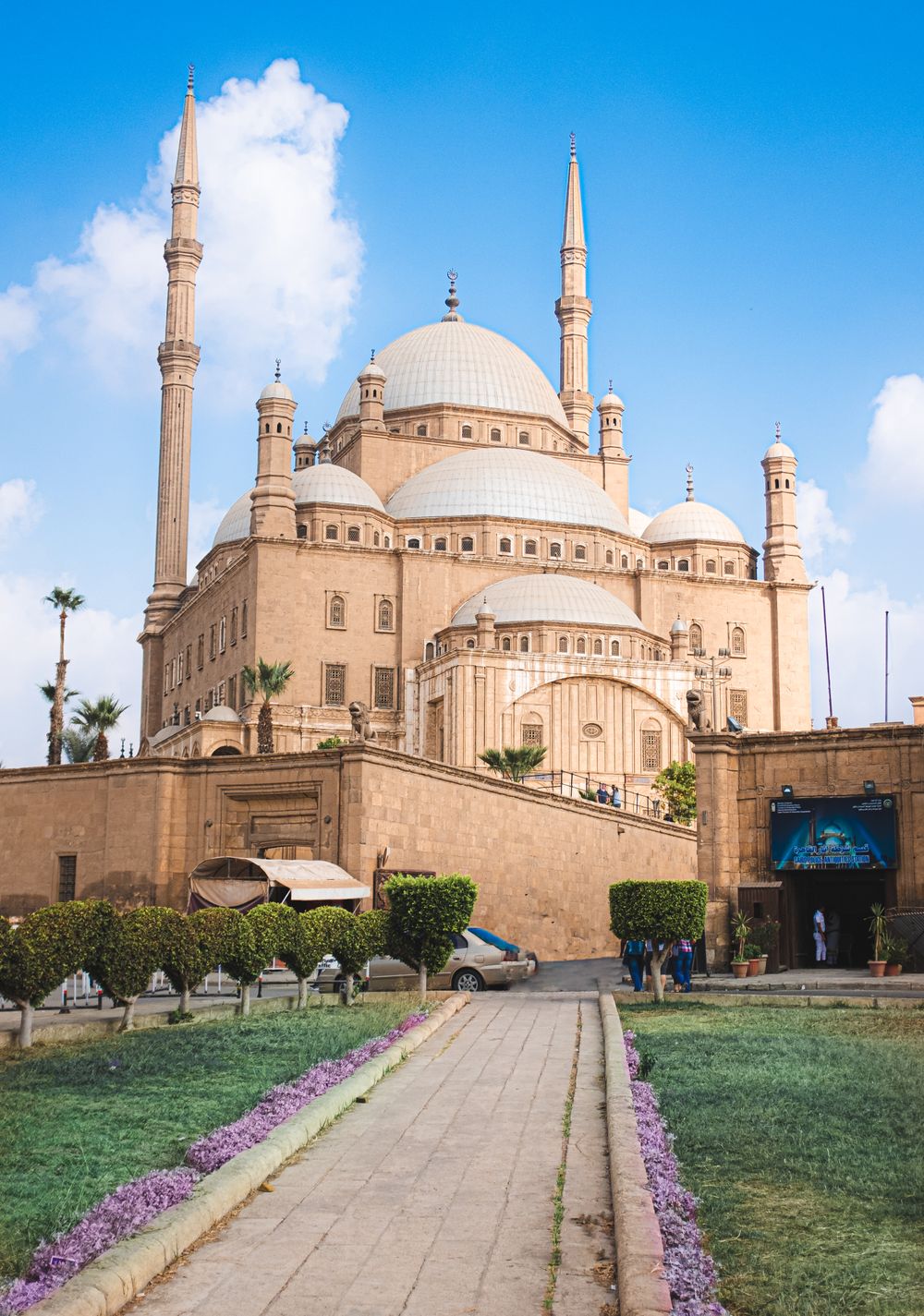
The Ottoman silhouette on top of the Citadel, domes and two pencil minarets, was finished in 1848 for the Albanian-born governor who…
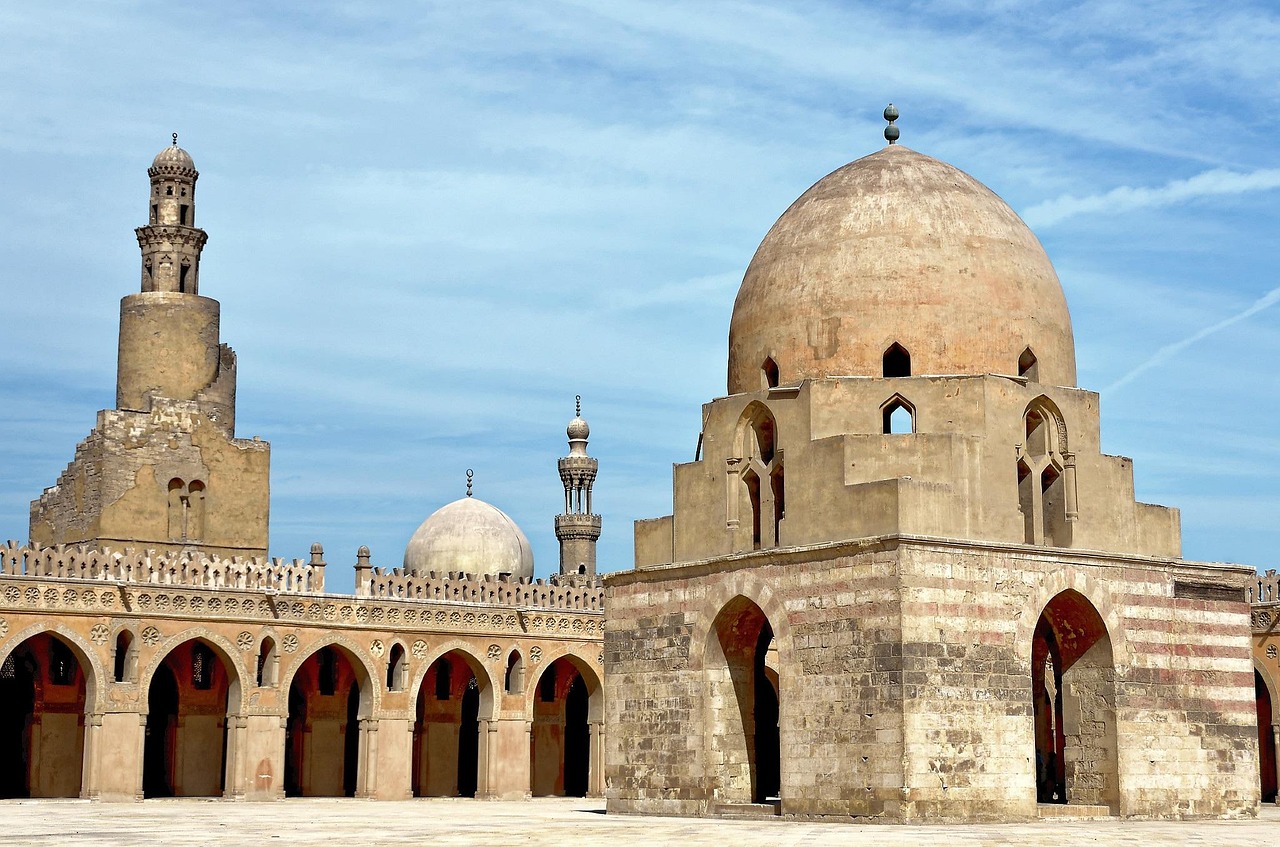
Completed in 879, this is the oldest mosque in the city still in its original form: a huge brick courtyard ringed by pointed arcades, built…
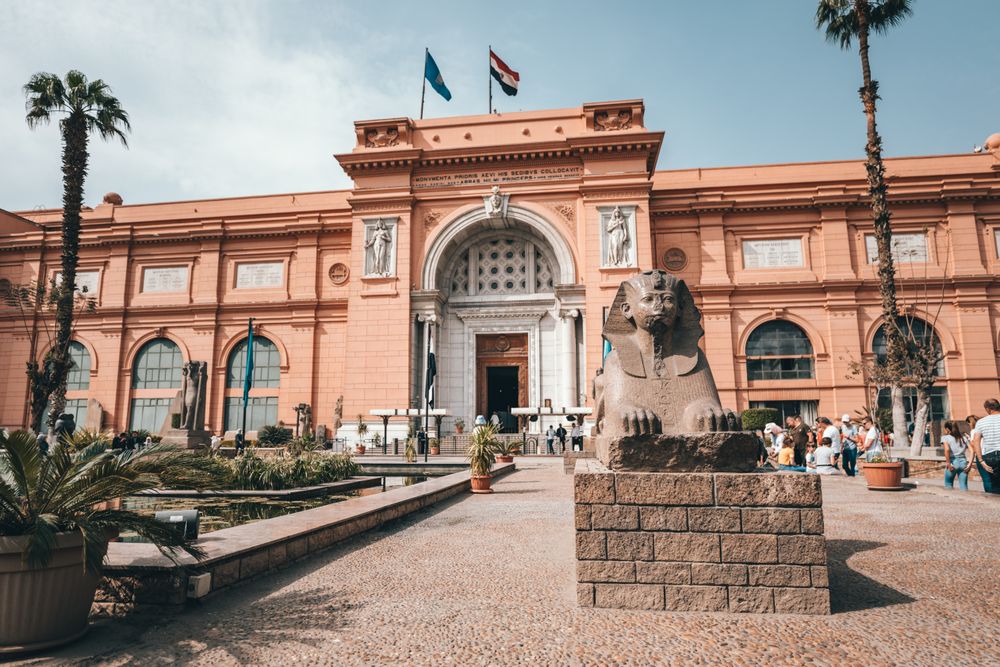
Two floors of the pink building on Tahrir Square hold the Narmer Palette, the treasures of Tanis and the complete burials of Yuya and…
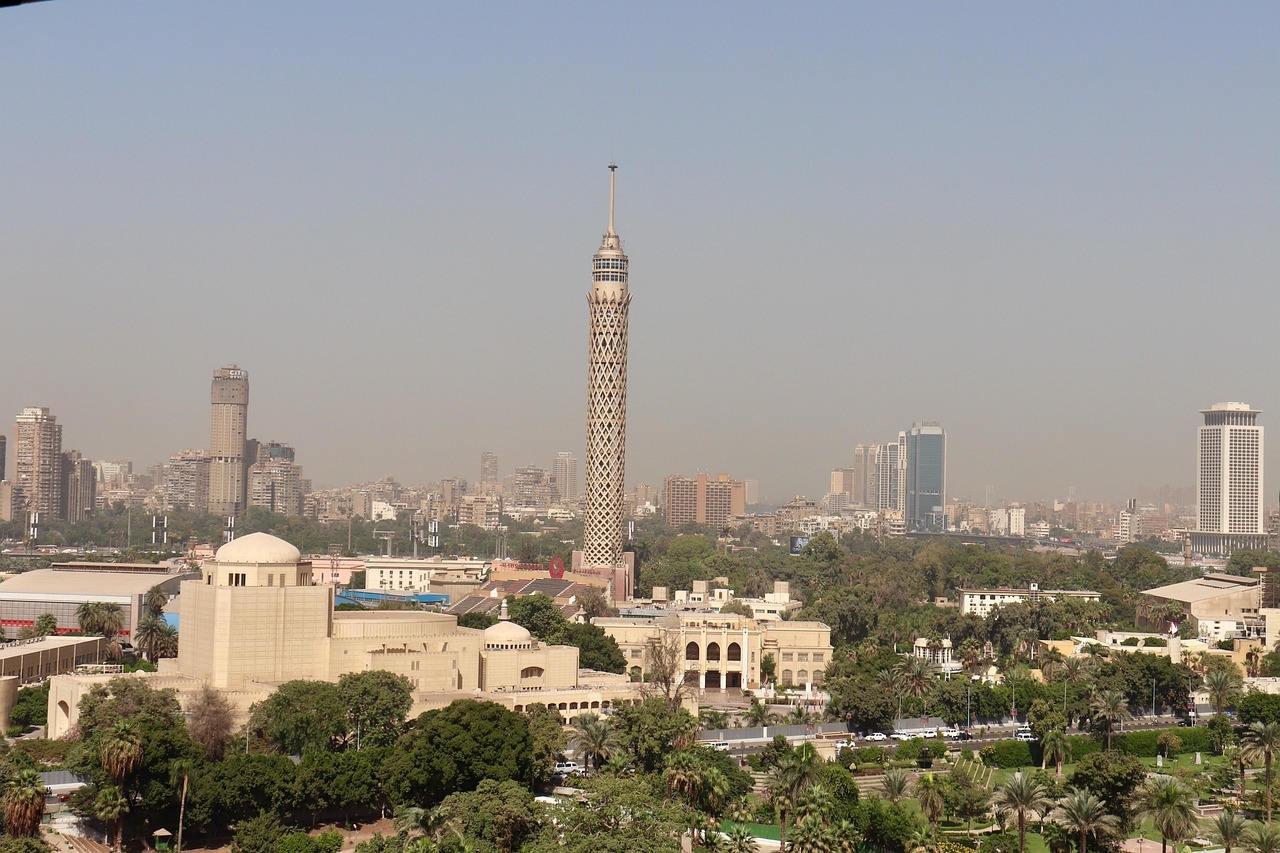
Naoum Shebib's concrete lattice on Gezira Island went up between 1956 and 1961, its open latticework shaped to suggest a lotus stalk. A…




Save Al-Muizz Street to your Egypt trip in the Meridian Dispatch app and build the day around it, with the best of Cairo pinned on one map.
Download on the App StoreLast updated