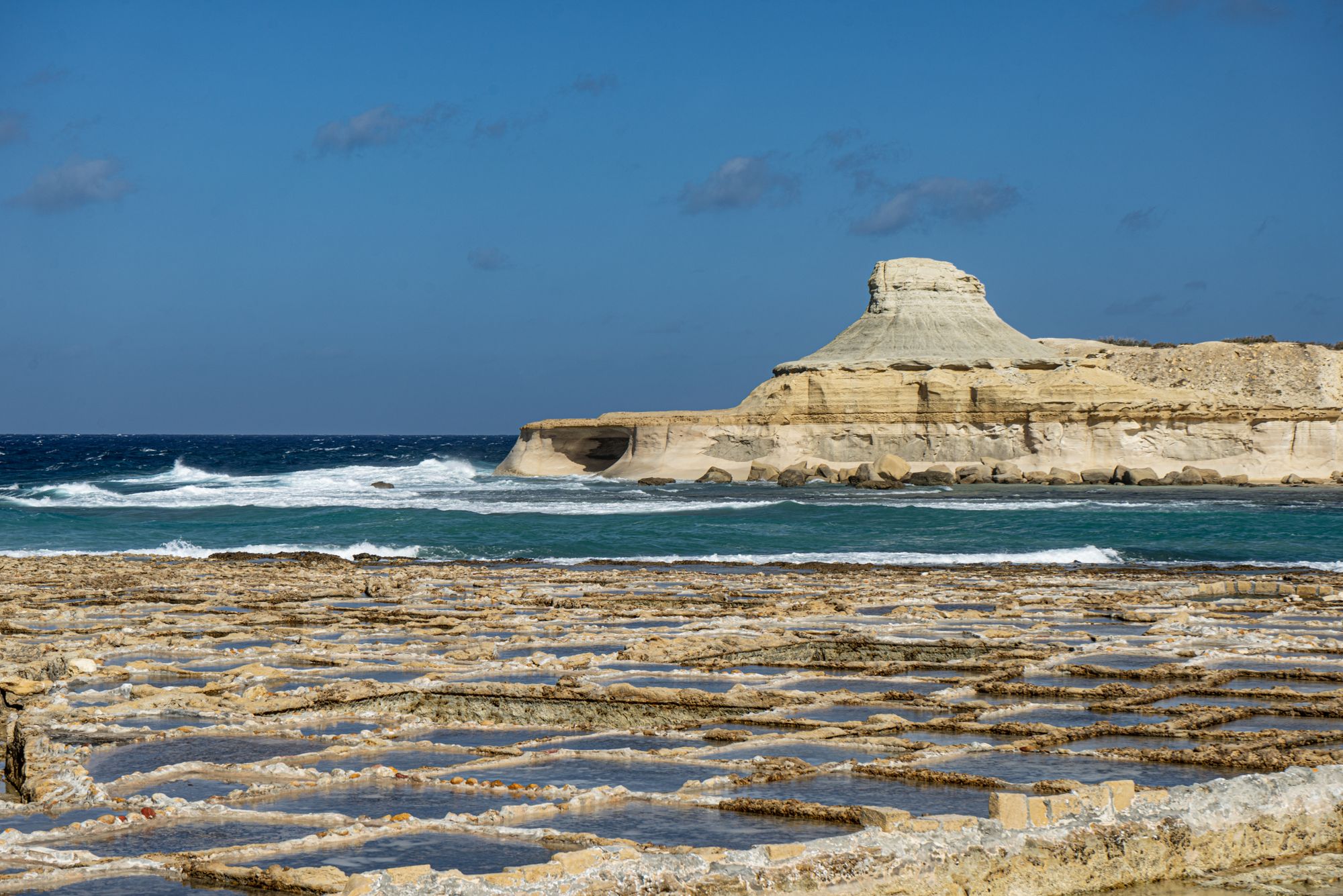
Walk the edge of a working salt farm on Gozo's north shore, just west of Marsalforn. In summer you can watch the salt being raked from the rock-cut pans and buy it from the family that makes it.
Landmark, Marsalforn. Meridian Dispatch.
Visitors report no entrance fee and no set hours. The pans are open shoreline beside the coastal path west of Marsalforn, and walkers on that path pass them at any time of day.
The producers harvest once a week through the summer. The season typically starts in mid-May and runs to the end of August or the start of September, depending on the weather. On stormy or rainy days no salt is collected.
Visitors report signs on site asking them not to step onto the pans, and one account says walking inside them harms the salt. Keep to the rock beside the basins.
The producers sell it from their family shop, in a small cave across the road from the pans. Visitors report it opens only when the family is working, and one found it shut on the day of their visit.
The salt in each pan is swept into small heaps with thick-bristled brooms and brushes, then carried off in buckets. It dries on a flat surface under cloths for about 24 hours, and the next day it is packed into 30-kilogram bags.
The family behind Xwejni Salt Pans by Leli tal-Melh fills the pans, sweeps up the salt and packs it themselves. Their base is on Triq ix-Xwejni, beside the pans in the Żebbuġ area of Gozo.
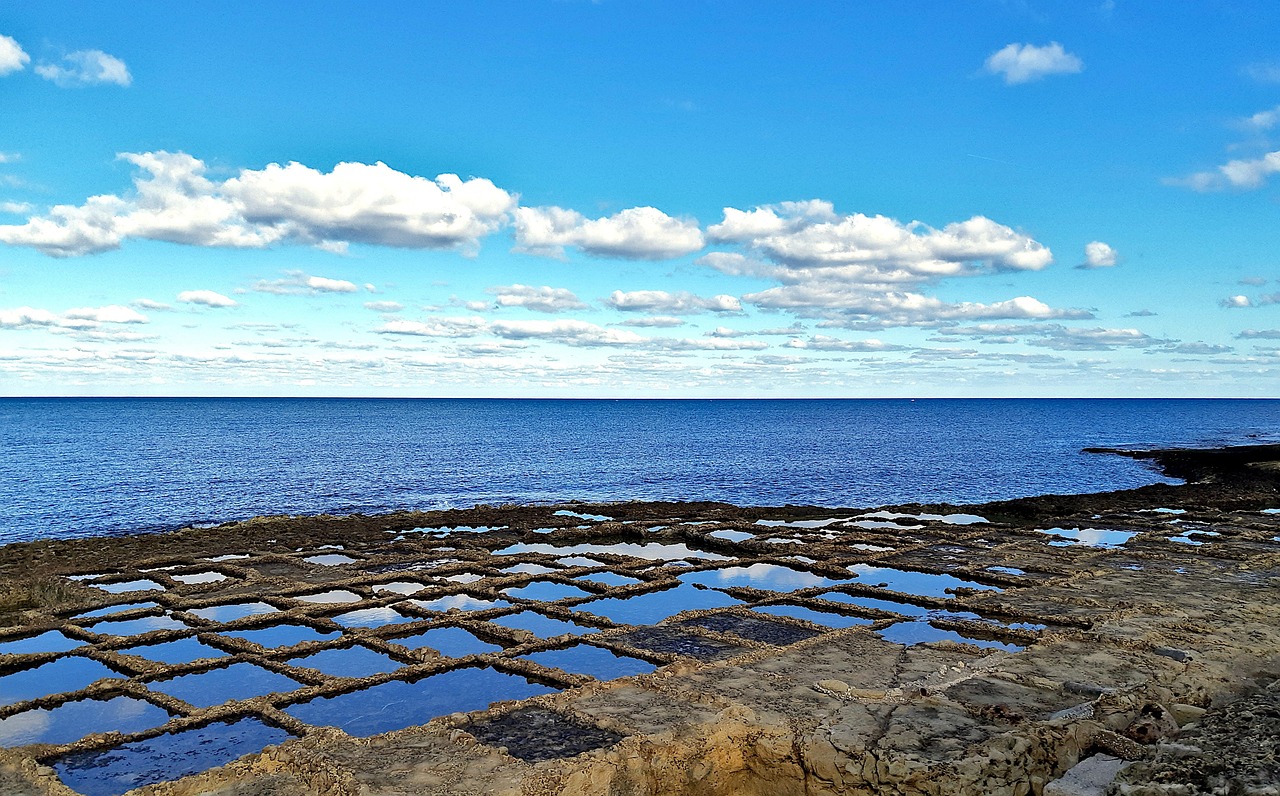
The pans run in a long ribbon along the shoreline beyond Marsalforn, on Gozo's north coast near Xwejni Bay. Each one is a rock-cut basin in the limestone, filled with seawater, and together they are laid out like a chequerboard.
Large pools hold the seawater, and the small pans around them do the drying. After every harvest, a motor pump fills each small pan in turn from the big pools.
The water then sits for about seven days while it dries out, and the salt crystals start to form.
Salt has been made on this shore for centuries, and the craft is passed down through Gozitan families. Those who work the pans in the warmer months are often descendants of the original salt farmers.
The usual approach is on foot from Marsalforn. Follow the shoreline west past Qbajjar Bay on the coastal path, and the basins start to appear in long, repeating rows. Drivers can head for the coastal road nearby and start the walk from there.
On arrival, look at how the grid works: the big storage pools sit apart from the small drying pans they feed. A few information boards on site explain the history and purpose of the pans.
The walk back to Marsalforn retraces the same shore, with the sea in view the whole way.
The shore is exposed and can get very hot, so bring shade and water. Late afternoon gives softer light and reflections on the water in the pans, which suits photographs.
For a longer walk, keep going west along the coast to Wied il-Għasri, a narrow, fjord-like inlet. The coast hike from Marsalforn to the inlet takes about an hour and passes the pans on the way.
Gozo's salt pans start a walk west of Marsalforn, and the coast path runs on past them to a gorge with a pebble cove at its foot. Back in the bay, you climb down steel ladders off the rocks into deep water.
Read the Marsalforn guideExplore the rest of Marsalforn
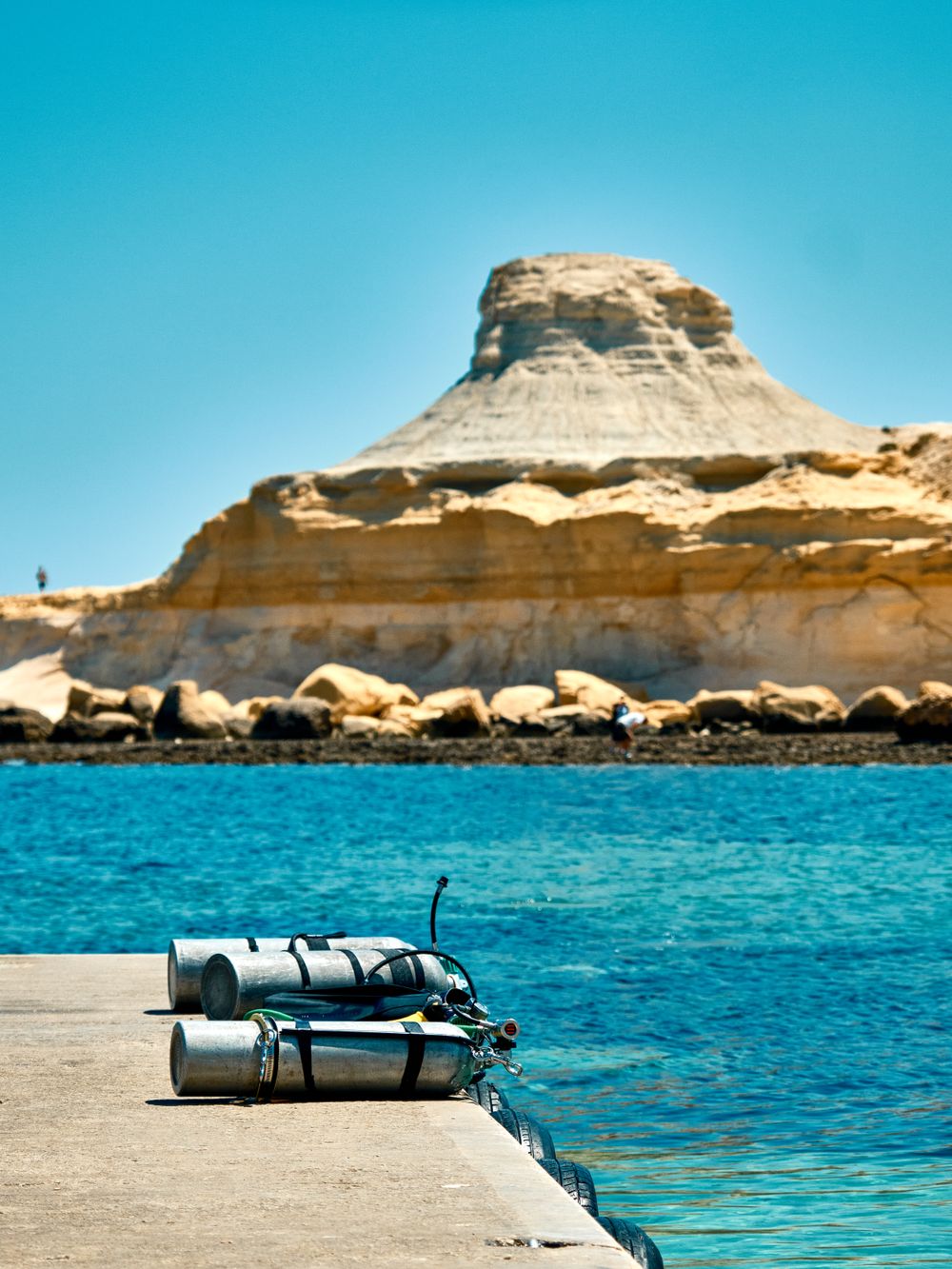
West of Marsalforn, a shallow inlet with a sliver of sand and wide flat rocks for sunbathing faces the pale cliff of Qolla l-Bajda. The…
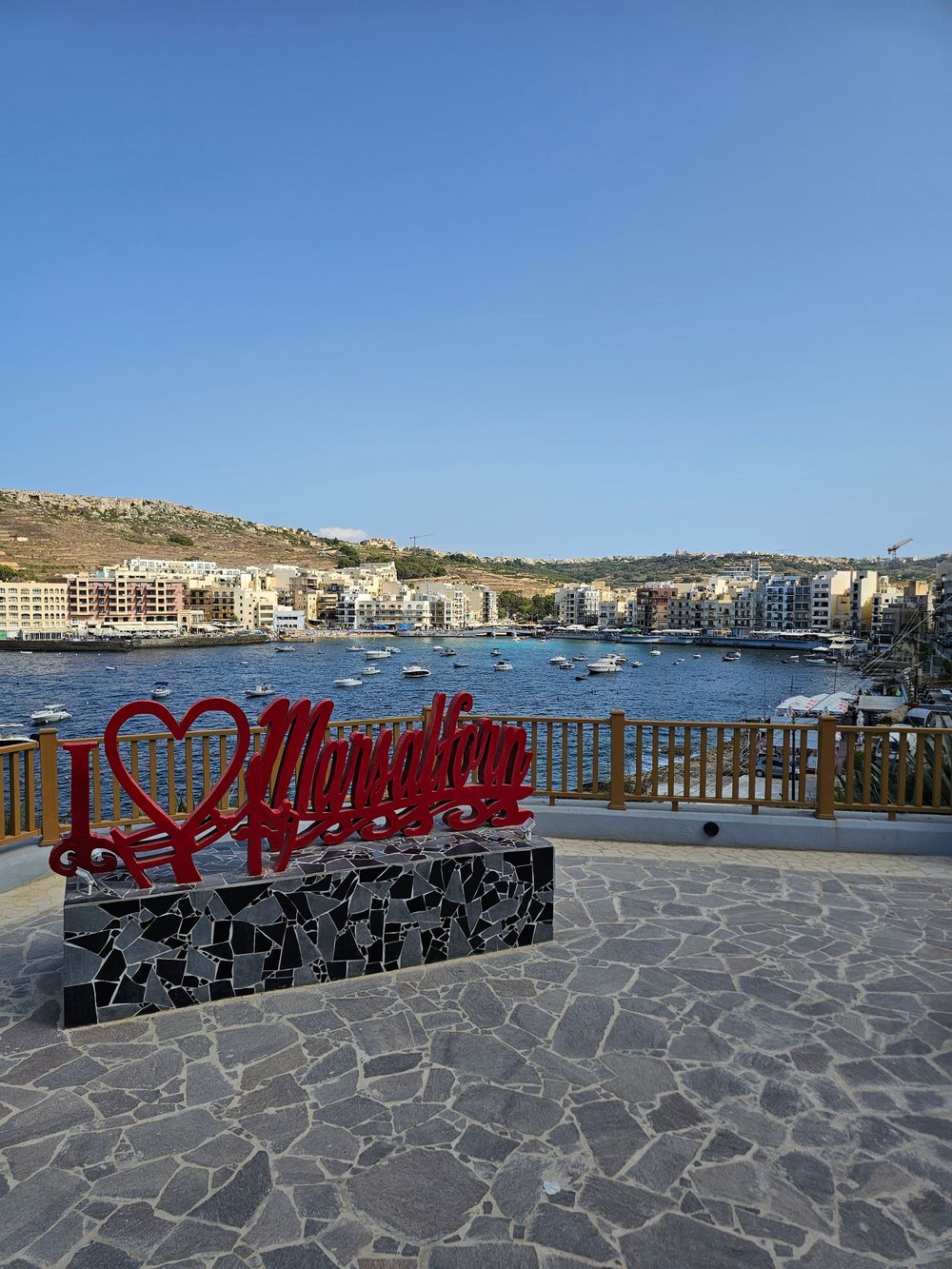
A small sandy beach at the head of the bay sits among cafés, fish restaurants and a fishing harbour, the busiest seaside spot on Gozo's…
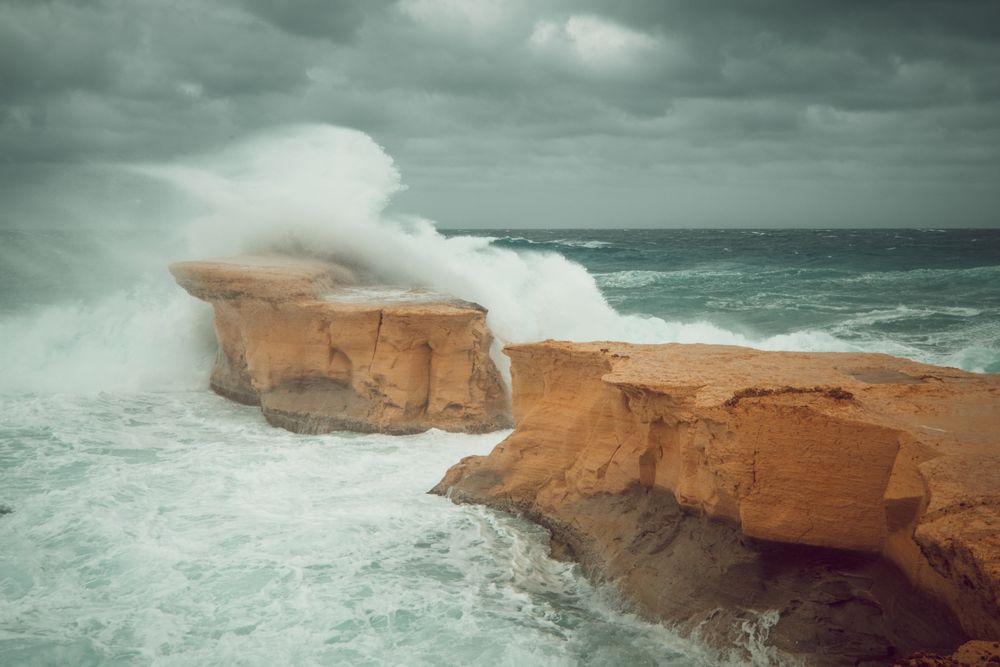
Just off the shore at Marsalforn, about 8 m out, a 3 m limestone pillar is all that remains of a natural arch that collapsed during the…
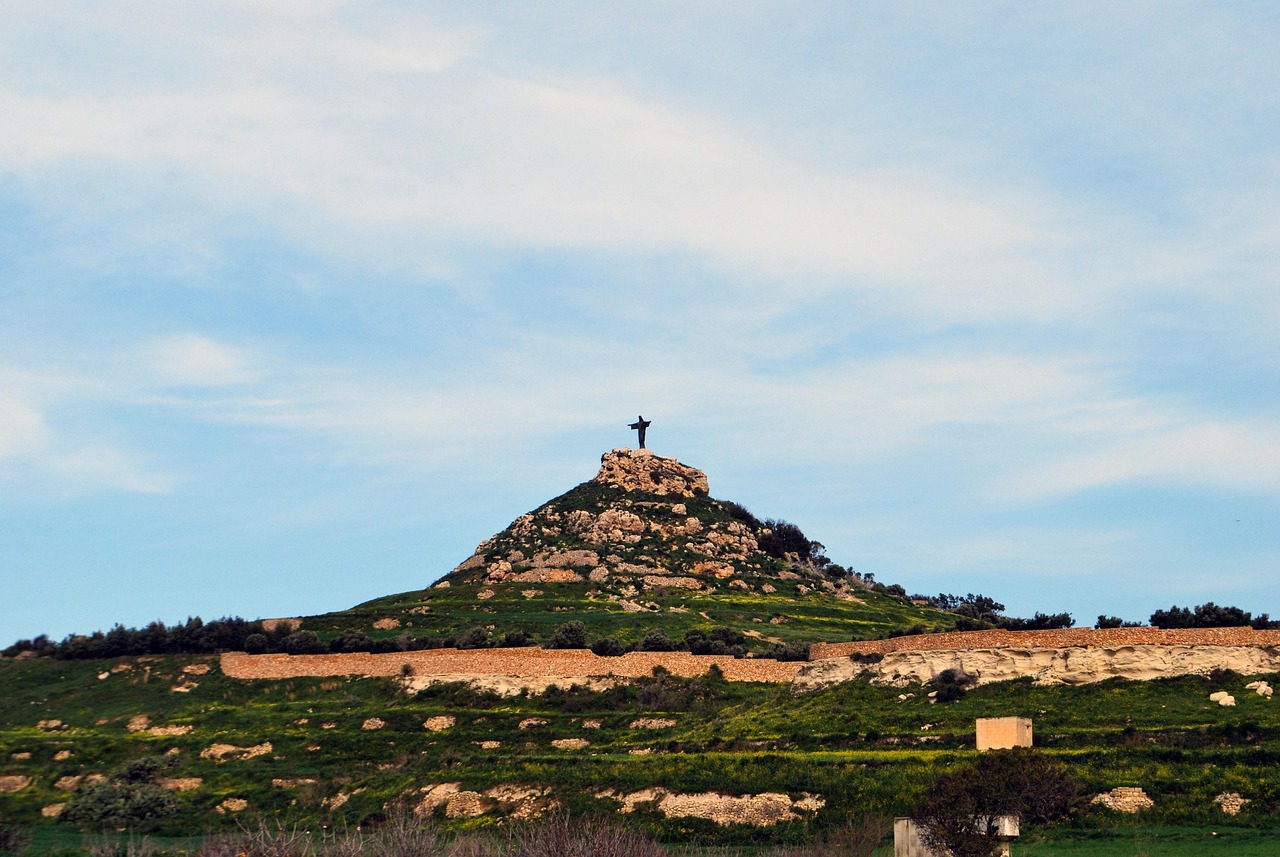
A concrete statue of the risen Christ on this hill above Marsalforn can be seen from much of Gozo. Pieces of its storm-felled predecessor…
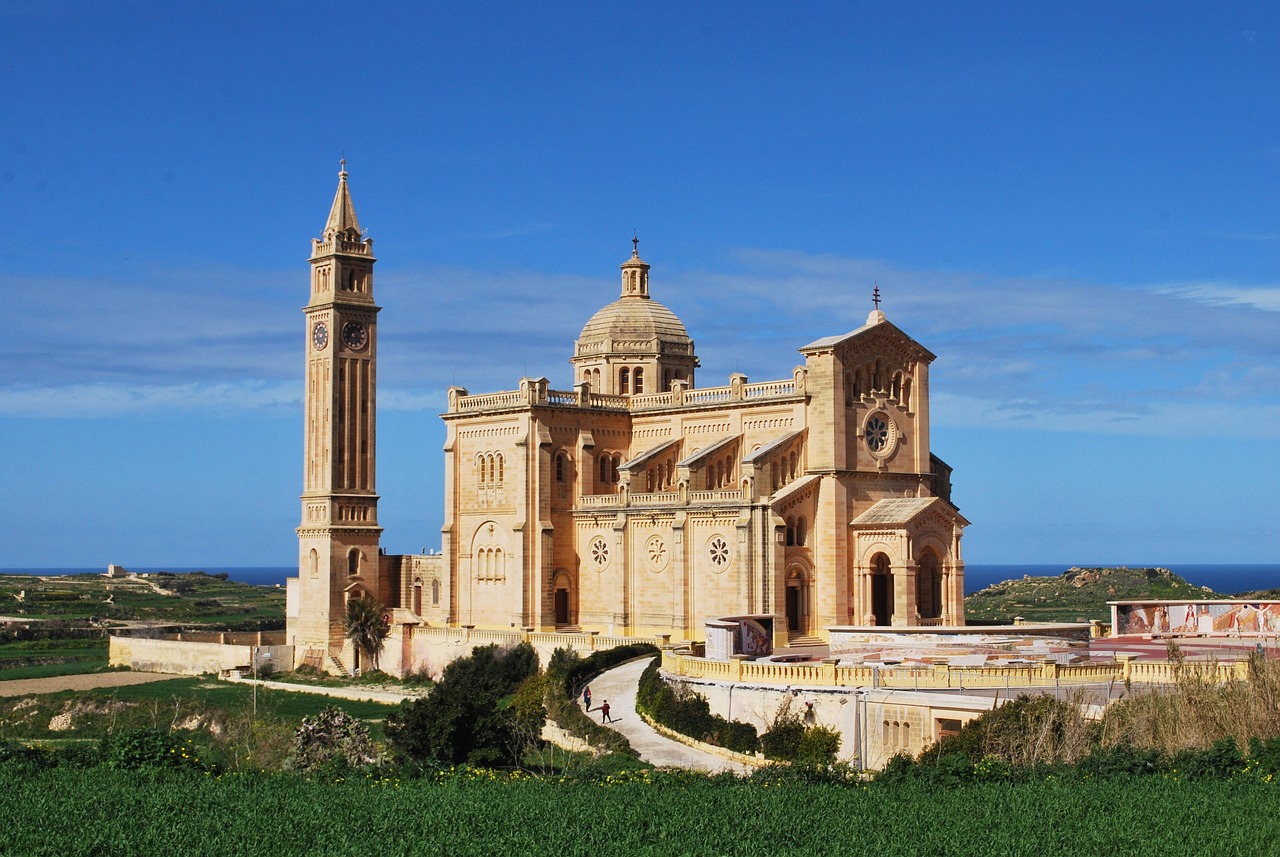
Alone in open fields near Għarb, this large stone basilica is Gozo's main pilgrimage church. A side corridor is lined with thanks…
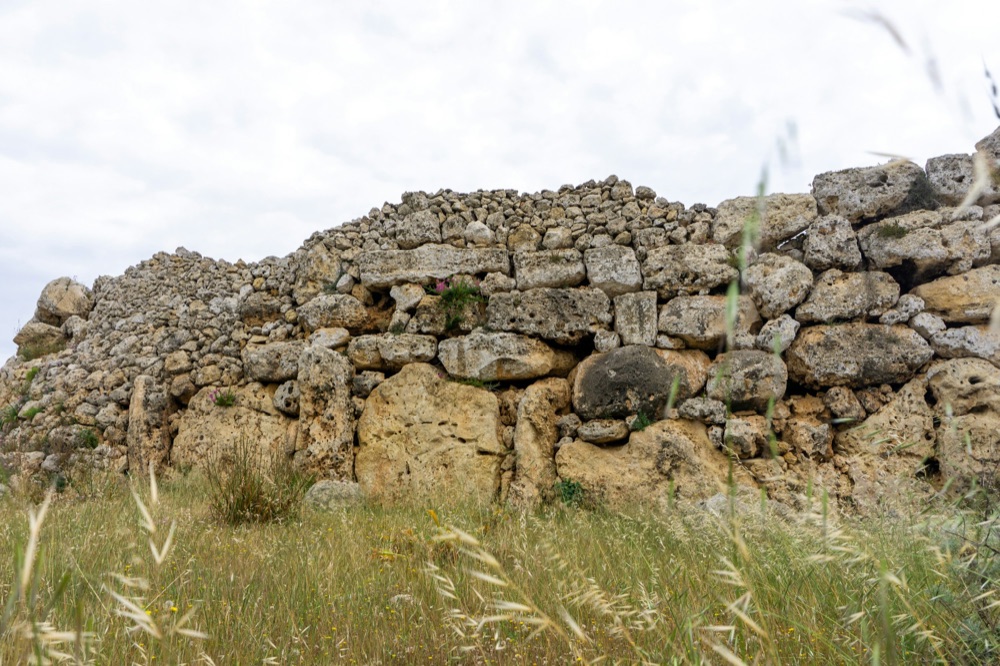
On high ground in north Gozo, Xagħra holds the Ġgantija temples, two Neolithic stone structures, and a village square with cafes. Ramla…
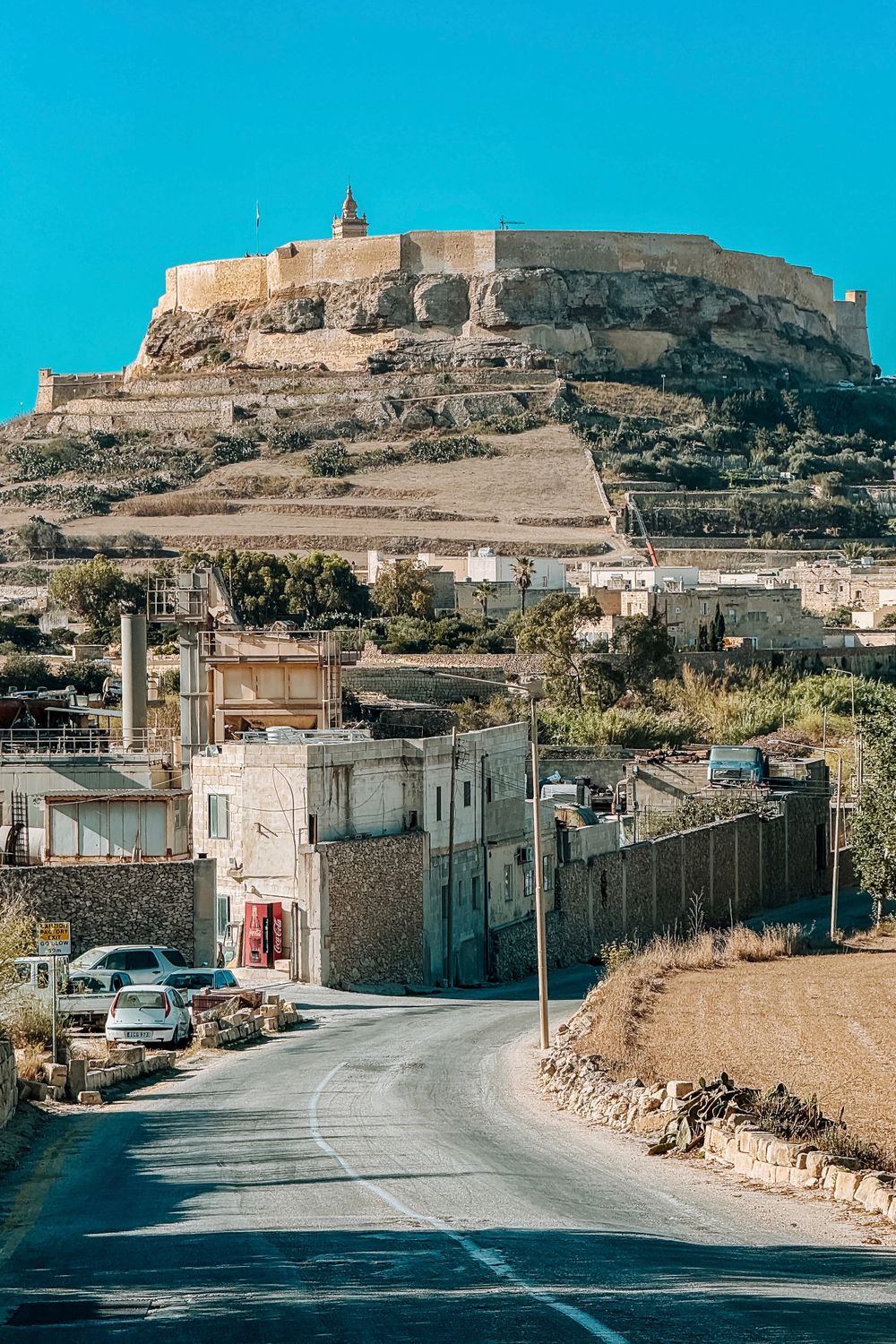
Walls ring the top of a hill in the middle of Gozo, and the walk along the ramparts looks over almost the whole island. Entry to the walled…
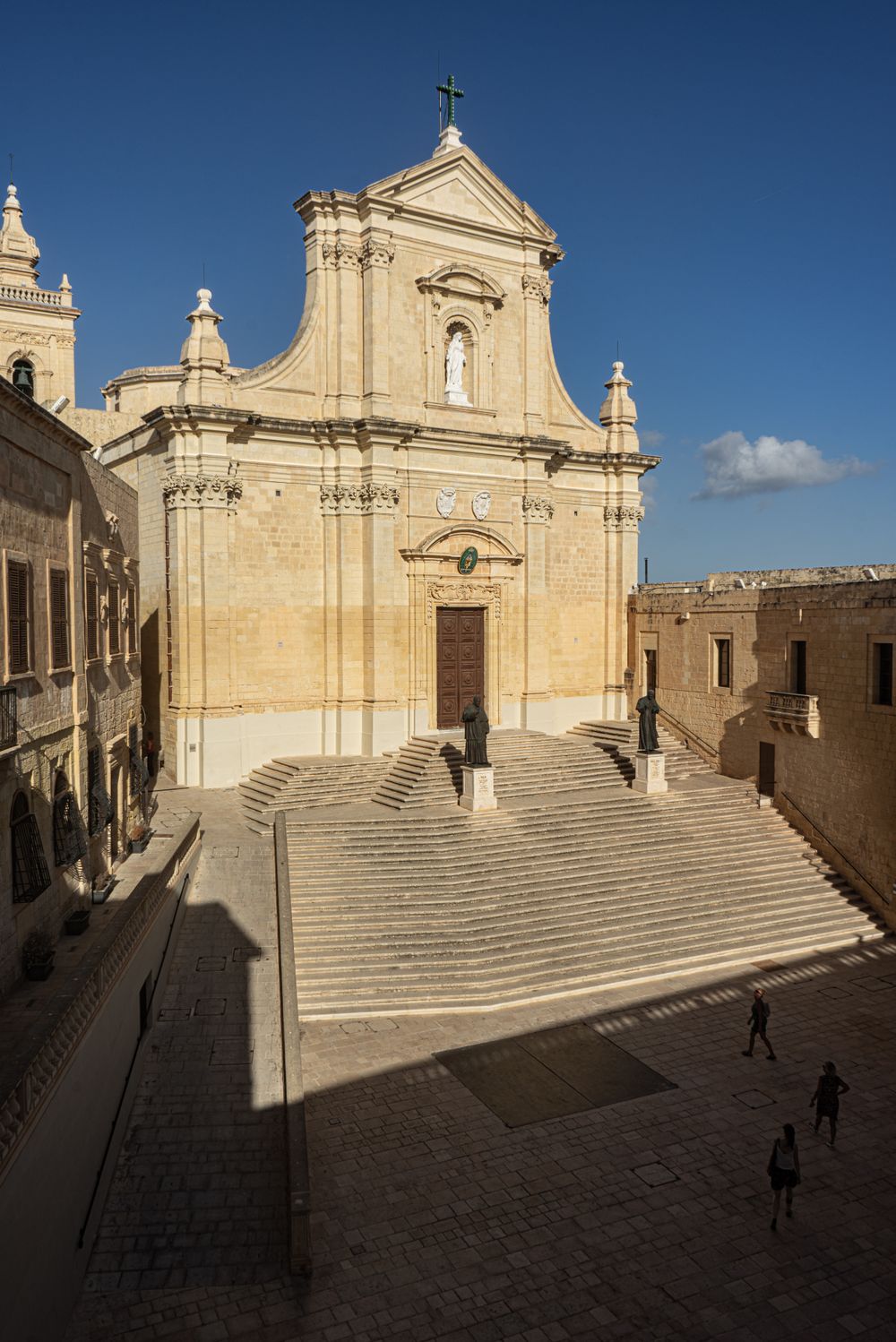
Look up inside: the cathedral has no real dome, and a painter turned the flat ceiling into a convincing one in perspective. The church…



Save Xwejni Salt Pans to your Malta trip in the Meridian Dispatch app and build the day around it, with the best of Marsalforn pinned on one map.
Download on the App StoreLast updated