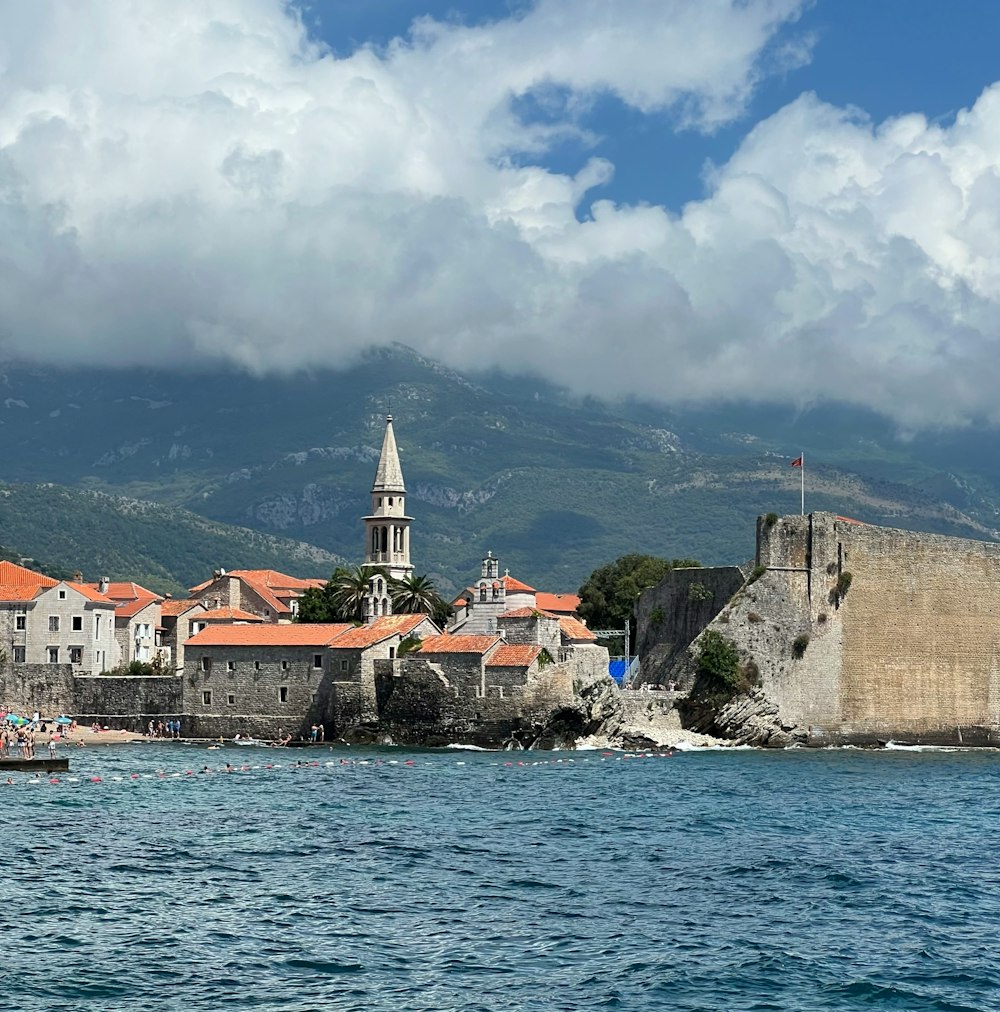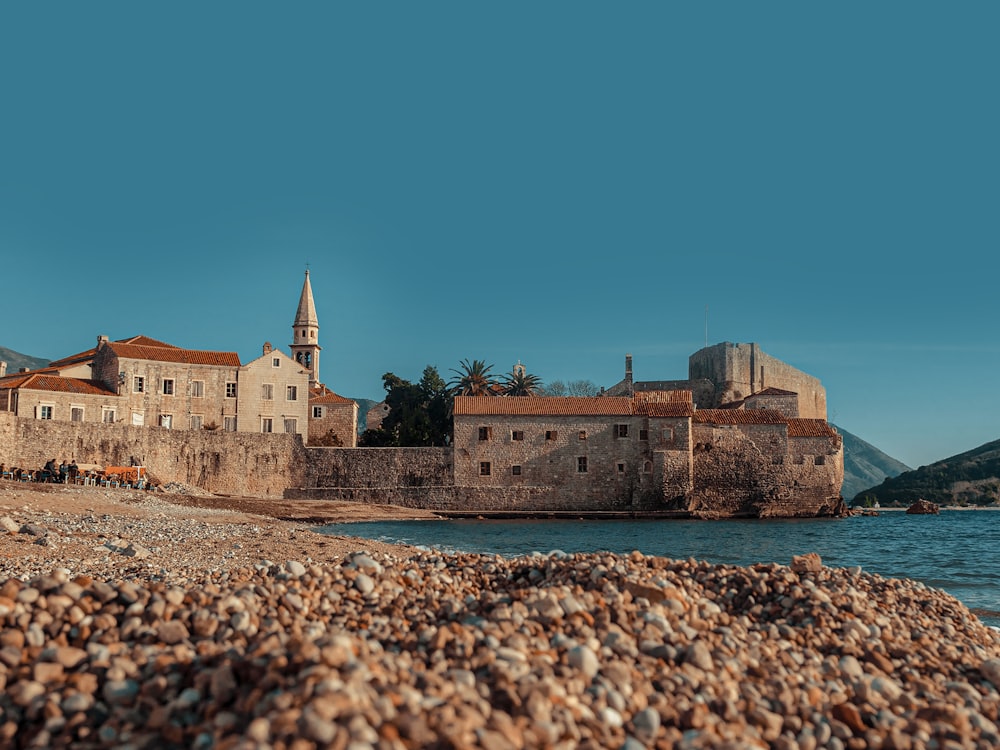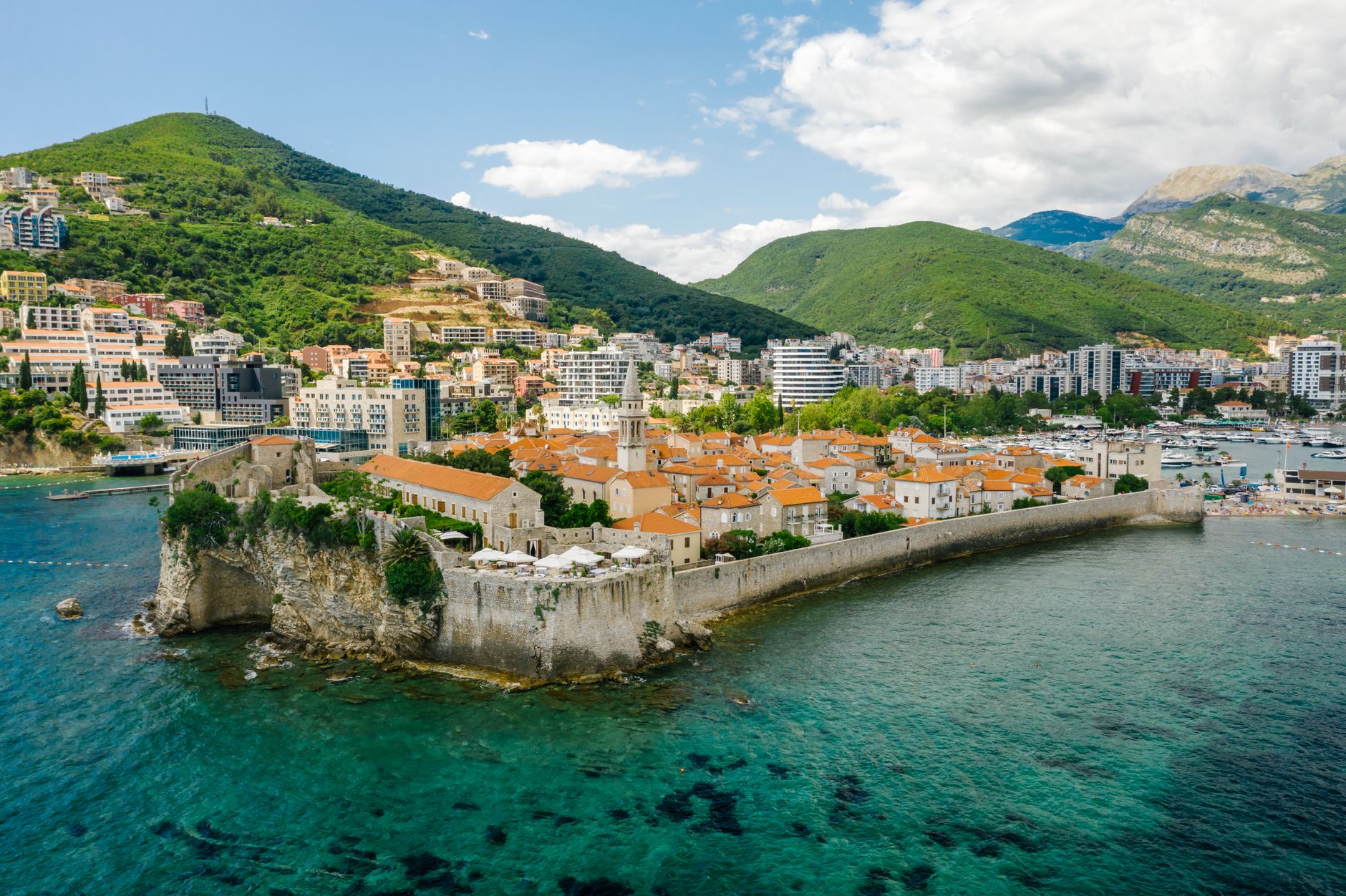
Nothing has accreted on the stone in Budva's old town. The paving is even, the lanes are clean and the joints are regular. There is no bricked-up doorway in the wrong material, no sagging course, none of the mess that makes an unreconstructed Adriatic town interesting to walk.
Four hundred buildings stood inside the walls before the earthquake of 15 April 1979. Eight of them came through undamaged, and the fifteenth-century walls were severely damaged as well. The Yugoslav government paid 82 per cent of the cost of repairing the country's damaged cultural property, the municipalities the rest, and UNESCO ran an international campaign alongside it.
The salvaged stone went back up, block by block, and the work ran on through the following decade until almost everything inside the walls had been returned to its original form.
Kotor, up the coast, went onto the UNESCO List of World Heritage in Danger that October. Budva has never had a UNESCO listing at all.
A visitor of forty or more is older than the quarter they are walking through. One long trip report on the town, having admired the rebuild, still came away calling it sanitised, which is a verdict the stonework invites.
None of which is a scandal. The alternative to a careful reconstruction was a heap of rubble on a promontory, and the people who did the work were conservationists doing it properly. The objection is narrower: nobody says so at the entrance, and a visitor who arrives expecting Kotor spends the first hour confused about why the medieval town looks newly built.
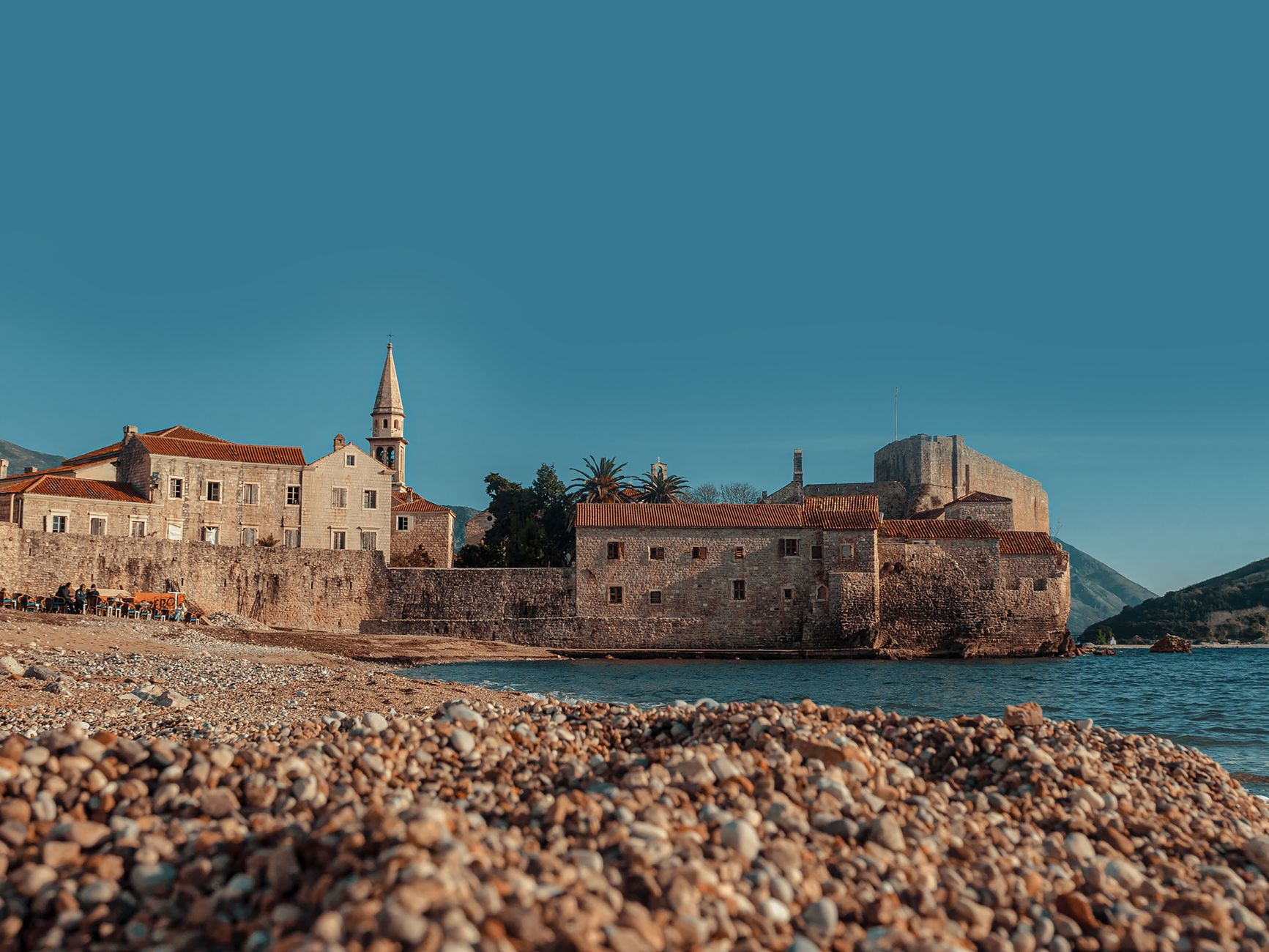
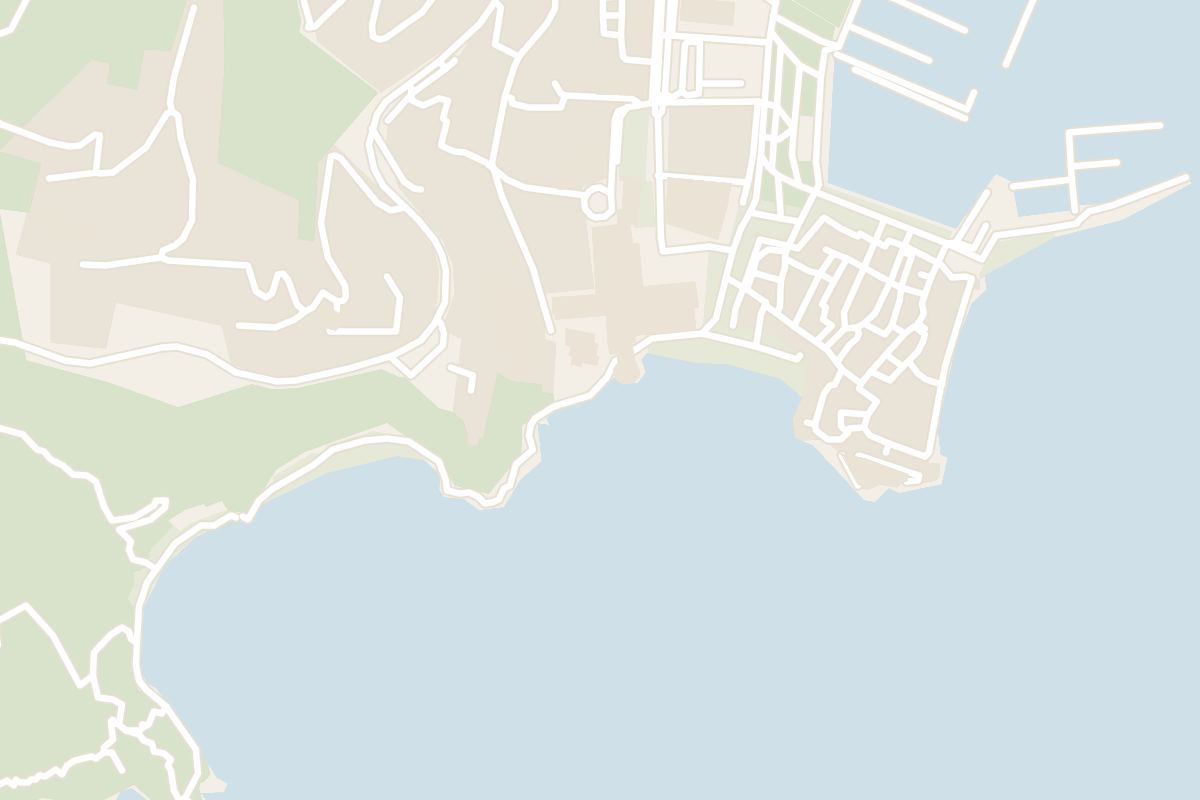
Inside the walls the quarter is small enough to cross in minutes, and a first pass takes well under half an hour. The best thing in it is a density.
Four churches stand on and around one square. Santa Maria in Punta was founded by Benedictines in 840, and the inscription cut into its north wall is one of the oldest securely dated medieval inscriptions on the eastern Adriatic. The Orthodox church of St Sava is twelfth century, and the Holy Trinity, striped red and white outside with an ornate iconostasis, is 1804.
The fourth is St John the Baptist, the Catholic parish church, which held a bishopric until the diocese was abolished in 1828 and carries a nineteenth-century campanile. Two confessions and four eras within a few paces of each other, on a square smaller than a tennis court. Seeing all four costs almost nothing and takes about ten minutes.
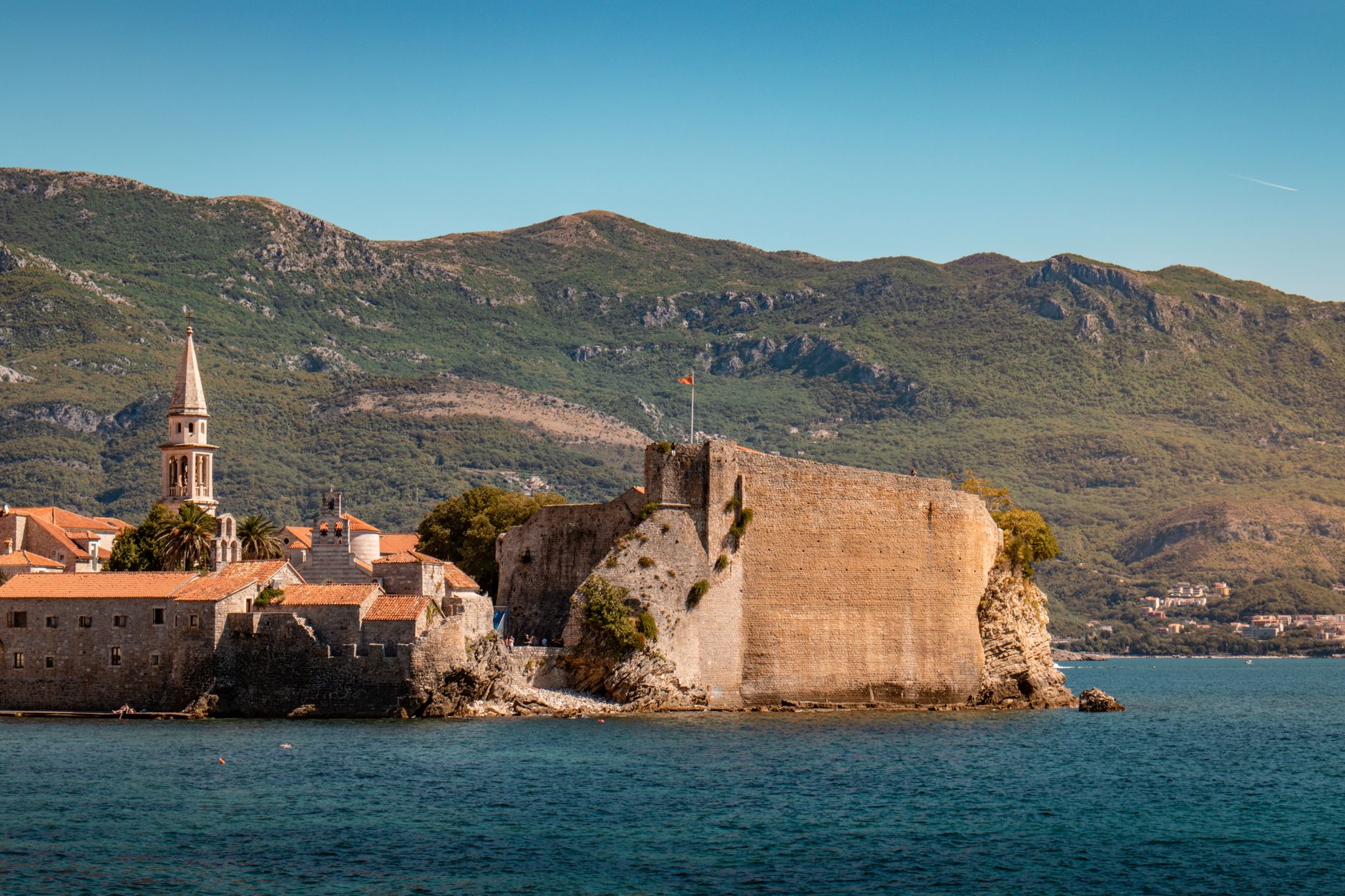
The walls walk, the citadel at the seaward tip and the city museum are three separate tickets. Carry cash for all three.
The walls and the citadel run shorter hours out of season and can be shut in bad weather, so check on the day. The museum keeps its own days: closed on Mondays, and at weekends it opens only in the afternoon. The walls are an out and back, so the return leg is the same distance again.
Inside the citadel are the ramparts, a restaurant and a library of rare books on Yugoslav and maritime history, which is the part worth the ticket. Anyone who has already walked Kotor's fortifications can skip it, because this is the smaller version of the same walk.
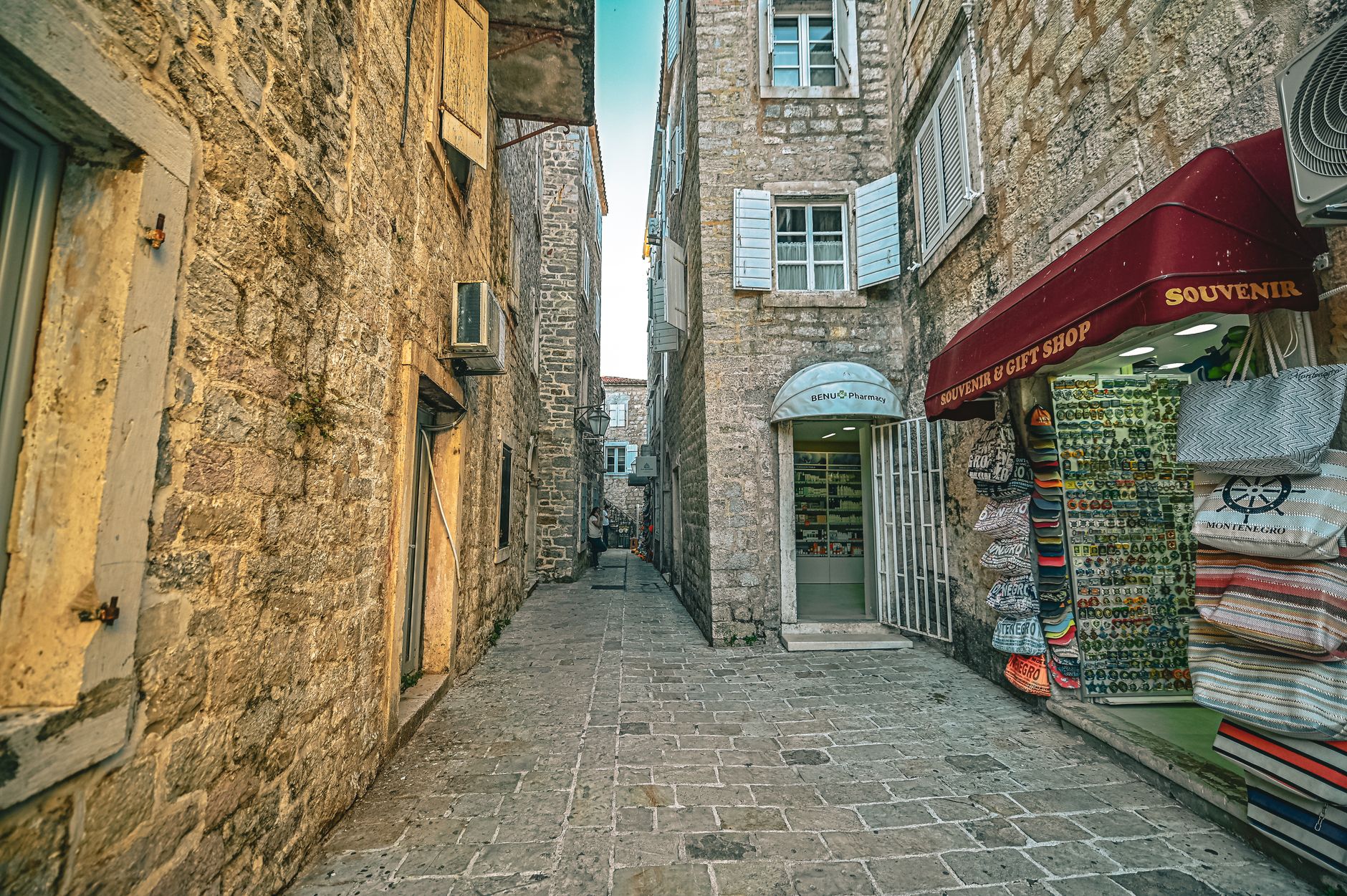
The lanes are commercial, and they are also ordinary. Between the gift racks there is a pharmacy, there are cafes keeping local hours, and there are bars that are quiet at eleven in the morning. The real objection inside the walls is scale, because the whole quarter is a fraction of Kotor's and a slow walker covers it twice without meaning to.
The town was built twice: once carefully, by conservationists putting a stone quarter back together, and once carelessly, by everyone else in the decade after.
So the case for Budva is not the walled town. It is the position.
Budva town holds about seventeen thousand residents. In 2025 it took just under five million overnight stays, close to a third of the national total of 15.4 million, and it has been the volume leader on this coast since the Yugoslav period. That density is the product. It is why there are more beds, more buses and more places open in October here than anywhere else on the Montenegrin shore.
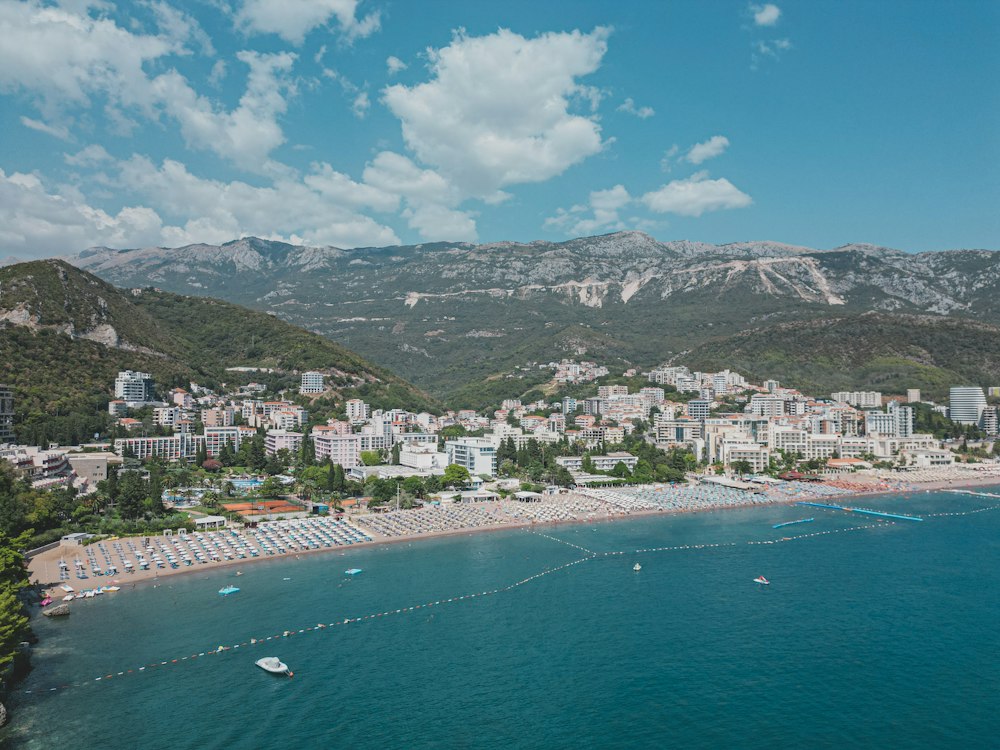
It is also why the modern town looks the way it does. Budva's growth was investor-led and effectively unplanned from the late 1980s onward, and it accelerated hardest after independence in 2006. It was disorderly enough that the region coined a word for it, and the word is Budvanizacija.
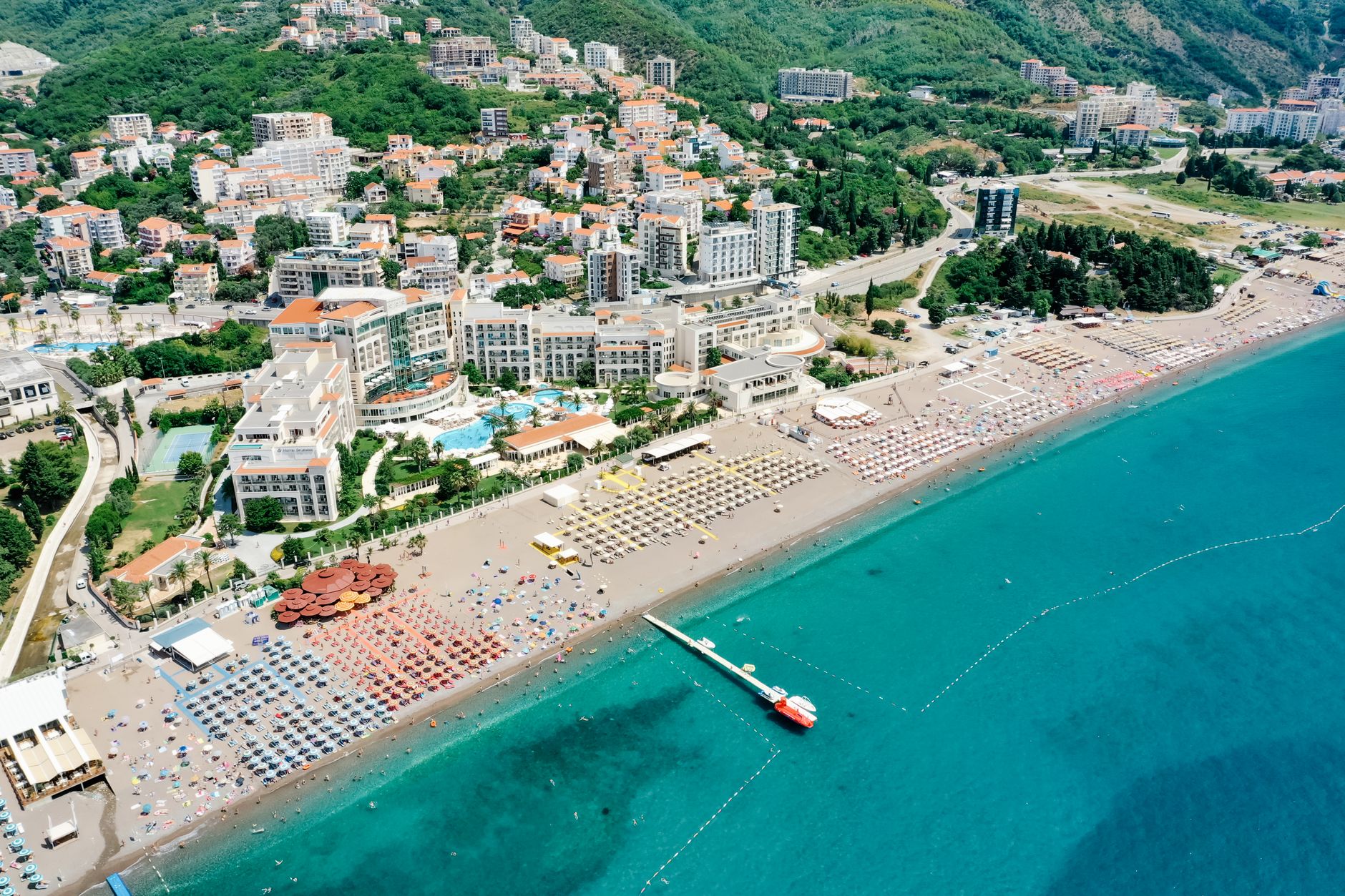
Budvanisation, in English, now means chaotic construction anywhere on the Adriatic. The UNECE used the term in its March 2026 recommendations to Montenegro, as shorthand for speculative development outrunning building control. Apartment blocks climb the slope behind the beach in an irregular grid with the infrastructure trailing them, and the problem is current, not historic: Montenegro passed a legalisation law in 2025, and between 2017 and 2024 it legalised 3,397 buildings out of some 62,000 applications.
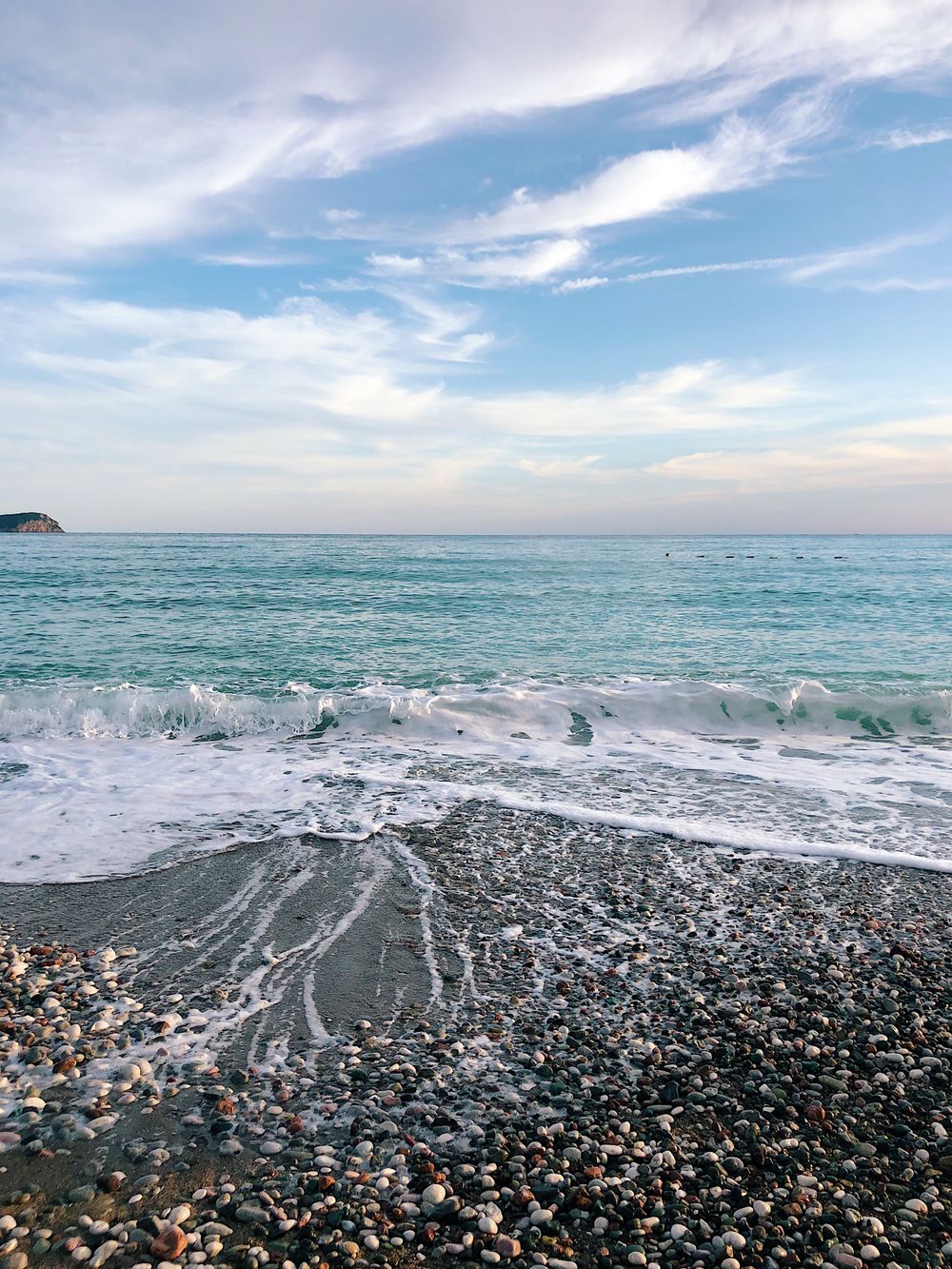
On the Montenegrin coast, sandy in the brochure means coarse gritty shingle underfoot. Bečići is marketed as two kilometres of sand and is coarse sand and gravel with pebbles through it. Slovenska, the main town beach, is stone, shingle and sand mixed, with pebbles large enough to make the footing unstable. Pack beach shoes.
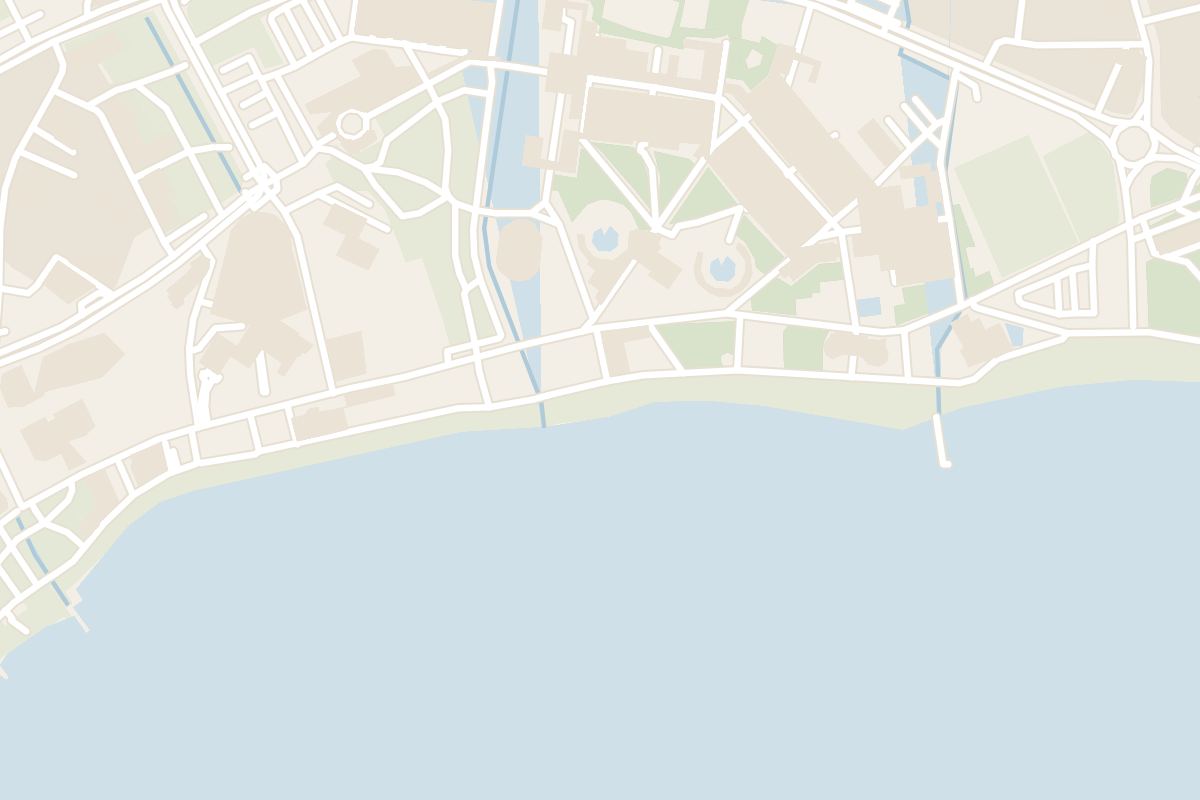
Mogren is the one to walk to, and the walk is most of the point. A paved cliff path runs from behind the Hotel Avala at the edge of the old town, ten to fifteen minutes above the water with the walls behind. The bronze dancer on the rocks partway along, by the sculptor Gradimir Aleksić, is the most photographed thing in Budva after the walls themselves.
The two coves at the end are pebble. The only way from the first to the second is a footbridge and a path cut through a stone tunnel in the cliff, which is why the second stays quieter. The gate onto the path is locked and the coves closed in heavy southerly swell, so the walk is not guaranteed on the day.
Slovenska is a different proposition: about 1.6 kilometres of seafront lined with concessions, each stretch run by the bar or cafe behind it, with sunbeds packed close and music across the strip in season. Travellers who dislike Budva are almost always describing this stretch. Jaz, west of town, has the most genuine sand in the area. The big summer concerts move around this stretch of coast from one year to the next, so check what is programmed near wherever you book before assuming quiet. Under the old town walls there are two small beaches with a wooden pier, which are where to swim if walking to Mogren is more than the afternoon deserves.
The nightlife is real and it is seasonal. Dinner runs late, bars fill from around ten, and the clubs do not start until after midnight, which catches out anyone who treats them as an evening. The larger venues sit out of town or up the hill, outside the walls, so a taxi is part of the plan.
Overcharging is a long-standing and repeated complaint, on the runs to the clubs especially, so agree the fare before getting in. Uber does not operate anywhere in Montenegro and neither does Bolt. Licensed taxis are required to run a meter, and there are local booking apps. At Ploče the water taxi that carries people out to the beach parties does not necessarily run back. Assume the return leg is by road.
Noise is concentrated on the seafront strip and around the out-of-town clubs, and it does not carry far inland. Anyone who wants to sleep books off the promenade, or in Rafailovići or Pržno, which are minutes away on the same coast and quieter by a wide margin.
Budva sits on the main coastal bus corridor, Herceg Novi to Kotor to Budva to Bar to Ulcinj, and it is the busiest node on it. There is no railway to Budva and none along the coast road. Montenegro's line reaches the sea only at Bar and then runs inland to Podgorica, so buses are the carless option and the only one. Services are run by several private companies with no single network behind them, which is why timetables are scattered across operator sites and why last departures have to be checked in advance.
Departures run to a few dozen a day in winter and comfortably more than double that in summer. Tivat is the near airport, and no bus runs from the terminal itself. Services go from Tivat's bus station, a short taxi away, direct to Budva in around half an hour, a few times a day. A new four-lane road between Tivat and Jaz opened for the 2026 season to take pressure off that corridor. Budva's own bus station is about twenty minutes on foot from the old town.
Kotor is under an hour away, Sveti Stefan is a few minutes down the coast, and the road up to Lovćen and Cetinje starts behind the town. A traveller basing themselves here can reach most of the southern half of the country and be back for dinner.
Arriving by car in July or August is the version that goes wrong. There is no genuinely free parking near the walls, the paid lots and garages around the centre fill with queues to enter, and illegally parked cars are towed. Approach traffic and tour groups moving through the quarter are what the complaints about high-season Budva are actually about. Cards are taken widely but not everywhere, so carry notes.
Budva is the wrong base for one kind of trip. A traveller whose week is about the Bay of Kotor should sleep in Kotor and treat Budva as an afternoon, because the drive back around the bay at the end of every day is the thing that ruins the itinerary. Anyone who wants the same coast with the volume down books Rafailovići or Petrovac, both on the same bus line and neither carrying the beds or the late food.
Late September and early October give a warm sea, a working town and empty lanes. The trade is real. The beach concessions are folding up by then and the club season has finished, so an October second day is the Mogren path rather than the strip.
Half a day covers the walled town and the museum. A full day covers that, the Mogren path and a swim.
The antiquity is sold hard and it is not where a visitor goes looking for it. The first written record of Budva is fifth century BC, which is where the 2,500-year line comes from. What survives from that far back is a burial ground: a large Hellenistic and Roman necropolis beside the road into the old town, found by accident in the late 1930s while the foundations of the Avala hotel were being dug, and excavated most thoroughly in the 1980s, when the earthquake rebuild opened the ground.
The city museum holds roughly 2,500 objects, almost all of them out of those graves, and it is the only place in Budva where the town's age is visible instead of asserted. The collection is strong and it is shown in one room with limited English labelling.
Most of what came out of the ground is not in Budva at all. Only a small part was preserved to archaeological standard, and that part is divided between the museums of Budva, Cetinje, Belgrade, Zagreb and Split, and private collections.