Things to do
10-
Banff Gondola
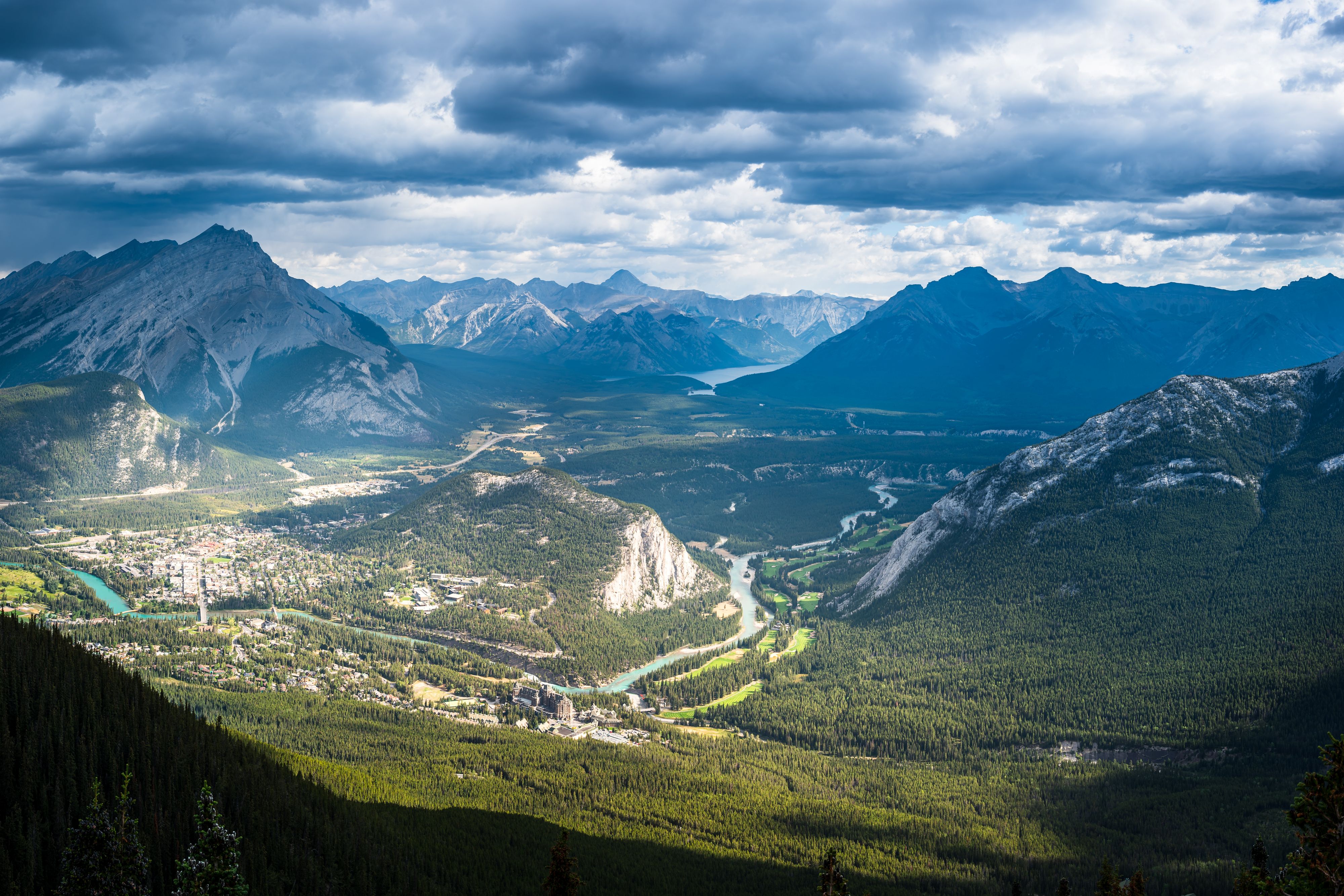
Eight minutes of cable carry the cabins from the valley floor to a ridge on Sulphur Mountain, above two thousand metres. A boardwalk follows the crest to a stone weather station and the site of a cosmic ray hut, with the Bow Valley laid out below. Walkers who prefer to climb the same face by switchbacks can ride down. Sunset slots on Sulphur Mountain go first in midsummer.
-
Banff Upper Hot Springs
Sulphurous water runs at around forty degrees and fills a single outdoor pool on the mountain road above town, in a bathhouse of nineteen thirties stone and stucco. Steam and snow together are the winter draw, with Mount Rundle across the valley. Swimsuits and towels are rented at the door. Evenings are packed; the quiet hour comes soon after opening on a weekday.
-
Bow Falls
Wide and low, the Bow drops over a rock shelf just below the Banff Springs hotel, under ten metres but with volume enough to be heard from the bridge. A riverside path reaches it from the town centre in twenty minutes, and a road brings cars to a viewpoint above. Marilyn Monroe was filmed here. Spring melt is the loudest season; by autumn the ledge shows.
-
Johnston Canyon
Catwalks bolted to the limestone walls carry a path upstream through a slot canyon on the Bow Valley Parkway, to a lower fall within a kilometre and an upper fall beyond it. Walkers who continue reach the Ink Pots, cold mineral springs bubbling up in a meadow. The canyon freezes into blue columns in winter, when cleats become necessary. The car park fills by mid-morning, and the catwalks narrow to single file.
-
Lake Louise
Rock flour ground by the Victoria Glacier turns this lake an opaque turquoise that photographs badly in flat light and remarkably in sun. A hotel stands at the outlet, a level path follows the north shore, and two trails climb to teahouses that bake on site. Parking is capped and full soon after dawn in summer, so the shuttle from the village car park is the reliable way in.
-
Lake Minnewanka
A dammed reservoir east of town, this is the long water of Banff park, some twenty kilometres from the dam to its far end, and its Nakoda name means water of the spirits. Raising the level drowned a resort village whose foundations divers still visit. Cruise boats run in the warm months, and a lakeshore trail crosses Stewart Canyon on a bridge. Bighorn sheep loiter near the road.
-
Moraine Lake
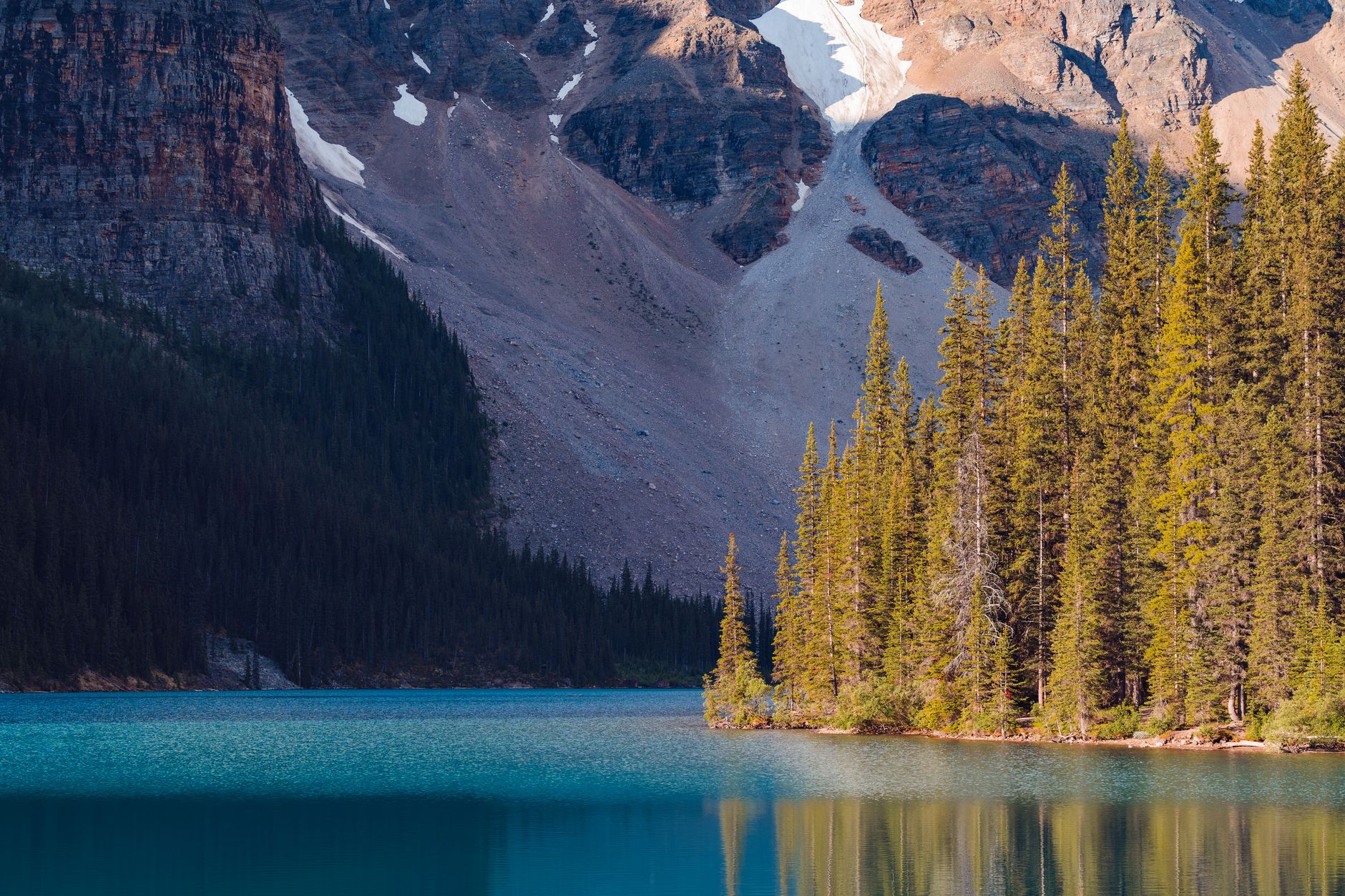
Ten peaks stand in a row above a lake the colour of copper sulphate, a view that once appeared on the national banknote. Private cars have been barred from the access road, so arrival is by park shuttle, commercial bus or bicycle, booked well ahead for sunrise. A short scramble up the rockpile at the outlet gives the classic angle. Snow shuts the road from mid-autumn until the start of summer.
-
Peyto Lake
Bow Summit on the Icefields Parkway carries a short paved path to a railed platform above a lake shaped, from that angle, like a wolf's head. Glacial silt gives the water its milky blue, strongest in late summer when melt runs heaviest. The viewpoint is named for a Banff guide and trapper. Morning light is kinder, and the upper car park fills early.
-
Tunnel Mountain
Named for a railway tunnel that was proposed and never dug, this small peak rises straight out of the townsite and gives the closest summit view in the valley. Switchbacks through Douglas fir climb a couple of kilometres to a bare ledge above the Bow, the hotel and Mount Rundle. An hour up is usual, and the path ices over in shoulder season.
-
Vermilion Lakes
A dead end road leaves the edge of town and runs a few kilometres past three shallow lakes with Mount Rundle standing at the end of the view. Dawn and dusk are the reason to come: still water, reflected rock, elk in the reeds. Warm springs keep patches open through the freeze. Cycling out from the town centre takes a quarter of an hour.