Things to do
9-
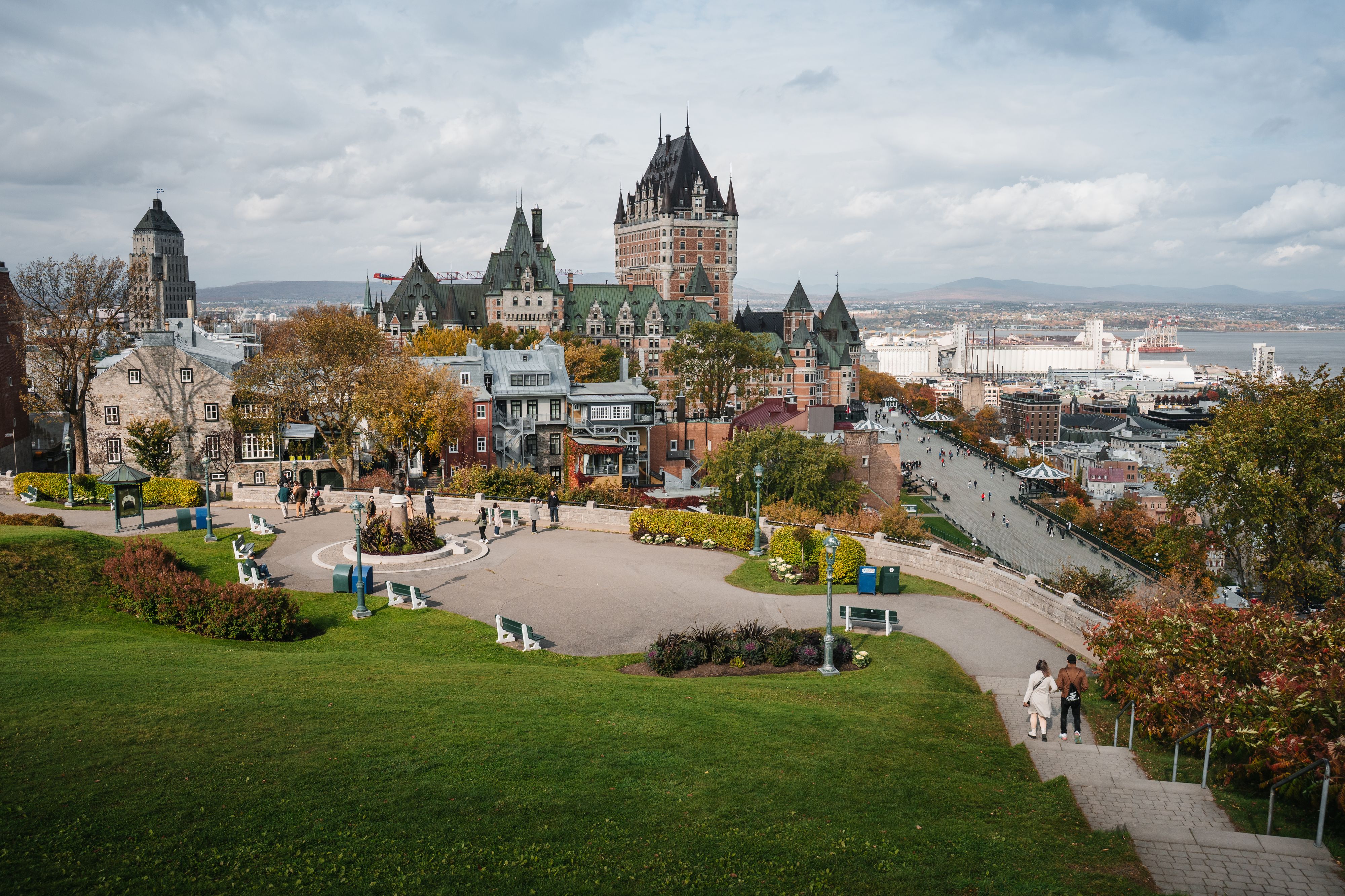
Château Frontenac
Canadian Pacific opened this railway hotel above the river in 1893, and its green copper roofs and turrets have set the skyline since. Churchill and Roosevelt met in its rooms during the wartime Quebec conferences. Guided tours take visitors who are not staying through the corridors and the old ballroom. River-facing rooms are the ones to request at booking.
-
Citadelle of Quebec
Still a working garrison, this star fort on the cliff top was raised by the British between 1820 and 1850 over older French works, and the Royal 22e Régiment has held it since the nineteen twenties. Access is by guided tour only. A changing of the guard with a regimental goat is staged on summer mornings. The Governor General keeps a residence inside the walls.
-
Île d'Orléans
Downstream from the city a bridge crosses to a farming island where six parish villages ring a single road, and a good share of French Canadians trace ancestors to its first settlers. Strawberries, apples, cider, maple and blackcurrant liqueur are sold at farm gates along the way. The loop takes a half day by car and is flat enough to cycle. Most farm stands close once the harvest is in, by late autumn.
-
Montmorency Falls
Eighty-three metres of white water drop straight into the St Lawrence a short drive east of the city, half again the height of Niagara. A suspension bridge crosses the crest and a wooden stair descends the east flank, with a cable car for the return. Spray freezes into a cone at the base in deep winter. Wind carries the spray, so the bridge stays wet in almost any season.
-
Old Quebec
Walls still ring the colonial core, alone on the continent north of Mexico, and UNESCO listed the whole quarter in 1985. Inside them Upper Town sits on the cliff of Cap Diamant and Lower Town on the riverbank below, joined by a funicular and a stairway called Breakneck Steps. Snow closes some terraces in winter, and the lanes are quietest early.
-
Place Royale
Champlain put his first habitation on this small stone square in 1608, which makes it the root of French settlement in the north. Notre-Dame-des-Victoires, built at the end of the sixteen hundreds, closes one side, and a bust of Louis the Fourteenth stands in the middle. Steep-roofed merchant houses were rebuilt after the sieges and restored again last century. Ten minutes covers it.
-
Plains of Abraham
On a September morning in 1759 the British army climbed the cliff and beat the French here in under an hour, and the loss of the colony followed. The battlefield became a park for the city's tercentenary and now holds Martello towers, an interpretation centre and lawns used for summer concerts. Skis and sledges take over the field once the snow settles in December.
-
Quartier Petit Champlain
Boutiques and restaurants fill a knot of pedestrian lanes at the foot of the cliff, restored from near dereliction and bought by a merchants' cooperative in the nineteen eighties. Rue du Petit-Champlain is billed as the continent's oldest commercial street. Murals cover the end walls, and the Breakneck Steps climb from here to Upper Town. December brings lights and queues; shoulder-season mornings are calmer.
-
Terrasse Dufferin
A boardwalk runs along the cliff edge beside the hotel, built under Lord Dufferin and lined with painted kiosks and a bandstand. The St Lawrence turns below, with ferries crossing to Lévis. At its southern end the Promenade des Gouverneurs climbs a long stair toward the Plains of Abraham. In winter a toboggan run is set up on the boards and carries real speed.