Things to do
10-
Jean-Talon Market
Quebec growers sell under an open canopy in Little Italy: strawberries and sweetcorn at the height of summer, squash and apples in autumn, maple syrup and cheese the year round. Fishmongers, butchers and a spice merchant occupy the buildings around the perimeter. Stall numbers shrink in the cold months, though the market never shuts. The metro station shares its name and stands two streets off.
-
Montreal Biodome
Inside the cycling track built for the Olympics of the mid nineteen seventies, a set of ecosystems under one roof: tropical rainforest, Laurentian maple forest, a tidal basin standing for the Gulf of St Lawrence, and sub-polar shores with penguins and puffins. Heat and humidity change between them, so a winter coat becomes a nuisance. Allow two hours and carry little.
-
Montreal Botanical Garden
Brother Marie-Victorin founded these gardens in the nineteen thirties beside what became the Olympic park, and they now run to some seventy hectares: a Chinese garden of pavilions built by Shanghai craftsmen, a Japanese garden holding an old bonsai collection, an alpine slope, a First Nations wood. Glasshouses carry the winter. Lanterns light the Chinese garden through the autumn evenings.
-
Montreal Museum of Fine Arts
Canada's oldest art museum spreads across five pavilions on Sherbrooke Street, linked by tunnels beneath the road, which is easy to lose track of. Strengths lie in Quebec and Inuit art, decorative arts and design, and European painting. A concert hall occupies a former church next door, behind Tiffany windows. Timed entry applies to the touring shows and those sell out at weekends.
-
Mount Royal Park
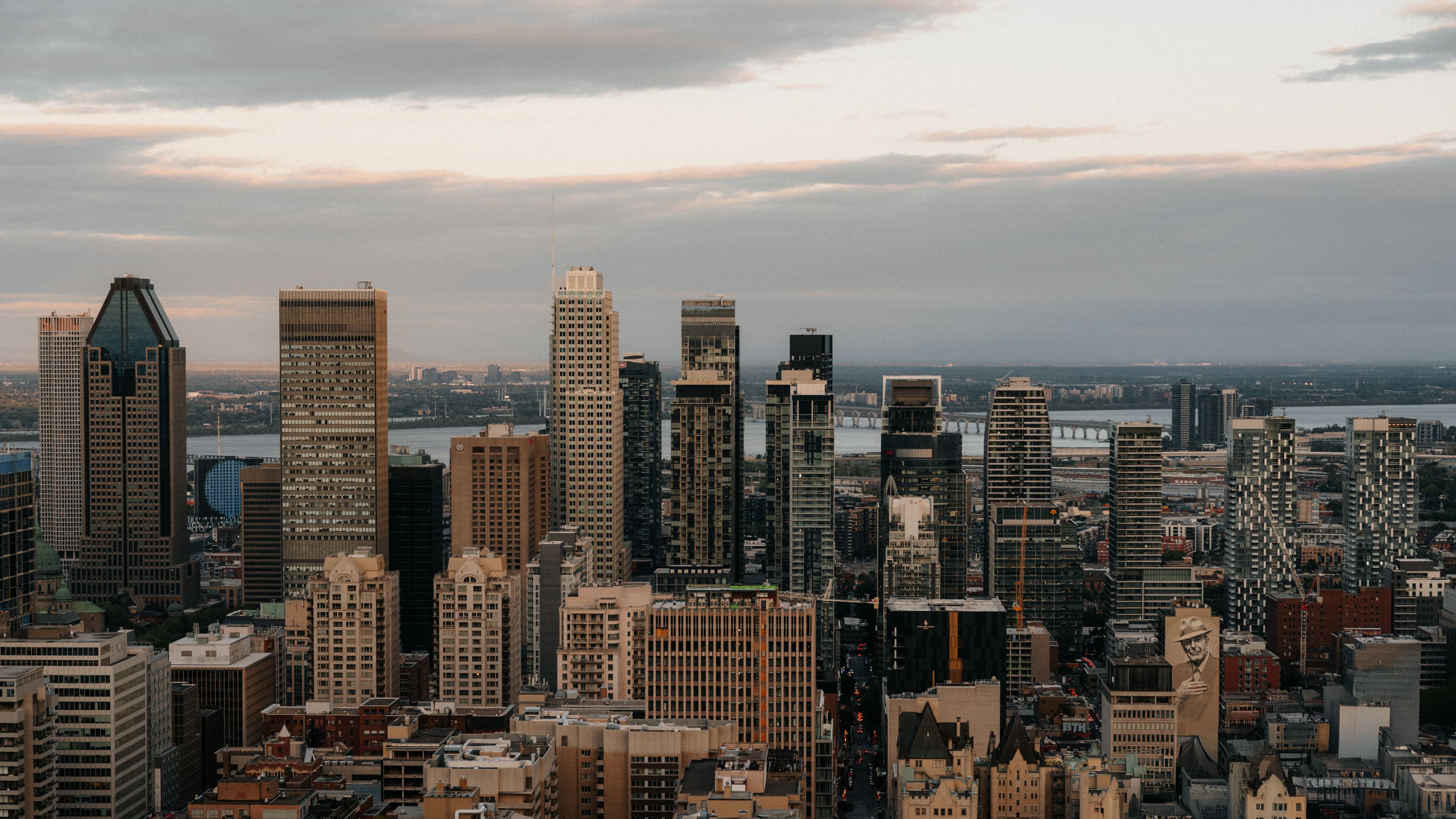
Frederick Law Olmsted laid out the hill above downtown in the eighteen seventies, curling a carriage road around the slope to keep the climb gentle. A stone chalet at the Kondiaronk lookout frames the towers and the river beyond. Drummers gather on the eastern slope on summer Sunday afternoons, and a steel cross on the summit is lit at night. Steps from Peel Street shorten the walk.
-
Notre-Dame Basilica
James O'Donnell's Gothic Revival church of the eighteen twenties, its interior painted deep blue and studded with gold leaf stars beneath a vaulted ceiling. The architect converted to Catholicism on his deathbed to be buried below it. Behind the sanctuary a wedding chapel, rebuilt after fire, ends in a vast bronze altarpiece. An evening sound and light show fills the nave; mornings are quieter.
-
Old Montreal
Cobbled lanes on the footprint of the walled French town founded in 1642, between the port and the banks. Grey limestone warehouses from the shipping century now hold hotels and dining rooms, and an archaeology museum at Pointe-a-Calliere is built over the first settlement's foundations, visible in the basement. Tables fill Place Jacques-Cartier in summer. The cobbles are uneven and cyclists share the narrow streets.
-
Old Port
Two kilometres of reclaimed quay along the river below the old town, given over to walkers and cyclists: a science centre in one shed, a spa moored in a converted ferry, a big wheel turning the year round and a clock tower raised to merchant sailors lost at war. Jet boats run the Lachine rapids in summer and a refrigerated rink takes the site in winter.
-
Plateau Mont-Royal
Triplexes with outdoor spiral staircases, a nineteenth century economy of space and land tax, line the streets north-east of the mountain, and the quarter stays residential. Bagel bakeries on Fairmount and Saint-Viateur keep wood ovens going all night, and the smoked meat counters are along Saint-Laurent. Parc La Fontaine anchors the south end. Terraces reach the pavement from the first warm week.
-
Saint Joseph's Oratory
A lay brother credited with cures raised a small chapel on the western slope of the mountain early in the last century; the basilica that grew over it was finished in the nineteen sixties, and its dome now tops that skyline. Pilgrims climb the central wooden steps on their knees, and abandoned crutches hang in the votive chapel. A lift serves anyone not walking.