Things to do
6-
ByWard Market
Stalls have stood on these streets since the eighteen twenties, when the place was a lumber camp with a canal to dig. Produce, cut flowers and maple syrup fill the outdoor tables in the warm months, while the brick market building and the lanes around it hold restaurants, bars and a pastry counter claiming the first BeaverTail. Loud at weekends and thin on stalls in winter.
-
Canadian Museum of History
Across the river in Gatineau, Douglas Cardinal's curved sandstone building of 1989 holds the national history collection. Its Grand Hall ranges house fronts and totem poles of the Pacific Northwest Coast against a glass wall facing Parliament. A long gallery traces the country from the ice age forward, and a children's museum fills one wing. Walk over the Alexandra Bridge in about fifteen minutes.
-
Canadian War Museum
Copper and concrete, deliberately unlovely, wedged into the flats west of Parliament and opened in the mid two thousands. Galleries walk through conflicts from the colonial wars to Afghanistan, with tanks, field guns and a staff car used by Hitler in a hall at the end. In the memorial room a single headstone is lit by the sun at the eleventh hour of Remembrance Day.
-
National Gallery of Canada
Moshe Safdie's glass and granite halls of 1988 rise beside the canal locks, with Louise Bourgeois's bronze spider standing over the entrance. Canadian painting from Tom Thomson and the Group of Seven, a deep Indigenous and Inuit collection, European old masters, and a nineteenth century chapel interior saved from demolition and rebuilt indoors room by room. Allow half a day.
-
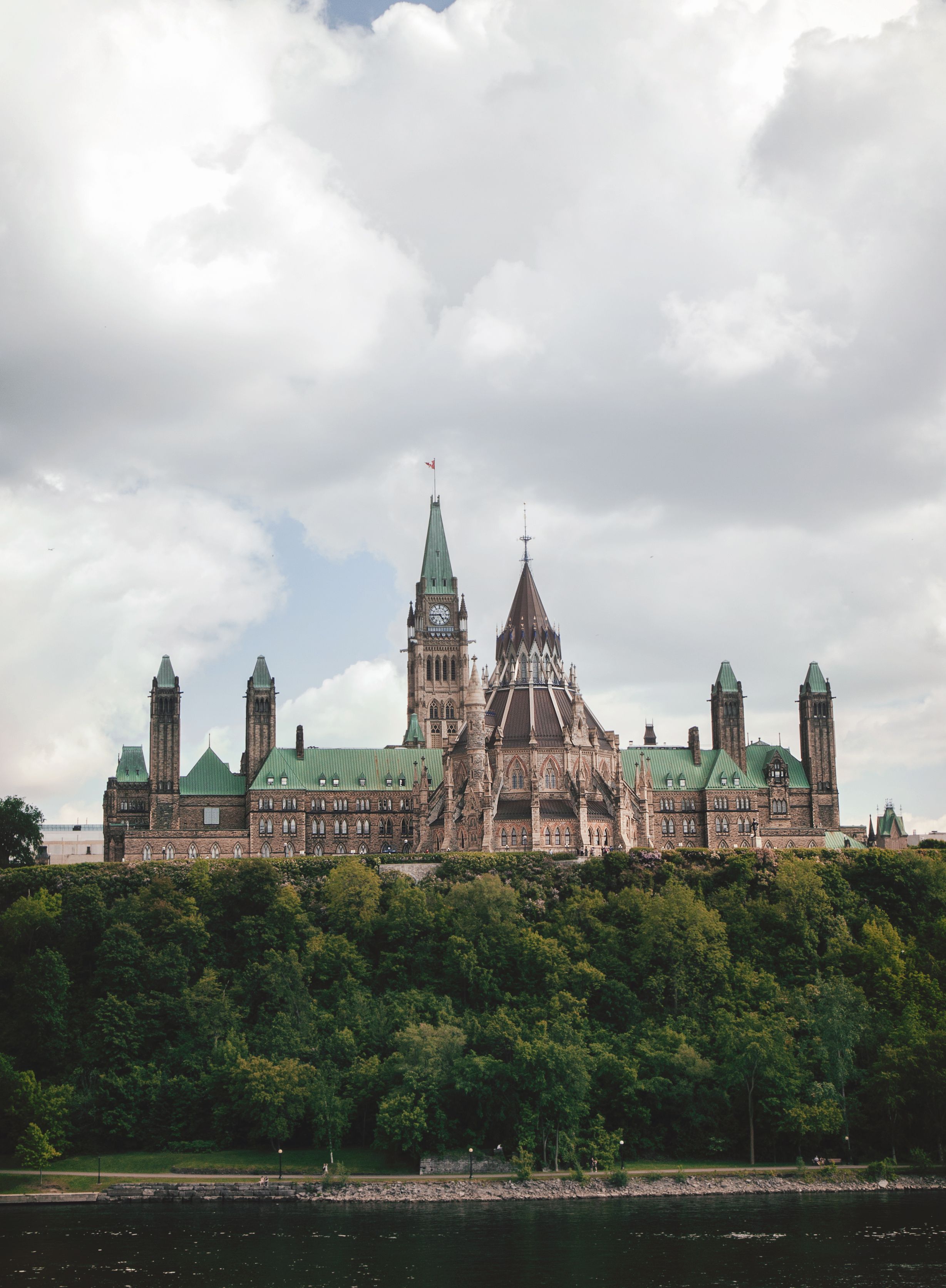
Parliament Hill
Gothic Revival ranges on a bluff above the Ottawa River, seat of the federal parliament. Fire gutted the Centre Block in 1916 and only the round library survived; its replacement carries the Peace Tower and a carillon of bells. That block is now closed for a long rehabilitation, so the Commons sits in the West Block and tours go there. Guards change on the lawn through summer.
-
Rideau Canal
Colonel By's military waterway of the eighteen twenties, cut inland so supply boats could avoid an exposed reach of the St Lawrence, and carrying a UNESCO listing for the engineering. Eight locks step down to the river beside Parliament and are still worked by hand. In a cold enough winter a long stretch through the city is cleared for skaters, with huts, skate hire and stalls.