Dubrovnik Old Town
About ten kilometres north of Mlini, so it means backtracking: only worth it with an early start, and park at Ilijina Glavica rather than circling the gates.
Cruise passengers fill the old town from mid morning, so avoid midday because of the crowds.
View on globeNinety seconds on Dubrovnik
Three. The walls and the old town fill the first two comfortably, with the museums and the Srđ cable car folded in. The third goes on the water, to Lokrum in twenty minutes or the Elaphiti islands for a day. Two days works if you skip the islands.
No, and a car is a liability here. Nothing motorised enters the old town, the walled city crosses in fifteen minutes on foot, and the local buses reach Lapad, Gruž and the airport. A car earns its keep only for the Pelješac peninsula or the drive south to Cavtat and the Konavle valley.
May and early June, or the second half of September into October, when the sea is still warm and the cruise schedule has thinned. July and August bring the heat, the busiest weeks of the year and the fullest ship calendar. Winter is quiet and mild, but the island boats run to a reduced timetable.
Croatian. English is spoken almost everywhere a visitor goes, and Italian and German are common along this coast.
The euro. Croatia replaced the kuna on 1 January 2023 and joined the Schengen area the same day, so there are no longer border checks arriving from Slovenia or Hungary. Cards are taken almost everywhere; the Gruž market is the usual exception.
Dubrovnik Airport, DBV, at Čilipi about half an hour southeast of the city. An airport bus meets arriving flights and runs to Pile and the main bus station at Gruž. Tivat airport in Montenegro is closer than any Croatian airport except Dubrovnik, but the drive crosses a land border.
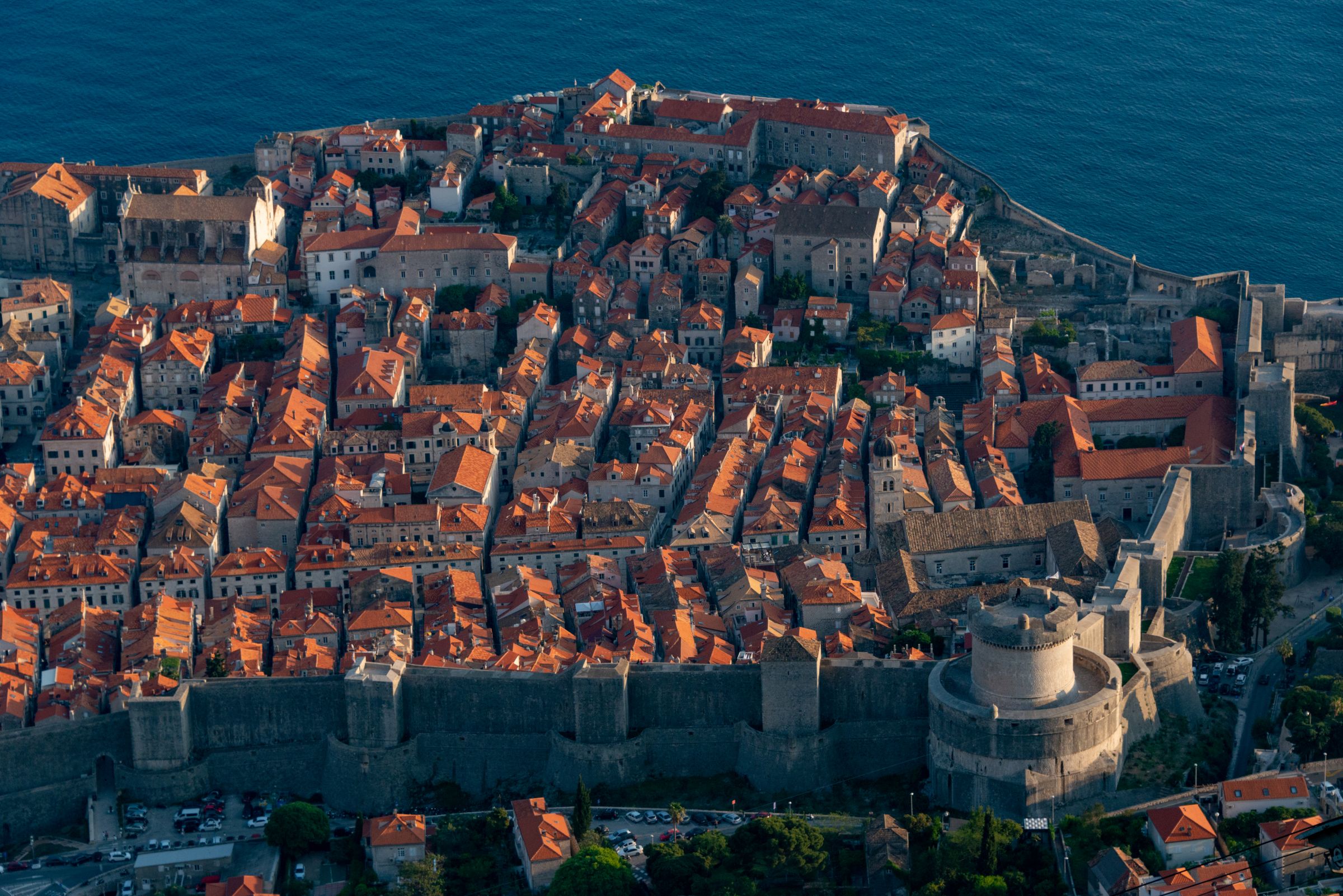
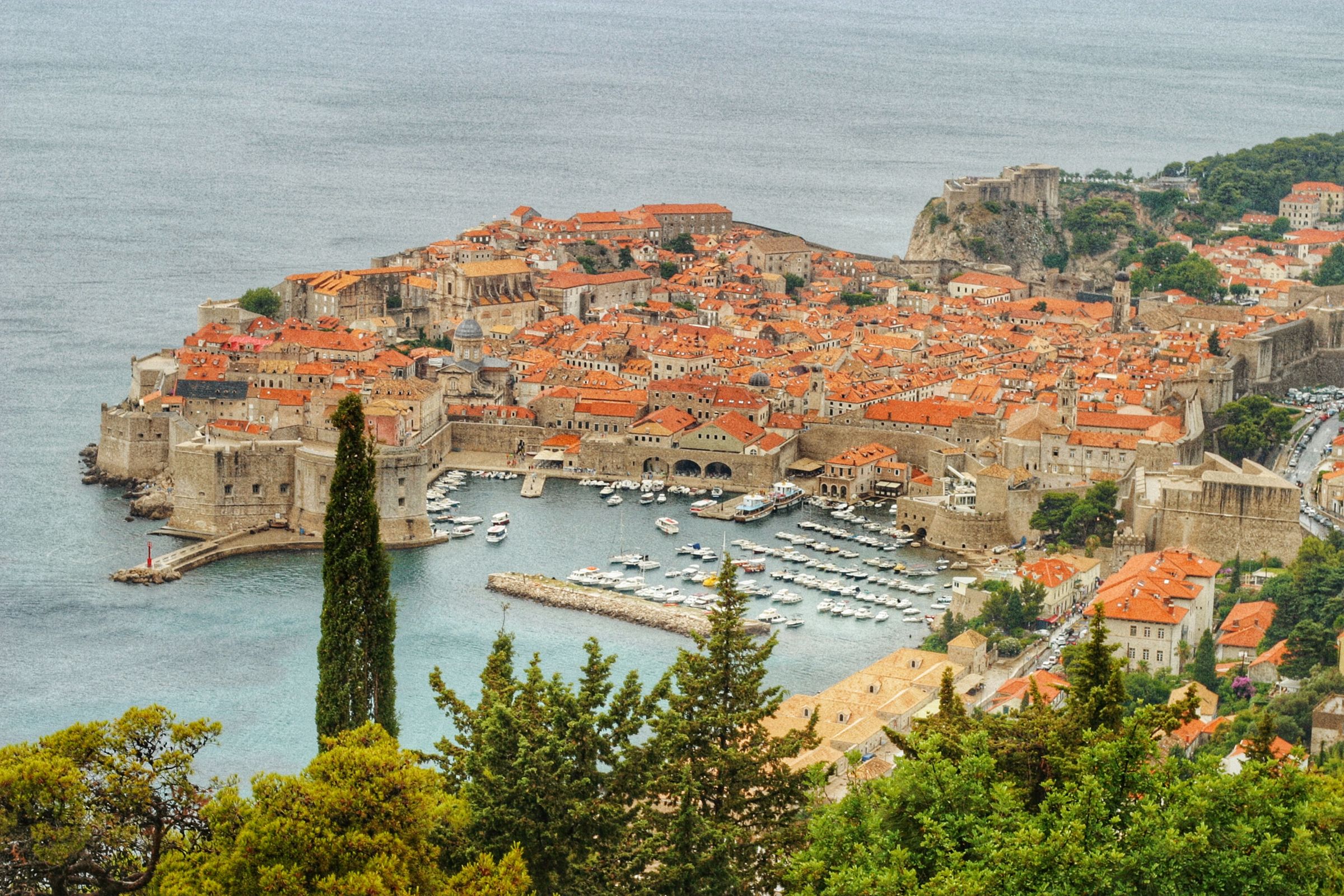
Almost everything you come to Dubrovnik for is inside the walled old town, a small core in a city of about forty thousand. Its streets keep a medieval plan, but most of the buildings along them are baroque, raised after the earthquake of 1667.
The circuit of the walls runs 1,940 metres, goes anticlockwise only and takes between ninety minutes and two hours. It opens at eight. There is no shade on the ramparts, and the stone holds the afternoon heat.
The city caps arrivals at two cruise ships a day and about four thousand disembarking passengers. Even so, the passengers arrive mid morning, and by ten the Stradun is crowded.
Pick your base with care, because it changes the trip. Inside the walls is the shortest walk to everything and the loudest nights, and you carry every bag the last stretch over stone. Ploče, just east, keeps the ramparts in view and has the town beach below.
Lapad is the green peninsula with the swimming bays, twenty minutes out by bus. Gruž is the working port, the cheapest of the four, with the market and the ferries.
About ten kilometres north of Mlini, so it means backtracking: only worth it with an early start, and park at Ilijina Glavica rather than circling the gates.
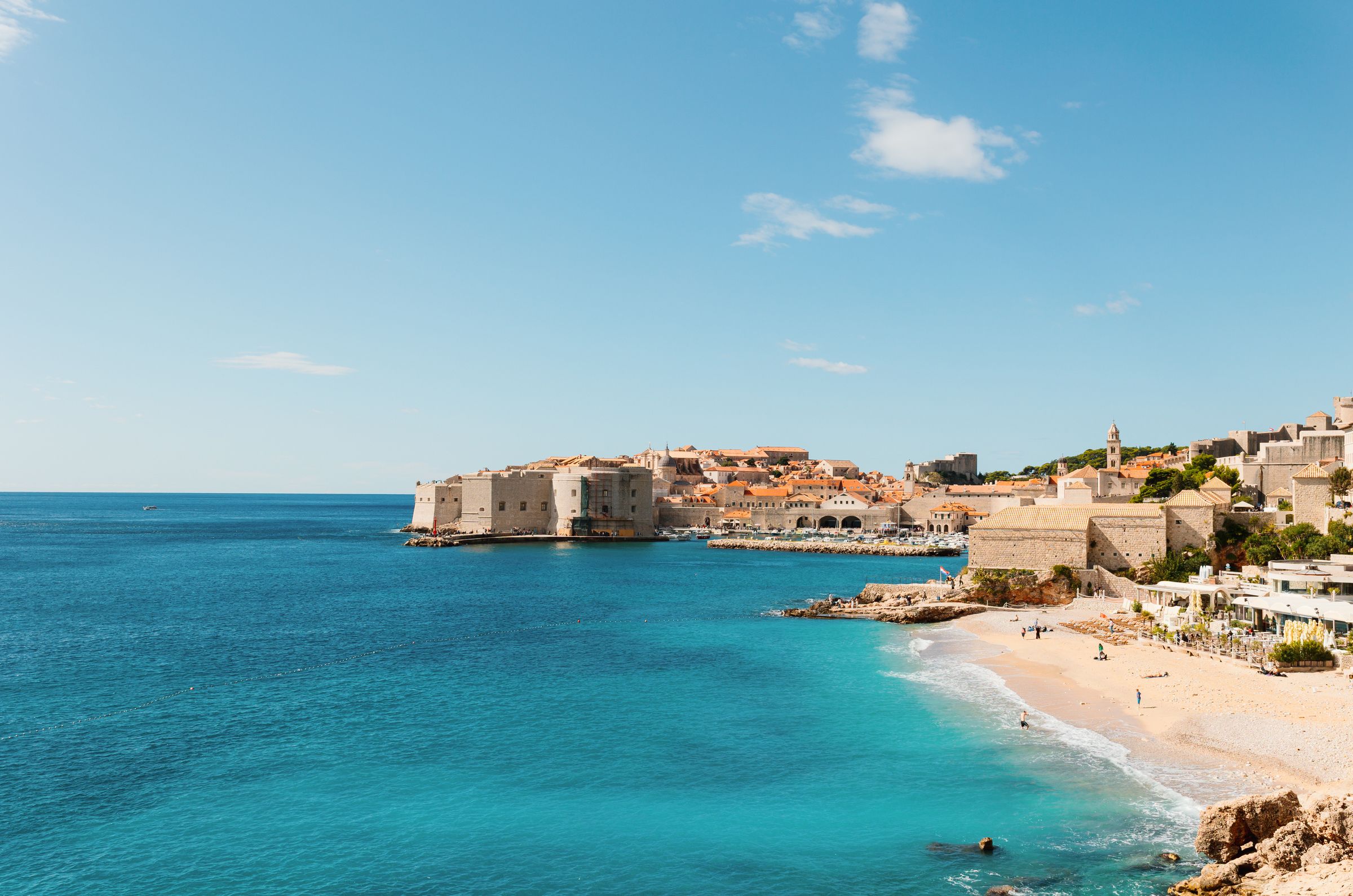
The quarter immediately east of the walls, reached through the Ploce Gate and its stone bridge. It holds the town beach, the old quarantine sheds and most of the hotels with a view back at the ramparts, so it is where a visitor sleeps who wants the walled city on foot and a swim before breakfast. The ground climbs steeply, and the higher terraces look straight down the length of the old harbour.
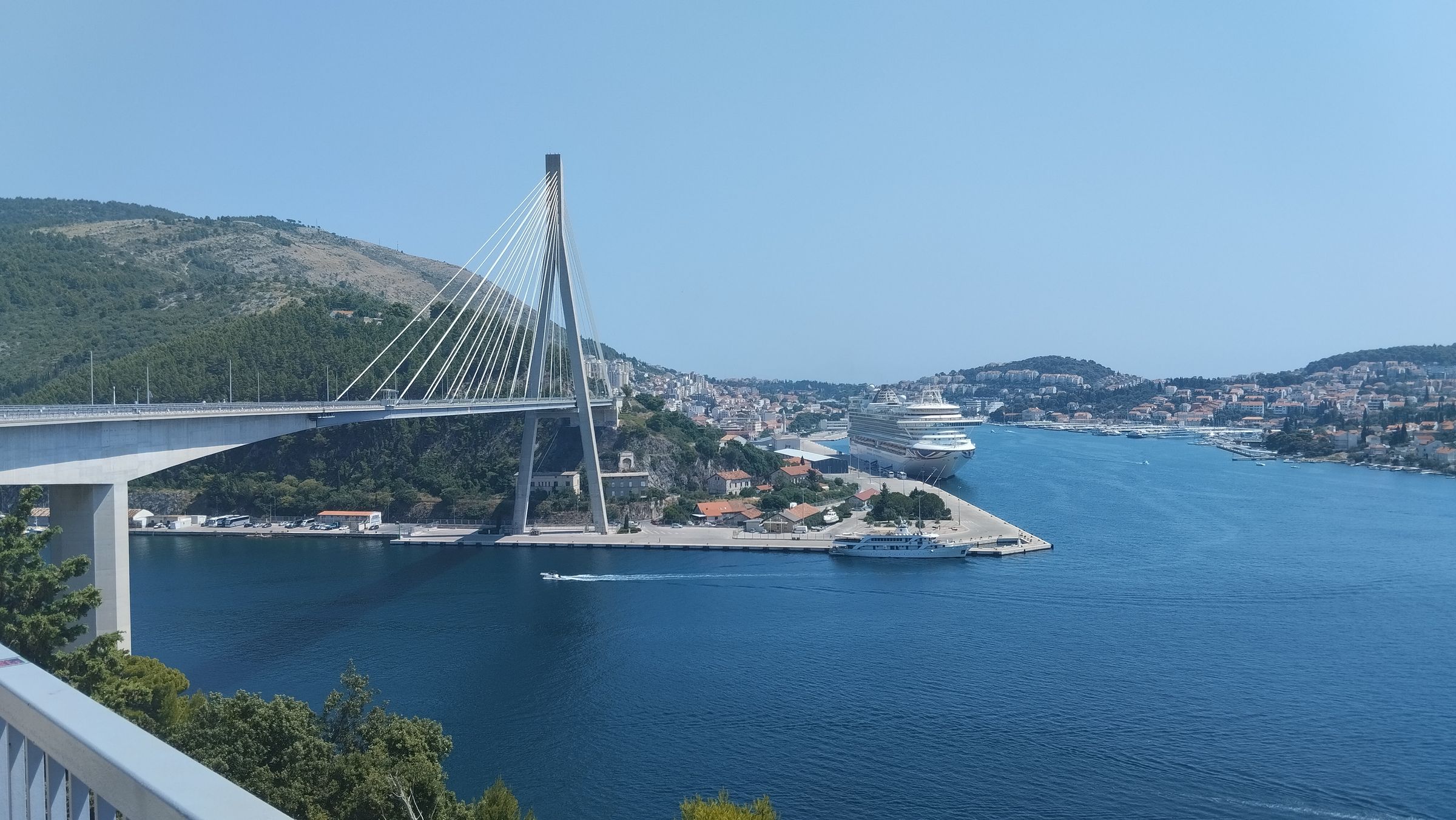
The working port, where the ferries, the island boats and the cruise ships tie up, and where the city does its shopping. It is the least polished of the three bases and the one with the most ordinary life in it, with the morning market on the quay and the bus station at the top of the harbour. Rooms are cheaper here than anywhere within sight of the walls.
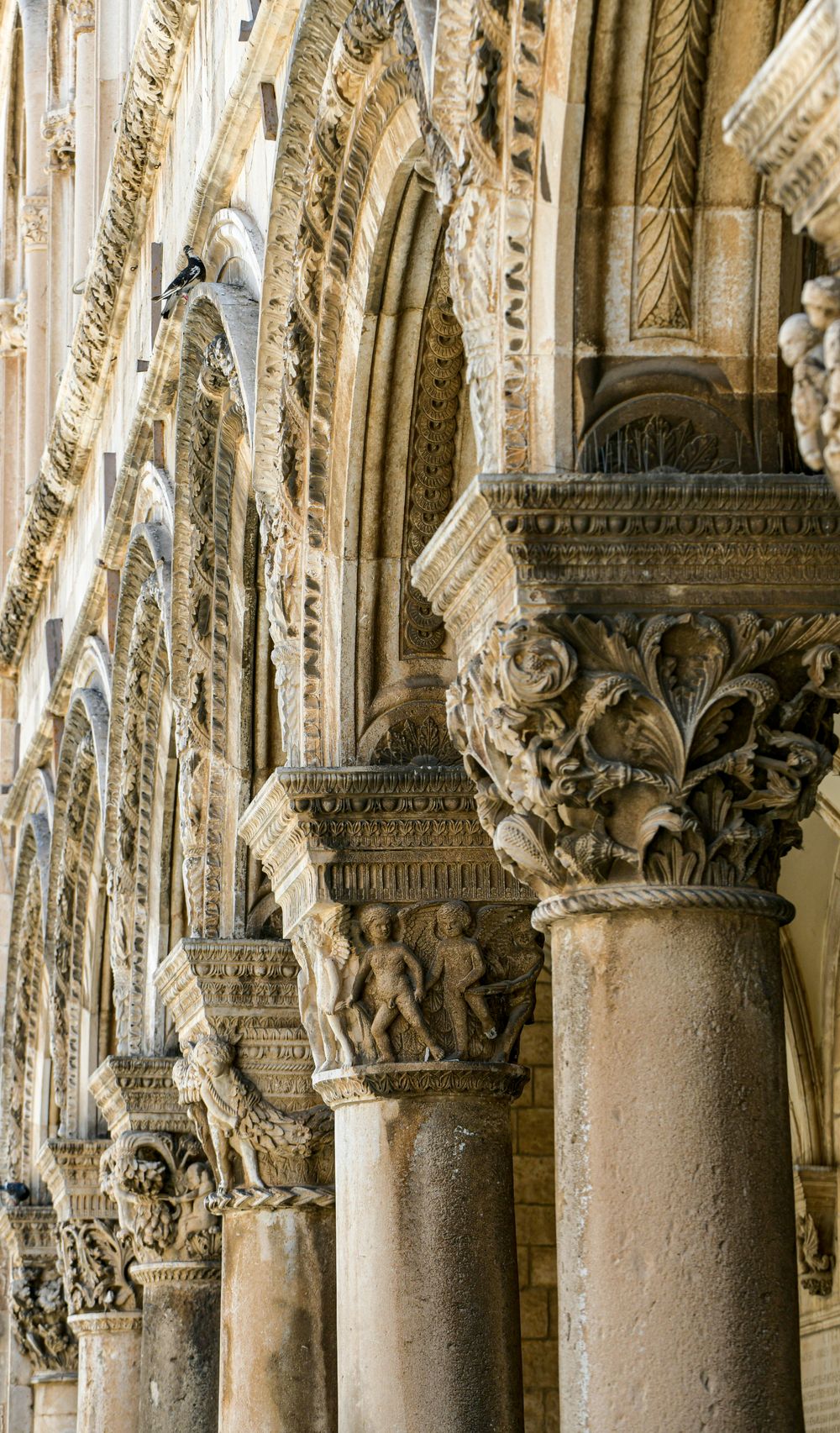
Ninety minutes covers it comfortably; park at Ilijina Glavica or Pile and accept that everything inside the walls means walking.
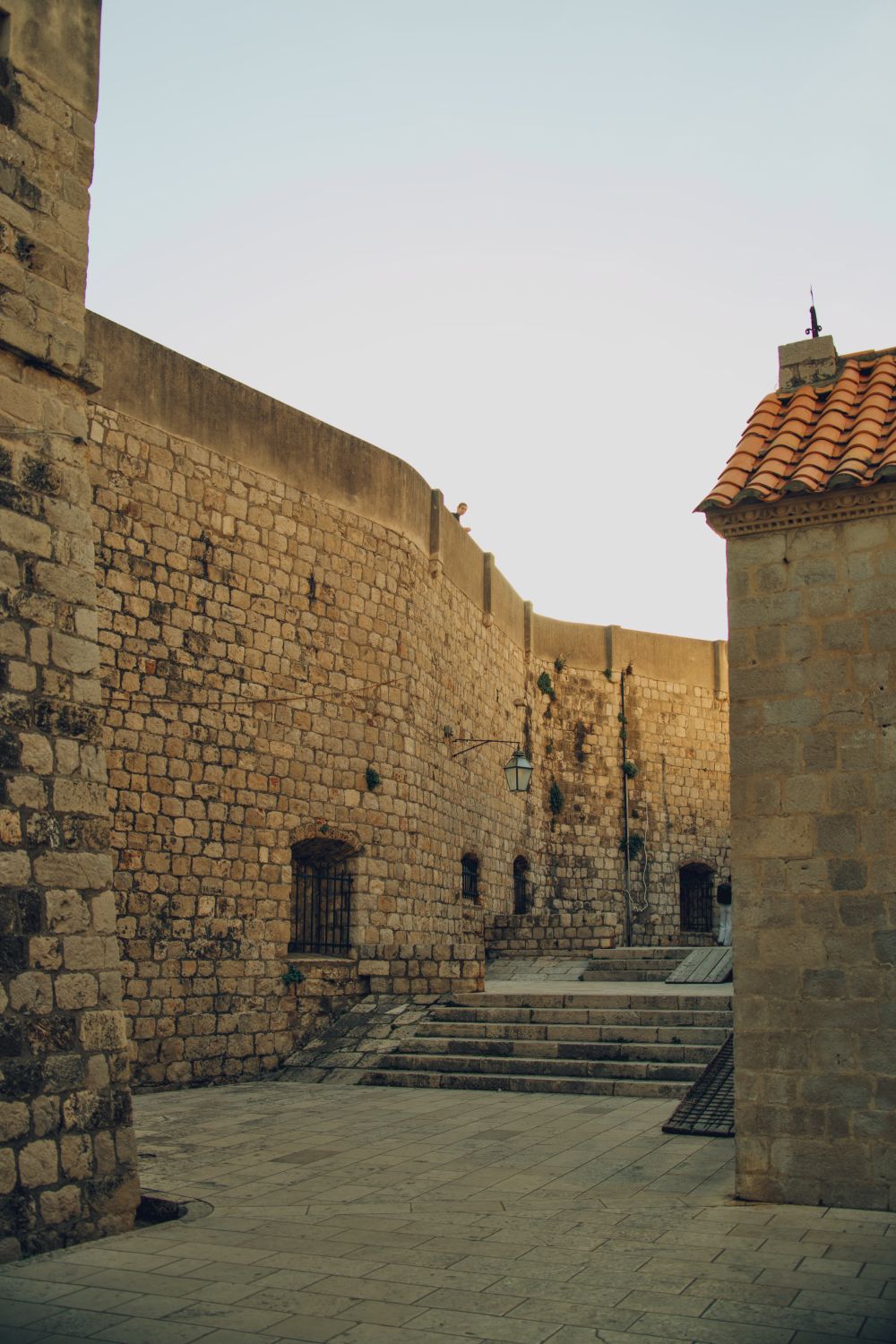
Ten kilometres back up the coast from Mlini, so go at opening time and be back in the car by mid-morning; the full circuit takes about 90 minutes with no shade.
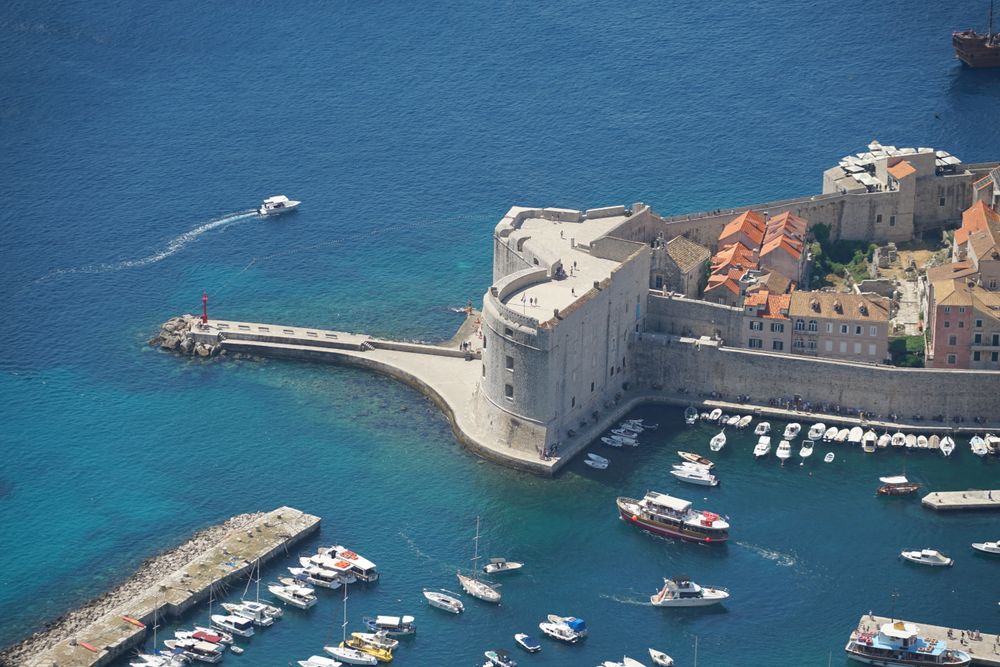
15th-century maritime fortress at the entrance to Dubrovnik's harbour, originally built as part of the city's defensive system. Now houses the Maritime Museum with exhibits on Dubrovnik's naval history.
A museum in a converted Gruz factory about everyday life in socialist Yugoslavia, built around domestic objects, packaging, furniture and a reconstructed living room. The collection was assembled largely from household donations. It is the only museum in the city that is not about the Republic of Ragusa or the 1991 siege.
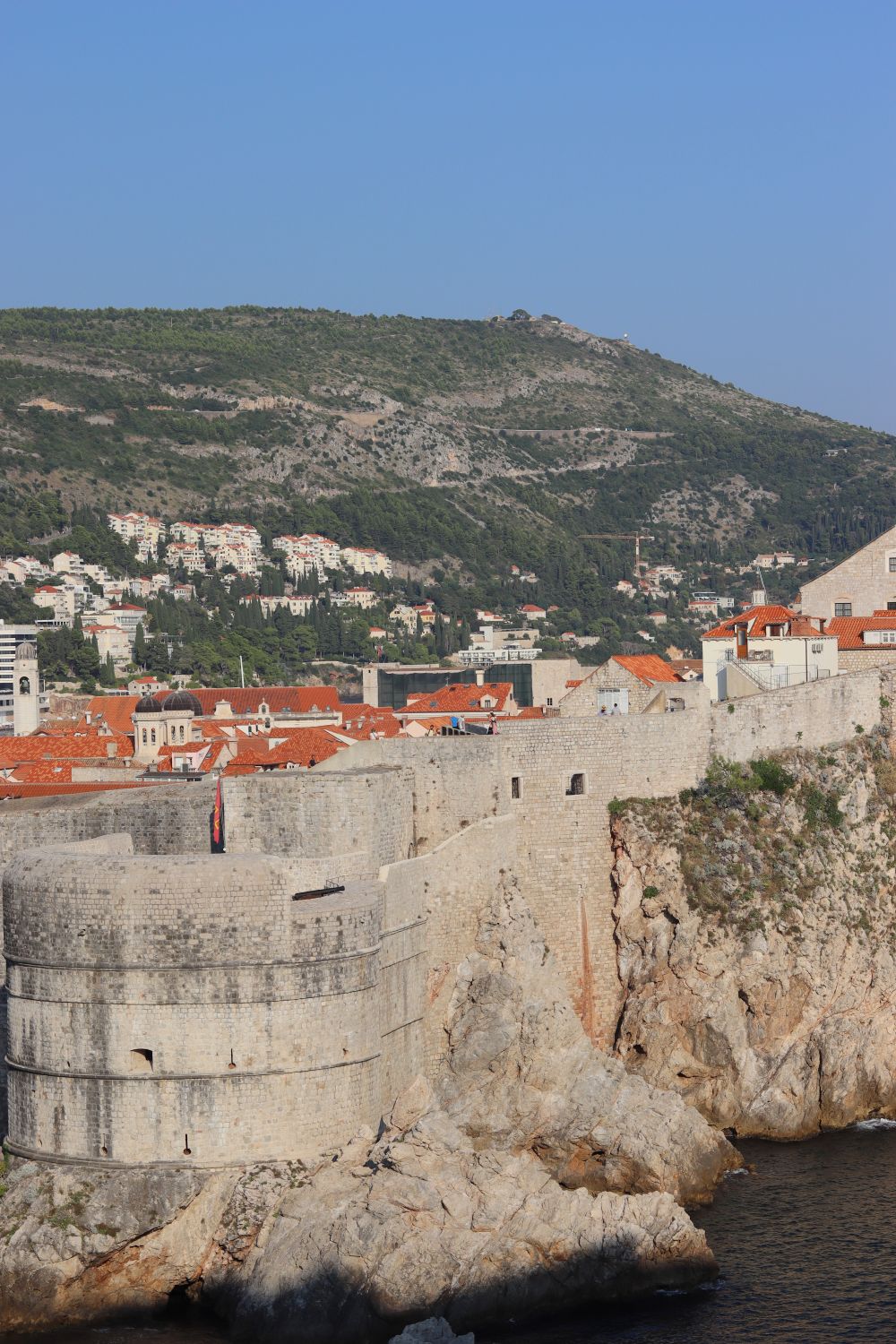
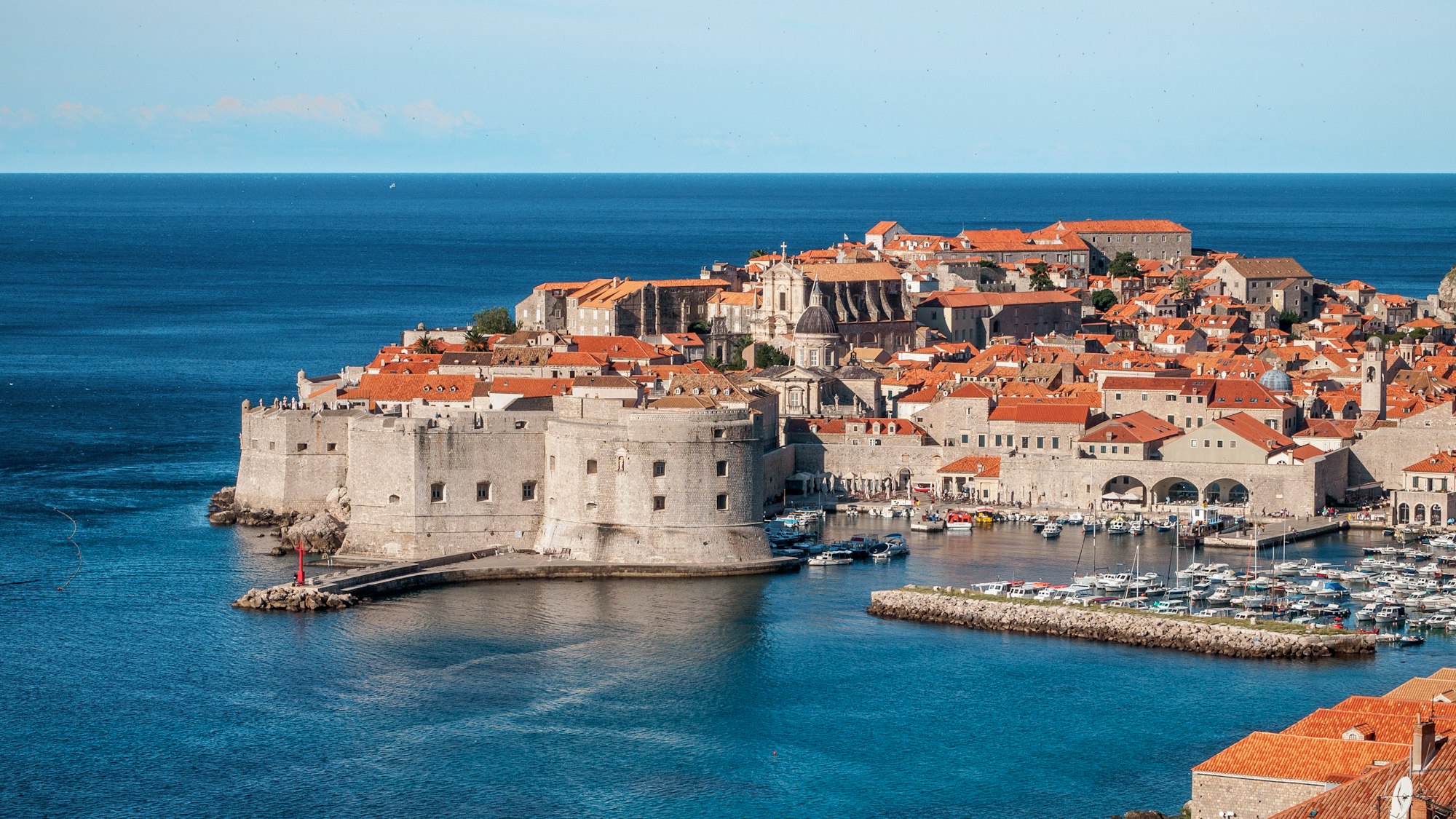
A circuit of two kilometres runs the full ring of the old town, climbing between forts and looking down on terracotta roofs and the sea. The route is one way and largely unshaded, which makes the first entry of the morning or the final hour before closing the sensible choice in summer. Steps are frequent and the walk takes around two hours.
Come for the cloister, which is quiet even in August; ten minutes off Stradun and one of the best value tickets in town.
The best straight-on view of the walls is from its ramparts; the City Walls ticket includes entry, so do both the same day.
An hour at most and it sits inside the walls a few steps off Stradun; go first thing before the cruise crowds fill the lanes.
Worth seeing for the interior, though entry is modest. Allow 45 minutes; visit early morning before Old Town crowds build.
The single best painting collection in the city and usually the quietest of the monastery museums; go for the Titian and the Bozidarevic triptychs.
Take the first boats out and check the last return time, which is posted at the dock; bring water shoes for the rocky swimming spots.
Combine it with a walk along Frana Supila; the terrace views over the old harbour are part of the visit.
Ride up an hour before sunset for the light over Lokrum and the Elaphiti; buy the round trip unless planning to hike the switchback trail down.
Stop here while in the Old Town for 20 minutes; the courtyard and facade are worth the look, but the interior is secondary.
Good overview of the city's development; budget 60 to 90 minutes and combine with nearby Rector's Palace.
An hour covers it plus the side lanes; park at Pile or Ploce and expect to pay dearly for the space.
Book a group boat tour or private ferry; a half-day excursion offers a quieter sense of the Adriatic and a break from the mainland.
Go as much for the extraordinary granary structure as the costumes; it is uphill from the Stradun and usually almost deserted.
Worth it for anyone interested in how a tiny republic ran one of Europe's largest merchant fleets; the fortress views come free with the ticket.
Go first thing: it is packing up by noon, and it is a fifteen-minute drive back from Mlini.
Allow about 15 minutes from Ston to reach the first stretch of wall, then half an hour along the top from the Great Wall at Ston to the Small Wall at Mali Ston, where the oyster boats leave.
Small and inexpensive; add fifteen minutes to a cathedral stop rather than making a separate trip.
Small and steeply stepped, so twenty-five minutes is enough; check the Friday and Saturday closures before climbing up.
The morning market on the Gruz quay, which is where Dubrovnik does its shopping rather than where it takes its photographs. Fish, fruit and vegetables come off the islands and the Konavle valley and the trading is finished by early afternoon. It sits between the ferry berths and the bus station, so it is the one part of the working port a visitor passes anyway.
Wooded peninsula 8 miles north of Mlini, home to three sandy beaches (Copacabana, Lapad, and Šunj) and shaded parks with walking paths. The area remains quieter than Dubrovnik Old Town beaches.
A 5-minute stop while walking the Old Town. Photograph it and move on; no museum here.
A hexagonal fortress completed in 1549 to defend Dubrovnik's eastern entrance, with thick stone walls and multiple gun emplacements. The structure is one of Europe's finest examples of Renaissance military architecture.
Time the stop for the harvest; the rest of the year the visit is the pans and a short introductory video.
Located in the 16th-century Fort St. John, the aquarium displays Mediterranean species native to the Adriatic, including local fish, crustaceans, and sea horses.
The town beach, a shingle crescent below the Ploce Gate with the walls and Lokrum in the frame from the water. It is the closest swim to the old town and the busiest, filling from the middle of the morning; the eastern end is public and the western end is run as a club. The steps down from the coast road are the only way in.
The baroque church of the city's patron saint, rebuilt after a fire in 1706 on a square plan with a broad flight of steps onto the Stradun. The silver-gilt statue on the high altar is the one object carried out of the medieval church intact, and the model of the city it holds shows Dubrovnik as it stood before the 1667 earthquake. Blaise has been the Republic's protector since the tenth century and his feast on 3 February empties the offices.
Take the cable car up, read the exhibition, then stay for the panorama over the walled city and Lokrum.
Eastern entrance to the Old Town built in the 16th century, adjoining the medieval arsenal and harbour where merchant vessels were repaired and built. The gate's sculptural programme includes inscriptions celebrating the Republic.
The Bay of Mali Ston holds the largest oyster cultivation in the Adriatic, alongside mussel farms, and boats to the farms leave from the main harbour at Mali Ston. Trips in traditional wooden boats last 45 minutes to an hour, stop at a working farm and end with a tasting of fresh oysters and wine. Boats go out all year, and demand peaks from spring to early autumn.
The Jesuit church at the top of the old town, finished in 1725 to a design by Andrea Pozzo, with an apse fresco cycle on the life of Ignatius of Loyola. A broad baroque staircase modelled on the Spanish Steps drops from its terrace into the square below. The grotto to one side is a replica of Lourdes, added in the nineteenth century.
A small Renaissance votive church just inside the Pile Gate, built by the Senate in thanks after the earthquake of 1520 and one of the very few buildings in the old town to come through the far greater earthquake of 1667 intact. The single nave is used for concerts and exhibitions. Its west front is the clearest surviving example of Dubrovnik's own Renaissance style.
Three painters who trained together in the 1930s and spent their working lives on this coast, shown in a house beside the cathedral that belonged to one of them. The rooms are hung as domestic rooms, and the pictures are mostly the same few subjects returned to across decades. Admission is covered by the Museums of Dubrovnik ticket.
A terraced pine park on the headland west of the walls, laid out on the site of a medieval suburb the Republic burned in 1667 to stop a fire spreading. It looks straight back at Lovrijenac and the sea gate, which is the view most photographs of the fortress are taken from. The lower path drops to the Danče bathing rocks.
A wooded peninsula west of the centre, with the town's swimming bays on one side and a pedestrian promenade running down the middle to the water. It is a different holiday from the old town: quieter, greener, family-shaped, and about twenty minutes from the walls by bus. Most of Dubrovnik's larger seafront hotels are here.
Ten stone courtyards and eight lodging blocks built outside the Ploce Gate in the 1620s, where the Republic of Ragusa held arriving travellers and their goods for forty days before letting them through the walls. The quarantine was among the first anywhere to operate as a standing public health system. The complex is now used for exhibitions, studios and concerts.
Ferries cross from the old port in about fifteen minutes to a wooded island of Holm oak, a ruined Benedictine monastery, a salt lake known as the Dead Sea and a colony of peacocks introduced by Maximilian of Habsburg. Overnight stays are forbidden. The final boat back leaves in the early evening and its time is posted at the jetty.
A small museum to the sixteenth century playwright whose comedies are the founding works of Croatian theatre, staged in the same square where his company performed them. The displays lean on recorded scenes and stage models rather than on manuscripts, because very little of what Držić owned survives. He died in Venice, out of favour, after trying to persuade the Medici to overthrow the Ragusan nobility.
A stone figure of a knight raised in front of the Sponza Palace in 1418, which served as the place where the Republic's laws were proclaimed and its punishments read out. The forearm carved into its base was the official Ragusan ell, the length cloth was measured against in the square. The banner flown from the pole beside it marked the days a public fair was in progress.
The western entrance to the walled city, a double gate reached across a stone bridge and a surviving wooden drawbridge that was raised every evening while the Republic stood. The niche above the outer arch holds a figure of Saint Blaise by Ivan Meštrović. Inside it the ground drops to Onofrio's fountain and the head of the Stradun, which is where almost every visit to Dubrovnik begins.
Last updated