 Submit a photo
Ninety seconds on Kuélap
A walled town of round stone houses on a mountaintop, carved with friezes by the Chachapoya, whose culture flourished long before the Inca, and you can walk among the houses in a single morning.
From the approach path, the outer wall is the first thing in view: stone and mud, rising and falling in height along the crest. The way in is through narrow passages, built so that invaders could only advance in single file.
Inside, the round houses stand packed close together, most now low stone bases and only a few with walls still standing. None had windows. Their façades carry carved friezes, diamond and zigzag bands on the largest, and figures in human form.
The Tintero, a finely carved stone structure more than five metres high, stands on the second level near the north end of the complex. Two towers, one at the north and one at the south, added to its defences.
Walk to the edge of the plateau and the ground falls away sheer on every side. On rainy days the valley below fills with fog.
With your entry ticket booked, take a colectivo from the Chachapoyas bus station to Nuevo Tingo; look for the minivan with a big Kuélap sign on the side. Buy the cable car ticket at the Nuevo Tingo station, the only place it is sold, then take the shuttle bus to the cable car.
The cable car climbs to the upper station at La Malca in about twenty minutes, and a path leads from there up to the fortress. Queue at the entrance, Access 1, five minutes before the time on your ticket. The last entry is around 2.50pm.
Inside there are three circuits of different lengths. Yours runs one way and brings you back out through Access 1, and you keep to the path without touching or climbing on the walls. If walking is hard, ask at the entrance for the short route kept for older visitors and those with physical limits.
The last cable car down, which is also the last bus return, runs around 4.30pm, and hours can change, so leave the fortress with time in hand.
You can walk the circuit alone, but there is almost no signage, so the houses and friezes mean little without a guide. Official guides wear clothing that identifies them and offer their services at the ticket point. Only a few speak English, so ask which language they guide in before you agree.
Take the first slot of the day. Mornings are often clear, and afternoons are reliably cloudy and rainy.
Bring a hat, sunscreen, water and a waterproof coat, because it rains often up here. Wear shoes with a good tread for the path up from La Malca, which turns to mud when it has rained.
Leave food, tripods and selfie sticks behind: none are allowed inside the fortress.
Chachapoyas, and further afield
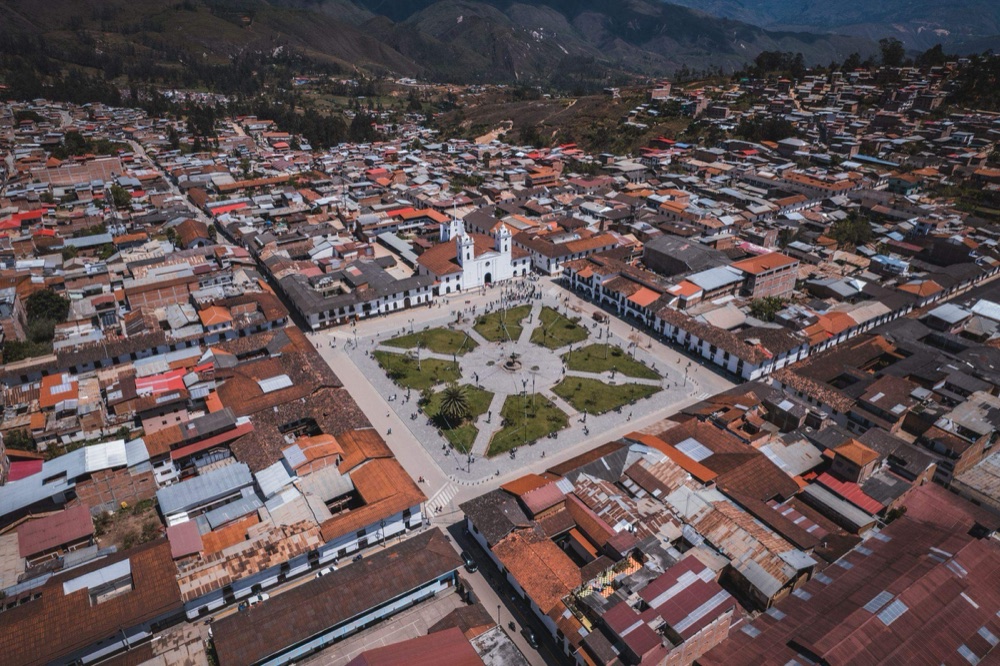
A small colonial town more than 2,300 metres up in the cloud forest of Amazonas, in northern Peru. It is the base for the ruins and…
The northern highland city where the Spanish seized Atahualpa in 1532 and the Inca empire effectively ended. It sits at 2,750 metres in a…
The market city of the north, and the base for the Lord of Sipán, the richest unlooted tomb ever found in the Americas, held in a pyramid…
The official pages this guide was checked against.
Last updated