Things to do
9-
Blow Up Hall 5050
A design hotel in a converted brewery within the Stary Browar arts and shopping complex, with art installations through the public spaces. Each room is different, and there are no numbers on the doors. Book ahead during the big trade fairs, when the city fills.
-
Hotel Bazar
A nineteenth-century hotel that served as the social heart of Polish Poznań under Prussian rule, a few minutes' walk from the market square. Restored rooms keep high ceilings and period detail. Ask for a room facing away from the street on weekend nights.
-
Imperial Castle
A heavy neo-Romanesque palace finished in 1910 for the German emperor, later altered by the Nazis as a residence for Hitler. It now houses a cultural centre with cinemas, galleries and a monument to the 1956 workers' revolt outside. Much of the building is free to enter, and guided tours run on set days.
-
Lake Malta
An artificial lake on the east side of the city with an international rowing course and a path of about 5 km around the shore. A narrow-gauge train runs to the zoo, and the dry ski slope and thermal pools sit at the eastern end. The lap is flat and good for an early run or an evening walk.
-
Old Market Square
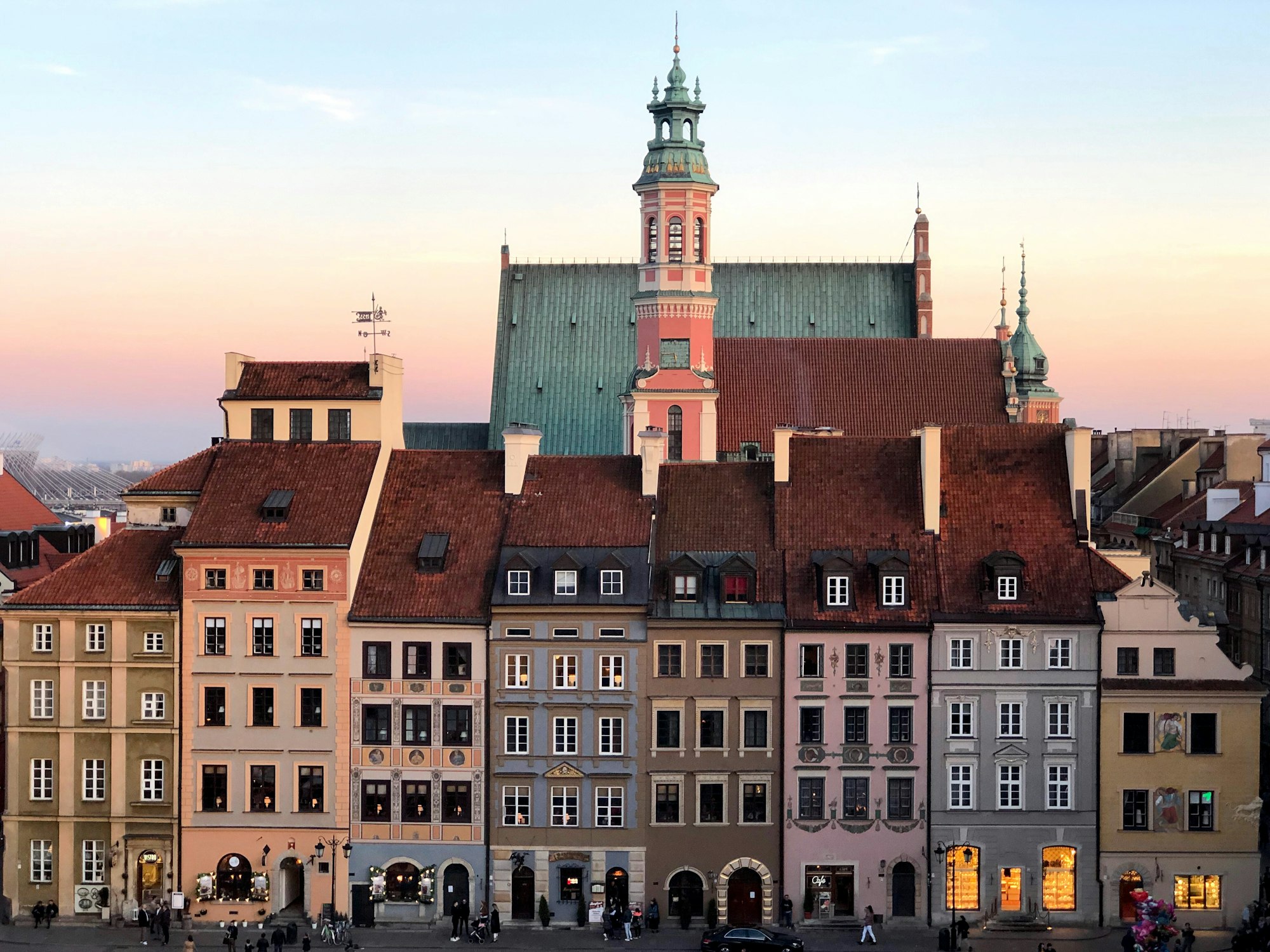
A rebuilt medieval square crowded with colourful arcaded merchant houses, with the town hall and a block of old fish sellers' houses in the middle. Café terraces line every side from spring onward. Most of what stands was reconstructed after heavy fighting in 1945, faithful to the painted facades seen in old photographs.
-
Ostrów Tumski
A river island where the Polish state began, holding the cathedral, the archbishop's palace and a quiet cluster of church buildings. The Porta Posnania interpretive centre on the far bank explains the early dynasty, and a footbridge links the two. Walk over from the old town in about 15 minutes.
-
Poznań Cathedral
Poland's oldest cathedral, a Gothic brick church on Ostrów Tumski whose crypt holds the remains of early Piast foundations. The Golden Chapel behind the altar, decorated in Byzantine style, contains the tombs of the first two Polish rulers. The crypt and chapel are ticketed and close during Mass.
-
Poznań Croissant Museum
A small living museum in a Renaissance house on the market square, where bakers demonstrate how the local St. Martin's croissant is made and tasted. The show runs in Polish and English with audience participation and a dialect lesson. Shows run at fixed times and sell out, so book ahead.
-
Poznań Town Hall
A Renaissance town hall with a three-storey loggia, rebuilt by an Italian architect in the 1550s. Every day at noon two metal goats emerge from a door above the clock and butt heads twelve times. Inside, the city history museum keeps a painted Gothic hall; it is ticketed and closed on Mondays.