Things to do
8-
Chapel of the Holy Trinity
A Gothic chapel inside the castle walls whose interior was painted by Ruthenian artists in 1418 for King Władysław Jagiełło, Western architecture dressed in Orthodox imagery. Saints, prophets and the king himself cover every wall and the ribbed vault. Entry is in small timed groups to protect the paint, so tickets sell out early on summer weekends.
-
Grodzka Gate
The gate between the old town and the castle, which once opened onto the Jewish quarter below the hill, a district the occupiers destroyed in the war. A cultural centre inside keeps its memory with an archive, old photographs and a room of recorded testimony. A single street lamp beside the gate is kept lit day and night, and the exhibitions keep weekday hours.
-
Kraków Gate
The fourteenth century brick gate that led into the old town from the west, given a baroque cupola in the eighteenth century. It holds a small museum of the town's history, and the upper floor looks across both the old and new towns. Hours are short and change with the season, and entry is ticketed.
-
Lublin Castle
A royal castle on its own hill, rebuilt in the 1820s in neo-Gothic style as a prison and used as one by the Gestapo during the occupation. It now holds the Lublin Museum, with Polish painting, arms and a Romanesque keep that can be climbed for a view over the old town. The keep, the chapel and the galleries are ticketed separately, and the museum closes on Mondays.
-
Lublin Cathedral
A former Jesuit church from the late sixteenth century, among the earliest baroque buildings in Poland, with illusionist frescoes covering the interior. Behind the altar, an acoustic sacristy carries a whisper from one corner to the other. The sacristy, the treasury and the crypts are shown on a short ticketed tour.
-
Lublin Old Town
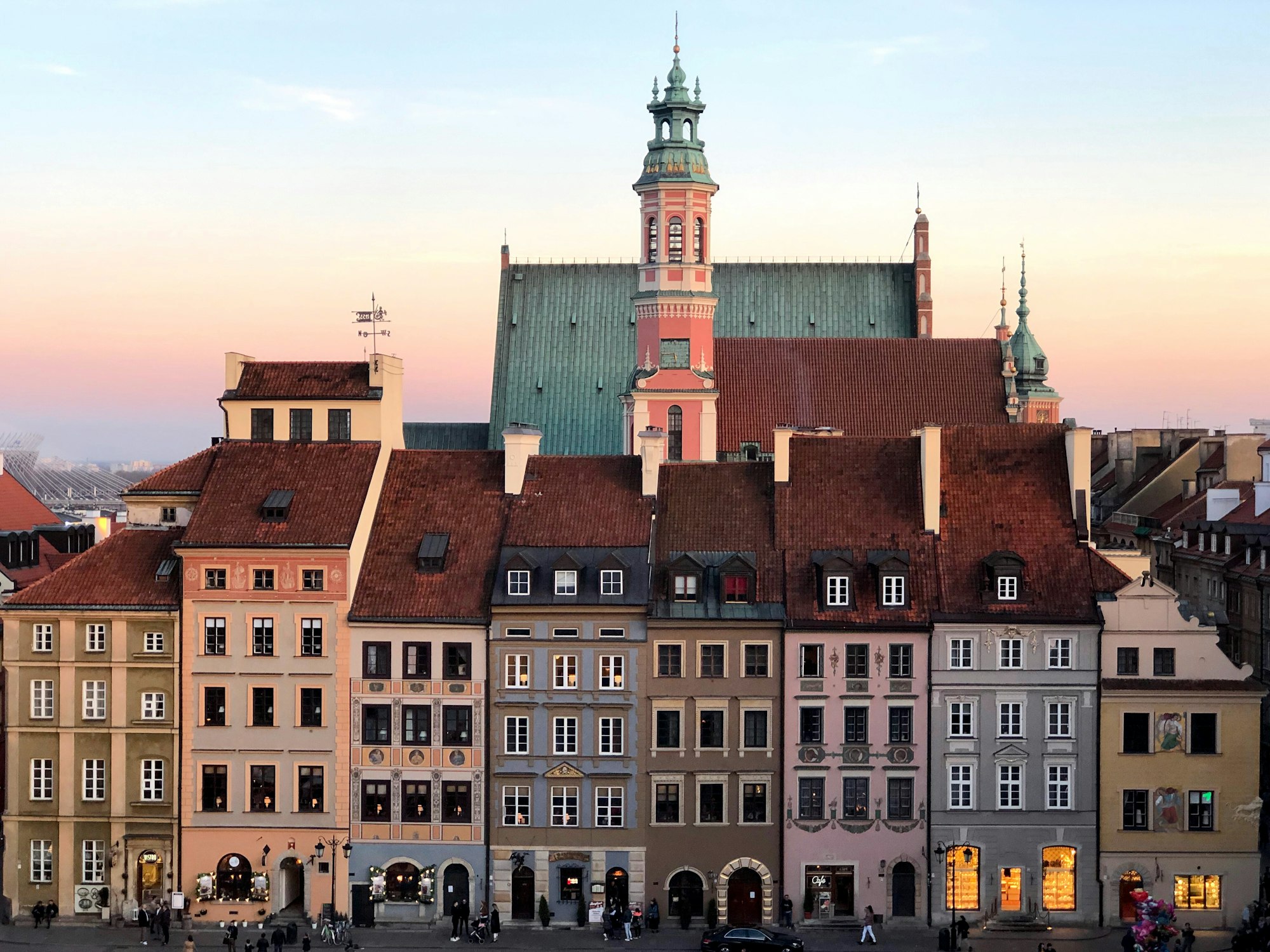
A compact medieval centre on a loess hill, rebuilt in Renaissance style after a great fire in the sixteenth century, with painted facades around the Market Square and the old Crown Tribunal in its middle. Lanes run down to the Kraków Gate on one side and Grodzka Gate on the other. Cafés fill the cellars and courtyards, and the streets are liveliest on summer evenings.
-
Lublin Underground Route
A walk through linked cellars under the old town, dug over centuries by merchants for storage and joined into a single route. Displays along the way cover the town's fires, trade and legends, and the route surfaces near the Crown Tribunal. Entry is by guided group only at set times, so book ahead in summer.
-
Majdanek State Museum
A German concentration and extermination camp on the south-eastern edge of the city, liberated in July 1944 with its barracks, gas chambers and crematorium largely intact. The museum preserves the camp grounds, exhibitions in the barracks and a domed mausoleum holding the ashes of the dead. Entry is free, the grounds are large and walked on foot, and guides should be booked ahead.