 Submit a photo
Ninety seconds on Postojna Cave
The Russian Bridge is a crossing on the walking section of the tour. The official route passes the Great Mountain, then crosses the bridge into the Beautiful Caves, so every standard tour reaches it on foot after leaving the train.
A standard tour lasts roughly 90 minutes and covers around five kilometres of passages. The train runs about two kilometres in and out, about four in all, and the walk between the Great Mountain and the end of the route adds just over one.
The cave holds a steady 10 °C regardless of season, so warm clothing and suitable footwear are advised even in midsummer. Rain jackets can be hired or bought on site for visitors who arrive without one.
Postojna is under an hour from Ljubljana, with hourly buses to the town. By car, the A1 motorway leads to exit 41, two kilometres from the park. From the town, a local bus or a walk of about 25 minutes reaches the cave park.
Yes. Predjama Castle is about nine kilometres from the cave entrance, and the official site recommends combining the two. Holders of tickets for both can use a shuttle between the park and the castle, which runs only part of the year.
No, but buying online is the official advice. Tickets are also sold at the main cash desk, about 150 metres from the cave entrance. Every visit is a guided departure at a set time, and an online ticket fixes that time before the trip to Postojna.
Yes. As of 2026, the cave is open year-round, including Sundays and public holidays, and in summer it stays open until 6 pm. Each visit is a timed tour, so a departure is chosen when the ticket is booked.
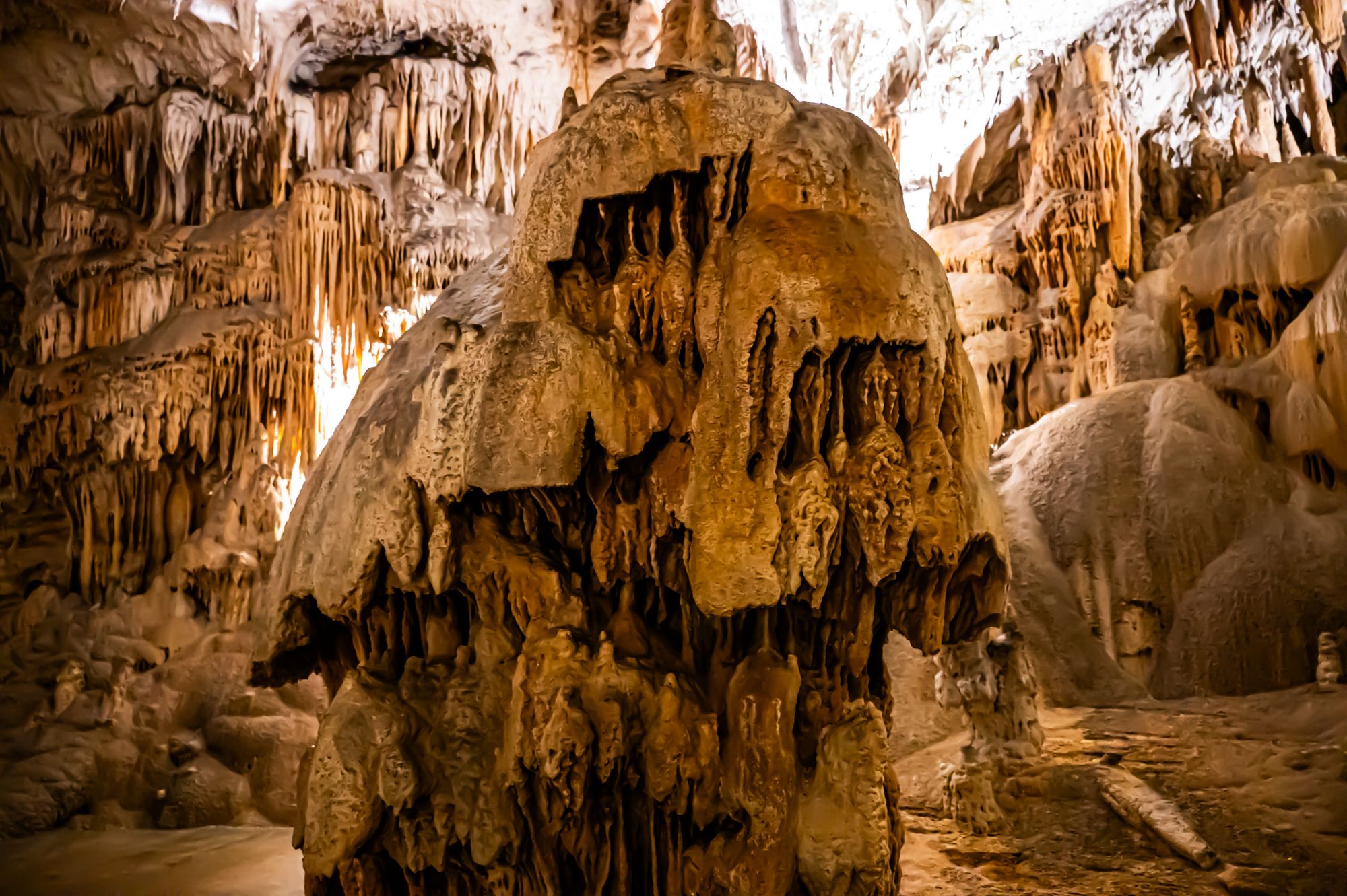
Two things bring you to Postojna: Europe's largest show cave, its halls crowded with stalactites and stalagmites, and the olm, a blind amphibian adapted to life in the dark.
Postojna is the only karst cave with a railway, and the line, the first ever laid underground when it opened in 1872, is still how you go in. The whole system runs to 24 kilometres.
Walking, the route crosses the Russian Bridge and climbs through halls of stalactites and stalagmites, the Gothic Hall among the most richly decorated. Watch for the Brilliant, in the Brilliant Passage: a stalagmite about five metres tall, the most famous in the cave and its symbol.
The olm is a blind amphibian and the largest of all cave-dwelling animals. It can live for up to a hundred years and go several years without food. Olms live in large aquariums in the middle of the cave, where they have laid eggs.
The walk ends in the Concert Hall, where the guide tells you about the cave's underground post office, the only one in the world.
Postojna's cave train takes the first stretch, about two kilometres into the cave to the Great Mountain, where you get off and walk. Be at Postojna Cave Park half an hour before your tour, because boarding starts 15 minutes ahead of the tour time. Train and walk together cover about five kilometres of the cave, and the visit takes about an hour and a half.
Guides divide the passengers into groups at the end of the track, and the walk of just over a kilometre begins on a steep slope at a quick pace. The groups are large at first and spread out as the route goes on, so hang back if you want room for photographs.
The path takes prams. If walking is hard for you, or you use a wheelchair, see the cave by train only. Without an online ticket, buy one at the park ticket office, a short walk from the cave entrance.
Every tour is guided, so the one choice is which group to join. Slovenian, English, German and Italian guides each lead their own. For any other tongue, ask for an audio guide, offered in 19 languages, and follow the group with it.
In summer the cave stays open until 6 pm, so if you are pairing it with Predjama Castle, about 15 minutes away by car, you can see the castle first and take a later tour.
Photographs and video are allowed without flash or a tripod, but recording the guide's commentary is not.
Explore the rest of Ljubljana
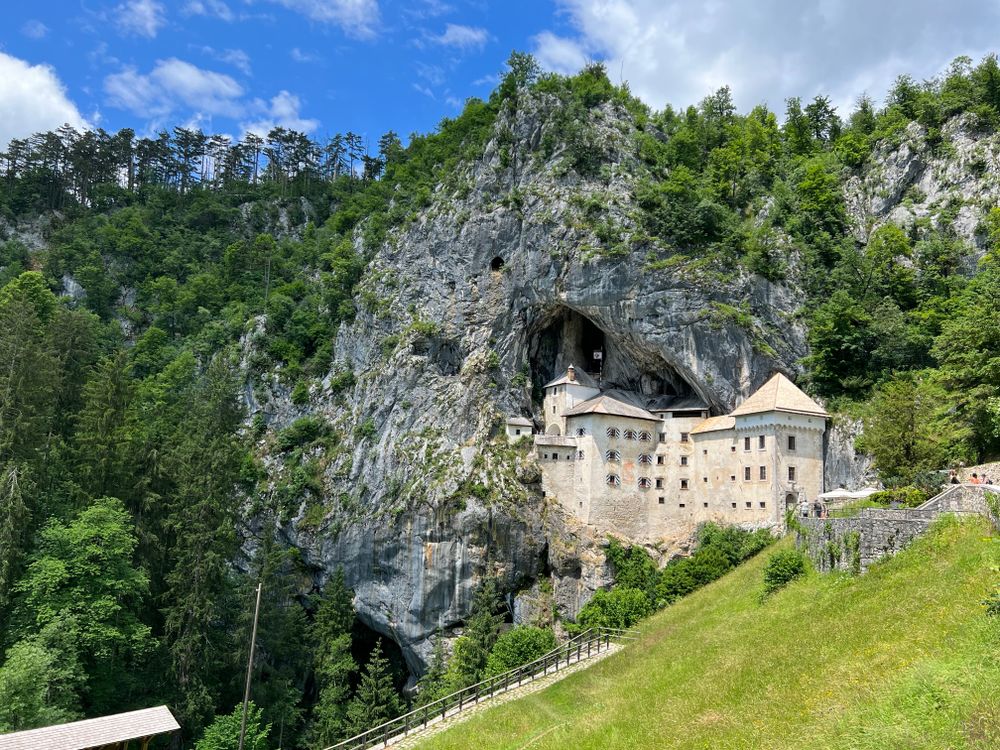
Built into the mouth of a cliff cave near Postojna, this Renaissance front hides a warren of passages that once let the robber knight…
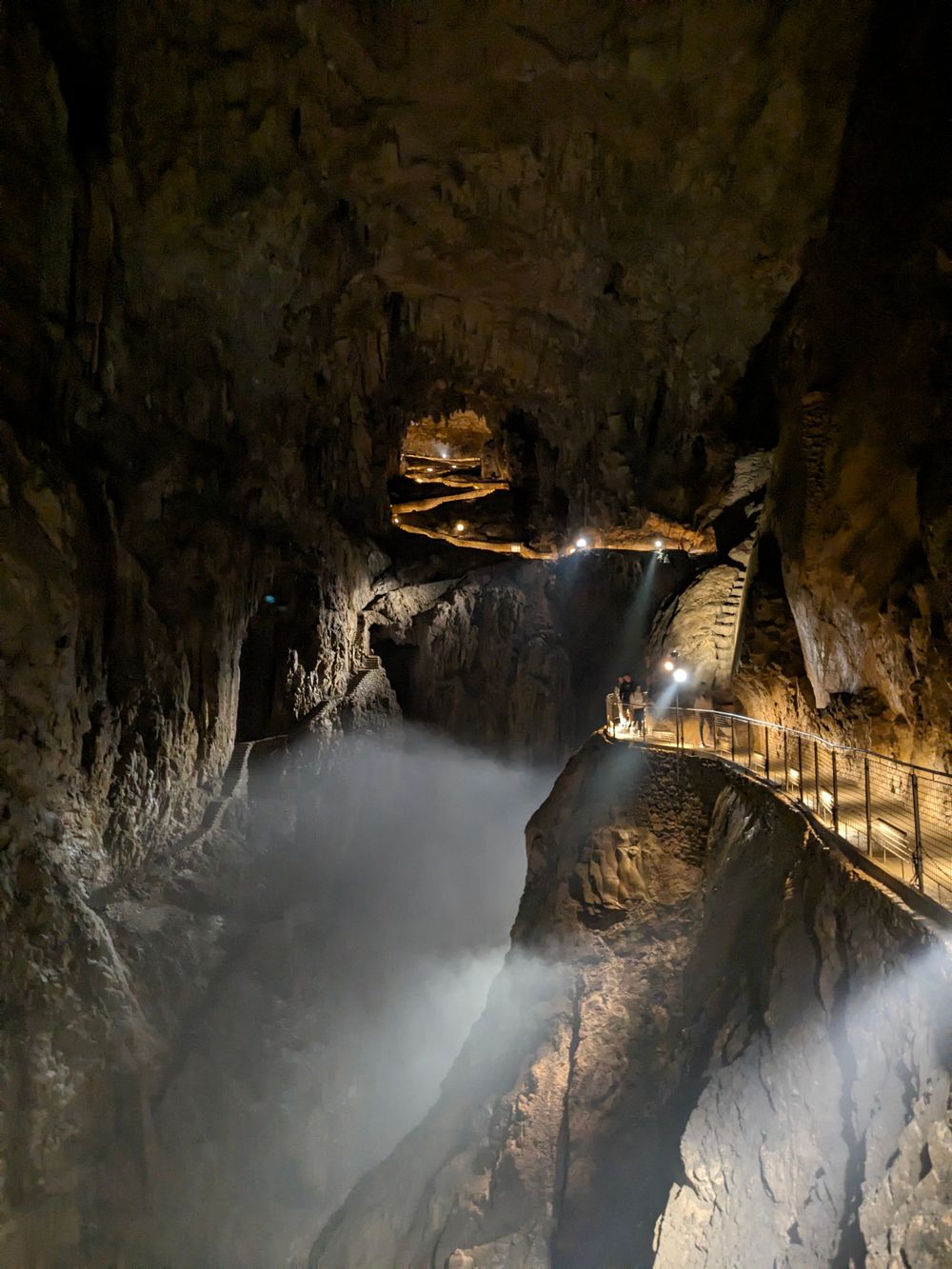
The Reka river disappears underground at Škocjan Caves and flows on out of sight for 34 kilometres, crossed inside the cave by the…
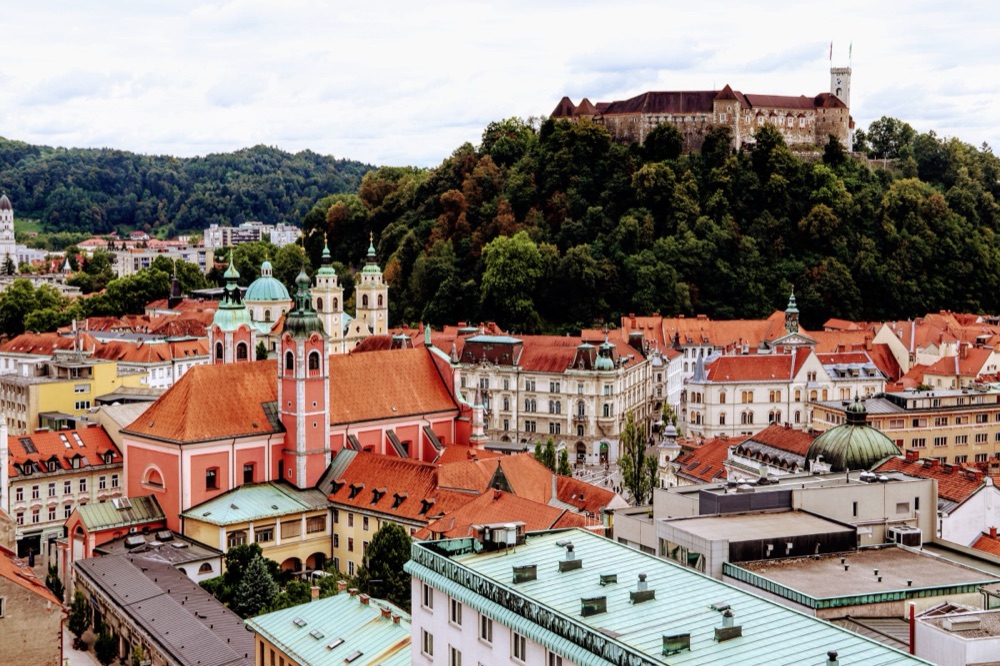
Slovenia's capital sits on the Ljubljanica river between the Alps and the Adriatic, small enough to cross end to end in a short walk. It…
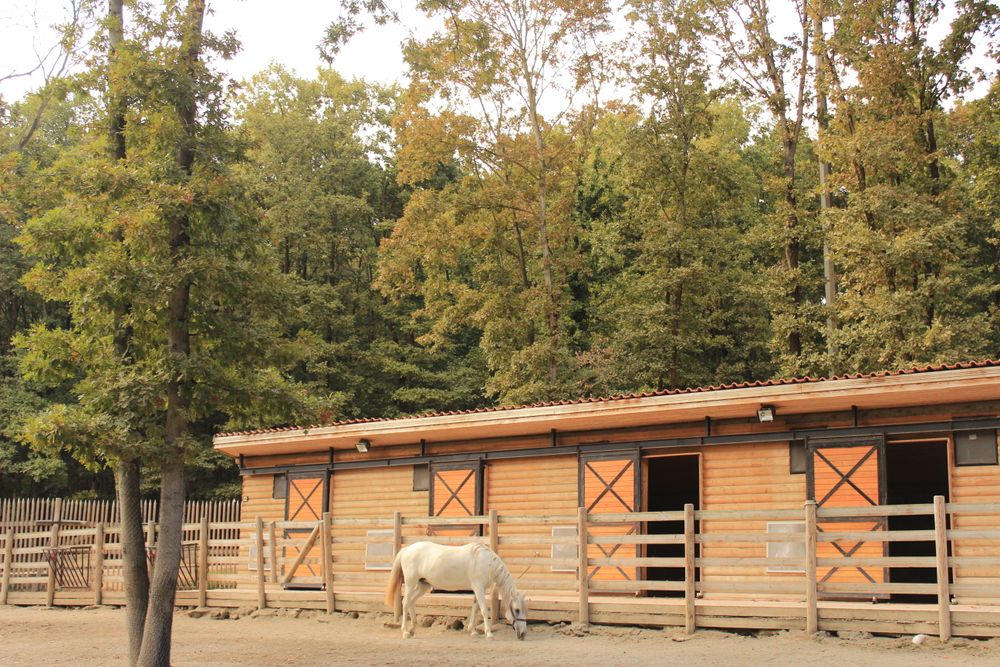
Lipica Stud Farm, founded by Archduke Charles of Austria in 1580, is the cradle of the Lipizzaner horse, on 311 hectares of Karst…
A lake that appears and disappears sits on the edge of this small Notranjska town: in a wet year the polje floods into Slovenia's largest…
A railway junction on the Karst plateau, with stone farmhouses and a dry-stone landscape of sinkholes around it, makes a practical base for…
Mercury made this steep-sided mining town rich for five centuries, and the mine, the castle and the lace schools still shape a visit. The…
Slovenia's oldest scientific institution sits beside the Ljubljanica south of the centre, with more than 4,500 species and subspecies,…
Last updated