 Submit a photo
Ninety seconds on Predjama Castle
As of 2026, the operator publishes Predjama Castle's opening times month by month on its tour timetables page, and summer hours run longer than winter hours. Last entry is 30 minutes before the castle closes, so the closing time on that page is the one to plan around.
Tickets are sold online through the Postojna Cave Park ticket shop, which also offers a joint ticket covering the castle and Postojna Cave. The castle guide is an app included with the ticket, available in 19 languages, and an audio guide can be rented at the ticket office.
A visit takes about two hours when the castle and the cave are combined. The castle alone takes less, and its rooms are reached by numerous stairs, so the time depends on pace and on whether the cave tour is added.
The castle stands at Predjama 1 near Postojna, about 45 minutes to an hour by car from Ljubljana and 9 km beyond Postojna Cave. A shuttle runs from Postojna Cave in high season, taking up to 20 minutes. From November to March no bus or shuttle runs.
As of 2026, the operator lists the cave as open from May to September, with tours at set hours between 11:00 and 17:00 by prior arrangement. It stays closed in winter while its bat colony hibernates, and the tour is not accessible with strollers or wheelchairs.
No. The operator states that castle tours are not suitable for visitors with mobility impairments or for prams and buggies, because of the numerous stairs inside the castle. The cave tour is not recommended for children under six.
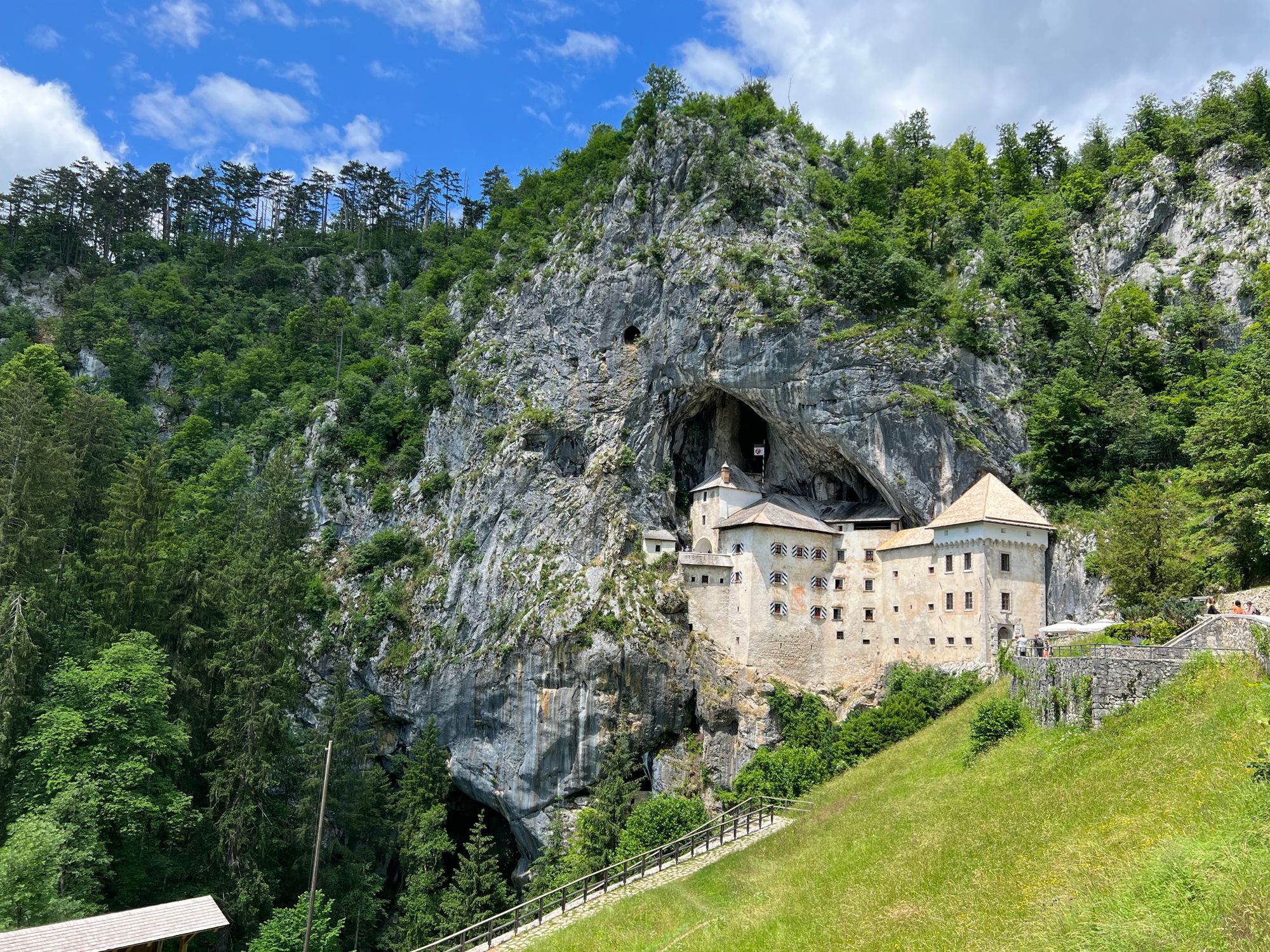
A Renaissance castle closes off the mouth of a cave halfway up a sheer cliff, and you walk through its rooms straight into the rock behind them.
The castle stands halfway up a 123-metre cliff, built into an overhanging rock in front of a cave hall. Beneath it the cave runs down through four levels, with a secret tunnel leading out into the open. The white front went up in Renaissance style under the overhang after an earthquake damaged the older castle, and it has changed little since.
Inside, the legend of the robber knight Erazem, who held the castle under siege on supplies brought in through the caves, is told room by room. The rooms are fairly bare, so most of what you look at is the building pressed into the rock.
In Erazem's Nook, the tunnel and cave behind the top rooms, look for the pipes set into the rock, which the story credits to Erazem for carrying water through the caves. It is a detail that is easy to walk past.
Start in the front tower, which sets out the castle's history and its owners. The rooms include the knight's room, the most richly furnished, and a dining room laid out as late Gothic castle life. On the third floor the Renaissance hall holds the hunting trophies of the last owner.
From there, climb to the cave at the top and back of the castle, on steps that are steep and often slippery. Allow a couple of hours if you add the cave below.
In summer the cave below opens for its own tour, around 45 minutes through the two upper levels. It has no electric lighting, so you are handed a flashlight at the start. If you are seeing Postojna Cave too, buy the joint ticket that covers both.
Bring a warm layer even in July: the rooms inside the rock stay chilly.
Use the free toilets by the car park before you go in, since there are none inside the castle.
The operator suggests seeing the castle in the morning and Postojna Cave in the afternoon, which suits the shuttle between them.
Explore the rest of Ljubljana
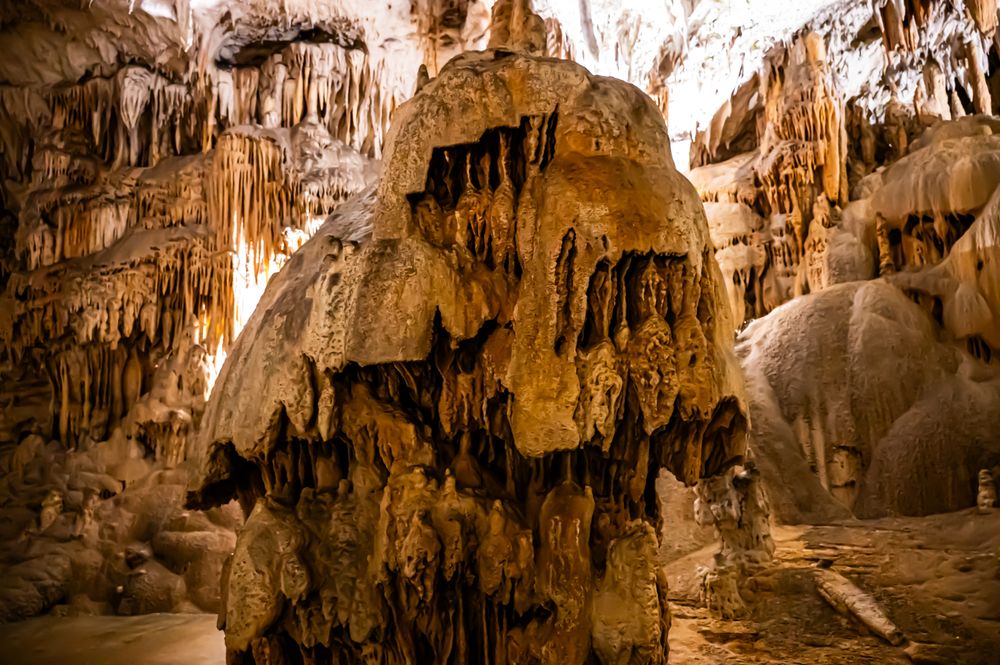
Europe's largest show cave, entered by train as far as the Great Mountain and then walked with a guide past the Brilliant, the stalagmite…
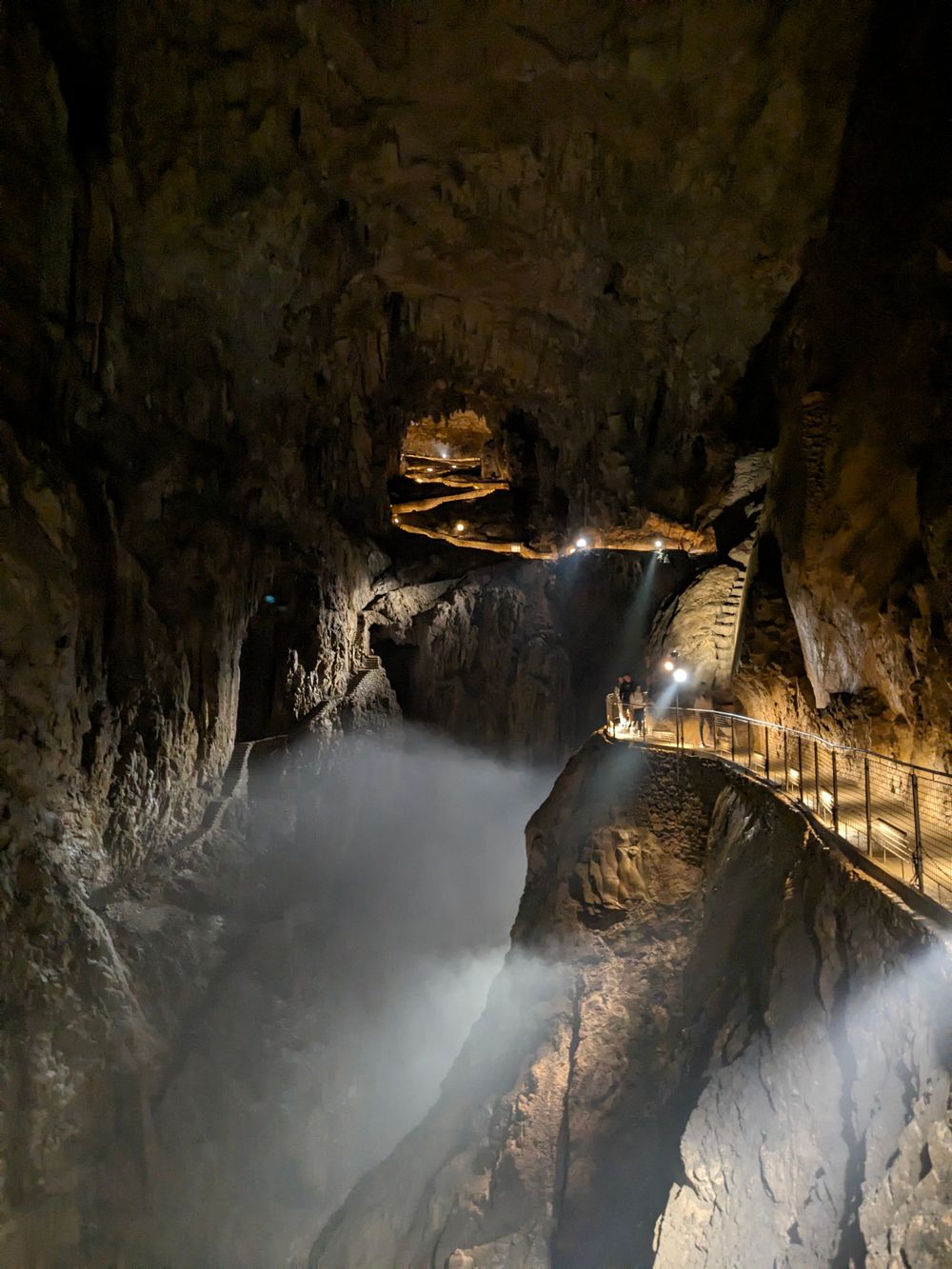
The Reka river disappears underground at Škocjan Caves and flows on out of sight for 34 kilometres, crossed inside the cave by the…
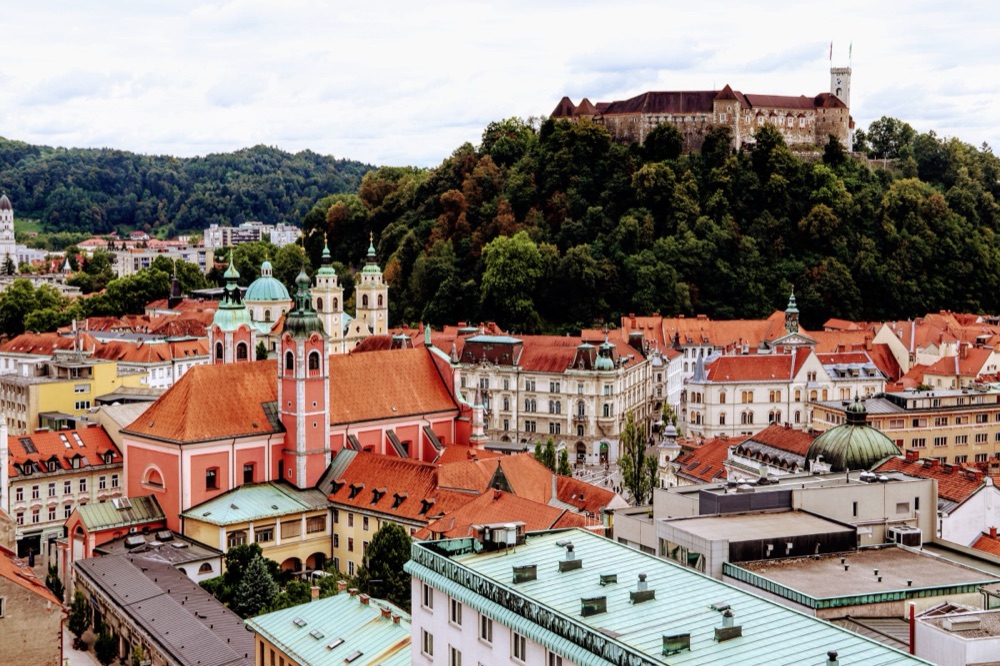
Slovenia's capital sits on the Ljubljanica river between the Alps and the Adriatic, small enough to cross end to end in a short walk. It…
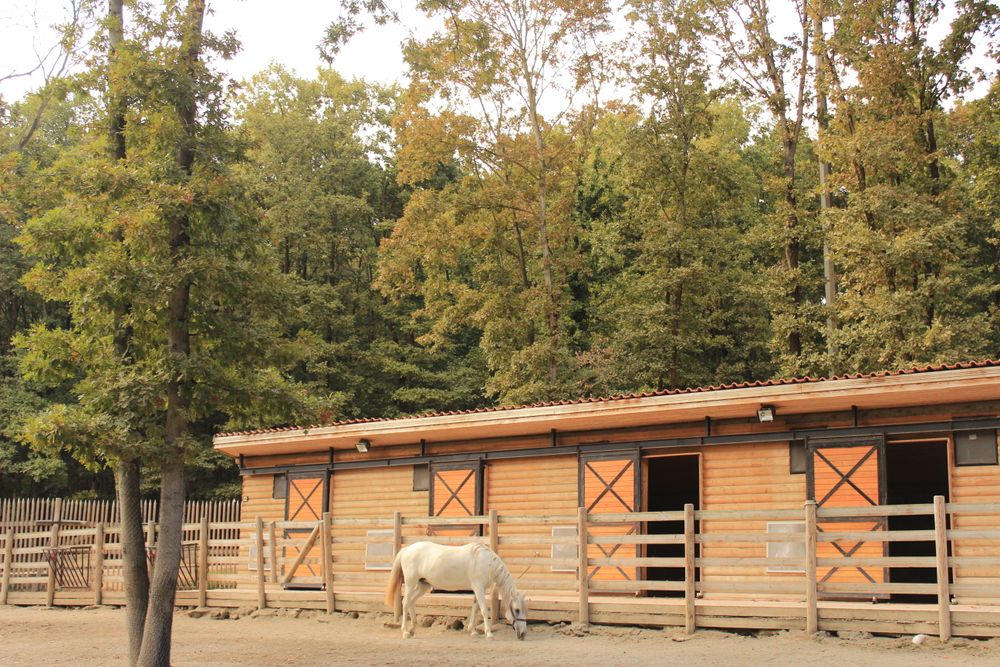
Lipica Stud Farm, founded by Archduke Charles of Austria in 1580, is the cradle of the Lipizzaner horse, on 311 hectares of Karst…
A lake that appears and disappears sits on the edge of this small Notranjska town: in a wet year the polje floods into Slovenia's largest…
A railway junction on the Karst plateau, with stone farmhouses and a dry-stone landscape of sinkholes around it, makes a practical base for…
Mercury made this steep-sided mining town rich for five centuries, and the mine, the castle and the lace schools still shape a visit. The…
Jože Plečnik's library has a facade of brick and stone in deliberately varied finishes, and door handles cast as heads of Pegasus. Inside,…
The official pages this guide was checked against.
Last updated