
Until the nineteenth century, a stairway on this island was still in use for measuring the height of the Nile. You see it on a walk through ruined temples and Nubian lanes, a short boat ride from Aswan.
Island, Aswan. Meridian Dispatch.
By boat, which is the only way across. A public ferry from the corniche takes five to ten minutes, and motorboats and feluccas can be hired for the same crossing. On the local ferry the fare is usually paid going over and not coming back.
As of November 2026, the ruins open at 08:00 and last entry is at 16:00. Those times are the same in summer, in winter and during Ramadan.
Two to three hours covers the temples, the nilometers and a walk through the Nubian lanes. A shorter look at the main archaeological zone fits into one to two hours.
October to April, when temperatures in Aswan are moderate enough to be outdoors all day. From May to September they regularly pass 40 degrees Celsius, and the granite throws the midday heat back.
Photography with a mobile phone is free of charge at the archaeological site. In the two villages, visitors should always ask before taking a resident's picture.
Only in part. Boarding the ferry means a step, and the ground in the ruins is uneven and sandy, so anyone with limited mobility may need help. The village lanes are largely flat.
Elephantine is a Nile island 1.6 km long. The excavations lie at its southern end, and the Nubian villages of Siou and Koti fill much of the rest.
The ruins of Khnum's temple cover most of the southern tip. A gateway 18 metres high still stands there.
The temple of the goddess Satet is older. It was founded around 3000 BC and rebuilt over the next three thousand years, and you walk past versions of it from more than one period.
Two nilometers, built to read the height of the Nile, survive. The famous one is a corridor of 52 stone steps running down to a doorway at the river, with depth marks on its walls. The other is a rectangular basin near Khnum's temple.
Also look for an older part of Kalabsha, a temple from another site. It was found in the foundations when that temple was moved in 1972, and rebuilt here.
Take the small ferry from the corniche on the Aswan bank. It lands by the main entrance to the ruins. From the villages, you can also walk south to a door in the fence on the eastern side.
Start by the old Aswan Museum building, cross the small garden and look at the Greek and Roman temple of Satet. Follow the path south to Khnum's gateway and fork left, then carry on about 100 metres to the basin nilometer.
Turn north along the shore. Walk back to the gateway, go through Khnum's temple, and stop at the viewpoint over the old town behind it.
The excavation museum is just north of the old one. Ask at the gate whether it is open, then walk up to the villages. Some painted houses and small cafés take visitors who buy a coffee.
Leave the villages for the second half of the visit, when the late light suits the painted walls.
Wear sturdy shoes and modest clothes, and carry water and sun protection. You see most of the island on foot.
Look out for jewellery, embroidered scarves and pottery, which families sell from their homes.
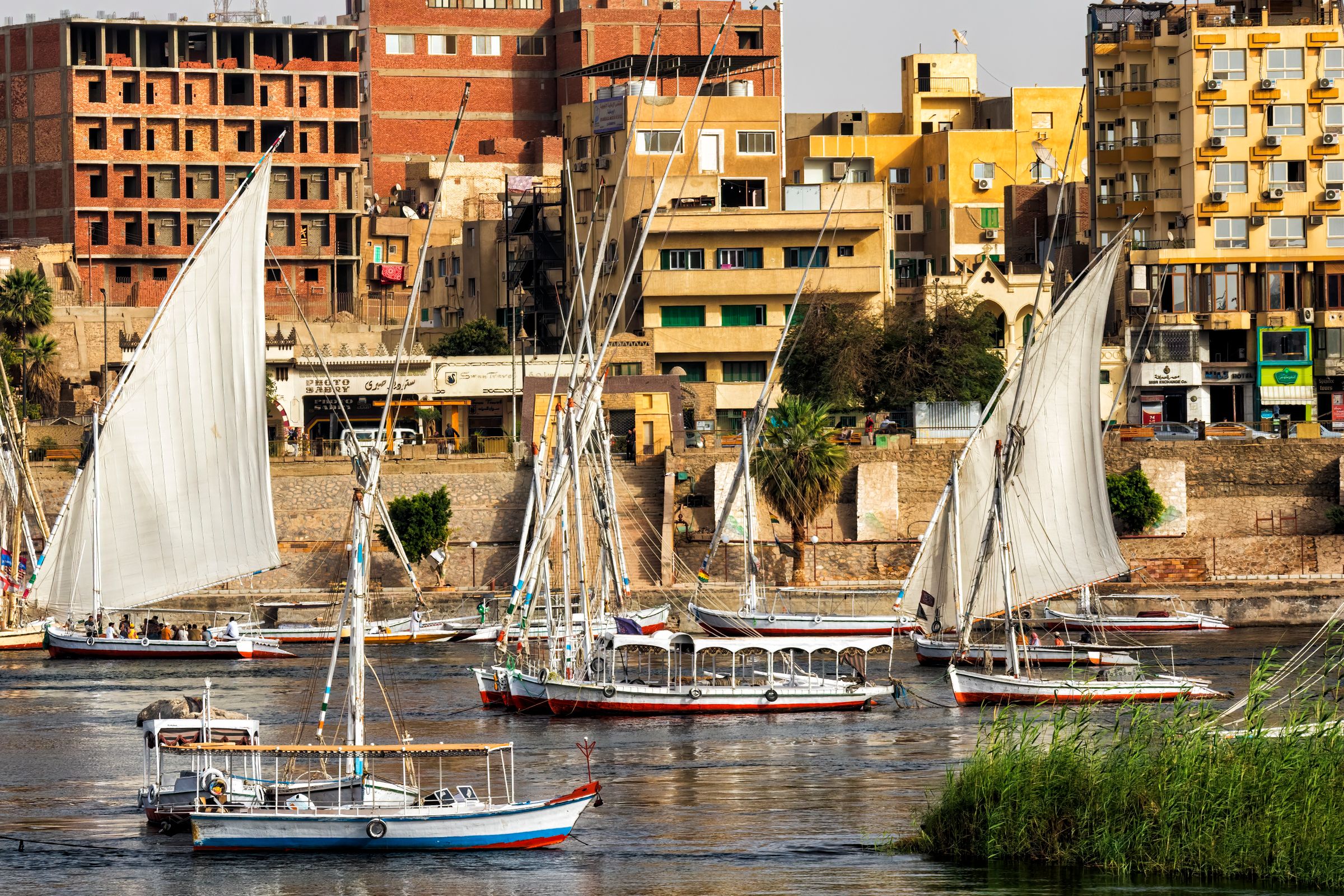
Take the public ferry from the corniche to the Nubian villages on Elephantine, then sail a felucca between the granite islets of the First Cataract. Philae is a short drive and a motorboat ride south of town, and Abu Simbel a long day trip.
Read the Aswan guideExplore the rest of Aswan
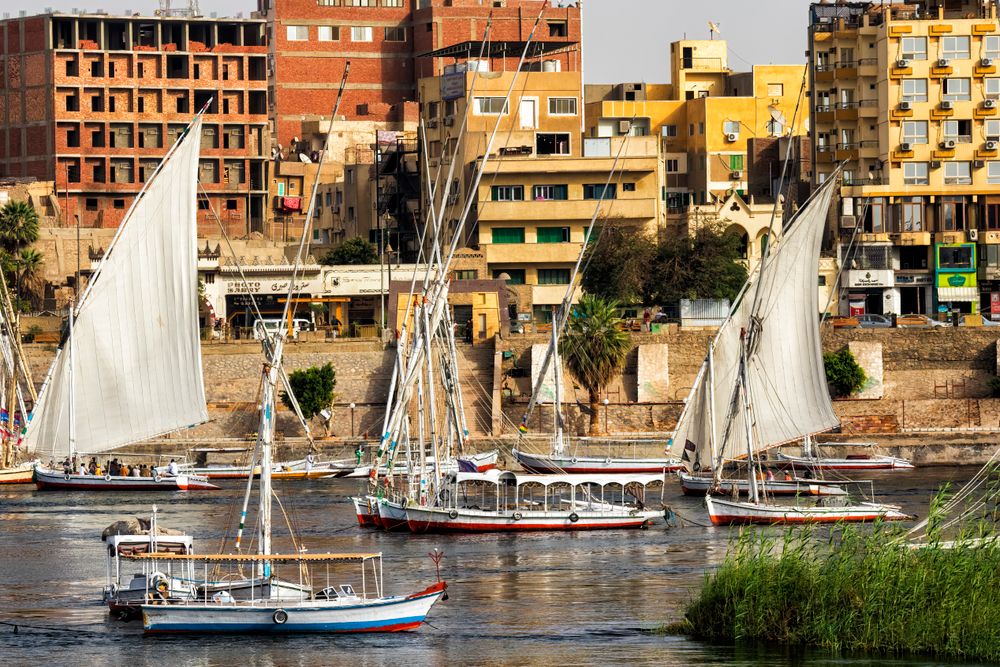
Egypt's southern frontier town sits where the Nile breaks through a belt of granite, scattering islands and boulders across the river, and…
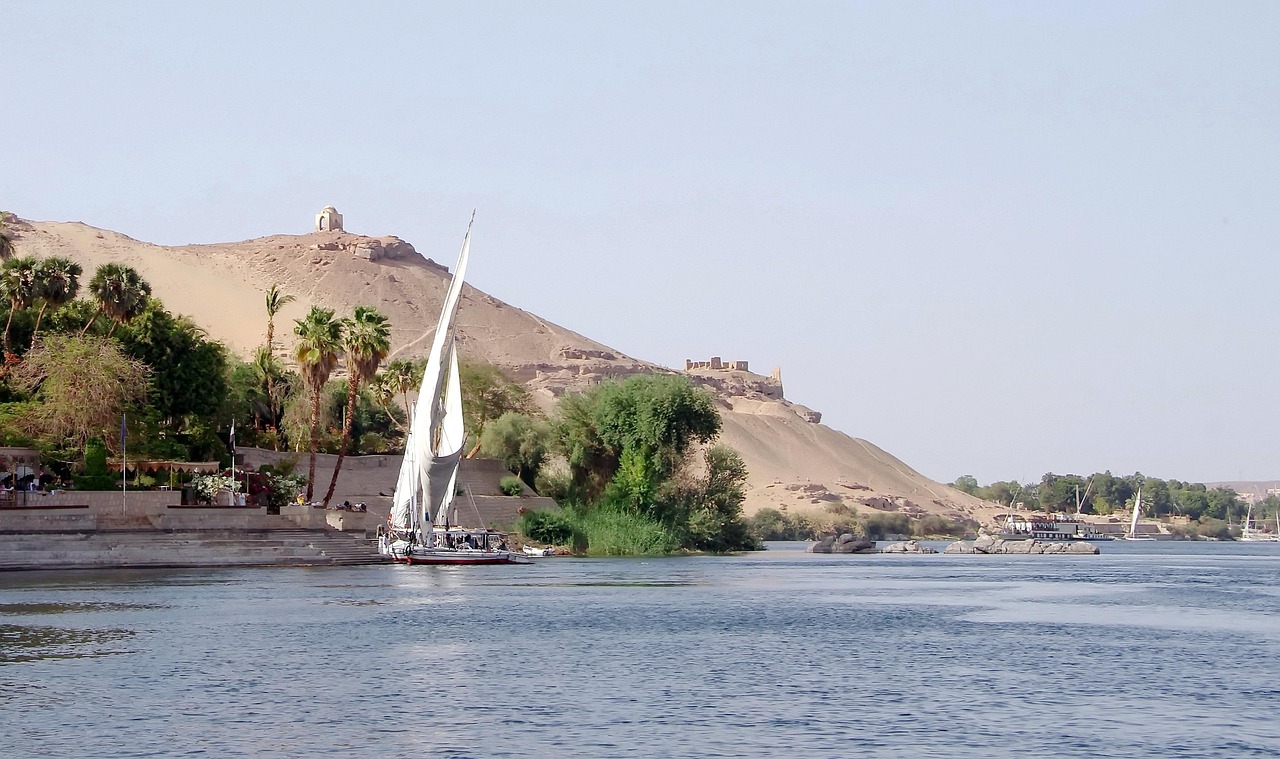
A small oval island tucked behind Elephantine, barely visible from the city. Lord Kitchener was given it while Consul-General between 1911…
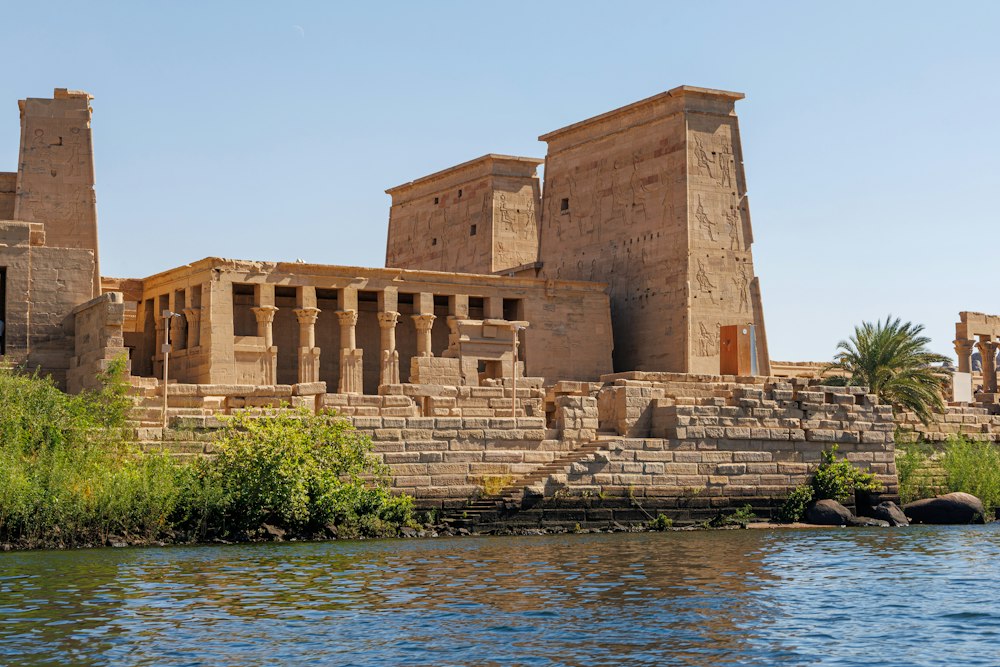
The temple of Isis, the last in Egypt where the old religion was practised, with the latest known hieroglyphic inscription, carved in 394.…
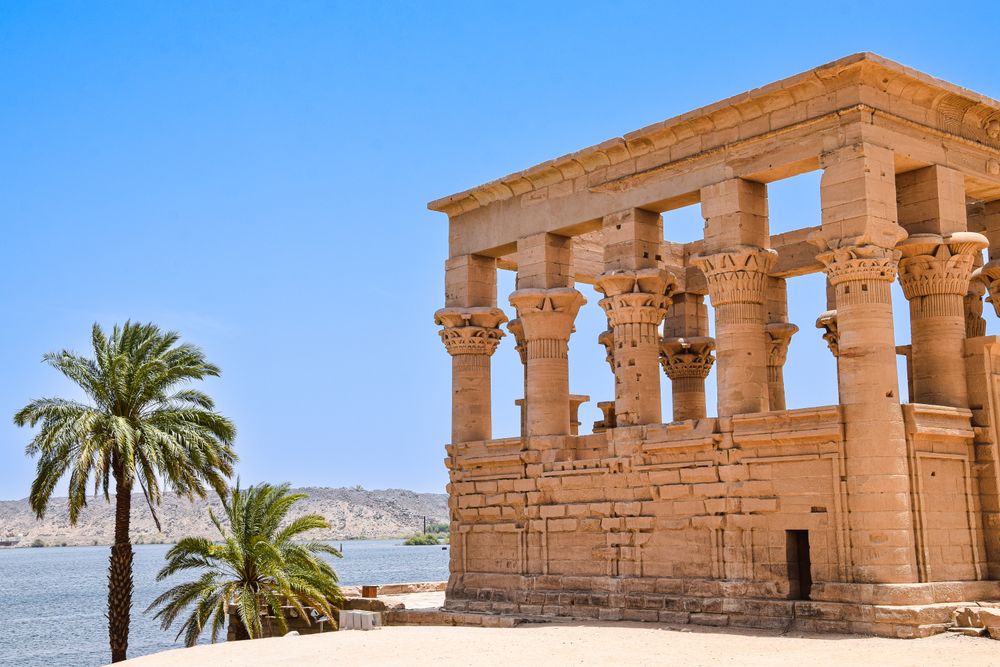
Fourteen columns with composite capitals stand open to the sky on the eastern shore of Agilkia, beside the Philae temples. The kiosk once…
Opened in 1997 as a record of the land and culture lost under Lake Nasser, when tens of thousands of Nubians were resettled and their…
Still lying in the granite quarry where it was abandoned, this would have been the largest obelisk ever raised: forty-two metres long and…
On the hillside of the Nubian village of Gharb Soheil, across the Nile from Aswan on the west bank, Kato Dool looks over the river from its…
Built under Augustus for the Nubian sun god Mandulis, this sandstone temple stood about fifty kilometres upriver until a West German team…




Save Elephantine to your Egypt trip in the Meridian Dispatch app and build the day around it, with the best of Aswan pinned on one map.
Download on the App StoreLast updated