Blue Hole
A sinkhole more than 100 metres deep starts a few metres off a Sinai beach, so you can snorkel, freedive or dive its wall without getting on a boat.
Read the guide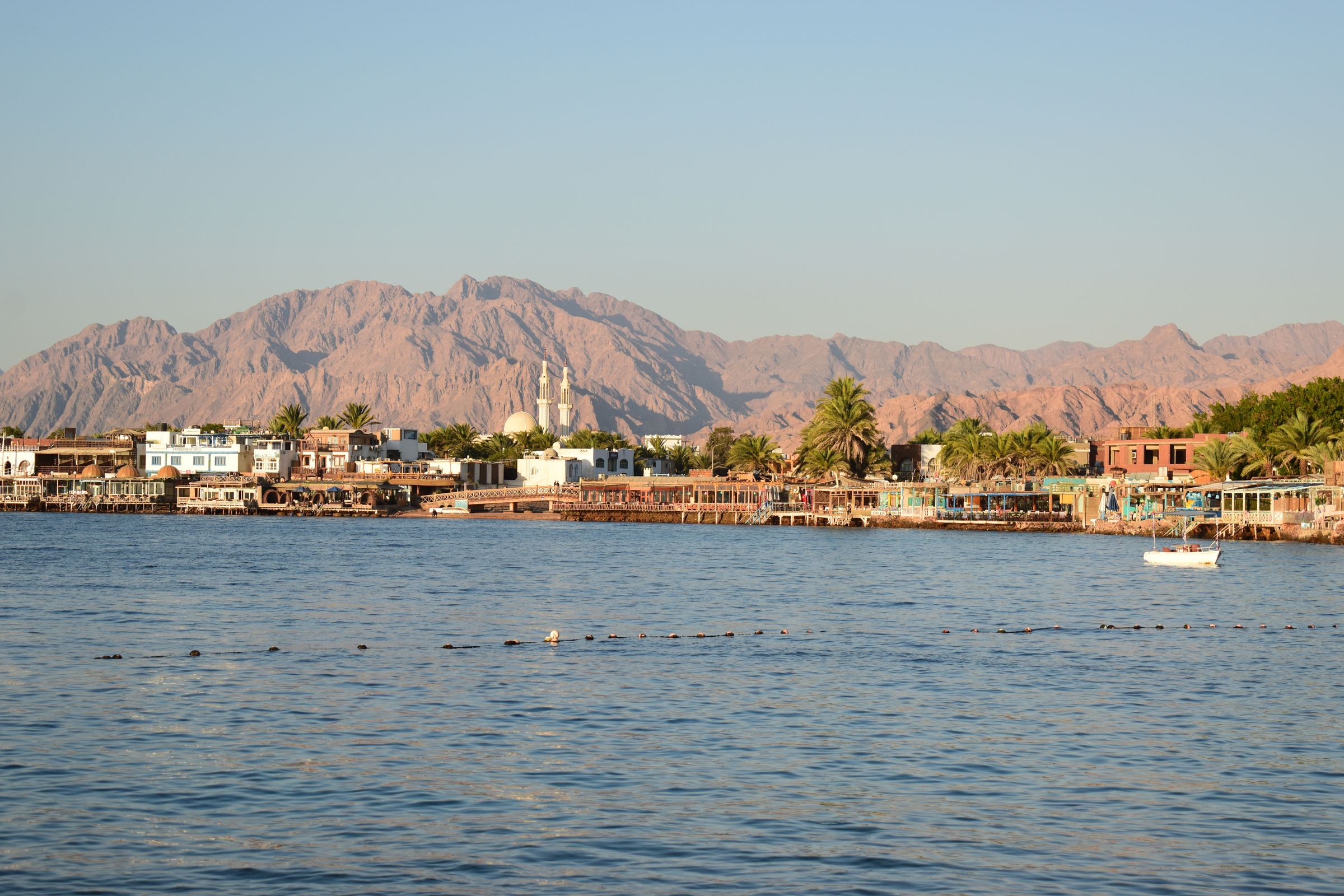
Dive the Blue Hole one day and climb Mount Sinai the next night: from a room in Dahab, the Red Sea reefs and the desert mountains of South Sinai are both within reach.
Town guide, Egypt. Meridian Dispatch.
Ninety seconds on Dahab
Five nights covers the main outings at an easy pace. One day goes to the Blue Hole and the reefs off the town shore, one to Ras Abu Galum and the Blue Lagoon, one to a slot canyon in the desert, and one night to the climb up Mount Sinai. That leaves a spare day.
No: much of the seafront can be walked, a taxi is the short way to the Blue Hole, and desert trips run in operators' 4x4s. Long-distance buses link Dahab with Sharm el-Sheikh and Cairo.
October or November for a single visit, when the autumn wind blows steadily enough for kitesurfing between dives. Underwater visibility reaches 25 to 30 metres from March to May and from September to November, and the strongest kite wind blows from May to September. What little rain comes falls briefly between December and February.
Not for a short resort stay: air arrivals at Sharm el-Sheikh staying under 15 days in the resorts of Sharm, Dahab, Nuweiba or Taba need no visa. Saint Catherine is not one of the named resorts, and the FCDO says travel outside them needs a visa, so check its page before a Mount Sinai climb. A visa on arrival is valid for up to 30 days and sold for cash at airport kiosks before the immigration counters.
Mostly cash: taxis, drivers, camel handlers and small food stalls expect Egyptian pounds. The Taba crossing from Israel takes payment in cash only, so travellers arriving that way bring US dollars.
Sharm el-Sheikh, SSH, about 91 km down the coast. The bus route starts with a taxi into Sharm, because GoBus runs its coach north from its own station in town, not from the terminal. A driver booked through the hotel goes door to door.
Stay in Dahab for the reefs off its shore and the desert mountains behind it. If you want a big resort hotel near the airport, stay in Sharm El Sheikh.
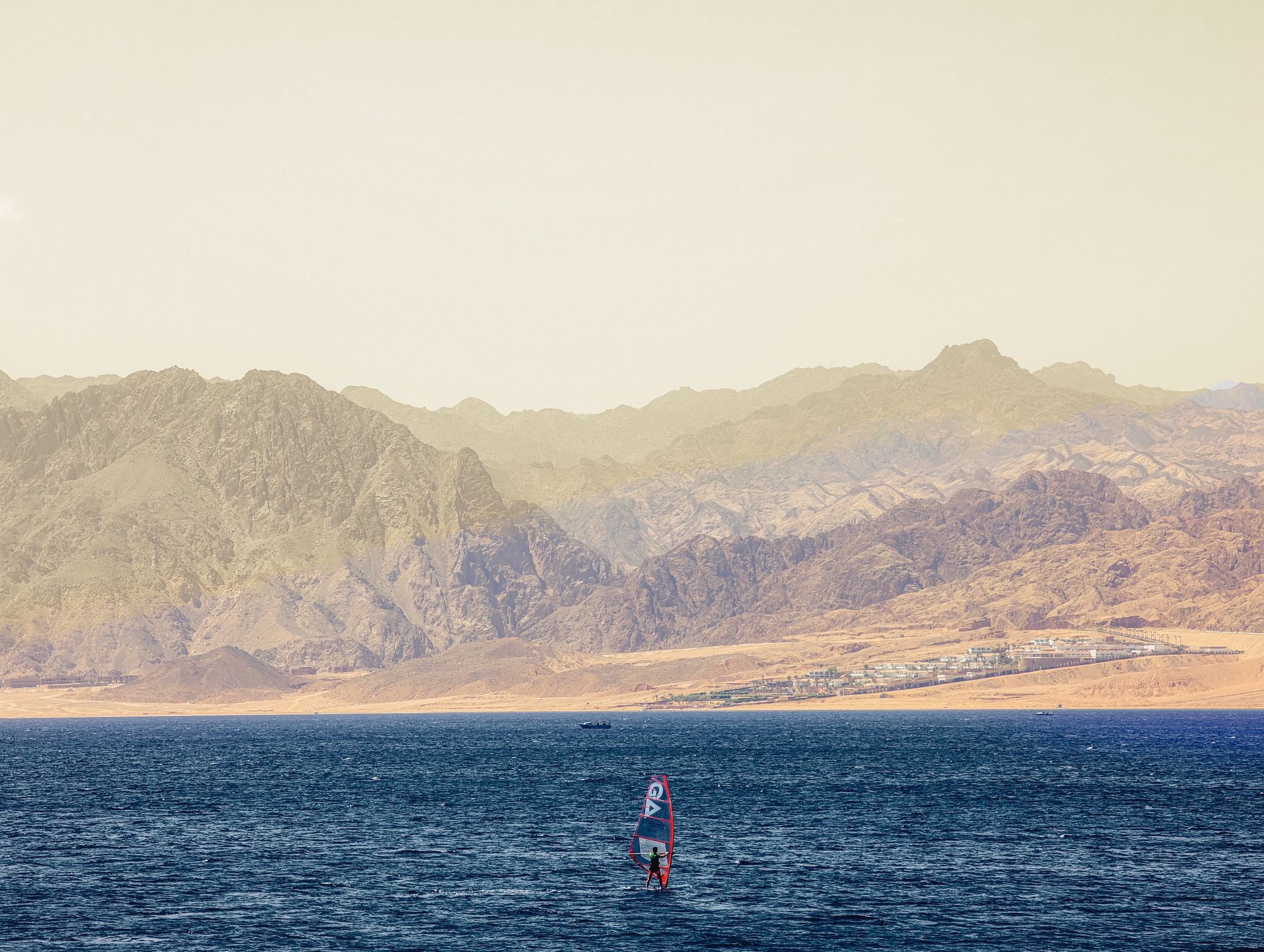
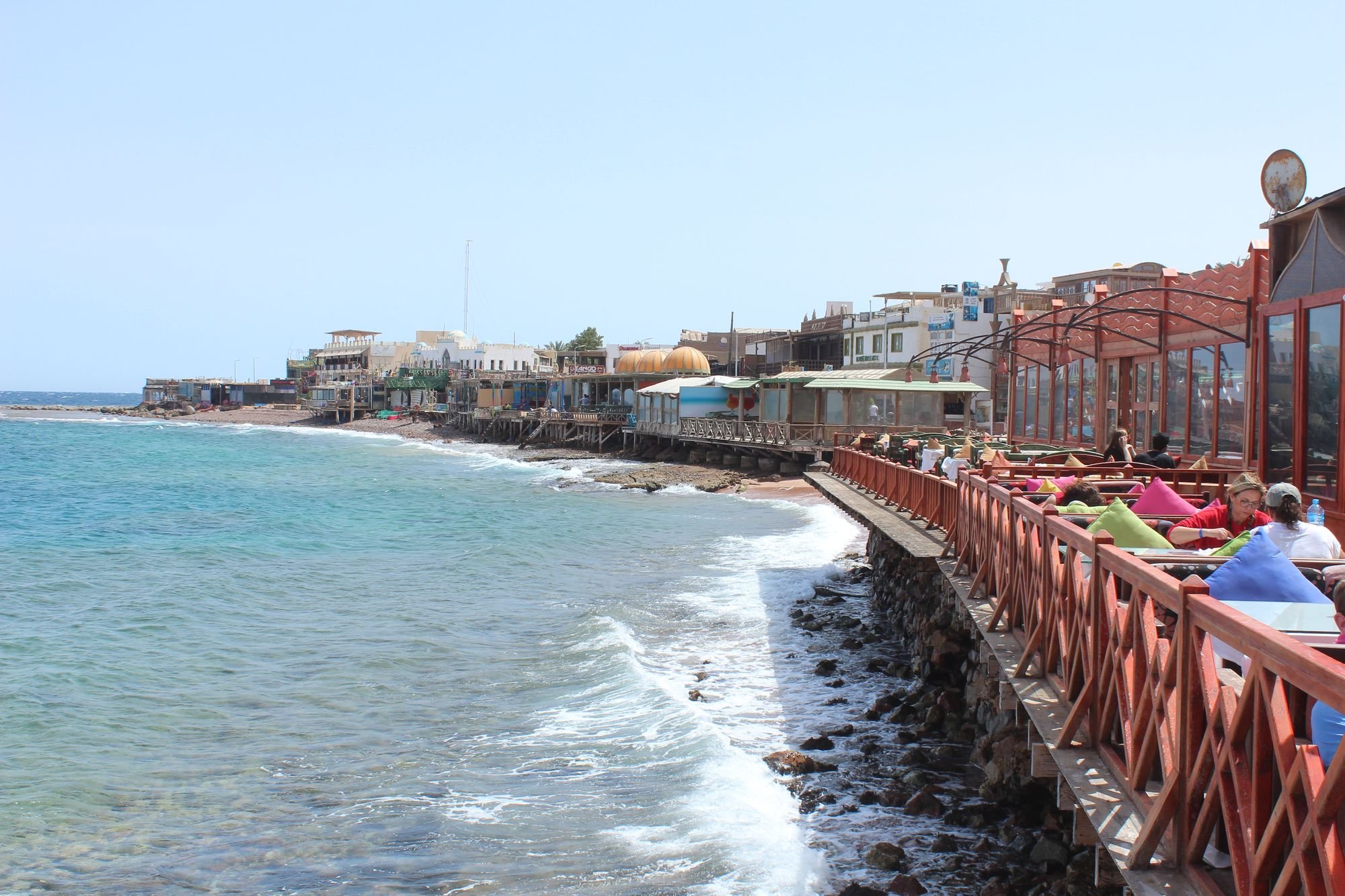
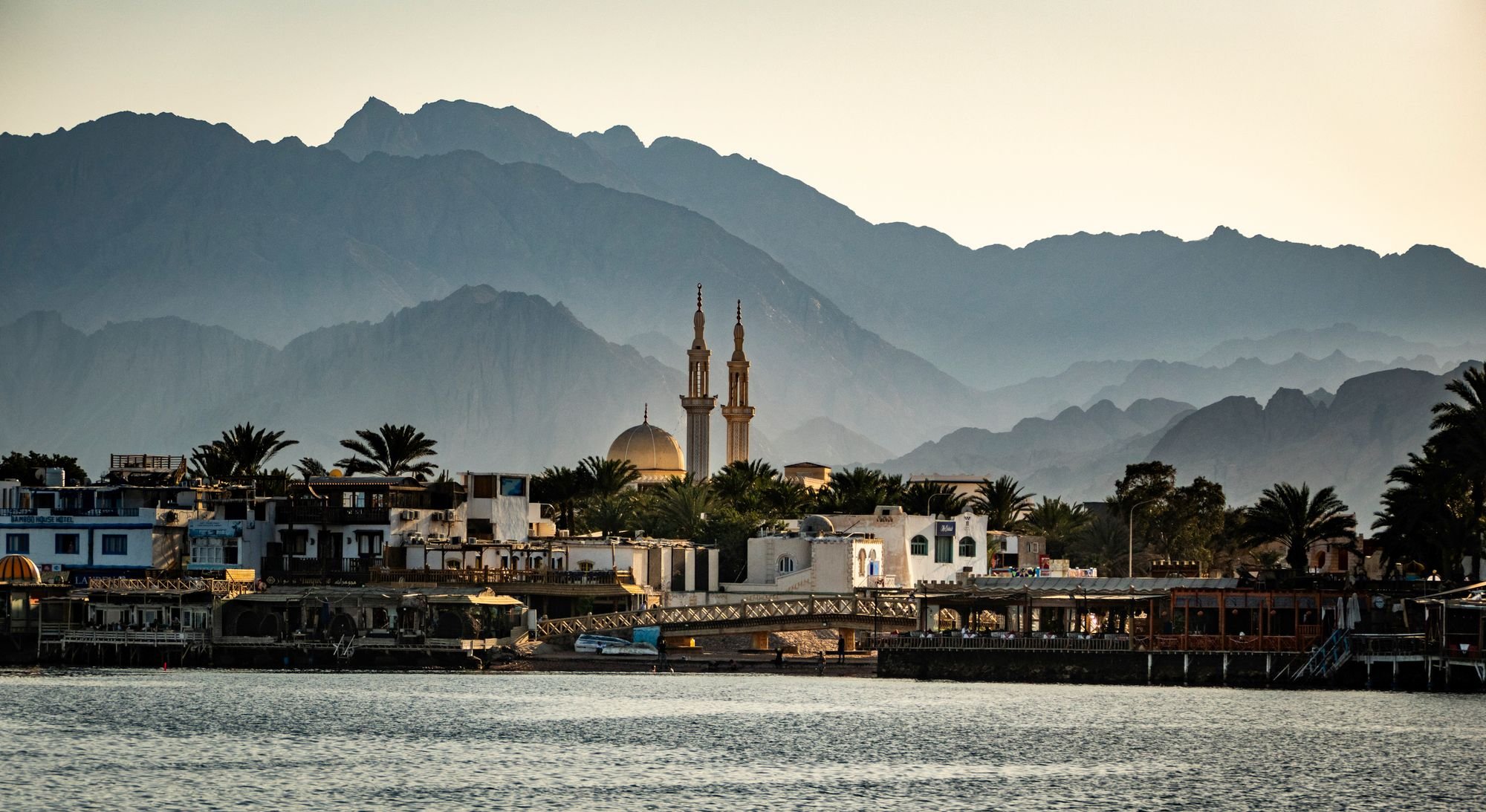
Dahab is a low-rise diving town on the Gulf of Aqaba, with reefs you reach from the beach and the bare granite of South Sinai behind it. A promenade runs along the shore from Assalah in the north to the lagoon in the south.
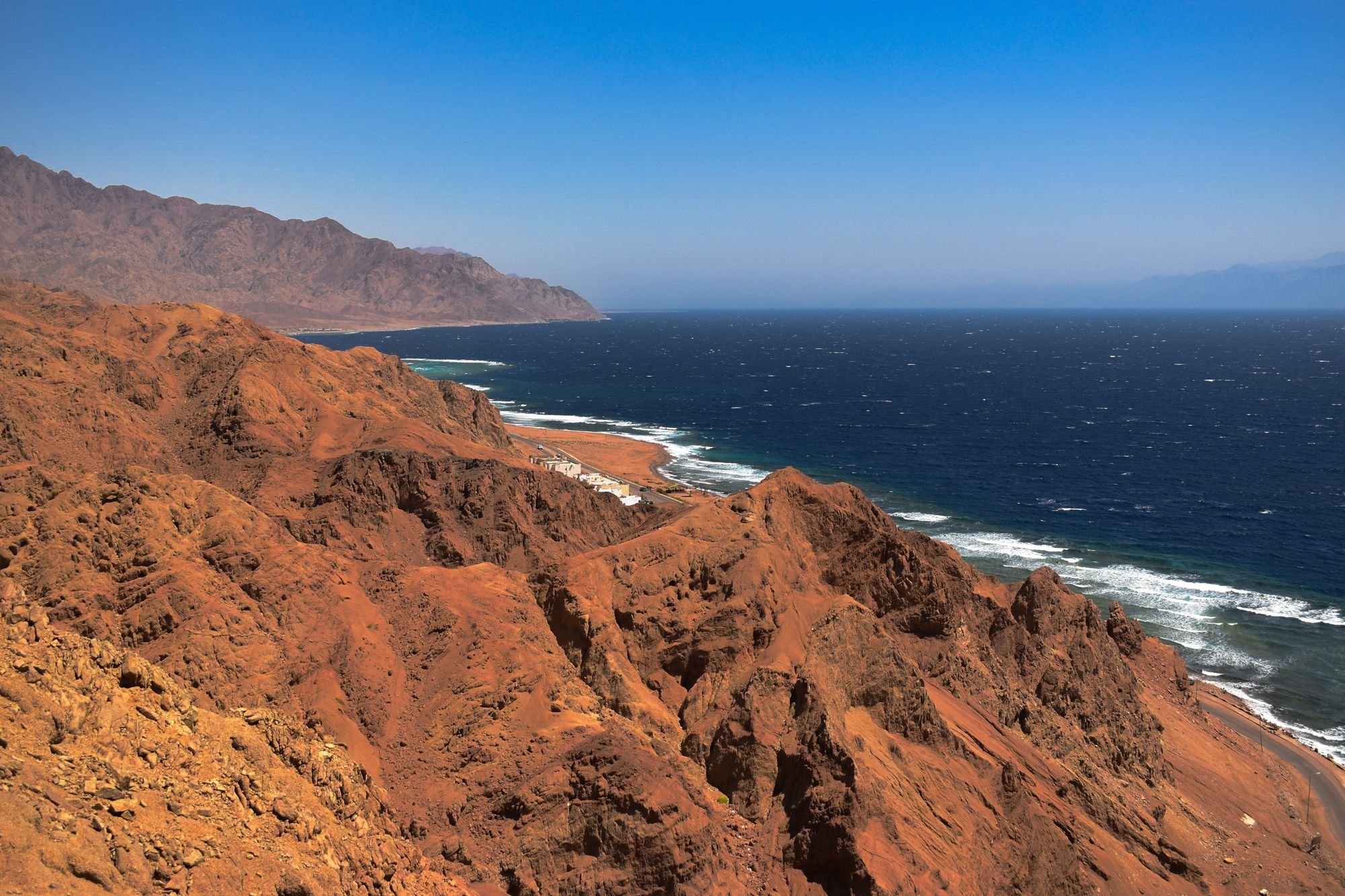
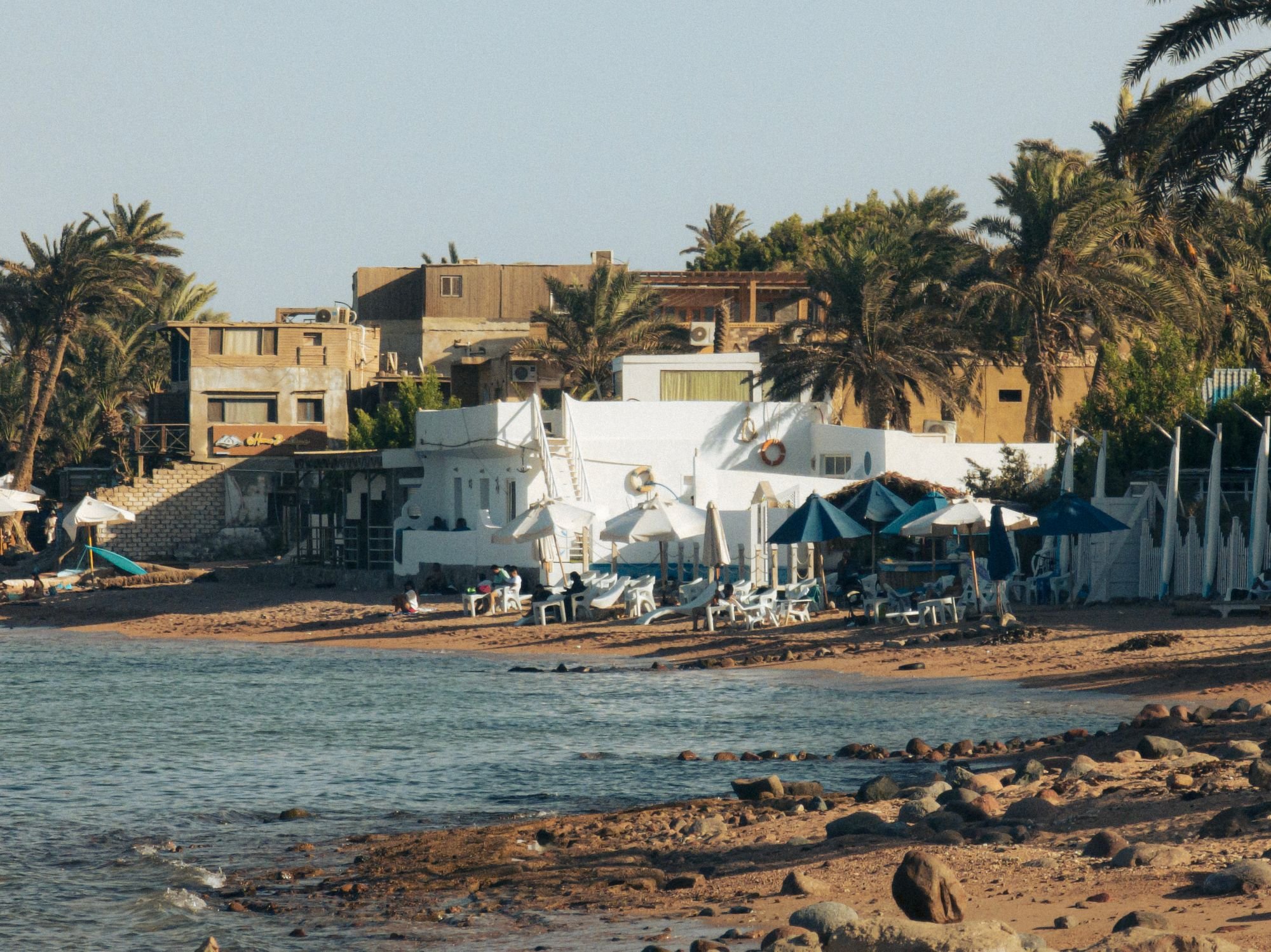
Two hotels on the Dahab shore, one in Mashraba and one on the Blue Hole road, and the monastery's own guesthouse at Saint Catherine for the night before or after Mount Sinai.
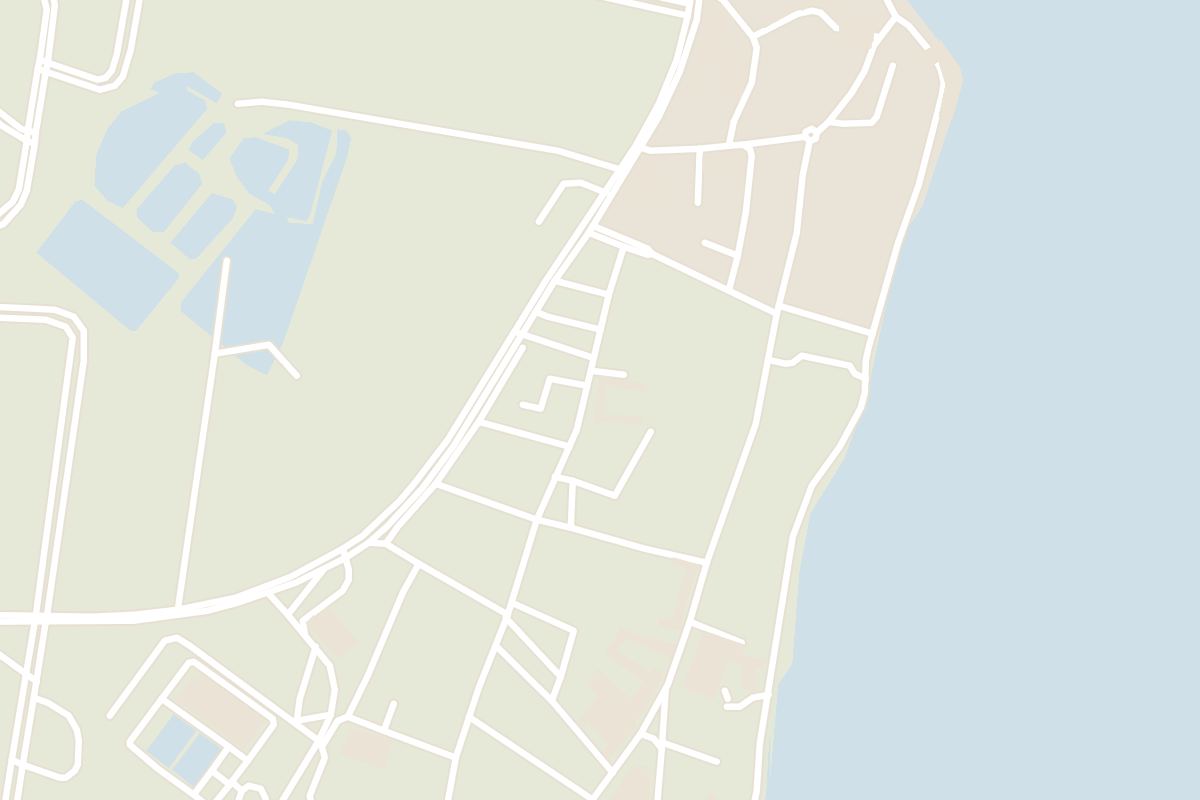 In Mashraba
 3.3 km north of Mashraba, on the Blue Hole road
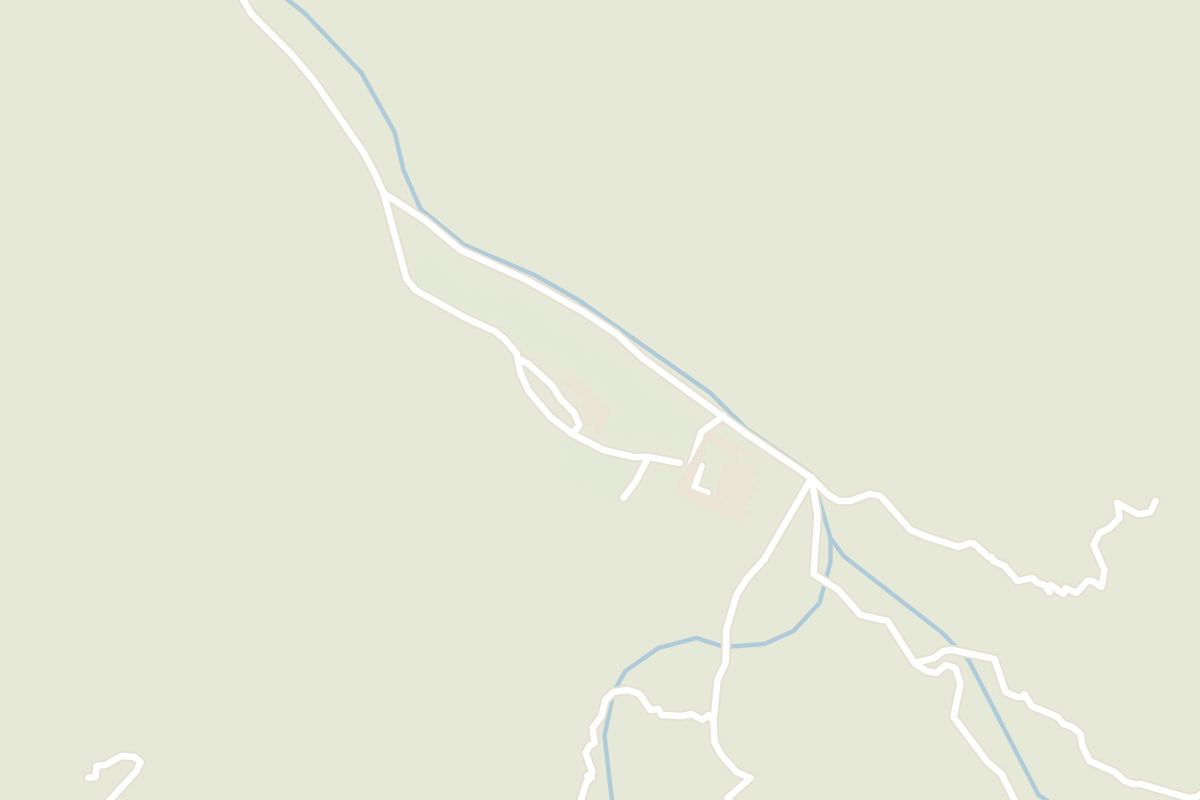 At Saint Catherine's Monastery
Grouped by what each place is for, from the reefs off the promenade to the canyons and the mountain inland.
The town's reefs and lagoon are a walk or a short taxi ride from Mashraba. Everything else takes a 4x4, a boat or a long drive, so carry your passport on every trip out of town for the Sinai checkpoints.
A sinkhole more than 100 metres deep starts a few metres off a Sinai beach, so you can snorkel, freedive or dive its wall without getting on a boat.
Read the guideGranite mountains end on a coastal plain here, and the reefs fringing the beach make the park a snorkeller’s destination. The way in is the shore path north from the Blue Hole.
Read the guideYou see a sixth-century basilica hung with candelabra and silver lamps, and the bramble venerated as the Burning Bush, which still stands inside the walls.
Read the guideThe reef at the north end of Masbat Bay, below the small lighthouse on the promenade. Dive schools bring beginners here, because the beach entry is easy in almost any sea.
Garden eels rise from a sandy slope off the north end of Assalah and sink back into the sand as you come close. Cross the wide reef top at high tide, in calm wind.
A granite valley south of town that meets the sea at the Three Pools, a beach sheltered by the reef with calm snorkelling. Camel trips along the shore take in the beach and the small oasis inland.
A shallow turquoise bay inside the Ras Abu Galum reserve, for swimming and wading rather than snorkelling.
A spread-out coastal town up the coast, with a ferry port, a resort strip and the beach camps of Tarabin. Car ferries sail from its port to Aqaba in Jordan.
A rocky islet off the coast near Taba, crowned by a restored fortress. Taba lies well up the coast road past Nuweiba, so from Dahab the island is a long day trip.
The old Bedouin village at the north of town, with sandy lanes a block back from the sea. Its seafront carries the promenade on north from Masbat.
The southern stretch of the promenade, between the lagoon and Masbat, with low guesthouses, dive centres and beach cafes. The reef runs close in, so snorkelling starts from the cafe steps.
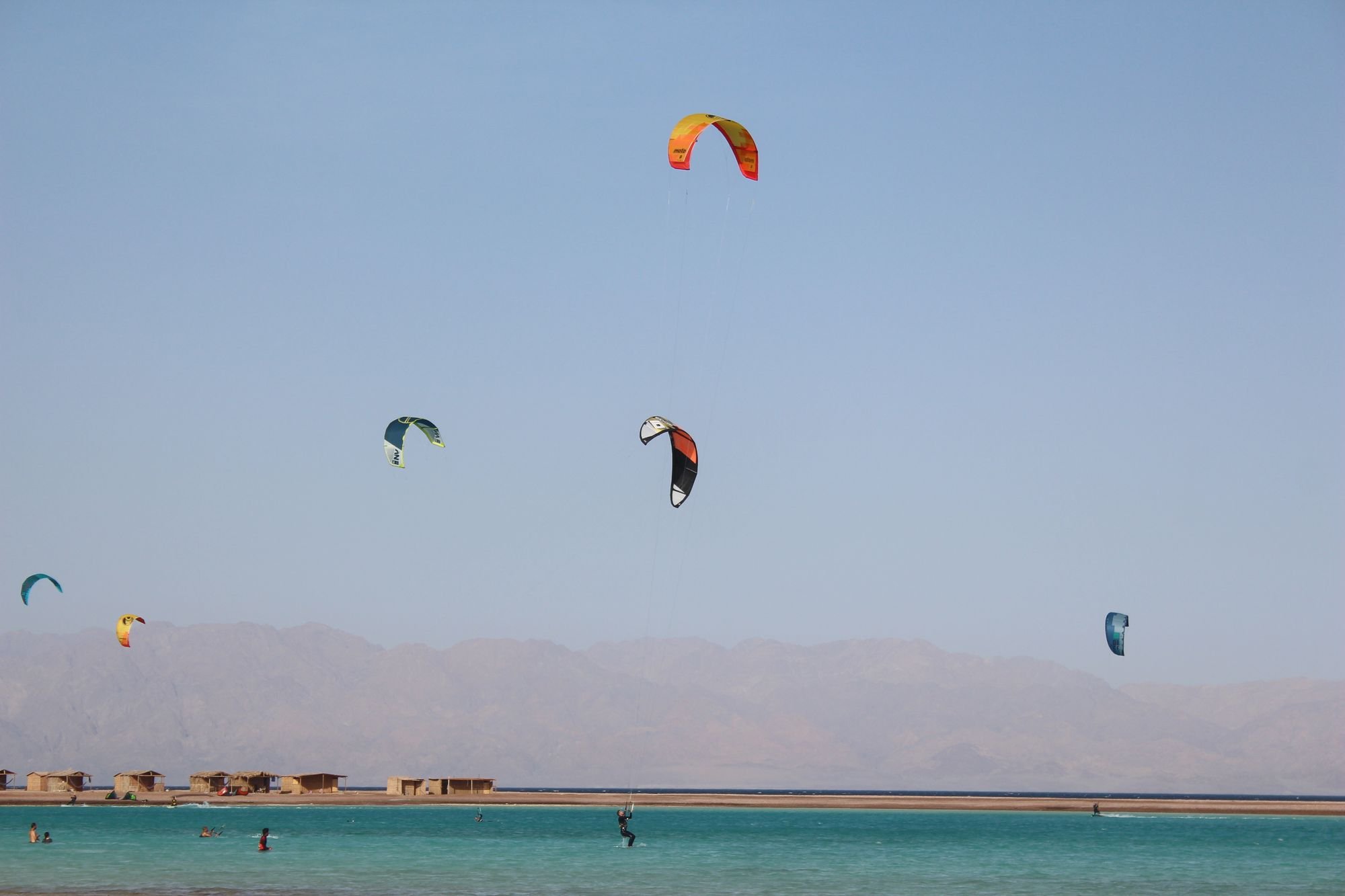
Flat, shallow water behind a sand spit at the south end of town, where the windsurf and kite schools teach. Kitesurfers keep to a marked zone, away from the windsurfers.
Pale sandstone walls close in along this canyon above the Ain Khudra oasis, off the Nuweiba road. The walk has narrow squeezes and a fixed ladder, and the 4x4 collects walkers at the oasis below.
A narrow slot canyon near Nuweiba between banded orange and pink sandstone walls, with some scrambling where they almost meet. Operators in Dahab run it as a full day by 4x4, often with the White Canyon.
A palm oasis fed by a spring in a sandstone valley, where Bedouin families keep gardens and serve tea. Most visitors walk in through the White Canyon.
A granite wadi off the Saint Catherine road. Rock climbers use the clean, dry rock of its side valley, Wadi Hammam, from October to April; summer heat makes the rock too hot to hold.
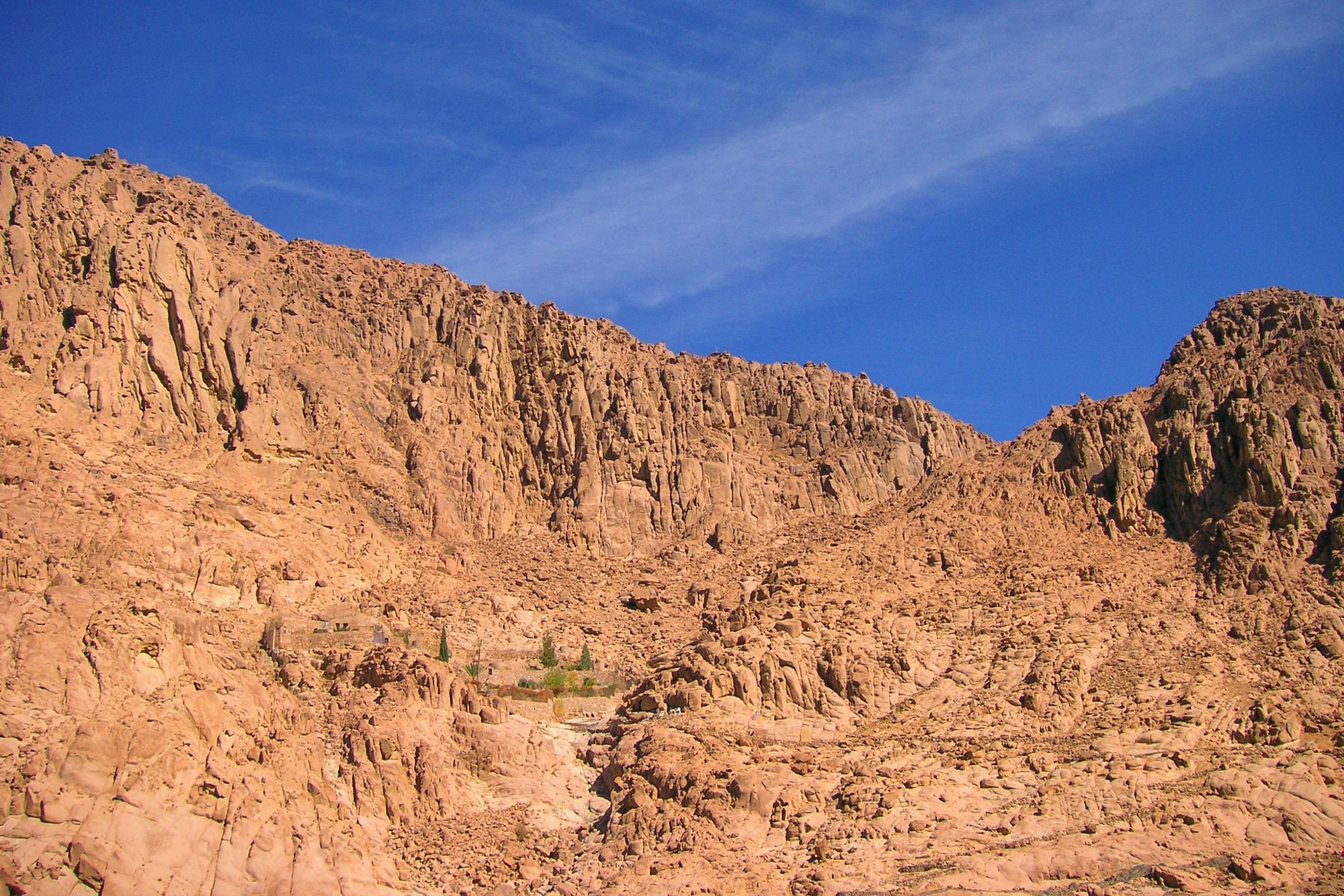
Jebel Musa, the mountain behind Saint Catherine's Monastery. Climbers go up at night with a Bedouin guide, who is compulsory, by the longer Camel Trail or the steep Way of the Steps.
Egypt's highest mountain, south of Mount Sinai, climbed from Saint Catherine village through Wadi el-Arbain. A Jebeliya Bedouin guide arranges the permit, and many groups camp on the way up.
The valley west of Mount Sinai, climbing from Saint Catherine village past Bedouin gardens to the Rock of Moses.
A small monastery in a walled orchard of olive trees and cypresses at the head of Wadi el-Arbain. Reach it on foot from Saint Catherine village along the valley path.
The greenest oasis in the south, with date palms and Bedouin gardens along the valley floor west of Saint Catherine. From Dahab it makes a long day's drive.
A sandstone plateau in western Sinai with a ruined temple to Hathor among carved stelae. You climb it with a guide from the Bedouin settlement at the base, and operators in Dahab run it as an overnight jeep trip.
The Blue Hole up the coast road, and easy entries along the town's own shore.
A sinkhole more than 100 metres deep starts a few metres off a Sinai beach, so you can snorkel, freedive or dive its wall without getting on a boat.
Read the guideThe reef at the north end of Masbat Bay, below the small lighthouse on the promenade. Dive schools bring beginners here, because the beach entry is easy in almost any sea.
Garden eels rise from a sandy slope off the north end of Assalah and sink back into the sand as you come close. Cross the wide reef top at high tide, in calm wind.
A granite valley south of town that meets the sea at the Three Pools, a beach sheltered by the reef with calm snorkelling. Camel trips along the shore take in the beach and the small oasis inland.
The Ras Abu Galum reserve north of the Blue Hole, then the coast road north towards Nuweiba and Taba.
Granite mountains end on a coastal plain here, and the reefs fringing the beach make the park a snorkeller’s destination. The way in is the shore path north from the Blue Hole.
Read the guideA shallow turquoise bay inside the Ras Abu Galum reserve, for swimming and wading rather than snorkelling.
A spread-out coastal town up the coast, with a ferry port, a resort strip and the beach camps of Tarabin. Car ferries sail from its port to Aqaba in Jordan.
A rocky islet off the coast near Taba, crowned by a restored fortress. Taba lies well up the coast road past Nuweiba, so from Dahab the island is a long day trip.
Cafes and dive centres from Assalah through Masbat to Mashraba, and the windsurf and kite schools on the lagoon.
The reef at the north end of Masbat Bay, below the small lighthouse on the promenade. Dive schools bring beginners here, because the beach entry is easy in almost any sea.
Garden eels rise from a sandy slope off the north end of Assalah and sink back into the sand as you come close. Cross the wide reef top at high tide, in calm wind.
The old Bedouin village at the north of town, with sandy lanes a block back from the sea. Its seafront carries the promenade on north from Masbat.
The southern stretch of the promenade, between the lagoon and Masbat, with low guesthouses, dive centres and beach cafes. The reef runs close in, so snorkelling starts from the cafe steps.
Flat, shallow water behind a sand spit at the south end of town, where the windsurf and kite schools teach. Kitesurfers keep to a marked zone, away from the windsurfers.
Slot canyons and palm oases in the desert inland, each a day out by 4x4.
A granite valley south of town that meets the sea at the Three Pools, a beach sheltered by the reef with calm snorkelling. Camel trips along the shore take in the beach and the small oasis inland.
Pale sandstone walls close in along this canyon above the Ain Khudra oasis, off the Nuweiba road. The walk has narrow squeezes and a fixed ladder, and the 4x4 collects walkers at the oasis below.
A narrow slot canyon near Nuweiba between banded orange and pink sandstone walls, with some scrambling where they almost meet. Operators in Dahab run it as a full day by 4x4, often with the White Canyon.
A palm oasis fed by a spring in a sandstone valley, where Bedouin families keep gardens and serve tea. Most visitors walk in through the White Canyon.
A granite wadi off the Saint Catherine road. Rock climbers use the clean, dry rock of its side valley, Wadi Hammam, from October to April; summer heat makes the rock too hot to hold.
Saint Catherine's Monastery, the night climb above it, and the high valleys around Saint Catherine village.
You see a sixth-century basilica hung with candelabra and silver lamps, and the bramble venerated as the Burning Bush, which still stands inside the walls.
Read the guideJebel Musa, the mountain behind Saint Catherine's Monastery. Climbers go up at night with a Bedouin guide, who is compulsory, by the longer Camel Trail or the steep Way of the Steps.
Egypt's highest mountain, south of Mount Sinai, climbed from Saint Catherine village through Wadi el-Arbain. A Jebeliya Bedouin guide arranges the permit, and many groups camp on the way up.
The valley west of Mount Sinai, climbing from Saint Catherine village past Bedouin gardens to the Rock of Moses.
A small monastery in a walled orchard of olive trees and cypresses at the head of Wadi el-Arbain. Reach it on foot from Saint Catherine village along the valley path.
The greenest oasis in the south, with date palms and Bedouin gardens along the valley floor west of Saint Catherine. From Dahab it makes a long day's drive.
A sandstone plateau in western Sinai with a ruined temple to Hathor among carved stelae. You climb it with a guide from the Bedouin settlement at the base, and operators in Dahab run it as an overnight jeep trip.
Take a taxi north along the coast road to the Blue Hole for your first morning. Snorkellers wade in from the beach, while divers usually enter at the Bells further along and swim across into the hole. On a recreational dive you keep to the inside wall, because the Arch deep inside is for trained technical divers only.
Taxis wait in the parking area for the ride back. In the afternoon, walk the promenade north from Mashraba through Masbat to Lighthouse Reef for an easy first snorkel, then carry on through Assalah to the Eel Garden.
Ras Abu Galum fills another day. Walk the shore path north from the Blue Hole, starting through the El Fanar Cafe, and come back by boat, which is smoother with the waves behind it. The path has no shade at all, and the last boat usually leaves shortly before sunset.
The Blue Lagoon lies further inside the reserve, beyond the boat landing, and a second boat or a pick-up truck runs on to it from there.
Mount Sinai is a night climb from Saint Catherine, about two hours inland by road. Time the descent for Saint Catherine's Monastery, which as of November 2026 opens 09:00 to 11:30 and is closed on Fridays, Sundays and Greek Orthodox feast days. That rules out climbing on a Thursday or Saturday night.
To skip the night drive from the coast, sleep at the monastery's guesthouse below the walls. Dinner and breakfast come with the room.
Dahab has no airport. Flights land at Sharm El Sheikh, down the coast to the south, and the transfer runs by road.
Hotels and dive centres in Dahab arrange a driver to meet your flight. Send the flight number when you book.
Taxis wait outside the terminal. Agree the fare for the whole run to Dahab before the driver loads your bags.
Buses for Dahab leave from the GoBus station in Sharm, so take a taxi there first. In Dahab, a short taxi ride takes you from the bus station to the seafront.

A fishing harbour grown into the main resort city of Egypt's Red Sea coast.

Ramesses II's colossus lies on its back under skylights at Mit Rahina, and you walk its full length at floor level.

Giza is a city of several million on the west bank of the Nile, continuous with Cairo.

Its polished limestone skin survives better than on any other pyramid in Egypt.

Last updated