
Two seated stone kings rise about 18 metres each beside the road on Luxor's West Bank. They once flanked the way into a vast temple, and fields now lie where it stood.
Monument, Luxor. Meridian Dispatch.
The statues stand beside the West Bank road and can be seen from it without a ticket. There is no ticket booth or entrance gate at the viewing area.
They are on the West Bank of the Nile, across from the city. From the East Bank, take the ferry over, then hire a taxi or a bicycle at the landing for the rest of the way.
They are the guardian statues of the mortuary temple of Amenhotep III, and have stood since 1350 BC. They carry 107 Roman-era inscriptions in Greek and Latin, many of those on the northern one referring to Memnon.
Yes. Personal pictures with a phone or camera are allowed under the general rules for Egyptian archaeological sites. It is worth asking about a permit before bringing professional lighting, and equipment should stay off the road.
There is no entrance gate at the roadside view. Plan the stop for daylight, when the carving is easy to make out, and check locally for current hours at the temple grounds behind.
Allow 20 to 40 minutes. A look from the road needs the least, and walking up to see the thrones and both figures at close range takes longer.
Both statues show the same pharaoh, Amenhotep III, seated and facing the sunrise. They are carved from a quartzite quarried near modern Cairo.
Much is battered, and above the waist the features have almost gone, so look lower down for what survives. On the front of each throne, beside the legs, find the smaller figures of his wife Tiye and his mother Mutemwiya. The side panels show Hapi, the god of the Nile.
The pair are not quite alike. The southern figure is one block, while the northern one has a large crack below and is built above the waist in five tiers.
It was the northern statue that drew Greek and Roman travellers, who came to hear it give out a sound at daybreak. They linked the cry to Memnon, son of the dawn goddess Eos, and it stopped after a Roman repair.
The statues stand along the main West Bank road, and there is a small place to park. Walk from the roadside to the viewing area in front of them, which is flat and paved.
Take in the pair together first. Then face them and move to the one on your right, which is the northern statue, before crossing to its neighbour about 15 metres to the left.
Next, look past them to the excavation of the lost temple, which is in view from here. This works as the start or end of a West Bank circuit by road, with Medinet Habu, the Mortuary Temple of Hatshepsut and the Valley of the Kings all within about 15 minutes.
Bring a wide-angle lens if you want the two figures in one frame, set against the Theban hills. The pair looks east, so the sun reaches their fronts in the morning and is behind them late in the day.
Arrange your onward ride before you start taking pictures, and carry Egyptian pounds for taxis. Souvenir sellers work around the stop, and a polite no is enough.
Finds from the dig are on show in the Luxor Museum.
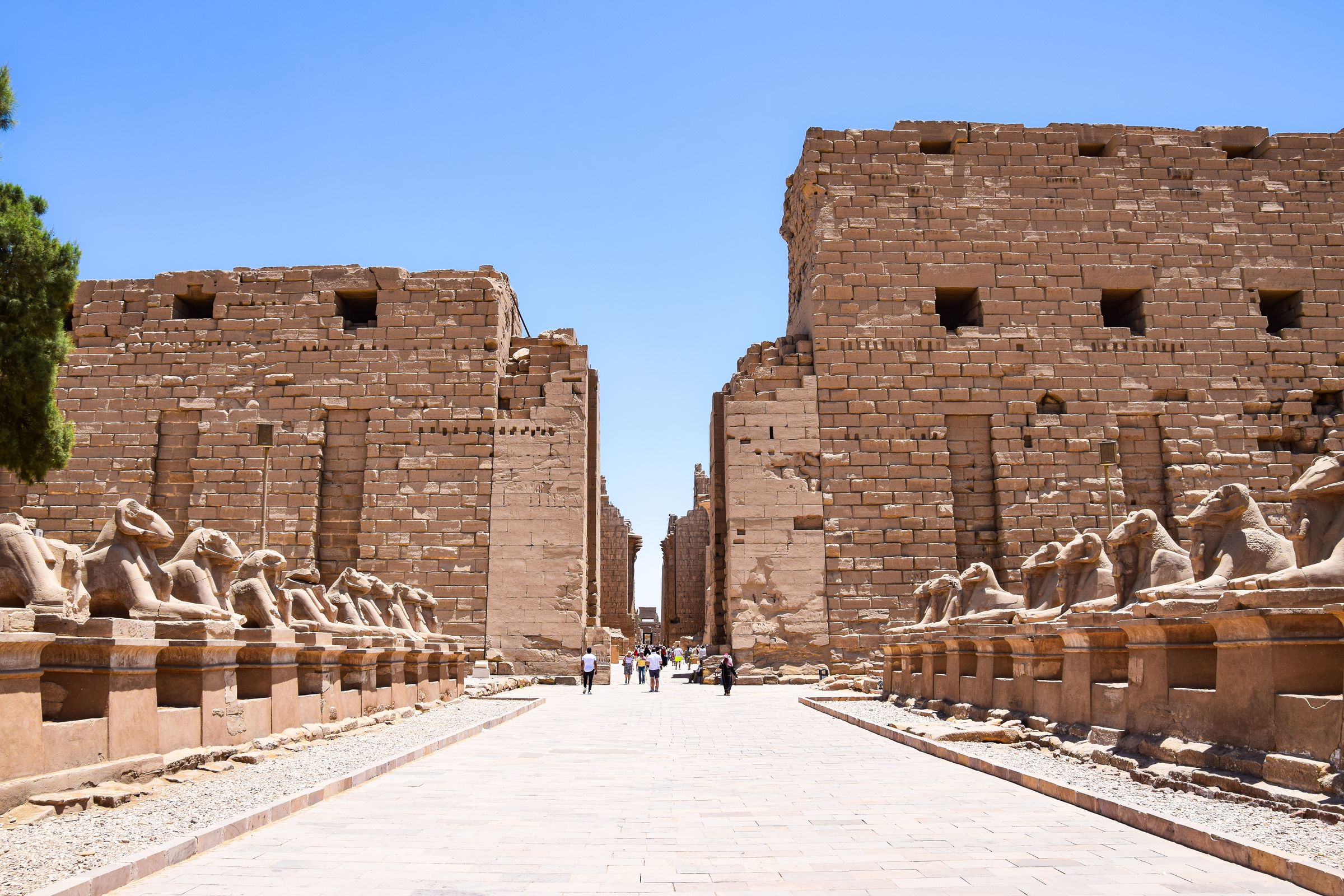
Give Luxor three nights and you can watch Luxor Temple at sunset, sail a felucca on the Nile in the evening and take the morning ferry across to the royal tombs of the West Bank.
Read the Luxor guideExplore the rest of Luxor
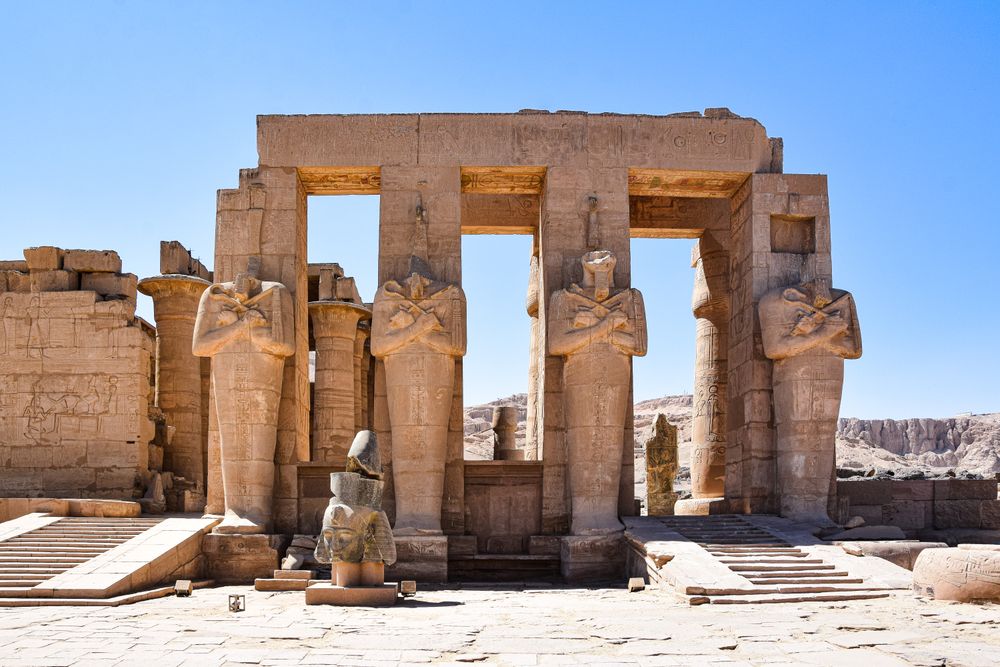
Ramesses II built this memorial temple for his own cult, and a colossus of him now lies in pieces on the ground, the statue behind…
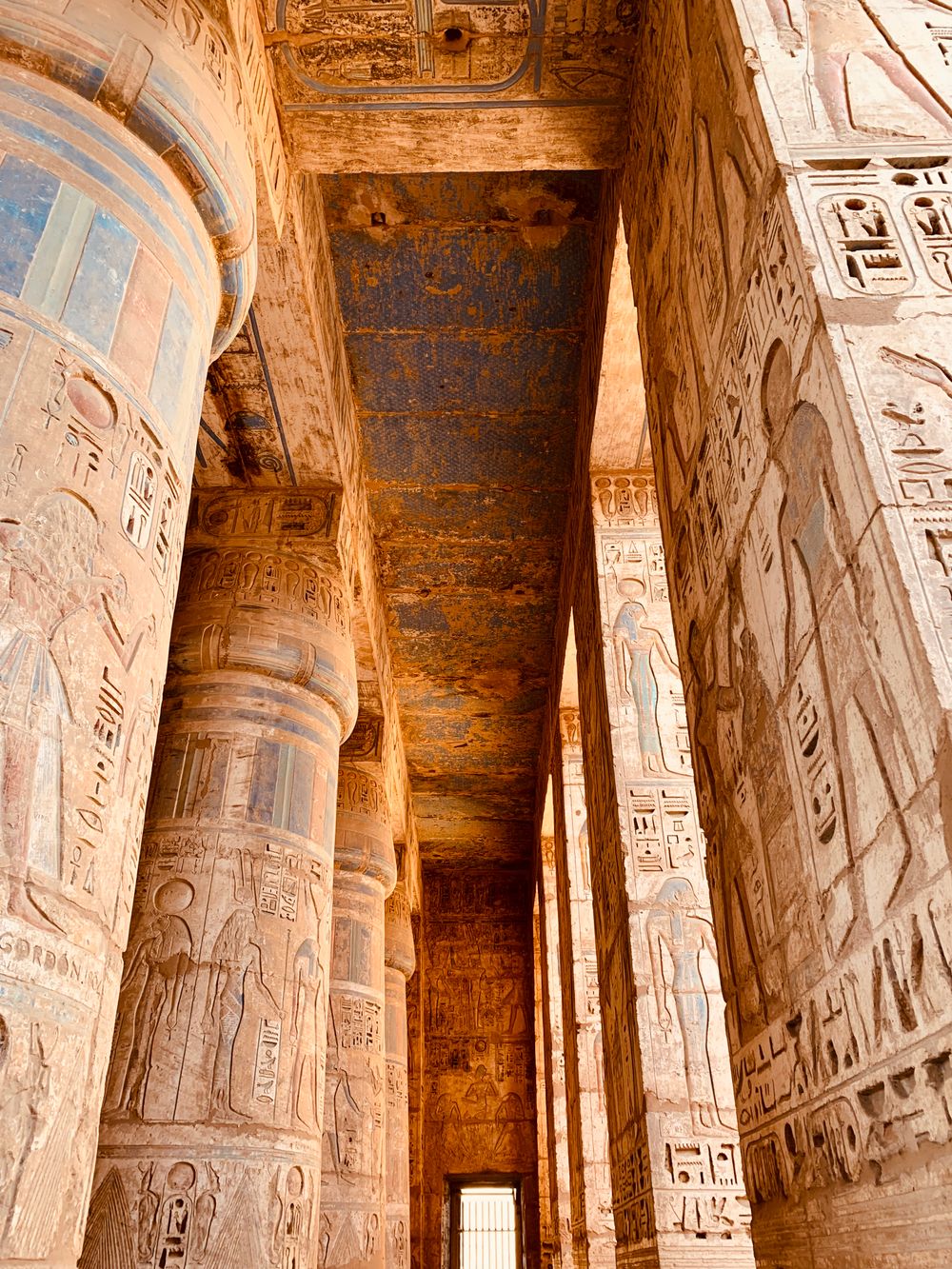
The mortuary temple of Ramesses III, entered through a fortified gate copied from a Syrian citadel. Its reliefs are cut deeper than any…
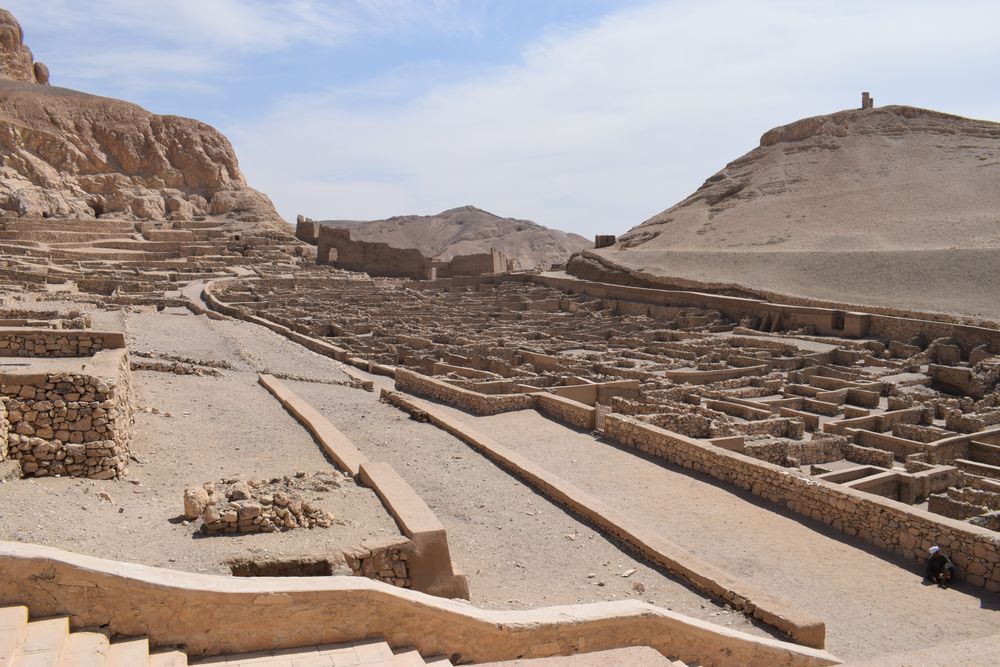
Craftsmen who cut and painted the royal tombs lived in this walled village in a fold of the hills behind Qurna, and the stone footings of…
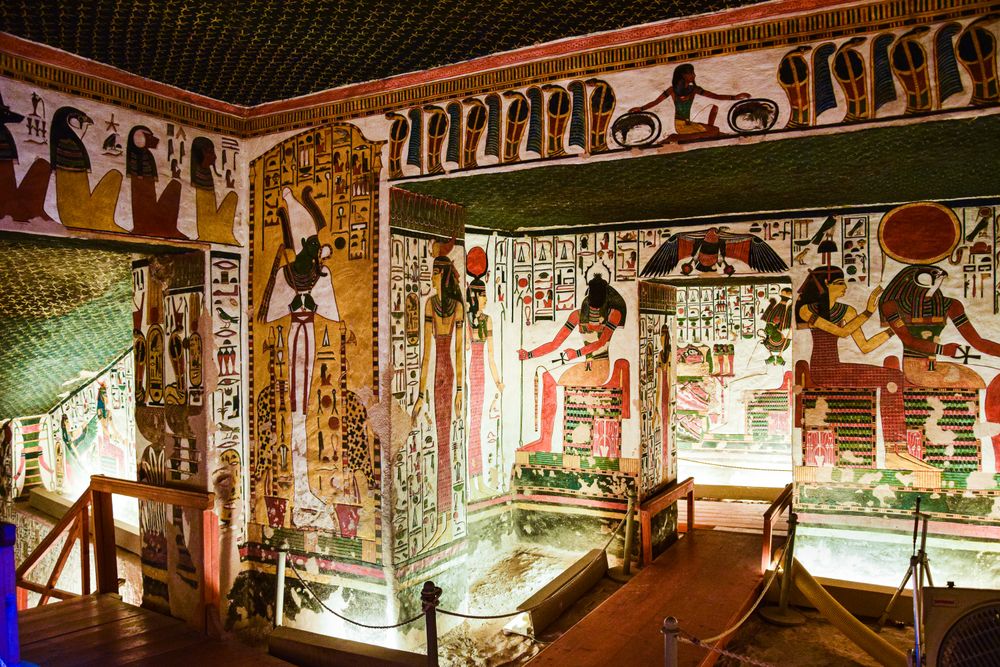
Wives and children of the Ramesside kings were buried in this smaller valley to the south. A few princes' tombs are open on the standard…
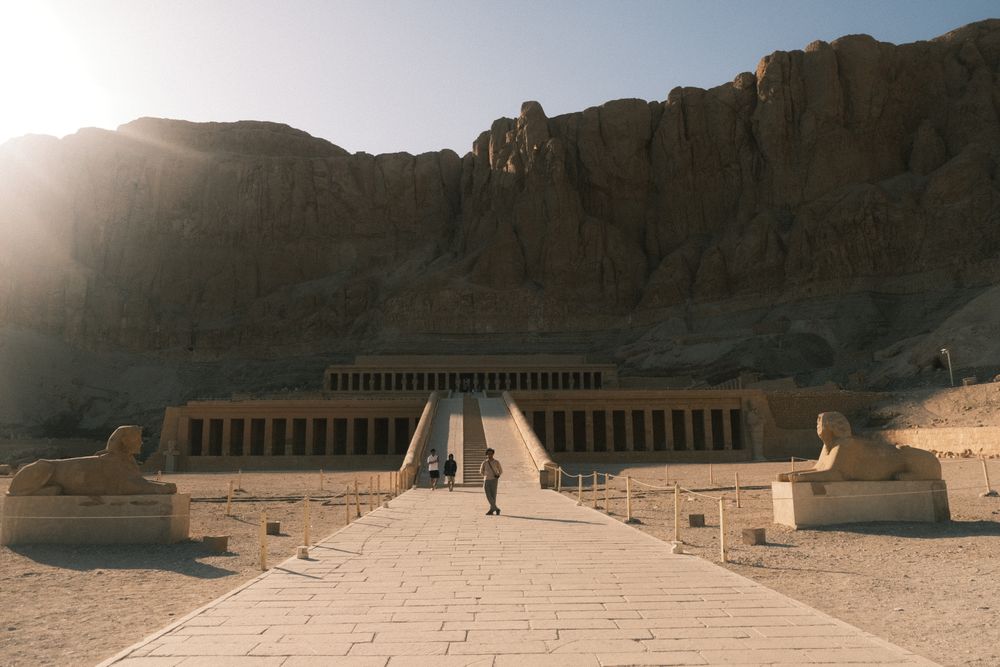
Three colonnaded terraces joined by ramps, set against a sheer amphitheatre of cliffs at Deir el-Bahari and startlingly modern in outline.…
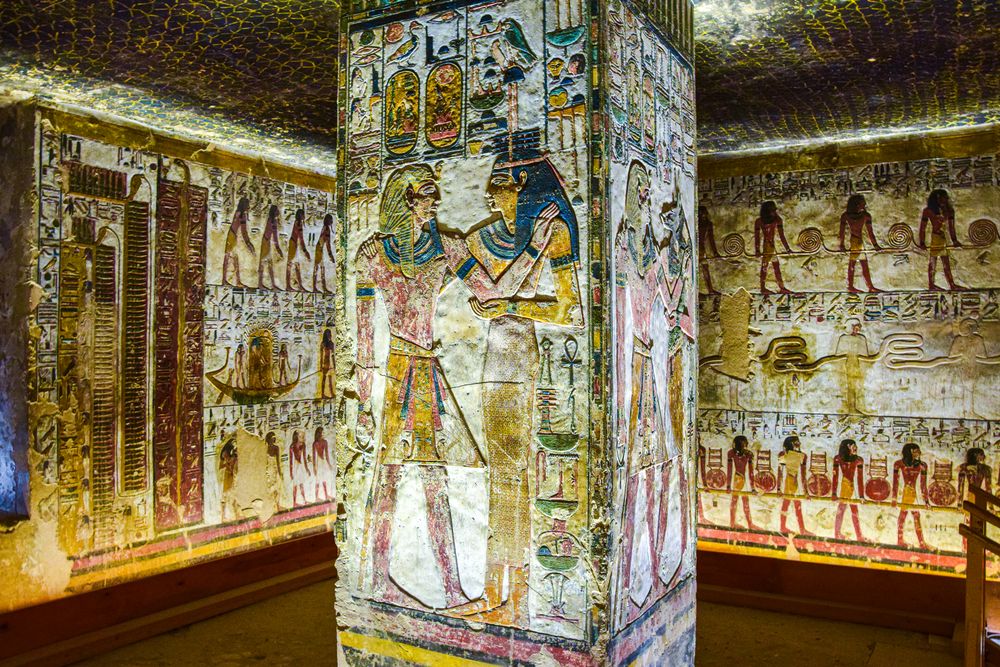
Cut more than a hundred metres into the rock, this is the longest tomb in the Valley of the Kings, and painted reliefs run almost its full…
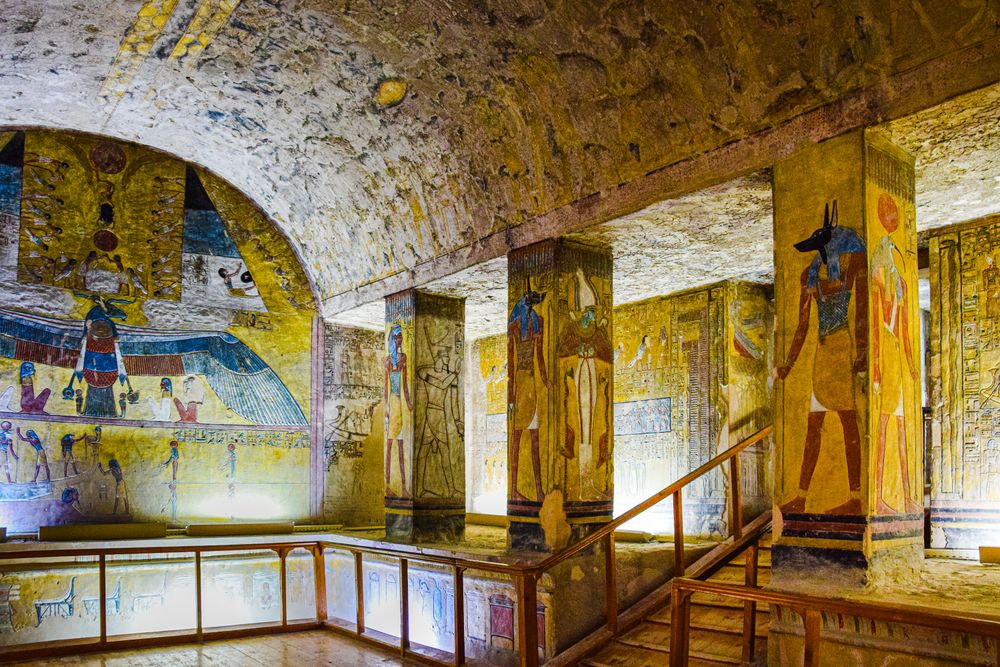
Long painted passages lead down into royal tombs cut under a dry valley. The standard ticket admits three from whichever are open that day;…
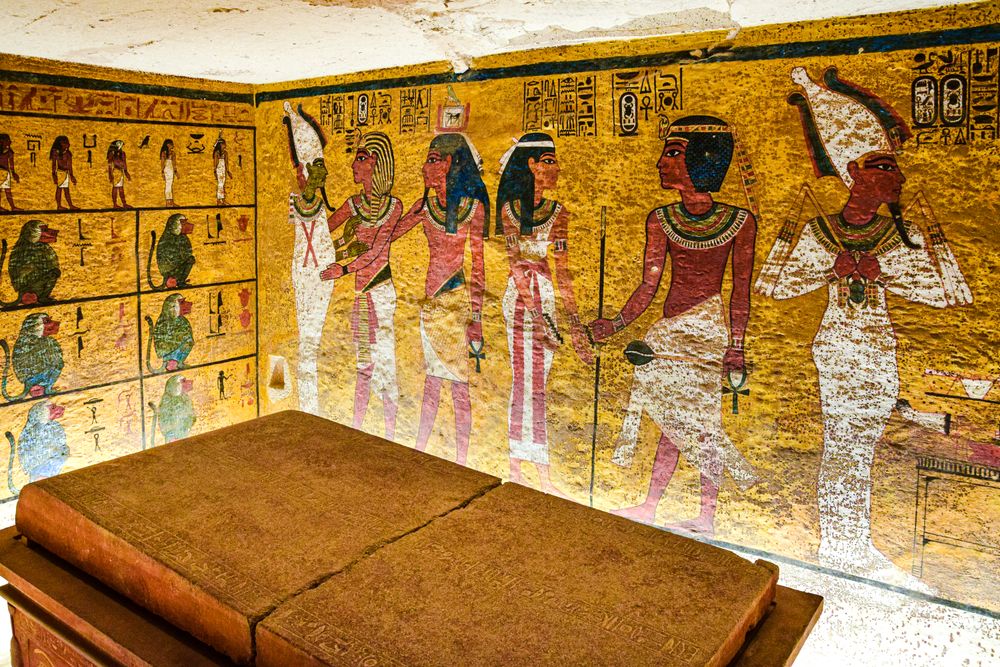
Howard Carter opened this small tomb in 1922, and the treasure it held now fills galleries at the Grand Egyptian Museum near Cairo. What…




Save Colossi of Memnon to your Egypt trip in the Meridian Dispatch app and build the day around it, with the best of Luxor pinned on one map.
Download on the App StoreLast updated