
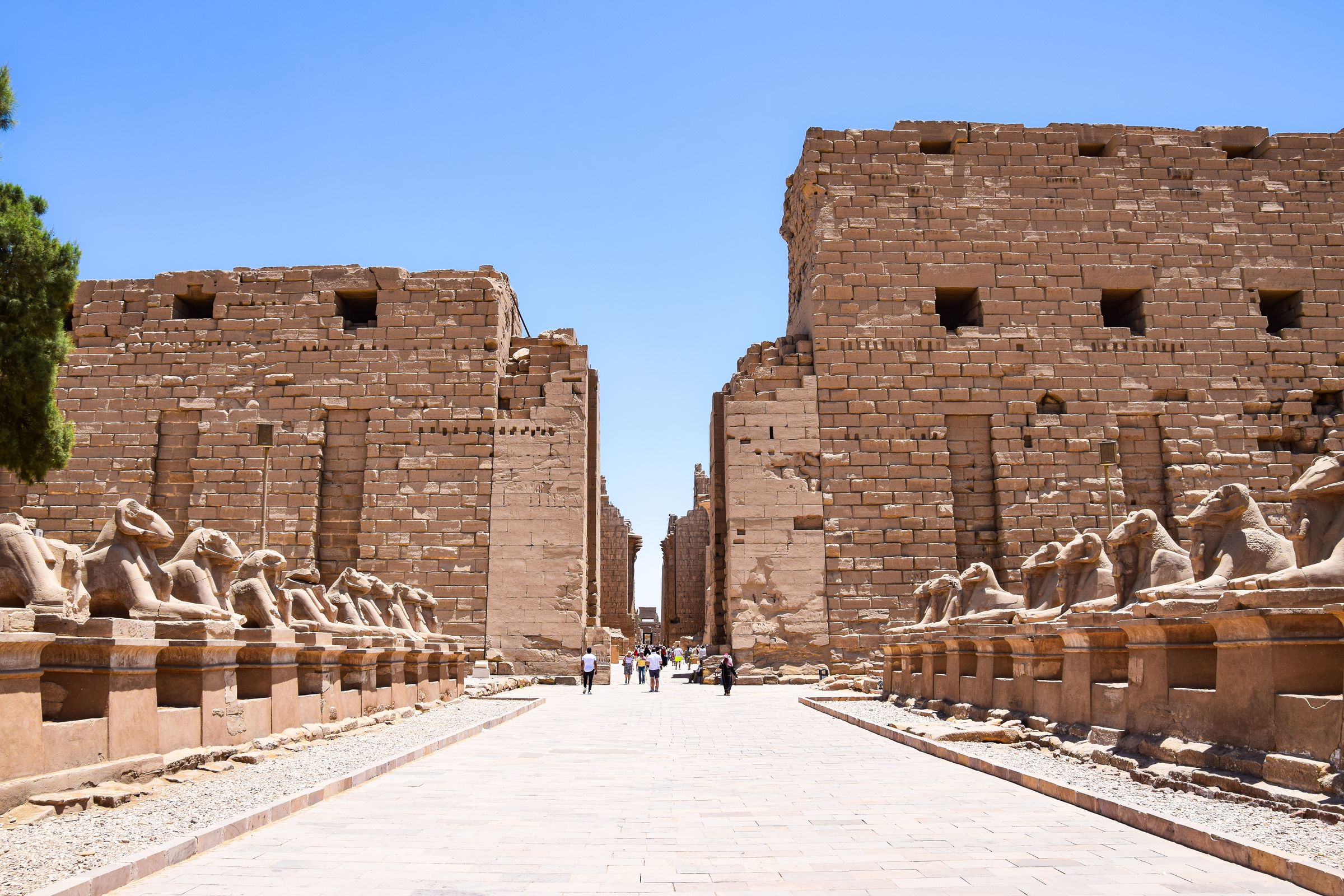
Under the two towers of a fortified gate, you step into the precinct of Ramesses III's mortuary temple, one of the best preserved of the New Kingdom. Its carvings are cut deep, and paint still clings to the stone.
Temple, Luxor. Meridian Dispatch.
By taxi, rented bicycle or a West Bank tour. The temple is about 5 km from central Luxor, across the Nile. Agree a fixed fare with a taxi driver first, and ask whether he will wait for the return; cycling suits the cooler months.
As of November 2026, Medinet Habu opens daily at 06:00 all year. Last entry is 17:00 in summer and 16:00 in winter and during Ramadan.
It is ticketed. Luxor Pass holders should check that the pass covers the temple. Single tickets are sold online on the official egymonuments.com page, with a reduced student rate and a lower rate for Egyptians.
October to April, when Luxor is more pleasant, though highs can still reach 30 degrees. From May to September late-morning heat is draining, especially at the end of a long circuit. Halls and tall walls give some shade, but the approach and open courts get direct sun.
Not very. The bulk of the temple can be reached with limited mobility, because the main axis is close to level. Rough paving slows a wheelchair, and there are ancient stone steps and uneven terrain away from that route.
Photography for personal use is allowed throughout, without flash, which can harm the surviving pigment. Anyone planning to set up a tripod inside the temple should ask about a permit beforehand.
The gate is often compared with the fortified gateways of the Near East, and has balconies on its flanks. In the upper rooms, when they are open, carvings show Ramesses III relaxing in the harem with foreign princesses.
The temple beyond is known for its war scenes. Among them is a battle at sea, a rare subject on this scale in Egyptian art. The enemy are the Sea Peoples, and you can pick them out by their feathered helmets, round shields and ships with bird-shaped prows.
The deep cutting often throws strong shadows. Look up at the ceilings and into the recessed reliefs for blue, red, yellow and green, which have lasted better there than on exposed outside walls.
In the second court, pillars carry statues of the king as the god Osiris, and the walls show processions for the harvest god Min.
The precinct also holds a smaller, older temple to Amun, begun under Hatshepsut and Thutmose III. Coptic Christians later built homes and a church inside the mudbrick enclosure.
Past the fortified gate, called the Eastern High Gate, the way leads to the First Pylon. Beyond it is the first court, with statues of Ramesses III.
The king's palace is on the south side of this court. He showed himself to his subjects at a window facing it, and the rooms behind are empty.
Carry on through the Second Pylon to the second court, then the three columned halls, the chapels and the sanctuary at the far end.
Before you leave, walk round the outside to the north wall. The best-known Sea Peoples scenes are there, with a carved calendar of religious festivals. There is a café across the road.
Bring a phone torch: the inner rooms are dark and unlit, and light from the side brings out the paint. Pack water, sunscreen and a hat for the courts.
For photographs, frame the columns and statues at an angle to give depth instead of shooting a wall straight on.
Put the Valley of the Kings and the Mortuary Temple of Hatshepsut ahead of this stop if you only have one West Bank day.
Give Luxor three nights and you can watch Luxor Temple at sunset, sail a felucca on the Nile in the evening and take the morning ferry across to the royal tombs of the West Bank.
Read the Luxor guideExplore the rest of Luxor
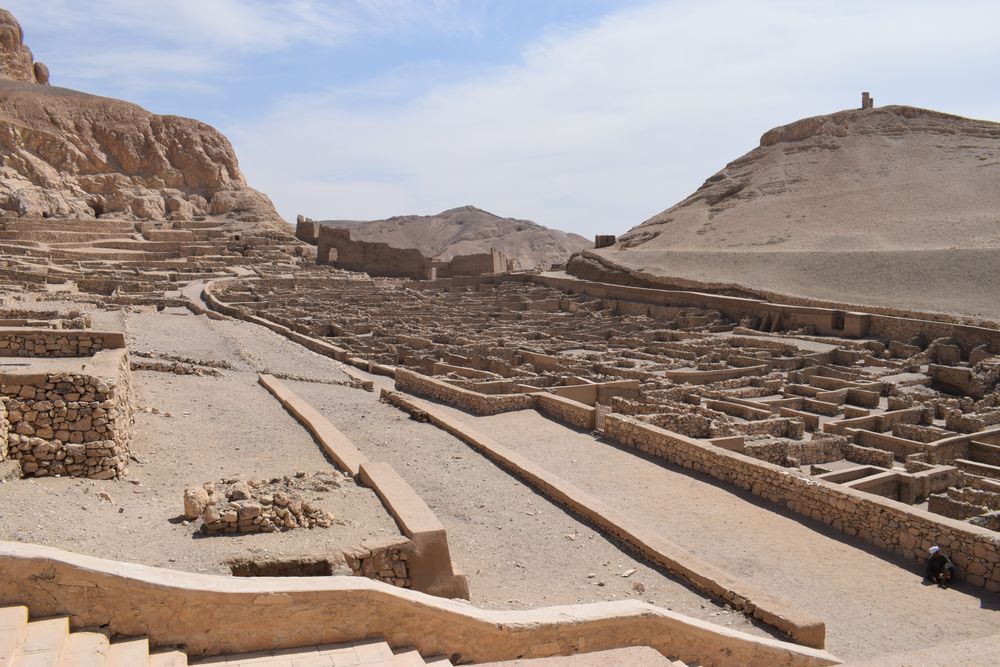
Craftsmen who cut and painted the royal tombs lived in this walled village in a fold of the hills behind Qurna, and the stone footings of…
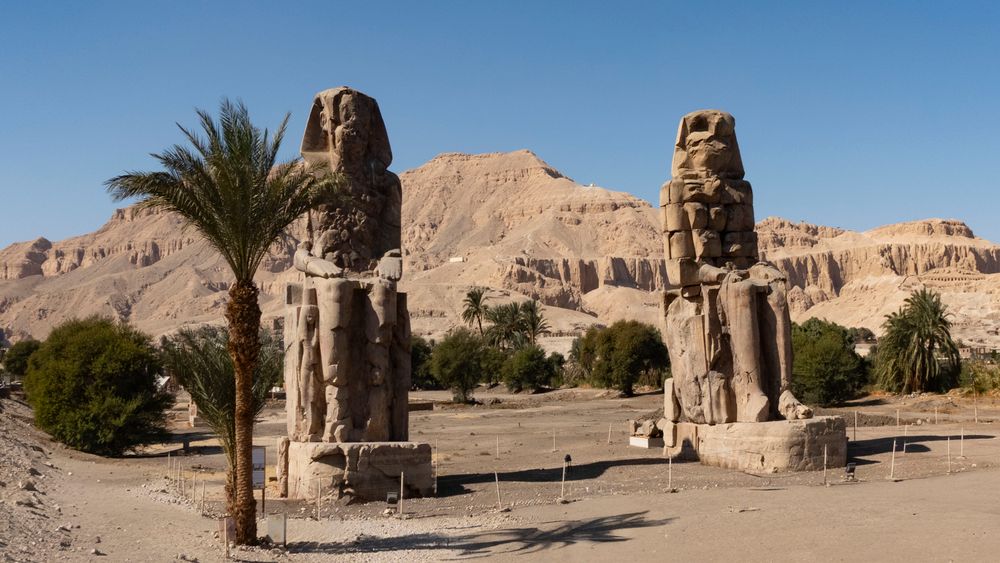
Two seated figures of Amenhotep III, eighteen metres high, facing the sunrise beside the west bank road. They guarded the gate of his…
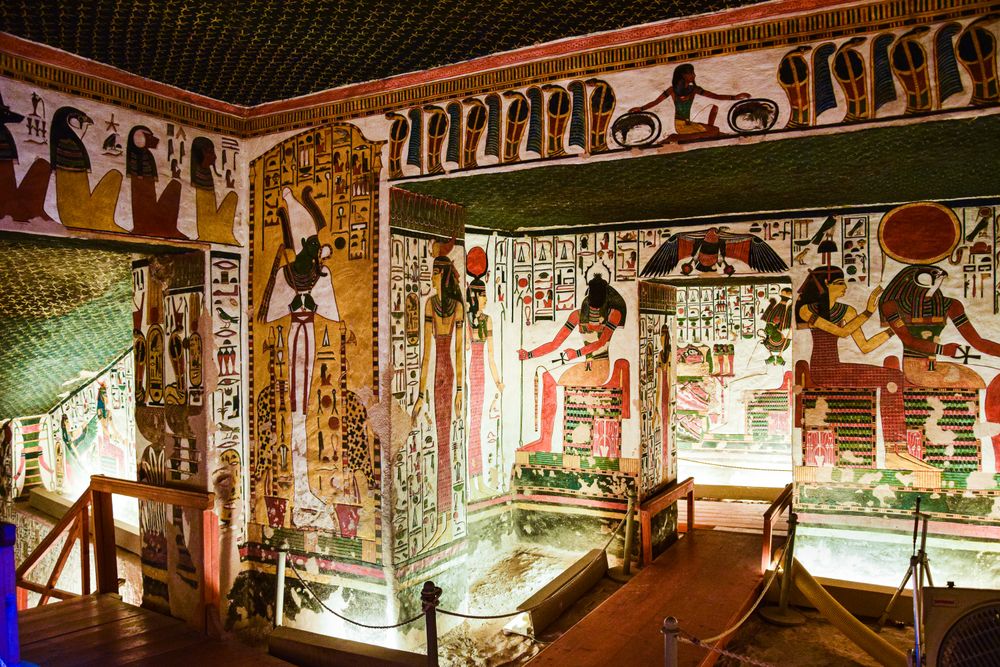
Wives and children of the Ramesside kings were buried in this smaller valley to the south. A few princes' tombs are open on the standard…
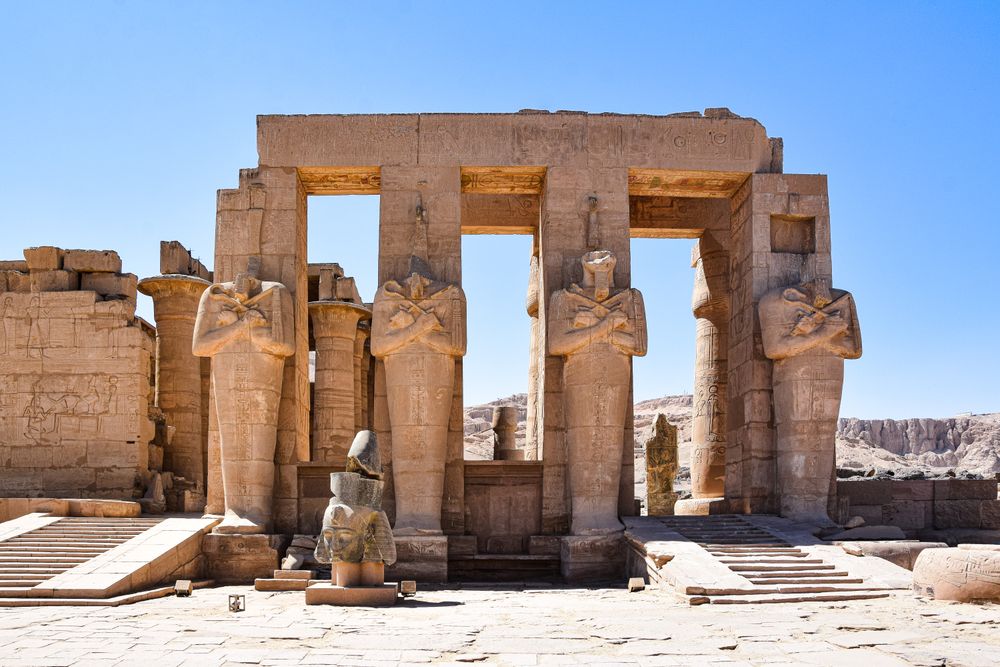
Ramesses II built this memorial temple for his own cult, and a colossus of him now lies in pieces on the ground, the statue behind…
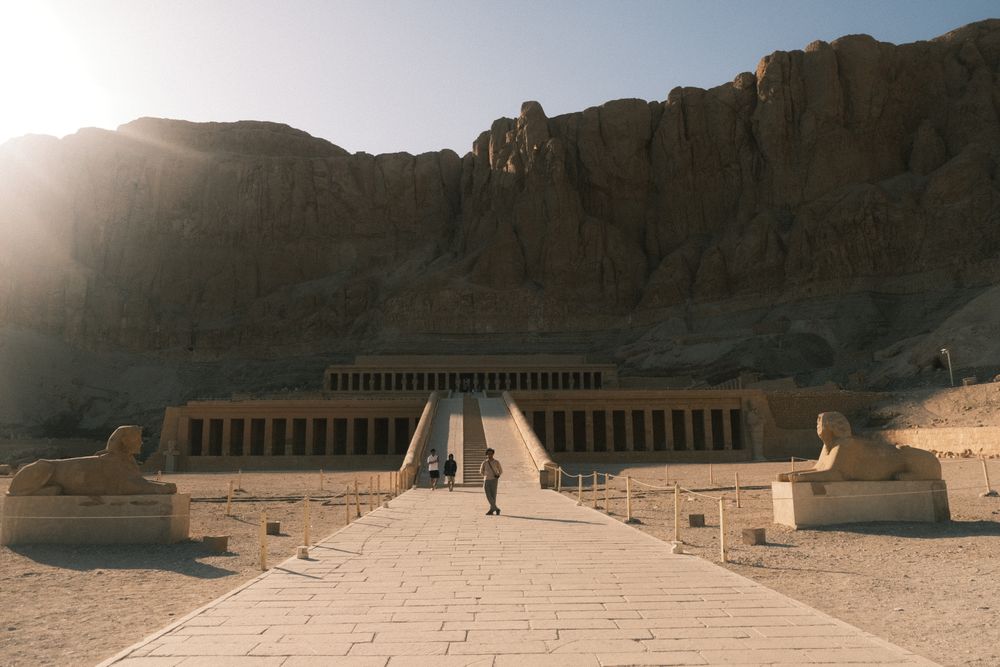
Three colonnaded terraces joined by ramps, set against a sheer amphitheatre of cliffs at Deir el-Bahari and startlingly modern in outline.…
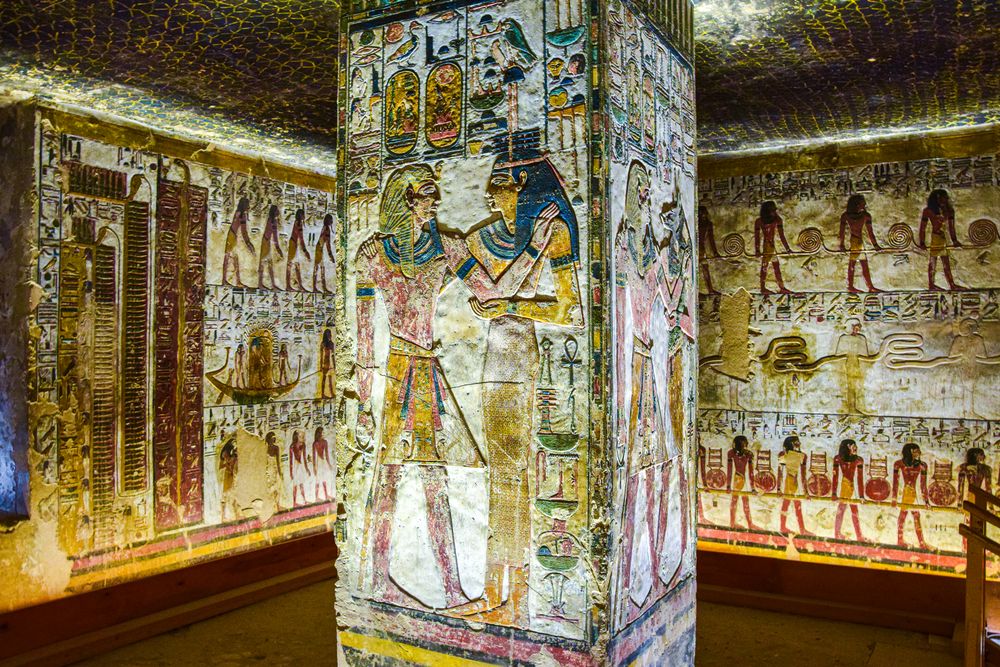
Cut more than a hundred metres into the rock, this is the longest tomb in the Valley of the Kings, and painted reliefs run almost its full…
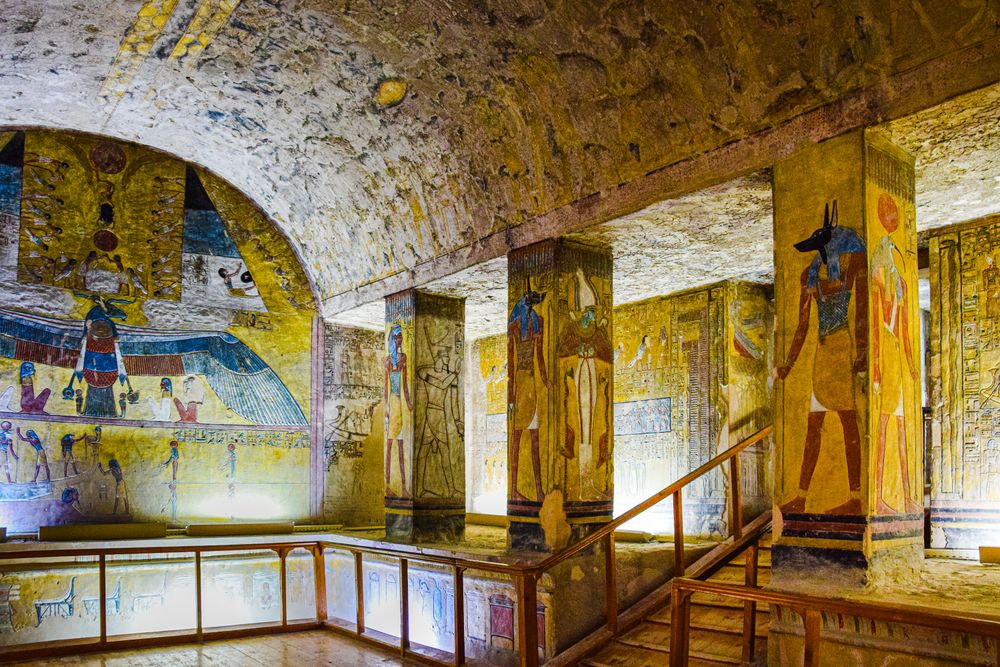
Long painted passages lead down into royal tombs cut under a dry valley. The standard ticket admits three from whichever are open that day;…
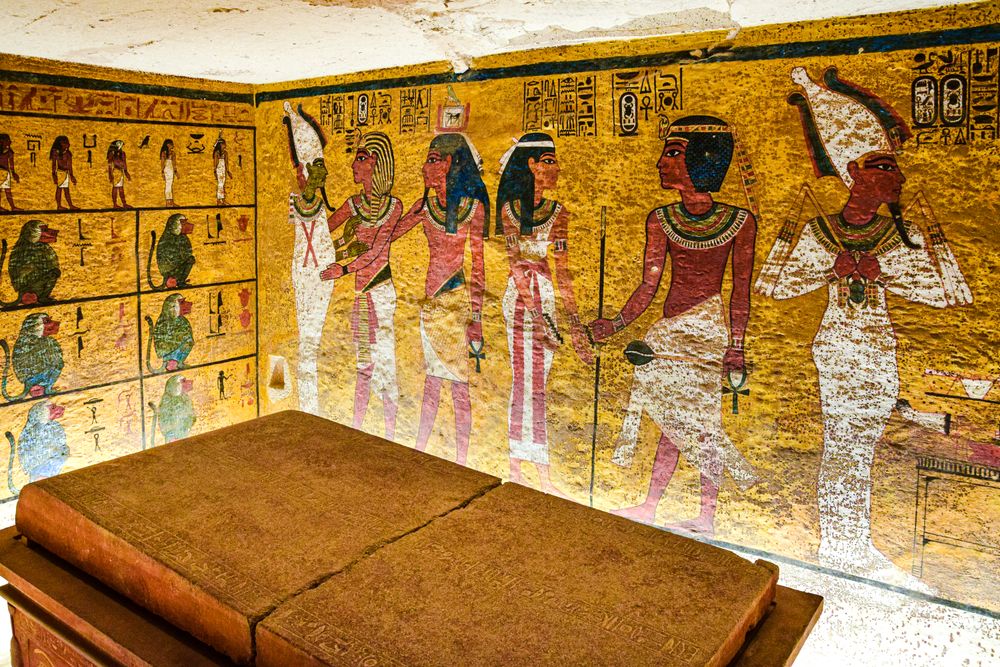
Howard Carter opened this small tomb in 1922, and the treasure it held now fills galleries at the Grand Egyptian Museum near Cairo. What…




Save Medinet Habu to your Egypt trip in the Meridian Dispatch app and build the day around it, with the best of Luxor pinned on one map.
Download on the App StoreLast updated