
Down carved and painted walls, the longest tomb in the Valley of the Kings leads you to a vaulted burial chamber with the night sky painted across its ceiling.
Archaeological Site, Luxor. Meridian Dispatch.
Check at the ticket desk, which can confirm whether the tomb is open that day. The valley itself opens daily from 06:00. Last entry to the valley is 17:00 in summer and 16:00 in winter and during Ramadan.
Yes. KV17 needs its own ticket on top of the general Valley of the Kings ticket. Luxor Pass holders should check at the visitor centre whether their version covers it.
Phone photography is free across the valley, but ask at the desk before using a camera in this tomb. Flash is banned everywhere because it damages the pigments.
Longer than the other tombs here, where ten minutes inside is typical, because this is the longest and almost all of it is decorated. Three standard tombs take around two hours, so add this one to that.
Yes, for a traveller who wants to see painted raised relief close up. For another astronomical ceiling with a much cheaper extra ticket, see Ramesses V and VI (KV9).
No. Guides are not permitted inside the tombs, so a hired guide explains the scenes outside and visitors then go in alone, quietly and in single file.
The tomb, numbered KV17, runs about 137 metres into the rock, through seven corridors and ten chambers. Almost all of it is raised relief, carved so the figures stand out from the wall and then painted. Vultures cover the first corridor's ceiling, and every other one has a cobra's head.
The well room shows Horus leading the king by turns to Isis and Hathor, under yellow stars on blue. On the left side of the pillared hall after it, look for a scene from the Book of Gates, an afterlife text, showing four peoples with different features.
One side room was never carved. Its figures are still black outlines on the plaster, so you can see how the artists planned a wall.
The burial chamber comes in two levels. Six pillars hold up the near end, and steps drop to a sunken floor below a deep blue ceiling painted with constellations, the first vaulted burial chamber here. Isis and Nephthys spread their wings at the tops of the side walls.
Some reliefs have lost their colour because early copyists pressed wet paper and wax against them, and others have had pieces cut away. Seti's alabaster sarcophagus is in Sir John Soane's Museum in London.
Getting there from Luxor means a taxi over the Nile bridge, or the public ferry and then a taxi on the West Bank. Seti's tomb needs its own ticket as well as the general one, and you buy both at the visitor centre.
From there, ride the small electric train or walk up to the tombs. Go past Tutankhamun's, and KV17 is the second on the left.
Inside, a sloping corridor leads to a stairway at about thirty degrees, with another slope below it. Next come the well room and the first pillared hall, with the uncarved side room a few steps lower.
A descent at the side of that hall leads to two more corridors with scenes of the Opening of the Mouth, the ritual meant to let the dead king breathe again. Next is a room of the king with various gods, then the burial chamber, and you climb back out the way you came.
Wear sturdy shoes and carry water. There is very little shade outside, and the air in the tombs is stuffy, so pack a hat and sun cream too.
Ask at the ticket desk which sections are open before paying, because the open extent changes. Combine the tomb with the Mortuary Temple of Hatshepsut.
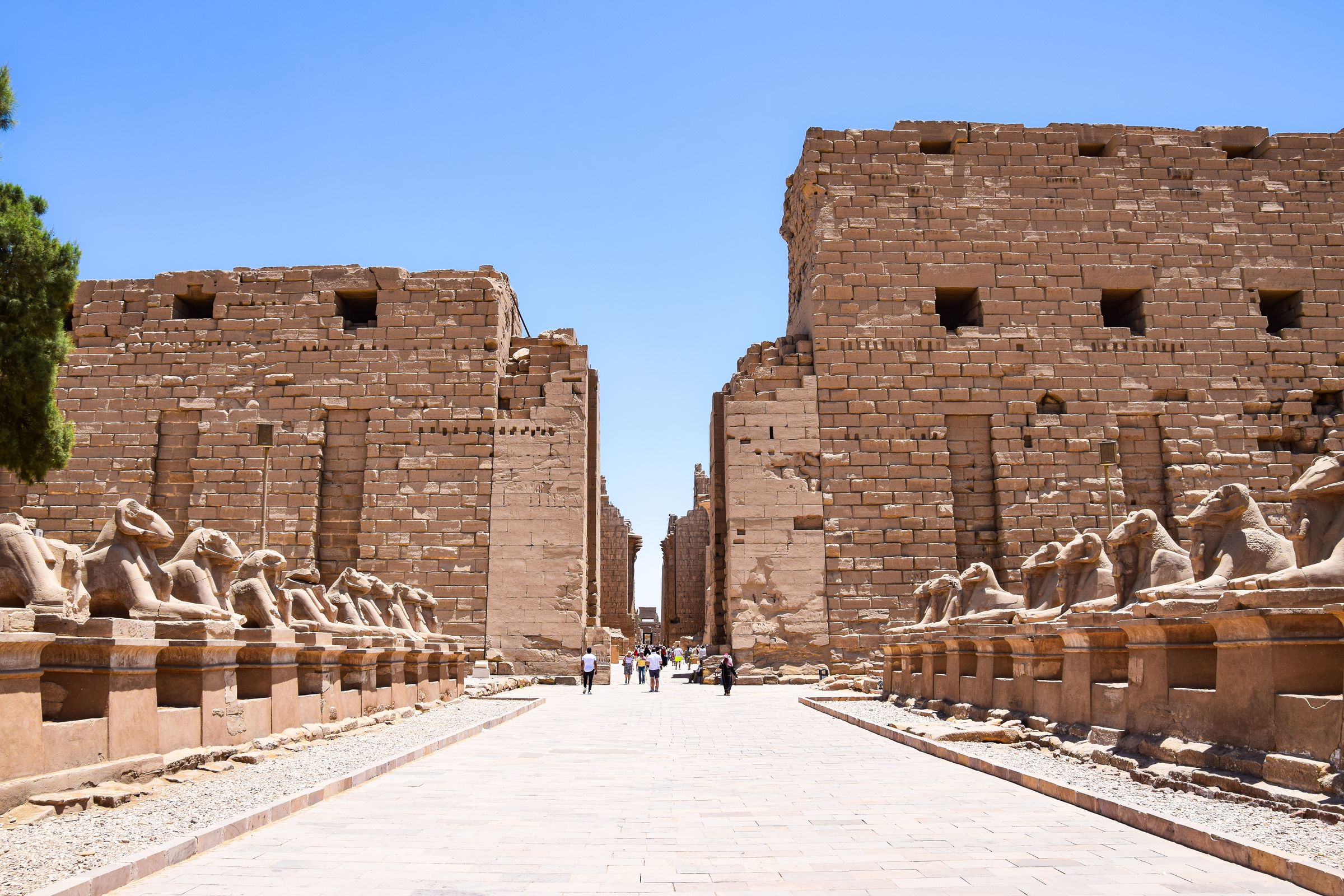
Give Luxor three nights and you can watch Luxor Temple at sunset, sail a felucca on the Nile in the evening and take the morning ferry across to the royal tombs of the West Bank.
Read the Luxor guideExplore the rest of Luxor
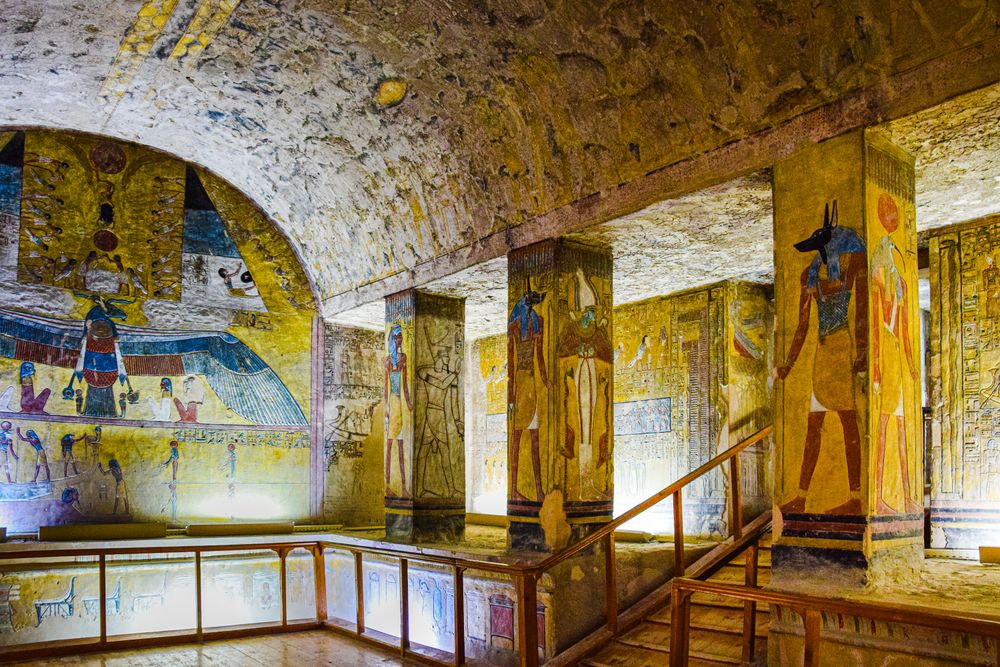
Long painted passages lead down into royal tombs cut under a dry valley. The standard ticket admits three from whichever are open that day;…
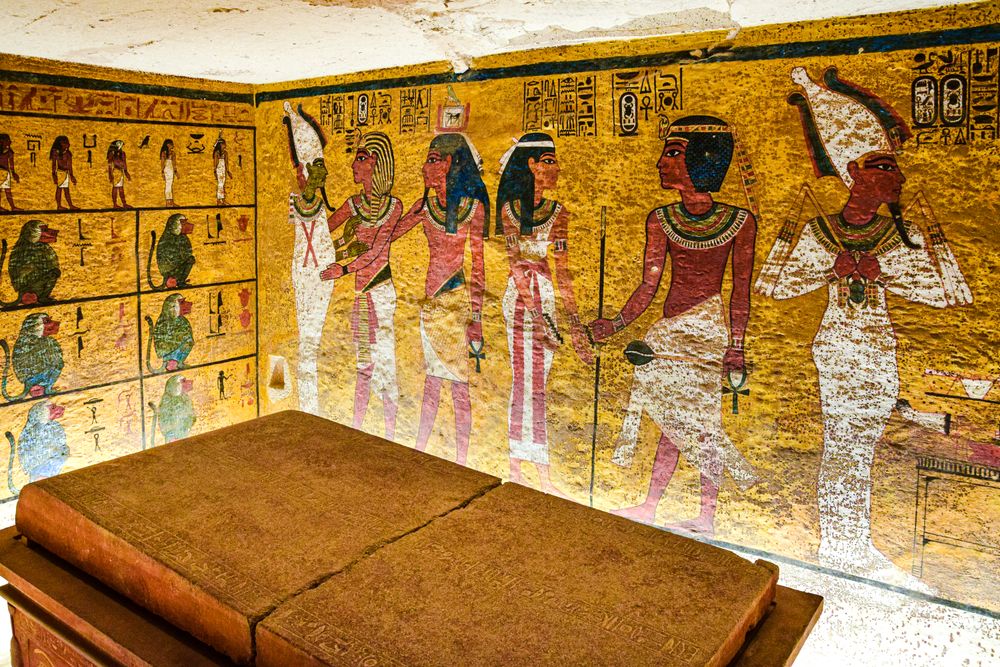
Howard Carter opened this small tomb in 1922, and the treasure it held now fills galleries at the Grand Egyptian Museum near Cairo. What…
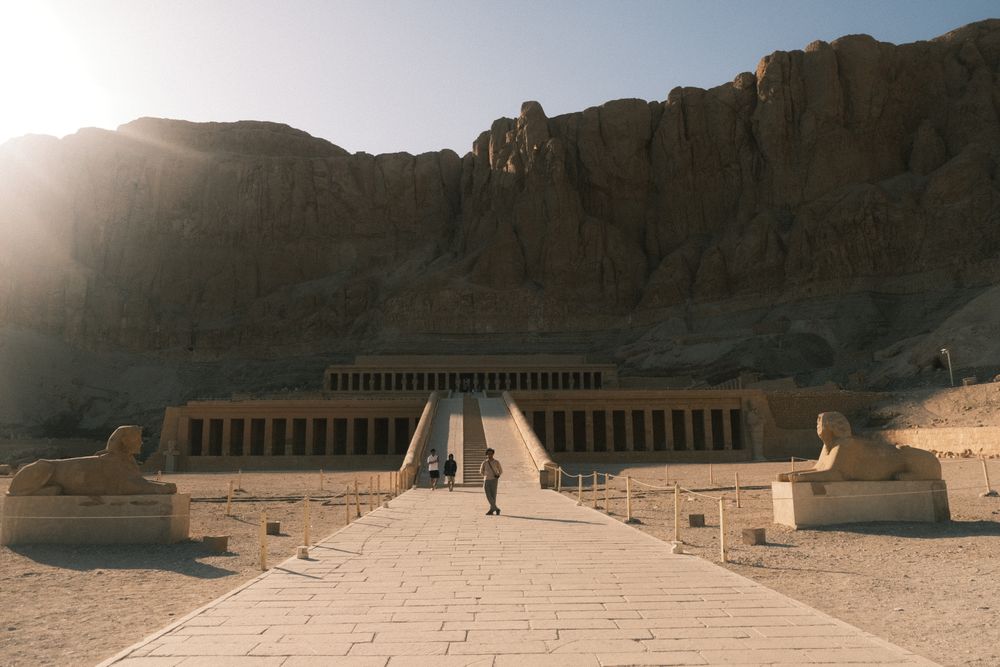
Three colonnaded terraces joined by ramps, set against a sheer amphitheatre of cliffs at Deir el-Bahari and startlingly modern in outline.…
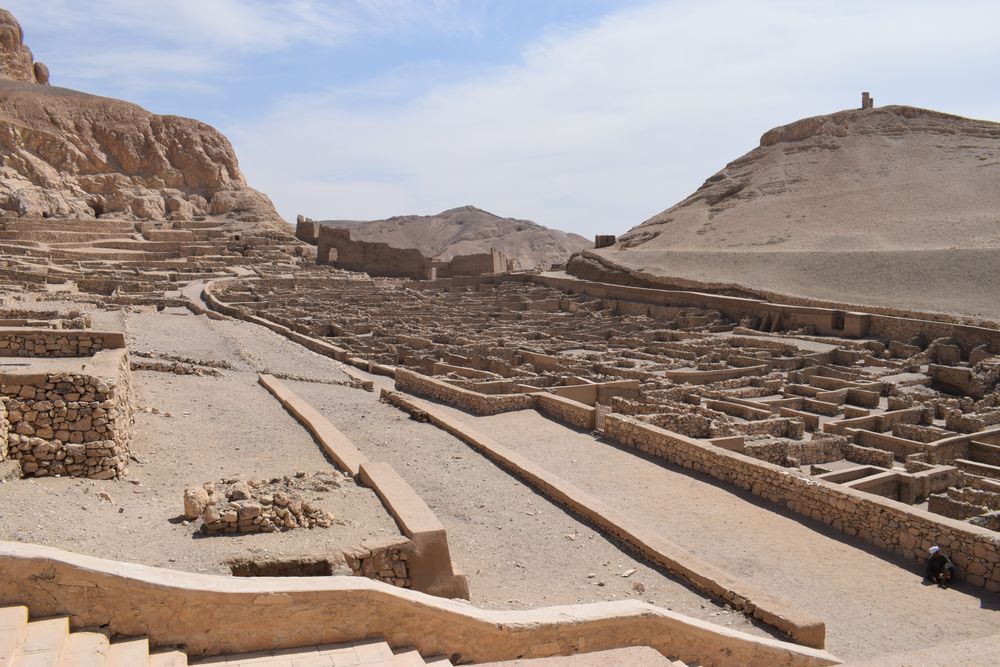
Craftsmen who cut and painted the royal tombs lived in this walled village in a fold of the hills behind Qurna, and the stone footings of…
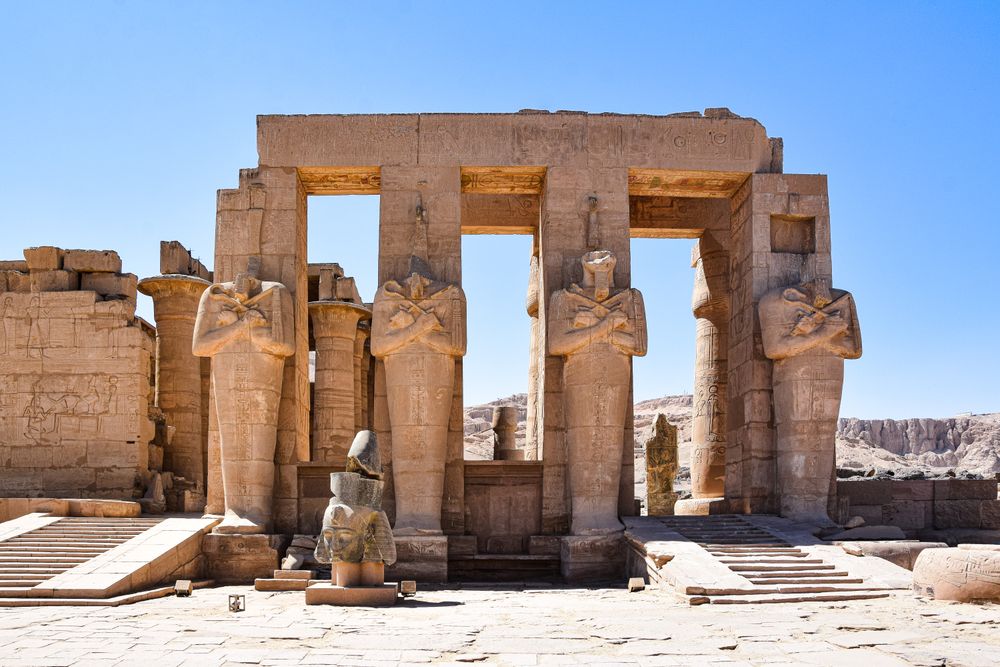
Ramesses II built this memorial temple for his own cult, and a colossus of him now lies in pieces on the ground, the statue behind…
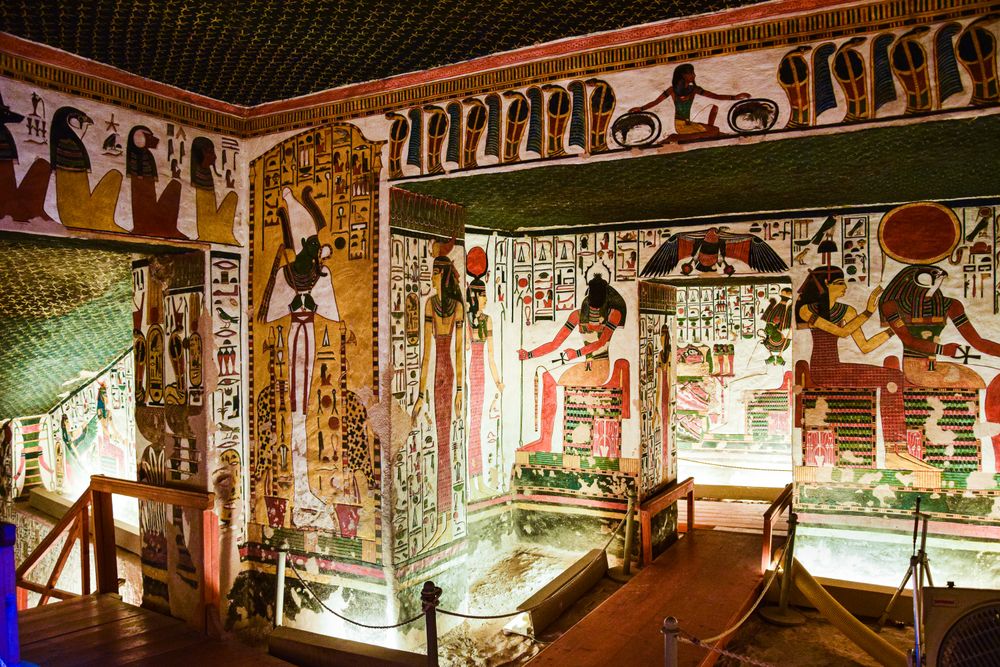
Wives and children of the Ramesside kings were buried in this smaller valley to the south. A few princes' tombs are open on the standard…
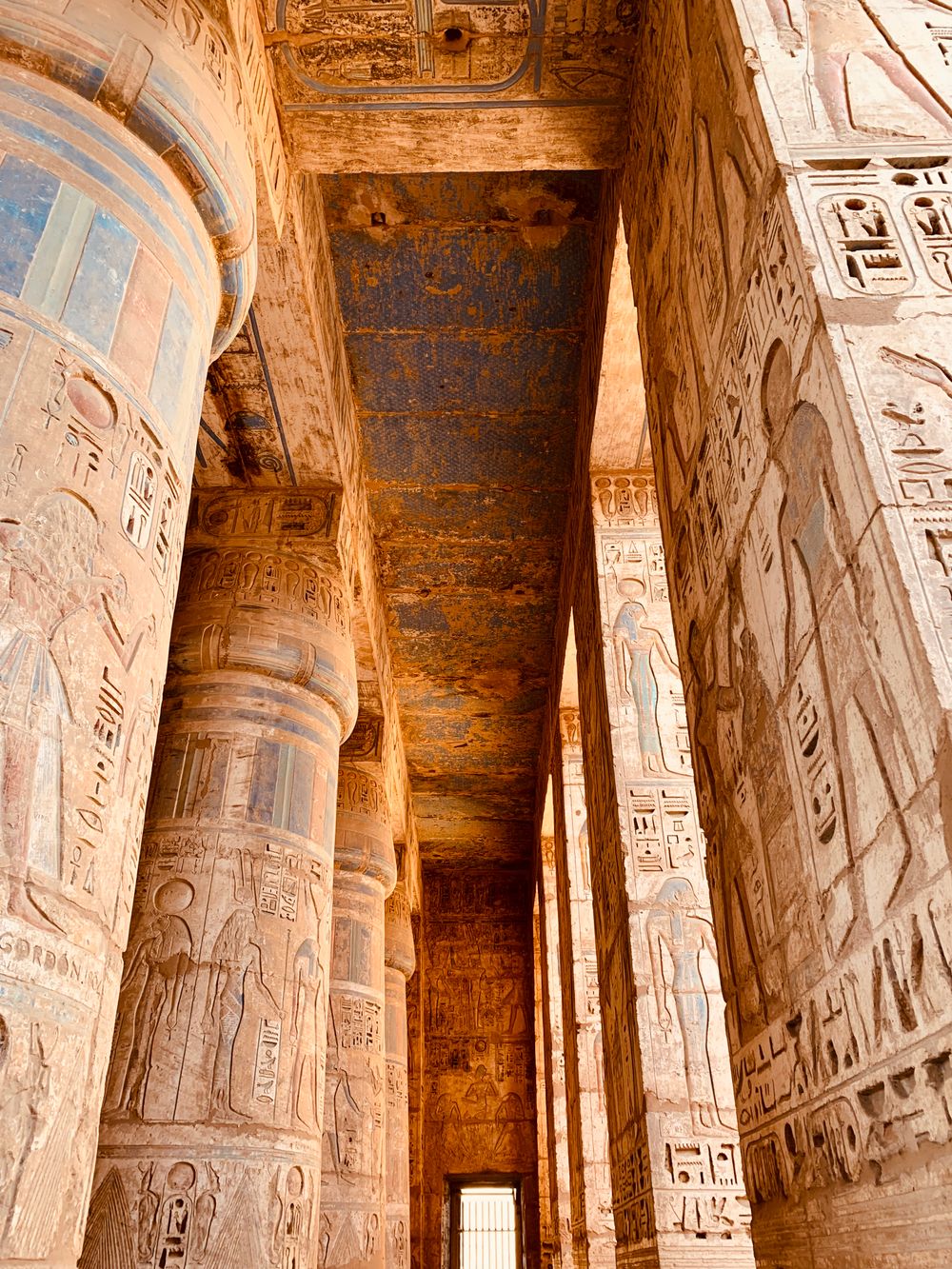
The mortuary temple of Ramesses III, entered through a fortified gate copied from a Syrian citadel. Its reliefs are cut deeper than any…
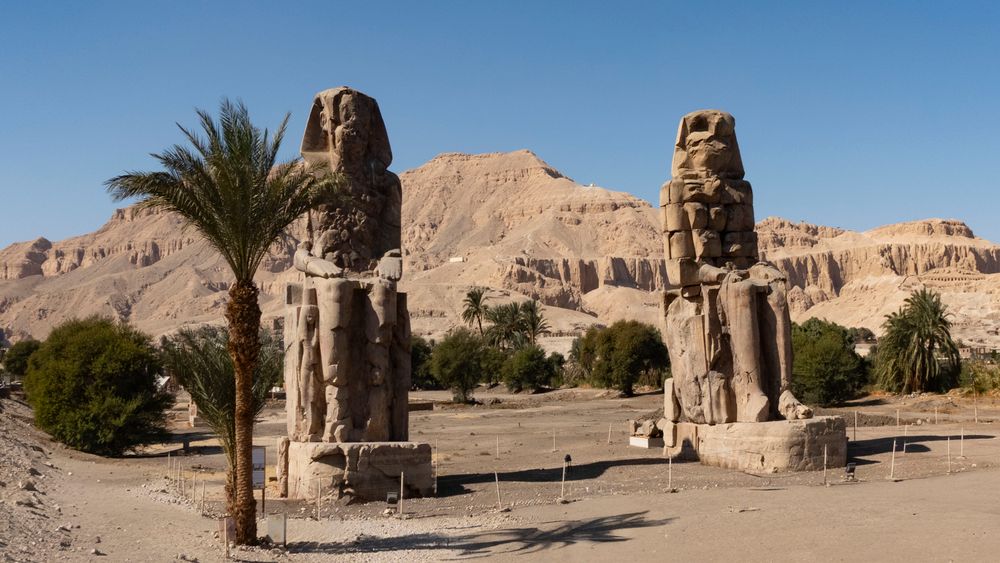
Two seated figures of Amenhotep III, eighteen metres high, facing the sunrise beside the west bank road. They guarded the gate of his…




Save Tomb of Seti I to your Egypt trip in the Meridian Dispatch app and build the day around it, with the best of Luxor pinned on one map.
Download on the App StoreLast updated