
After three thousand years, a giant statue of Ramesses II lies broken on the floor of the temple he built for his own worship. Shelley wrote Ozymandias about this statue, and you can stand beside what is left of it.
Temple, Luxor. Meridian Dispatch.
The site is open every day of the week, from 06:00. As of November 2026, last entry is 17:00 in summer and 16:00 in winter and during Ramadan.
Yes, and it must be kept throughout the visit. Carry a bank card, as the West Bank office may refuse cash. Children below six enter free.
Between an hour and an hour and a half is enough for the courts and the columned hall. A slower visit can run to about two hours.
Cross the Nile by ferry or motor launch, then hire a taxi for the day, the easiest way round several West Bank sites. Minibuses also run from the ferry to Gurna, with a walk of up to a kilometre from the main road.
In part. The site is largely flat, and wheelchair users can reach the broken statue and the Second Court. The back of the hypostyle hall is out of reach, and the ruins have uneven ground and some shallow steps.
Yes. As of November 2026, taking photos with a mobile phone is free of charge. Visitors who plan to use any other camera should ask at the ticket office before entering.
The Ramesseum is the memorial temple of Ramesses II, on the west side of the Nile across from Luxor. It is a ruin now, and the parts still upright are the pillars of one court and the columns of the main hall.
The colossus is the famous part. The seated king once rose 16 to 19 metres and weighed about 1,000 tonnes, brought from Aswan as a single block. Today parts of its base and torso remain.
A smaller figure of his mother, Tuya, was its pair, and the two flanked the second pylon, a monumental gateway.
The pylon reliefs show the king and his army chasing the Hittites at the Battle of Kadesh. Further in, tall pillars carry the king in the form of Osiris, god of the underworld.
The columns still standing in the hypostyle hall are carved with Ramesses before the gods. Part of the ceiling keeps its gold stars on a blue ground.
Mud-brick storerooms wrap three sides of the temple. One of their vaults is the oldest arch of its kind still standing in Egypt, about 3,300 years old.
Sort the ticket out before you reach the temple, either on the ministry's ticket site or on the West Bank. Ask on arrival where it is sold that day, because it may be the main West Bank office and not the temple itself.
The entrance brings you straight into the Second Court, behind the pylons. Look along its portico at the Osiris pillars, then for the scattered pieces of two more seated statues of the king, one in pink granite and one in black.
Turn back towards the first court for the broken colossus. Then go through the hypostyle hall to the first room behind it, where part of the ceiling carries astral scenes.
North of the hall lie the traces of a small temple to Tuya and Nefertari, the king's chief wife. Add fifteen minutes for the brick vaults at the back.
Photograph the fallen giant from low down, with a wide lens if you have one. In the hypostyle hall, look up, because the painted ceiling is easy to miss while you study the columns.
Wear comfortable shoes for the walking, with water in your bag. Bicycles can be rented near the ferry jetty, though they are basic and the summer heat can be intense.
For a view over the whole ruin, climb the hill behind the Tombs of the Nobles, reached through the tombs area. It also looks across to the Mortuary Temple of Hatshepsut.
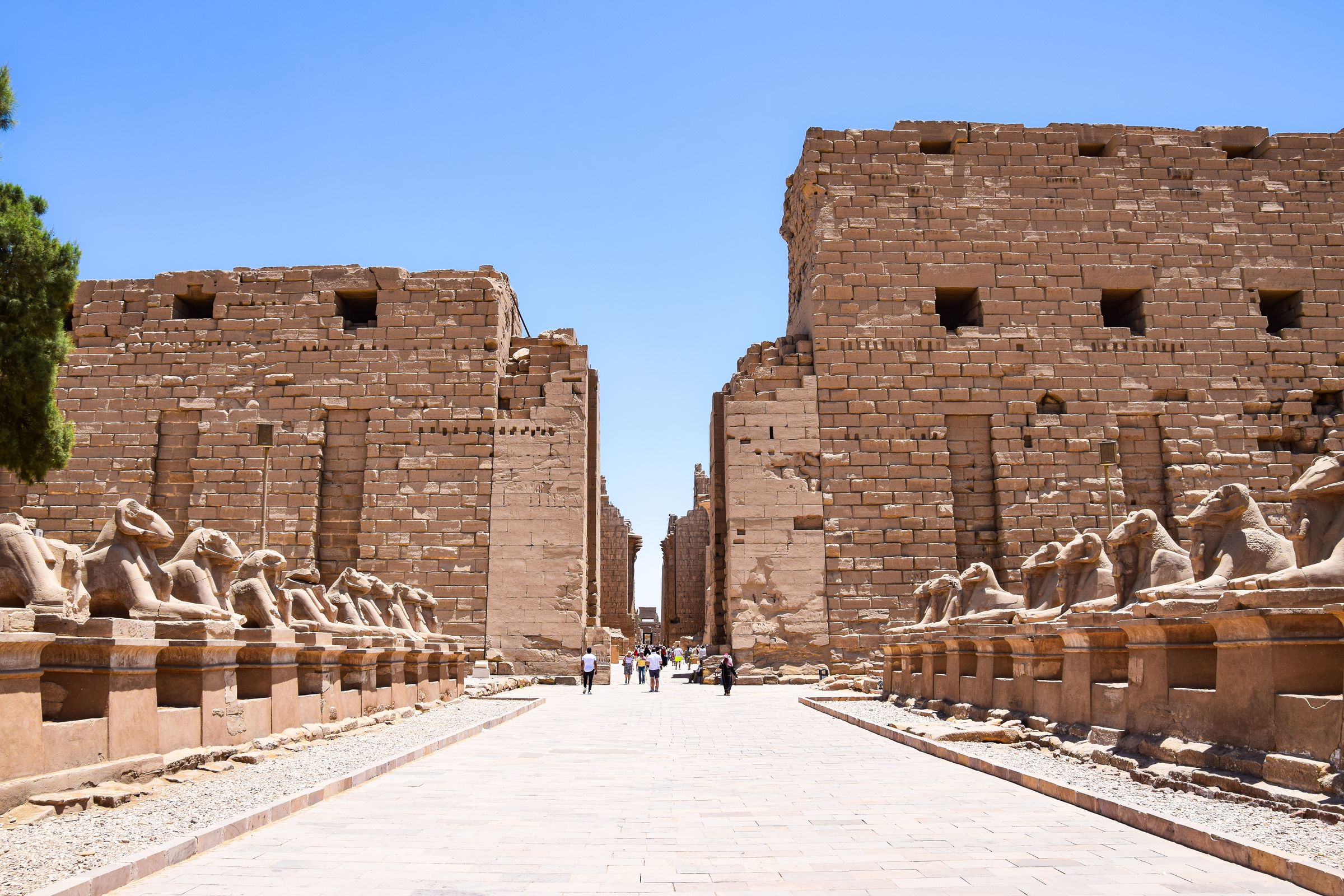
Give Luxor three nights and you can watch Luxor Temple at sunset, sail a felucca on the Nile in the evening and take the morning ferry across to the royal tombs of the West Bank.
Read the Luxor guideExplore the rest of Luxor
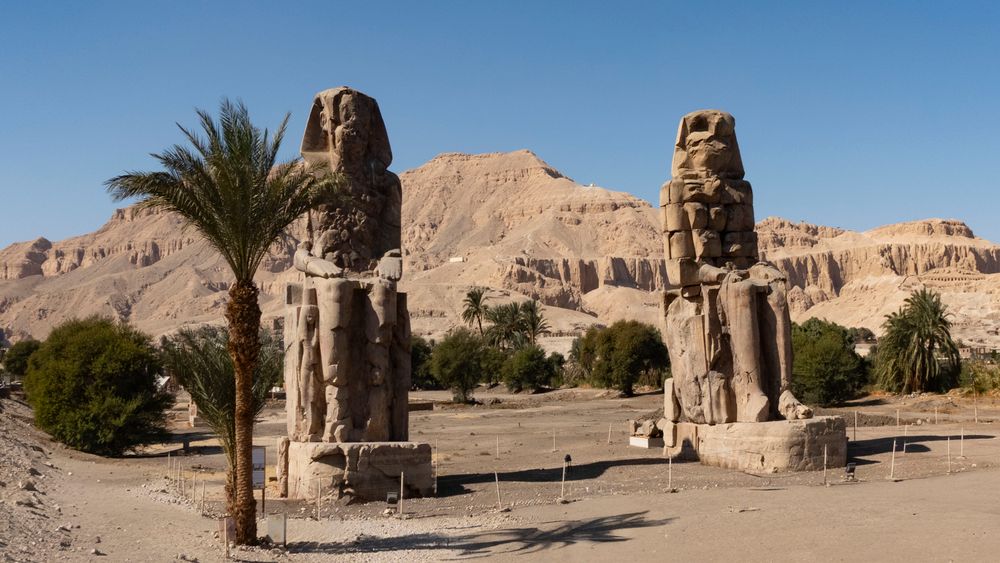
Two seated figures of Amenhotep III, eighteen metres high, facing the sunrise beside the west bank road. They guarded the gate of his…
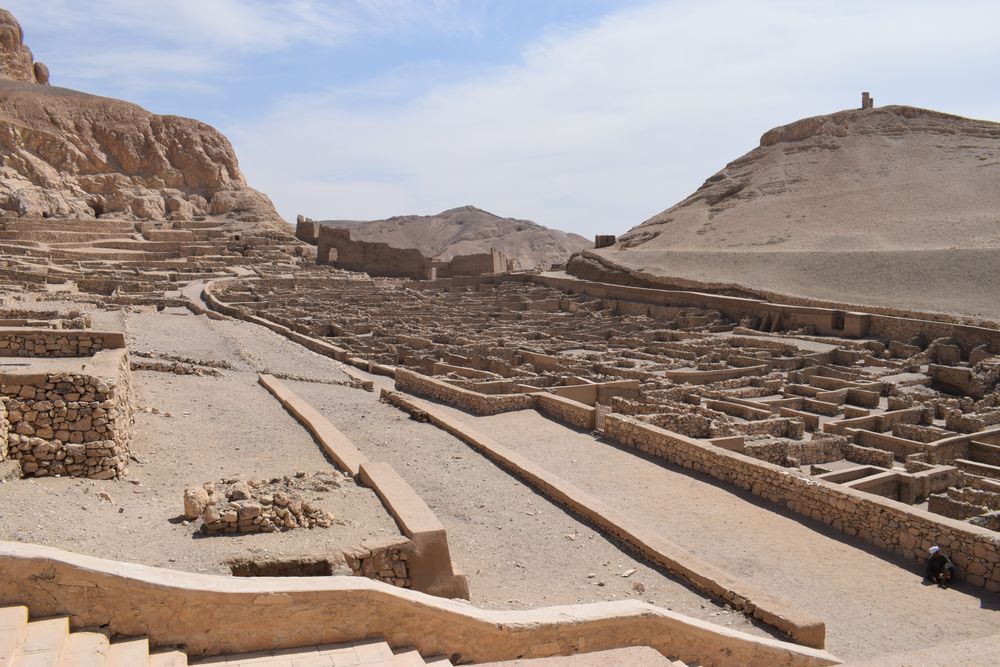
Craftsmen who cut and painted the royal tombs lived in this walled village in a fold of the hills behind Qurna, and the stone footings of…
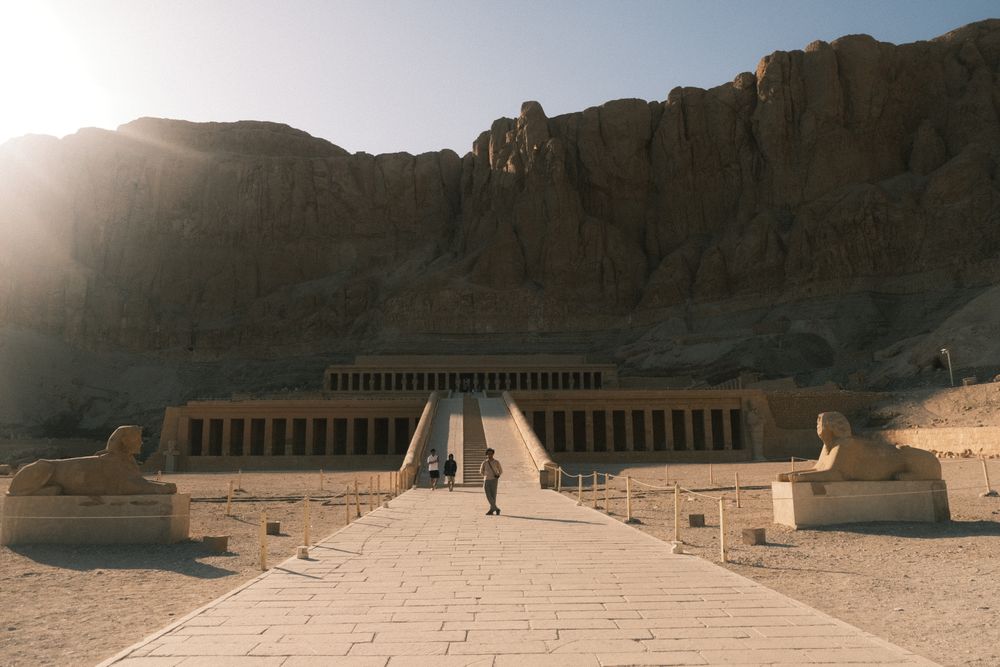
Three colonnaded terraces joined by ramps, set against a sheer amphitheatre of cliffs at Deir el-Bahari and startlingly modern in outline.…
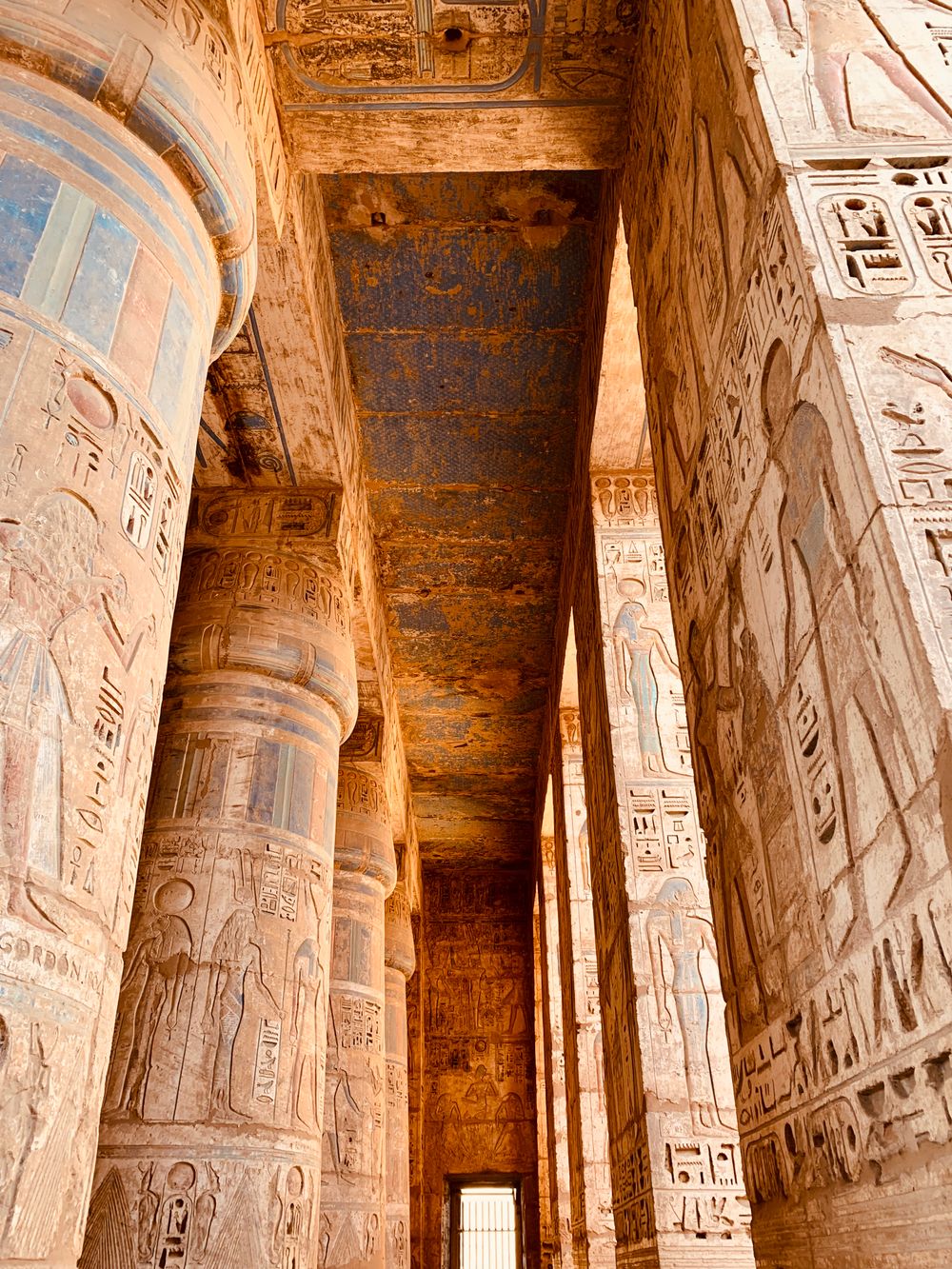
The mortuary temple of Ramesses III, entered through a fortified gate copied from a Syrian citadel. Its reliefs are cut deeper than any…
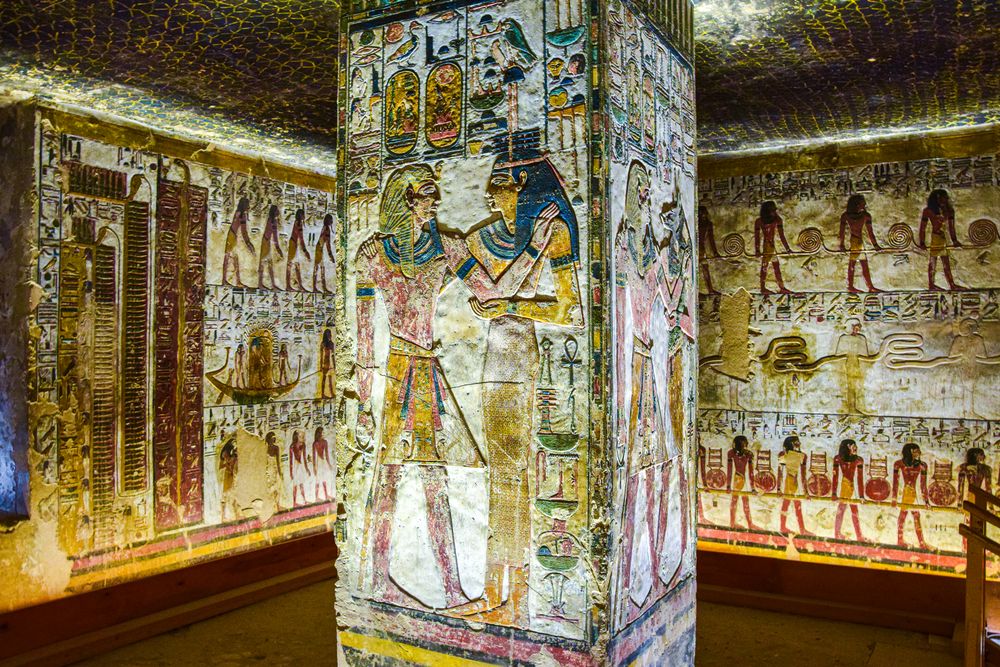
Cut more than a hundred metres into the rock, this is the longest tomb in the Valley of the Kings, and painted reliefs run almost its full…
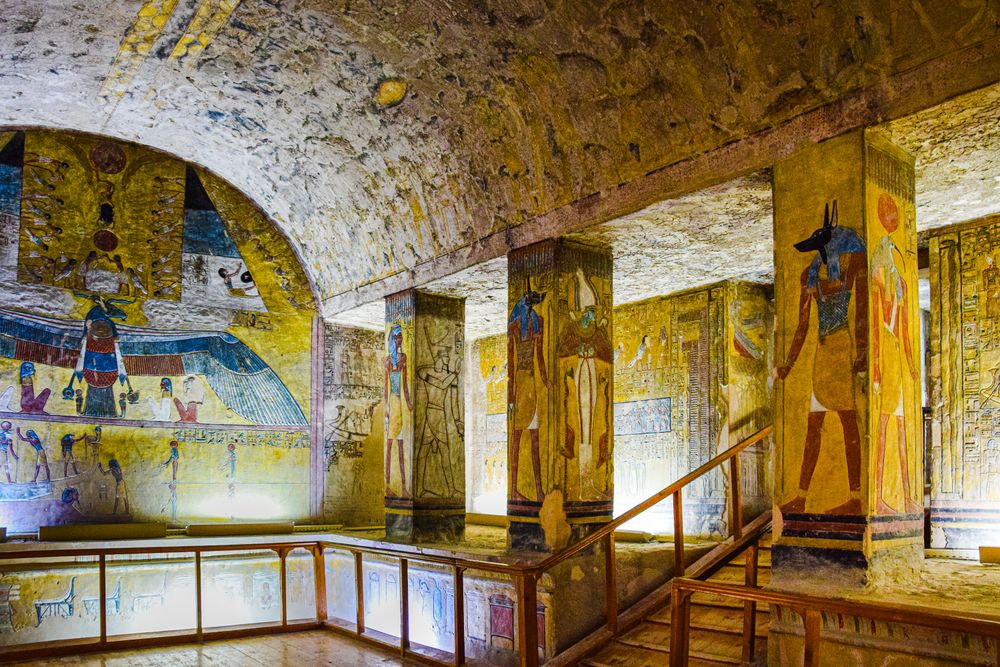
Long painted passages lead down into royal tombs cut under a dry valley. The standard ticket admits three from whichever are open that day;…
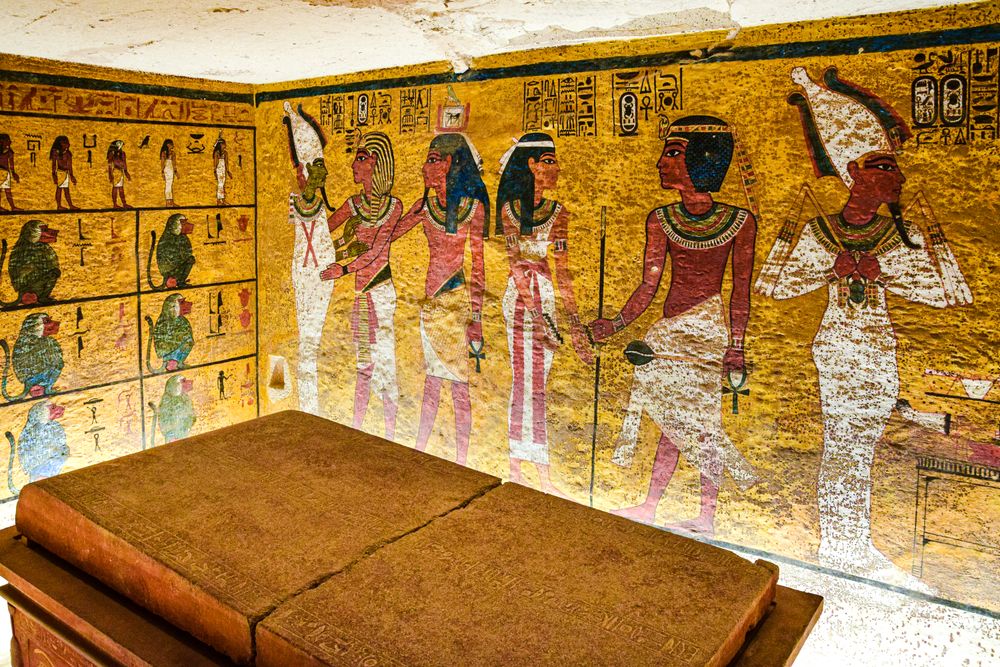
Howard Carter opened this small tomb in 1922, and the treasure it held now fills galleries at the Grand Egyptian Museum near Cairo. What…
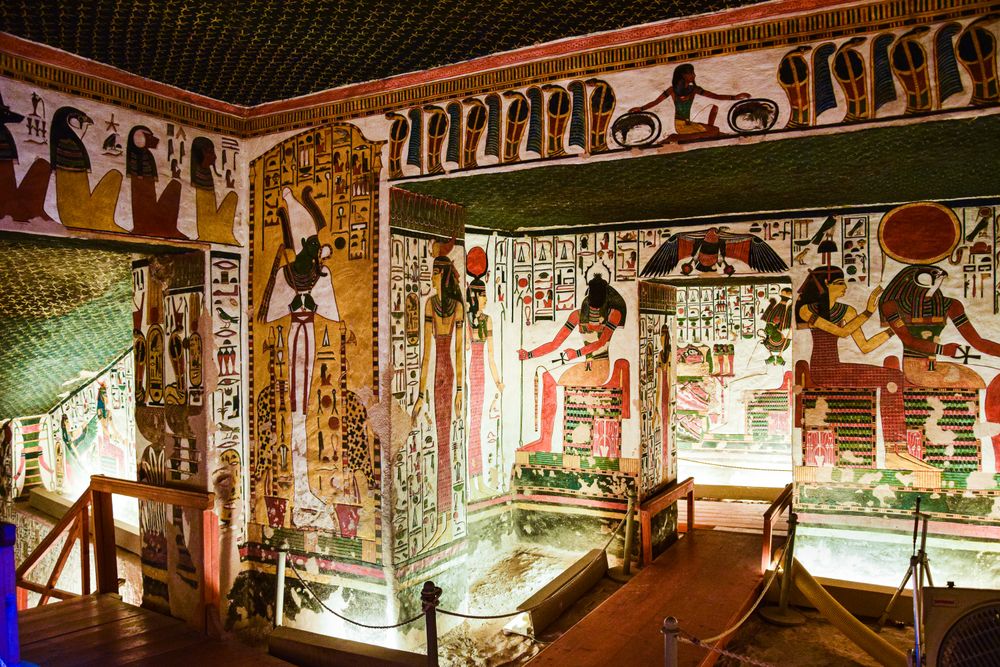
Wives and children of the Ramesside kings were buried in this smaller valley to the south. A few princes' tombs are open on the standard…




Save Ramesseum to your Egypt trip in the Meridian Dispatch app and build the day around it, with the best of Luxor pinned on one map.
Download on the App StoreLast updated