 Submit a photo
Ninety seconds on Piran Town Walls
As of 2026, the walls open from 8am to 9pm in summer and from 8am to 6:30pm in winter. In bad weather the walls close for safety reasons, so a wet or stormy day can shut the climb.
Yes, entry is ticketed. The ticket is sold per person and can be booked online in advance. A reduced rate applies to students and to groups of more than 15 people.
A visit takes under an hour, including the climb up. The walk along the wall alone can be as short as 10 to 30 minutes, and the ticketed route also takes in three of the seven defensive towers.
The walls lie about 400 metres from the centre of Piran, mostly uphill. The path starts at Tartini Square and takes about 10 minutes on foot, ending at the entrance at one of the wall's preserved gates.
The hour before sunset suits the walls best, when the low sun casts warm light across the tile roofs. In good weather the sunset itself can be watched from the wall.
No. Visits are not recommended for persons with reduced mobility, as steep stone staircases inside the towers lead to the upper platforms, and the stone parapets are low.
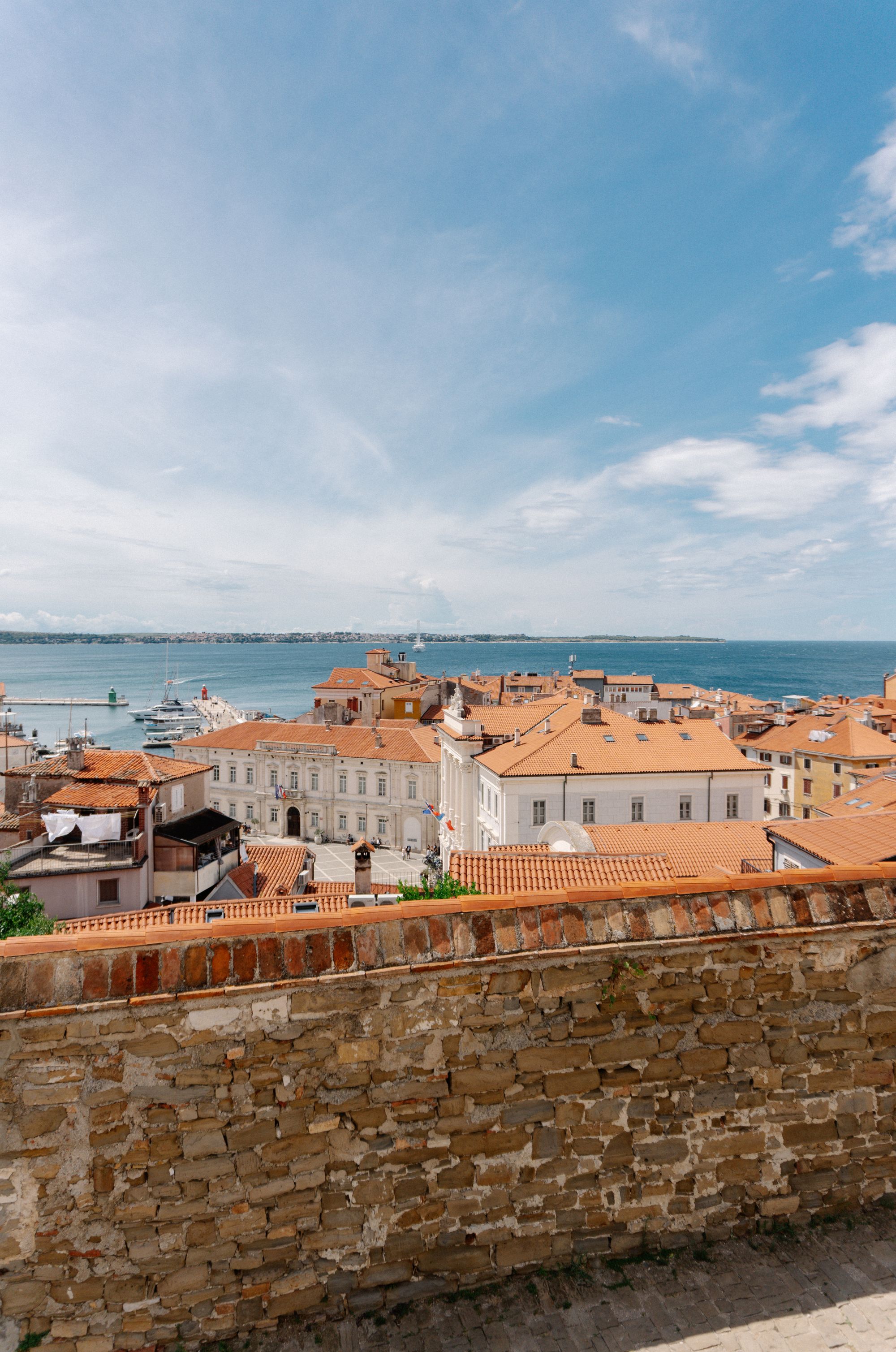
Walk the surviving stretch of Piran's walls for the view the town is known by: red roofs, church towers and narrow lanes packed onto one small peninsula, with the Adriatic stretching out beyond them.
From the highest tower platforms the whole Bay of Trieste opens out, and on clear days you can see the Julian Alps on the horizon.
The first wall, from the 7th century, ringed only the oldest part of the town. The section you walk is the longest that survives, on the slope of Mogoron Hill, and it forms the town's skyline from below. It belongs to the last of Piran's walls, built between 1470 and 1533 against Ottoman raids, and seven towers still stand along it.
Up close, the wall walk is narrow, about a metre wide in places, with a stone parapet. In town, look for the Dolfin Gate, carved with three dolphins in its coat of arms.
Three towers are on the route, and a stone staircase inside each leads to a platform with the widest views, so go up all three. From Tartini Square the path climbs to the walls, and the cobbles near the top are uneven.
Only the northern part of the rampart is open, because the southern stretch is missing its floors and stairs or is under reconstruction. The walk along it is short and narrow, so allow extra time for the platforms and the photographs.
Avoid the climb at midday in summer: it is hot and there is no shade on the walls. The steps turn slippery when wet, so leave flip-flops and heels behind and wear non-slip soles. Use the toilets and buy water in town first, since there is nothing on the wall.
Children from about six manage the walk, but hold their hands, as the parapets are low. Flying a drone over the walls or the old town needs permission.
Explore the rest of Piran
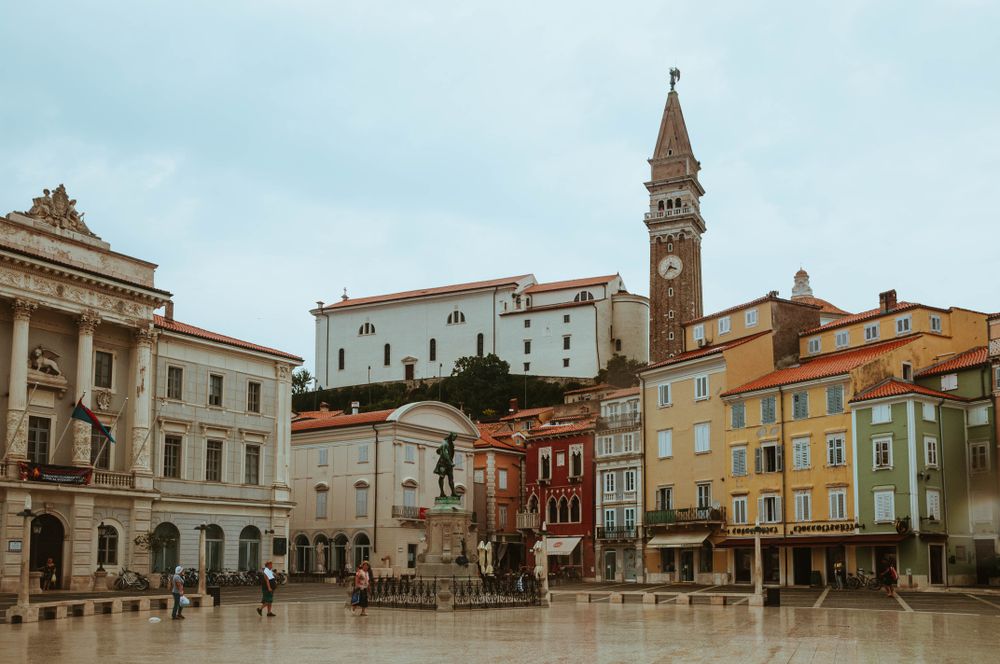
Facing the statue on Tartini Square, the house where the violinist Giuseppe Tartini was born keeps a memorial room with his violin, his…
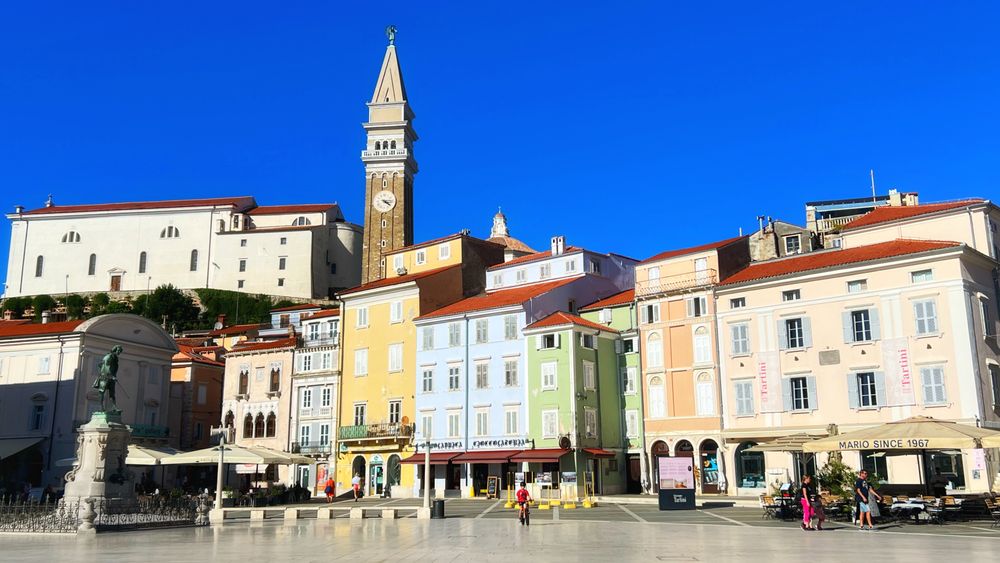
An oval of white Istrian stone in the centre of Piran, ringed with café terraces. A bronze statue of the violinist Giuseppe Tartini stands…
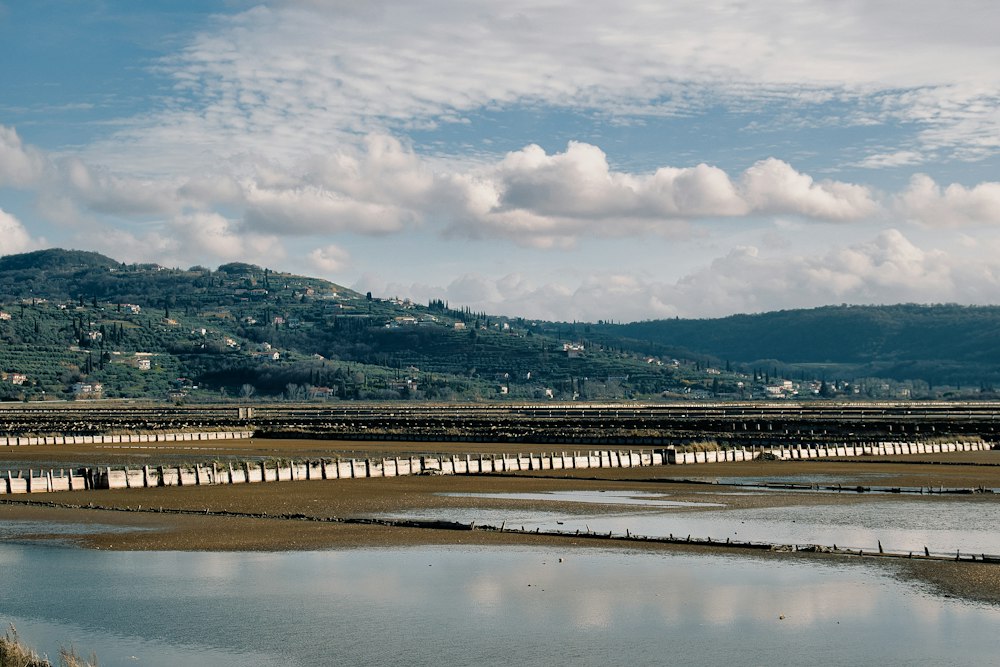
Salt is still raked by hand at Lera, on a thin microbial mat tended on the pan floor with wooden tools. The park south of Portorož also…
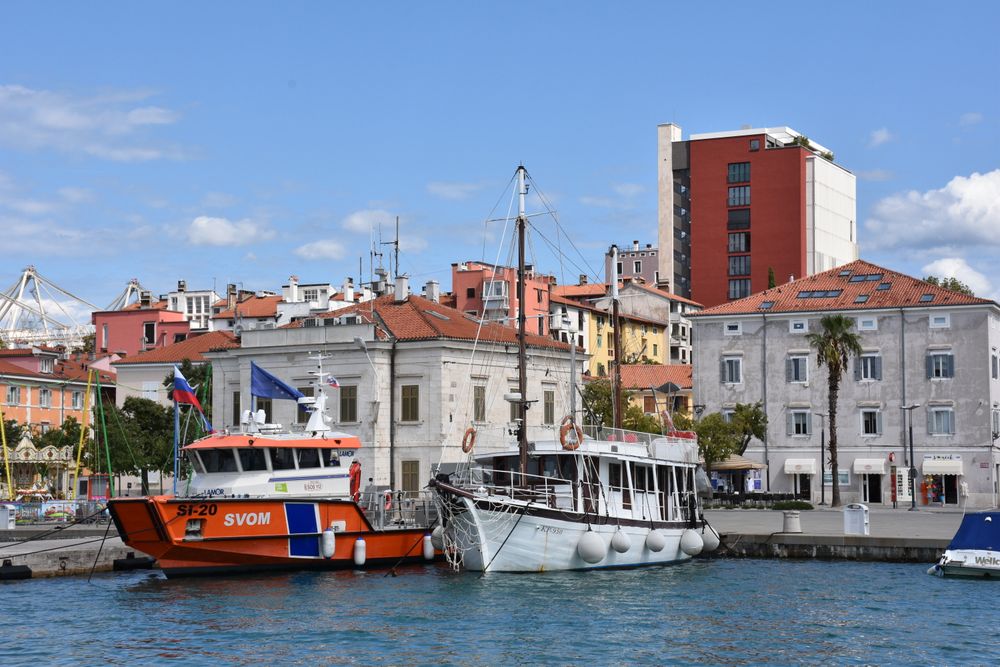
Venetian squares and a working cargo port share the same small peninsula on the Slovenian coast. Koper is the country's largest coastal…
On the harbour front a few steps from Tartini Square, a small aquarium run by the University of Primorska keeps about 140 species from the…
Named for the Venetian painter Vittore Carpaccio, this small square sits on the western edge of Koper's old town, by the sea. The column of…
The largest museum in Slovenian Istria fills the Belgramoni Tacco Palace, an early seventeenth-century palace on Kidričeva Street in the…
Shaped like a small bridge over an octagonal basin, this stone fountain from 1666 stands on Prešeren Square at the southern edge of the old…
Last updated