Things to do
10-
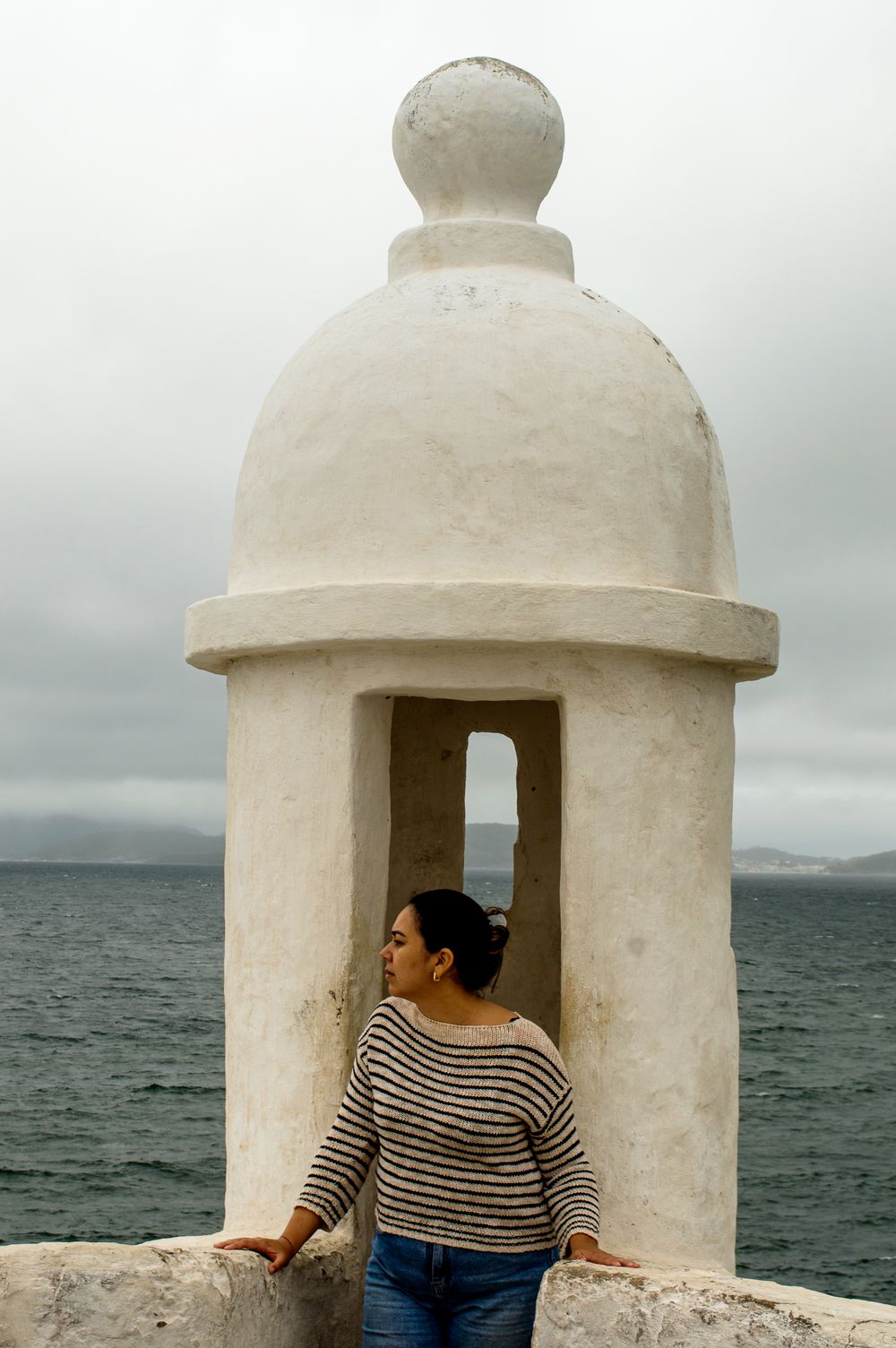
Fortaleza de Santa Cruz de Anhatomirim
The largest of the eighteenth century forts built to hold the bay for Portugal, begun in 1739 on an island off the northern shore. Boats run out from Canasvieiras and the north coast, and the crossing usually turns up dolphins in the bay.
-
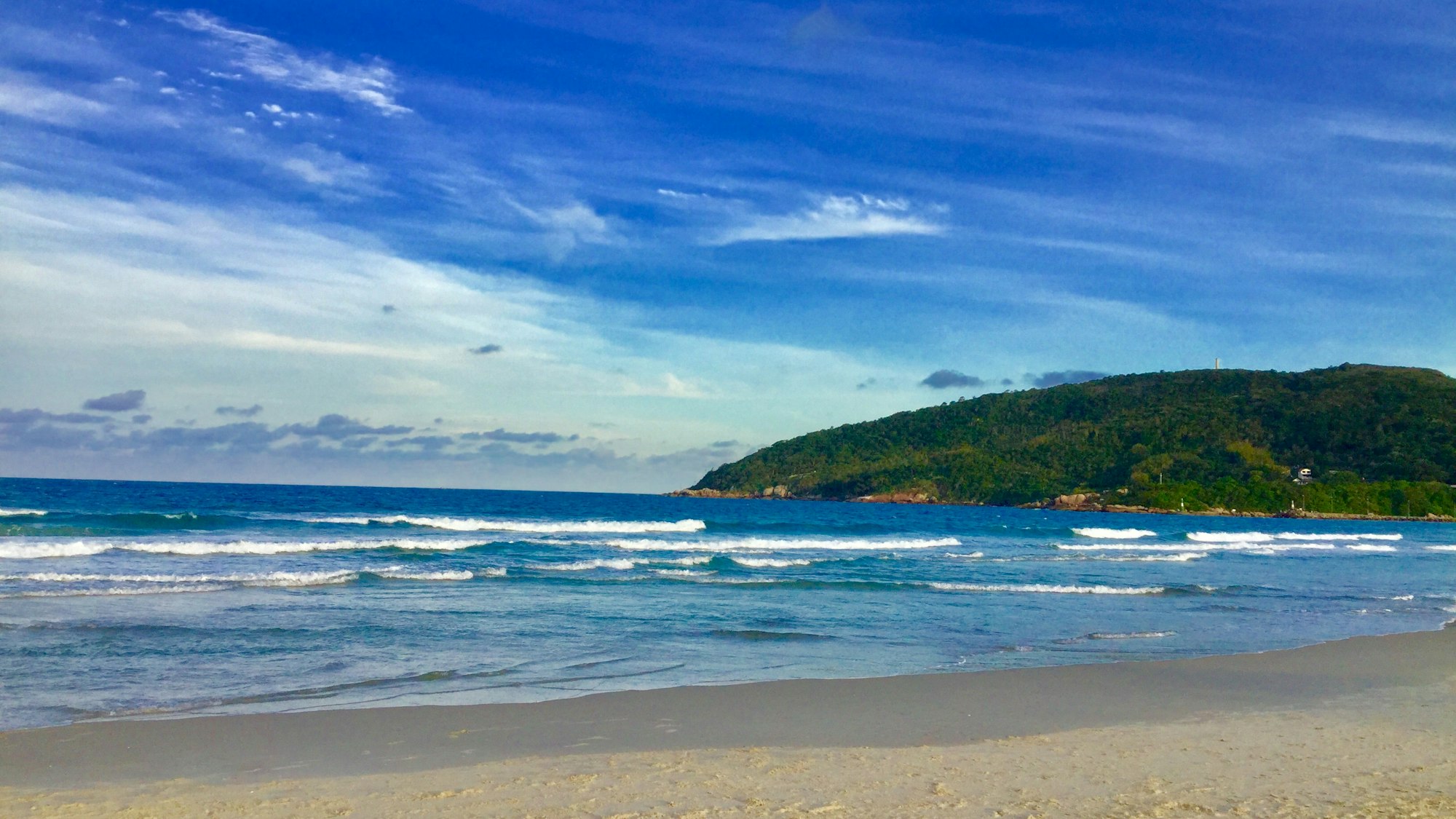
Praia Mole
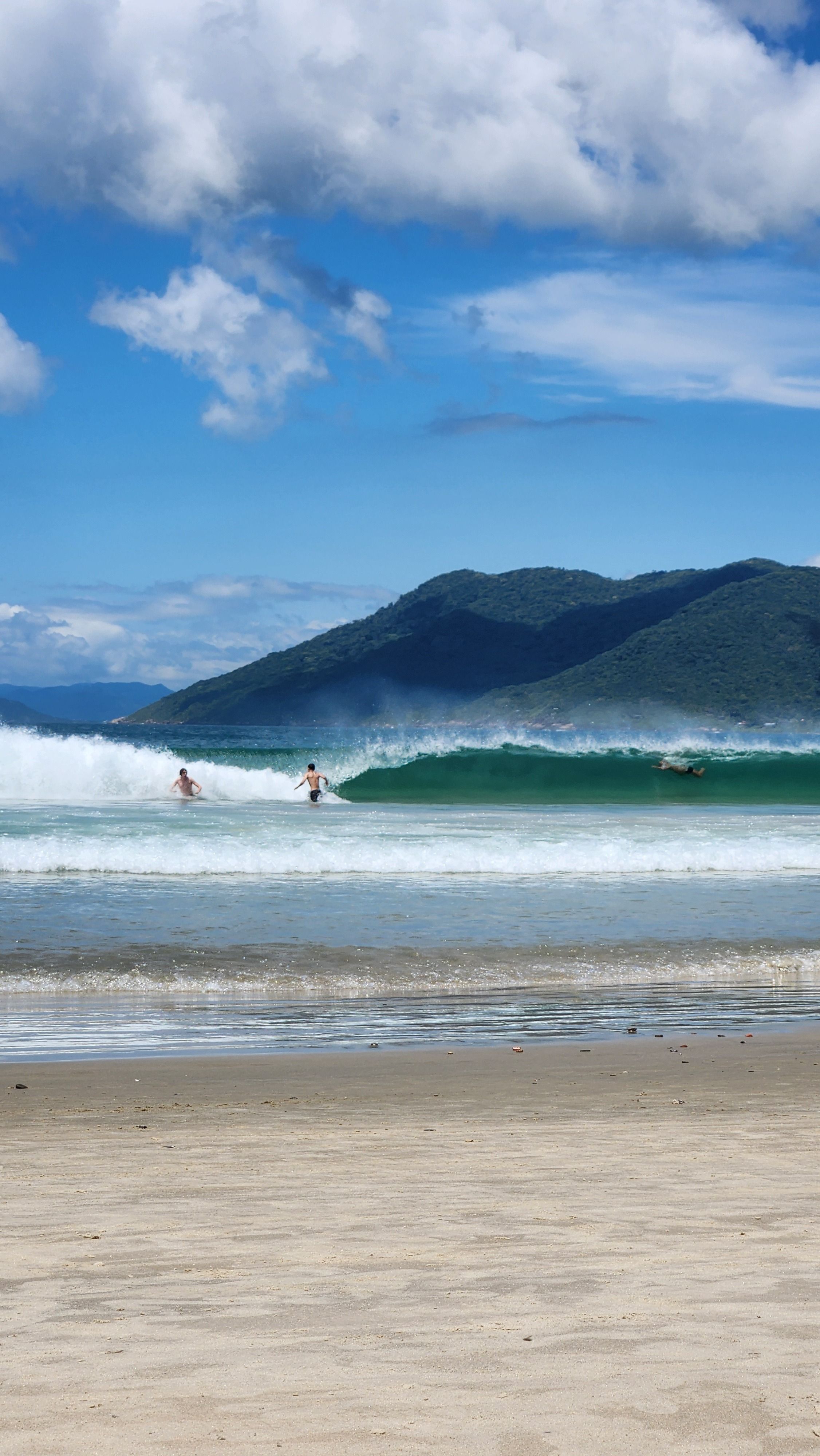
A short, steep beach on the east coast between two headlands, with heavy shore break and a paragliding launch on the ridge above it. It is the island's social beach, busiest in the hours either side of sunset. The break is strong enough that swimming is watched by lifeguards.
-
Barra da Lagoa
A working fishing village at the canal where the Lagoa da Conceição drains to the sea, with boats drawn up on the sand and a footbridge over the channel. A path along the rocks at the north end leads to sheltered swimming pools.
-
Ilha do Campeche
An island of clear green water and Atlantic forest off the southeast coast, protected as national heritage for the rock inscriptions cut into its stone. Daily visitor numbers are capped and boats leave from Armação and Barra da Lagoa in the morning.
-
Lagoa da Conceição
A brackish lagoon filling the middle of the island, joined to the sea by a narrow canal and ringed by hills. Flat water and reliable afternoon wind make it the island's centre for kitesurfing and paddleboarding, and the neighbourhood on its shore is where the island goes out.
-
Lagoinha do Leste
The one beach on the island with nothing built on it, reached by an hour of climbing over the ridge from Pântano do Sul or by boat around the point. A freshwater lagoon lies behind the sand, and the walk out has to be timed for the light.
-
Mercado Público
The city's covered market of 1898, two yellow blocks by the old harbour front, still trading in fish, cachaça and the oyster and shrimp of the bay. The counters in the second block turn into the busiest bar in the centre by late afternoon.
-
Ponta dos Ganchos
Twenty five bungalows on a private point north of the city at Governador Celso Ramos, each with its own pool and a view down the bay. It is the best known hotel on the Santa Catarina coast and is reached in about an hour by road from Florianópolis.
-
Ponte Hercílio Luz
The eyebar suspension bridge that first tied the island to the mainland, opened in 1926 and the largest of its kind in Brazil. It stood closed and rusting from 1982 until a long restoration returned it in 2019, and it is lit at night as the city's emblem.
-
Praia da Joaquina
The surf beach that made the island's name, running competitions since the 1970s on a consistent right hand break. Behind it stands a field of white dunes where boards are rented by the hour for sliding down the faces. Wind picks up through the afternoon and the water stays cold into December.