Things to do
8-
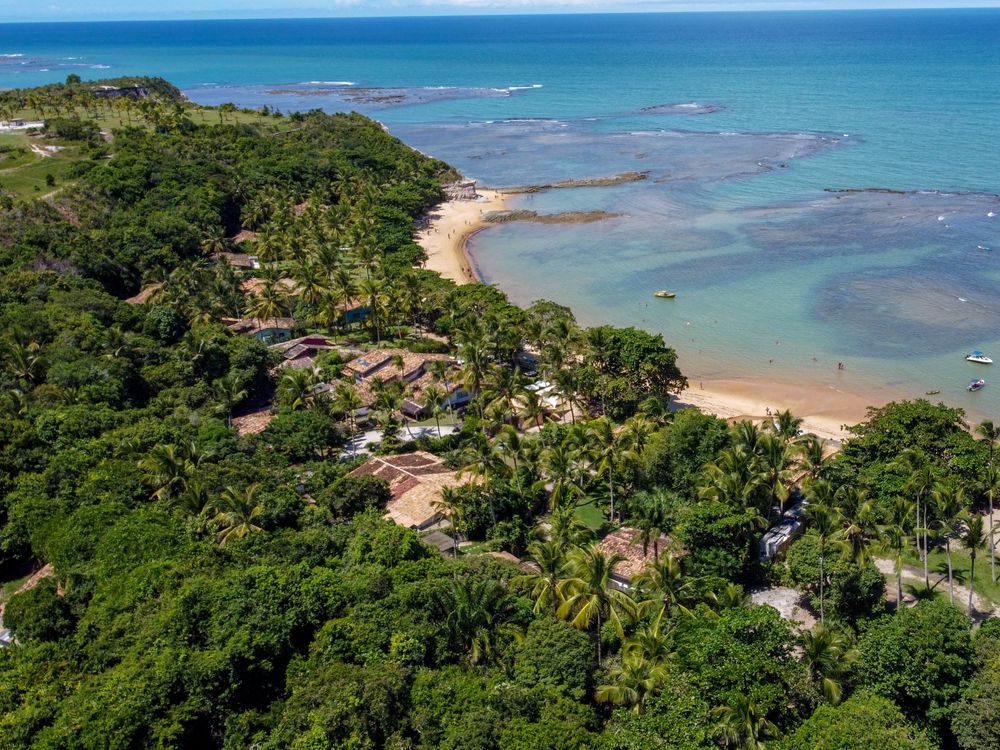
Praia do Espelho
A crescent of pale cliffs and reef pools about twenty kilometres south, named for the way wet sand mirrors the sky when the tide drops. The access track is rough and the tide table decides whether the pools are there at all.
-
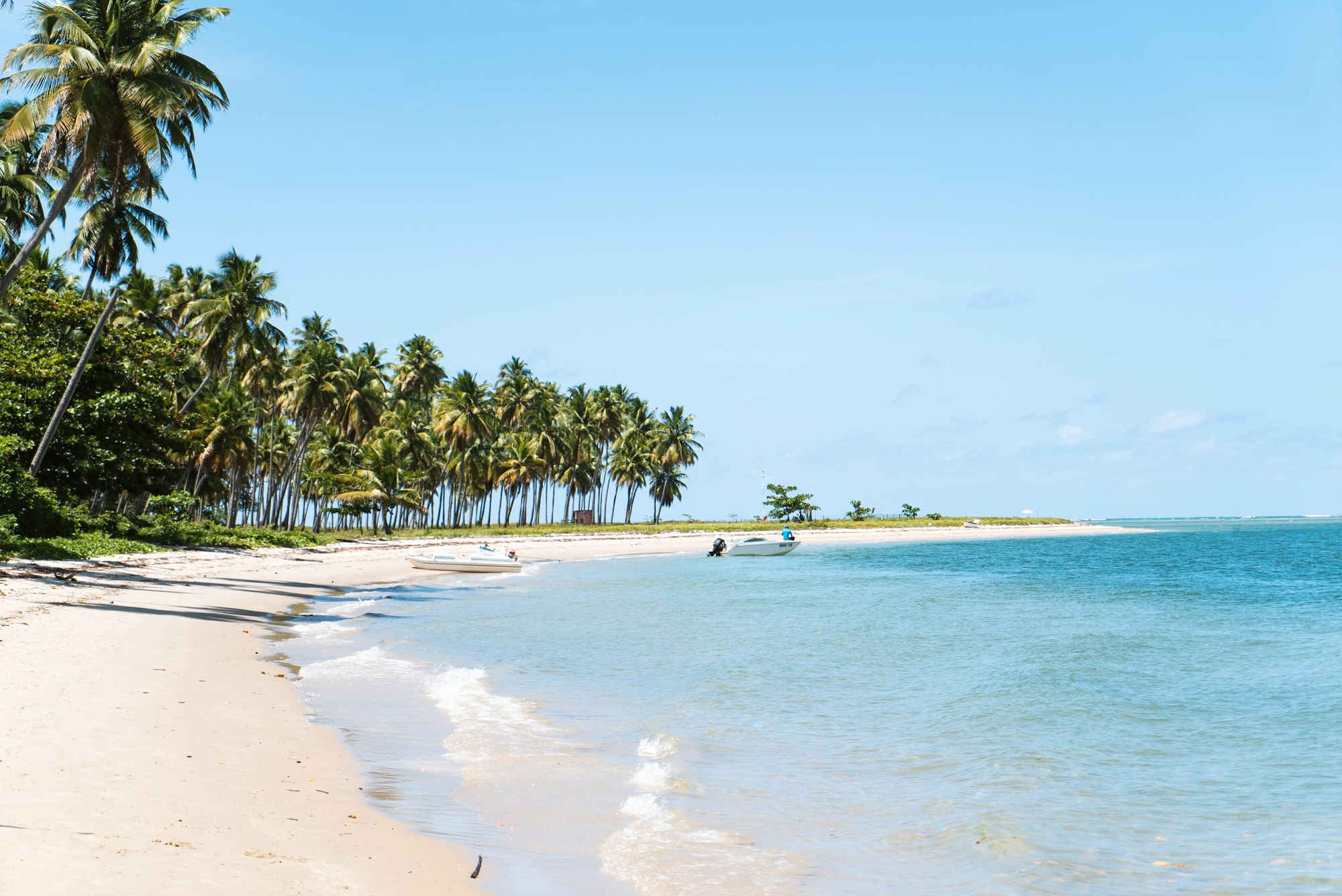
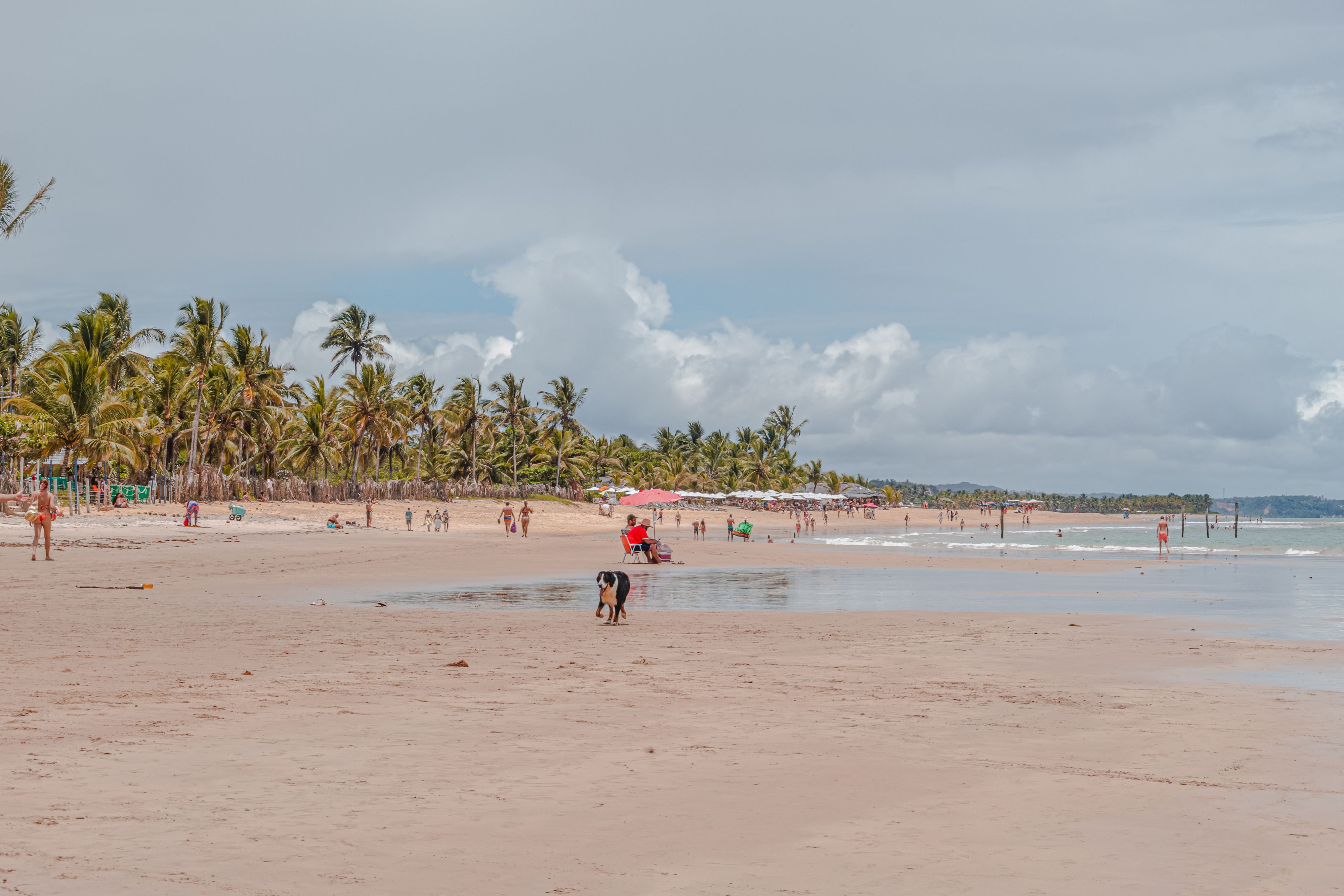
Praia dos Coqueiros
The next bay south, backed by coconut palms and fronted by reefs that flatten the water at low tide into a line of warm pools. It is the calmer of the two beaches under the village and the better one for swimming with children.
-
Caraíva
A village of sand streets at the river mouth south of Trancoso, crossed on the last stretch by canoe because no road reaches it. Mains electricity arrived only in 2007, there are no cars, and Pataxó settlements sit upriver. The drive down takes about an hour on a rough track.
-
Igreja de São João Batista
The whitewashed church closing the seaward end of the Quadrado, raised by Jesuits in 1656 and still the village parish. The ground behind it falls away to the beach, which is the reason the square points the way it does, and the churchyard is the sunset spot.
-
Praia de Itaquena
A long empty strand south of Coqueiros, reached on foot along the sand at low tide or by a rough track inland, with a river crossing on the way. There is almost nothing built on it, which is the point of walking there.
-
Praia dos Nativos
The village beach, reached on a steep path down from the square or by the road that loops around behind it. A river meets the sea at the northern end and the sandbank there is where most of a Trancoso day goes.
-
Quadrado de Trancoso
The grass square the village is built around, laid out by Jesuits in the sixteenth century with low fishermen's houses painted in flat colours down both long sides. Cars stay off it, and the whole place walks it after dark.
-
UXUA Casa Hotel
Village houses on and around the Quadrado, some of them two centuries old, restored one at a time by the Dutch designer Wilbert Das with Bahian and quilombo craftsmen. The pool is lined in aventurine quartz, and the beach club below the cliff runs a shuttle down.