Things to do
12-
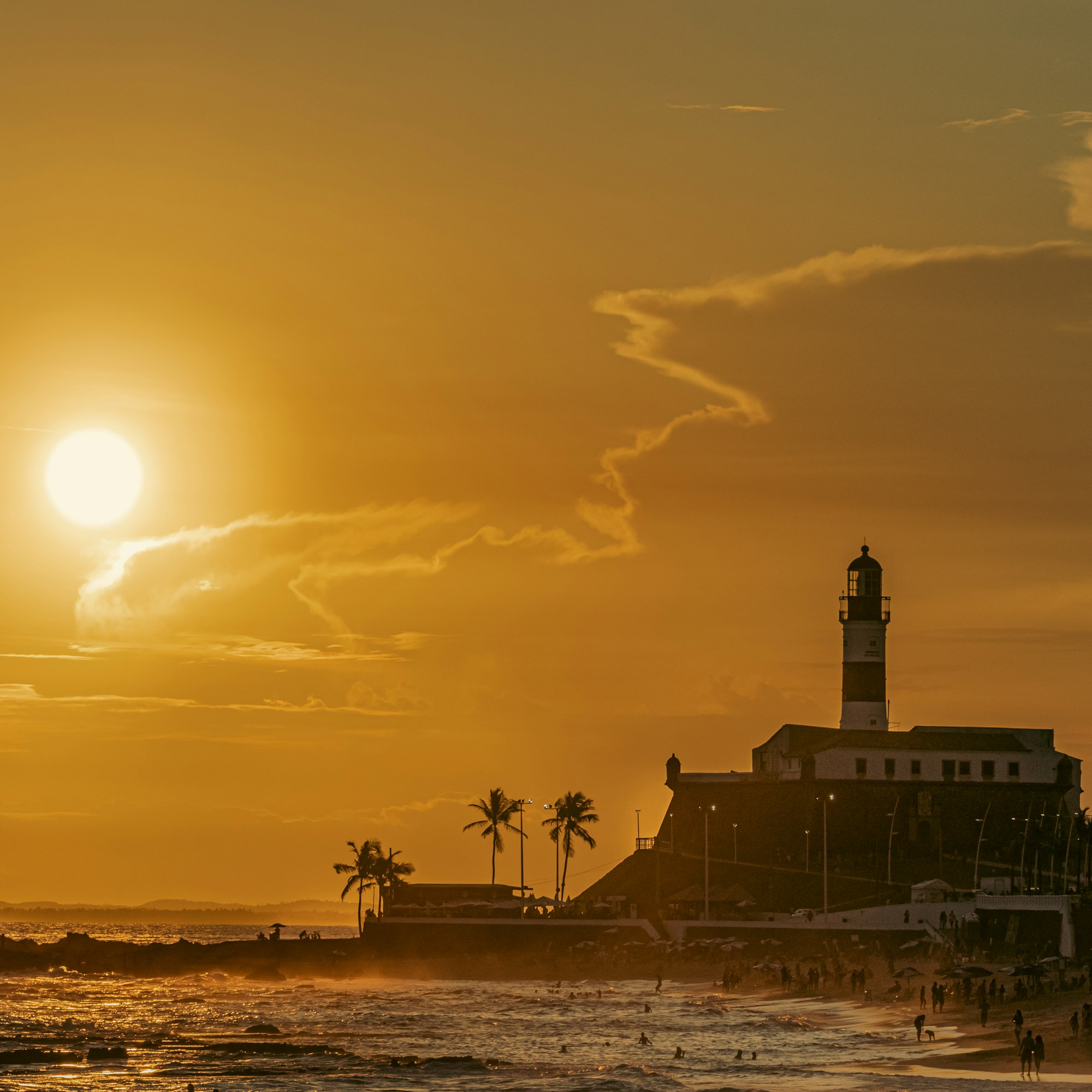
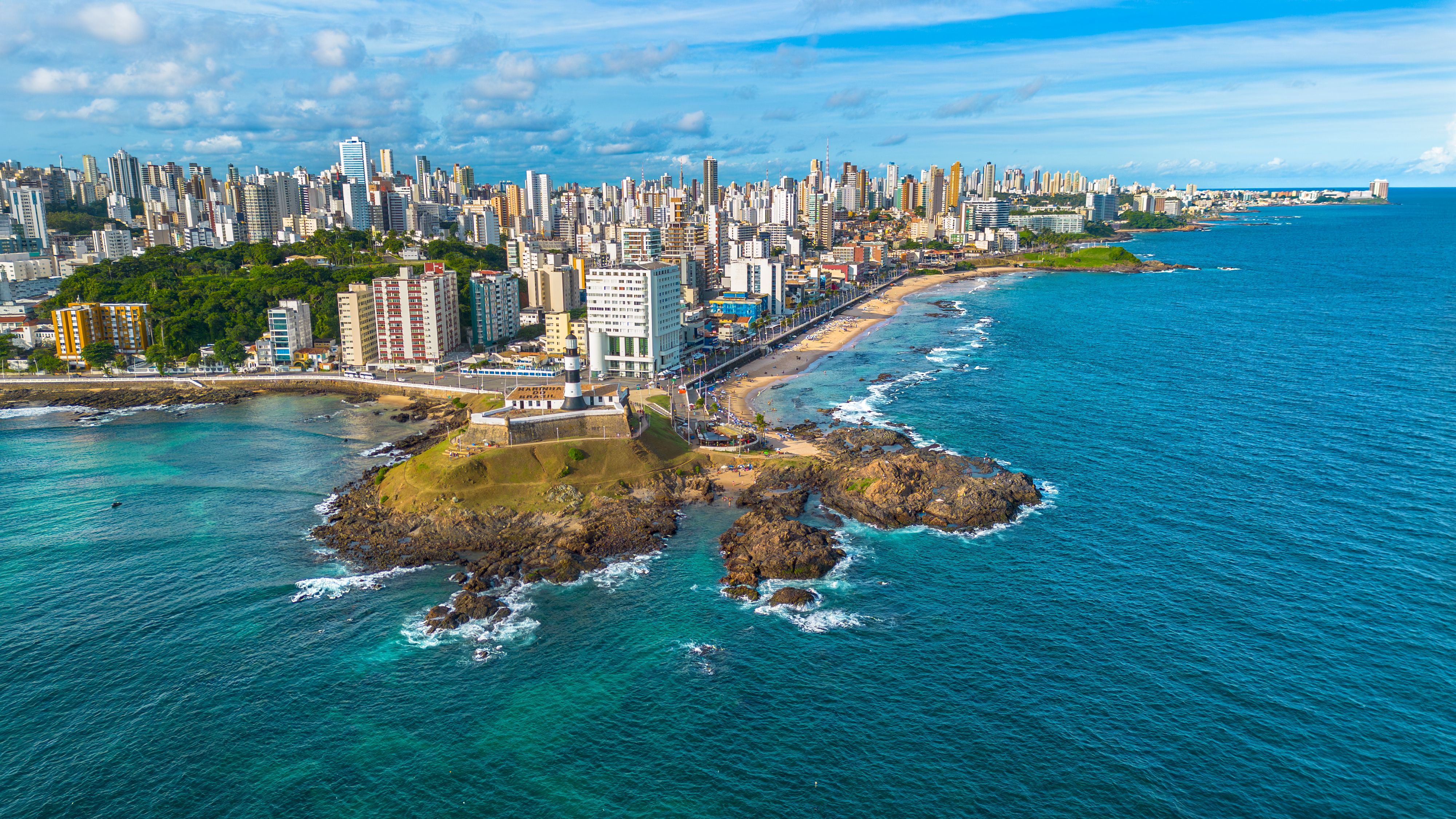
Farol da Barra
A lighthouse standing inside the Forte de Santo Antônio da Barra at the point where the bay of All Saints meets the Atlantic, dating from 1698 and counted the oldest in the Americas. The fort holds a nautical museum and the terrace is where the city watches the sun go down.
-
Fasano Salvador
The 1930s headquarters of the newspaper A Tarde on Praça Castro Alves, converted by Isay Weinfeld with the modernist staircase and the newsroom volumes left legible. It stands where the Carnival circuits meet, which is a warning as much as a selling point.
-
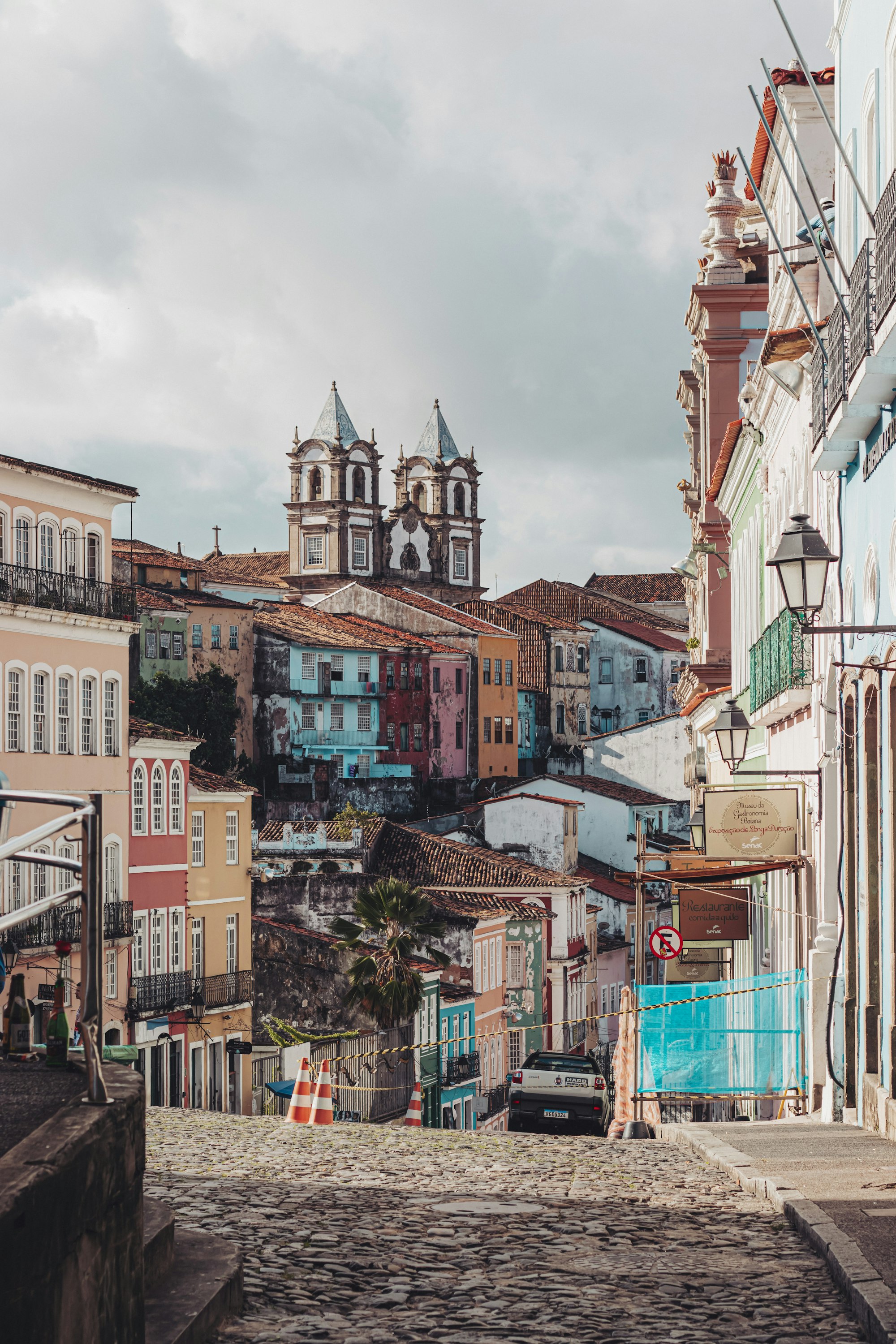
Pelourinho
The upper town's colonial core, on the UNESCO list since 1985, where pastel townhouses stack along cobbles laid out for the first capital of Portuguese Brazil. The churches sit within a few minutes of one another and the drumming groups rehearse in the squares on Tuesday evenings.
-
Praia do Porto da Barra
A short crescent facing into the bay rather than out at the ocean, which leaves the water flat and puts the sunset directly in front of it, rare on a Brazilian east coast beach. It fills early at weekends and the vendors work the sand all day.
-
Dique do Tororó
A freshwater lake below the football stadium, ringed by a walkway and set with eight steel figures of the orixás standing out in the water, raised in 1998 to designs by Tatti Moreno. It is at its best after dark, when they are lit.
-
Elevador Lacerda
Four shafts carrying passengers seventy two metres between the harbour and the upper town in about half a minute, running since 1873 and reckoned the first urban elevator built anywhere. The art deco casing came with the rebuild of 1930, and the queue moves fast in both directions.
-
Fera Palace Hotel
A 1930s art deco tower on Rua Chile, shut for decades and reopened in 2017 after a restoration that kept the original marble, ironwork and lift cages. The rooftop pool looks straight down the bay of All Saints, and the Pelourinho is ten minutes uphill on foot.
-
Igreja e Convento de São Francisco
Baroque taken to its limit: an interior lined floor to ceiling in gilded cedar, with a cloister of Portuguese azulejo panels wrapped around it. The tiles preach European moral lessons and the African craftsmen who cut the woodwork are widely read as having answered back.
-
Igreja Nosso Senhor do Bonfim
The most visited church in the city and the centre of a devotion shared between Catholicism and Candomblé, where Oxalá is honoured alongside Christ. Its railings carry thousands of coloured ribbons and the Room of Miracles holds wax limbs left in thanks.
-
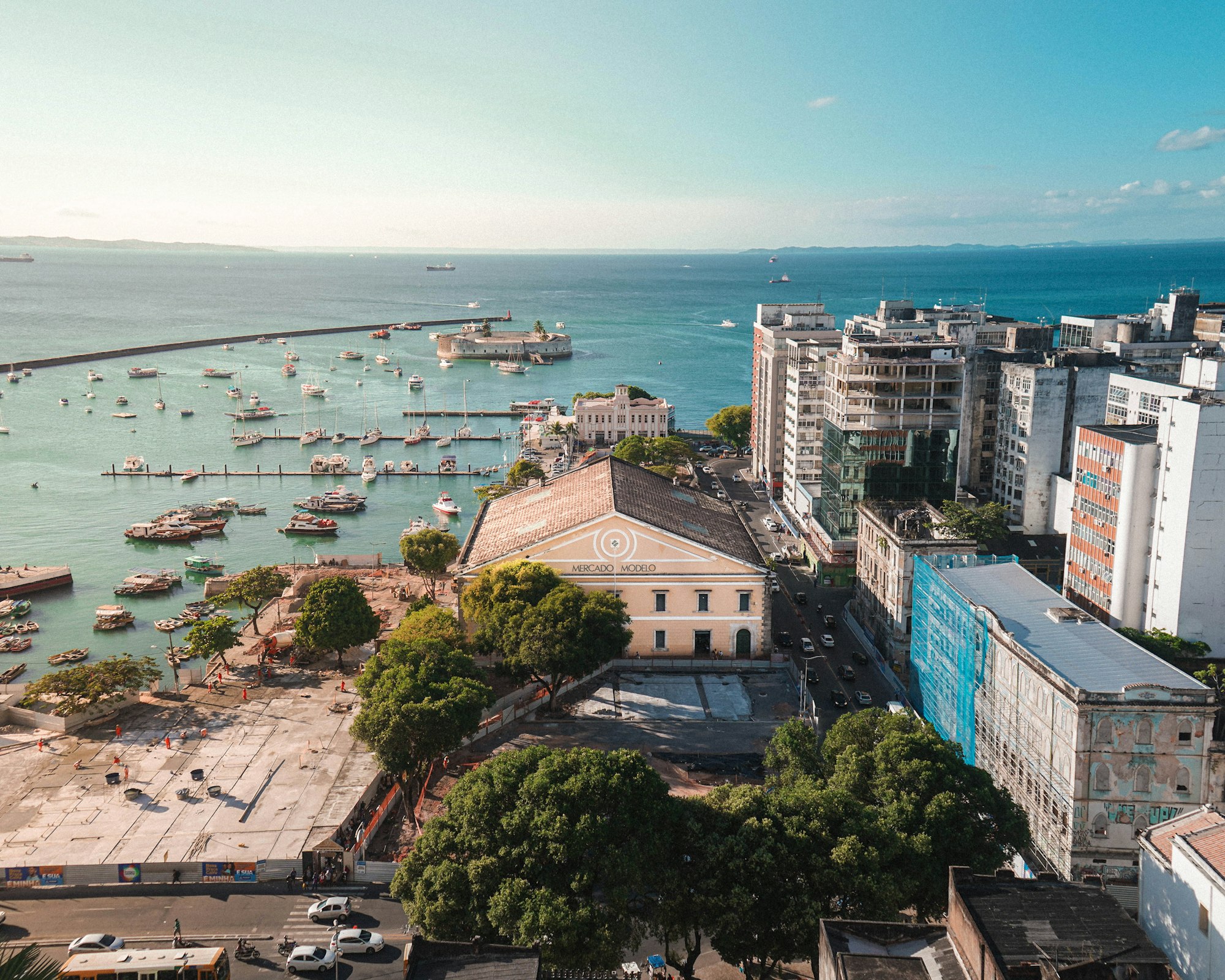
Mercado Modelo
The city's handicraft market since 1971, working out of a nineteenth century customs house on the harbour front, with capoeira rodas on the terrace outside. The vaulted cellars beneath are widely said to have held newly landed captives, a claim historians still argue over.
-
Museu Afro-Brasileiro
Set in the old medical faculty on Terreiro de Jesus, tracing the West African roots of Bahian religion, dress and food. The room of carved cedar panels of the orixás, cut by Carybé in the 1960s, is on its own worth the ticket.
-
Praia do Forte
A fishing village turned low rise resort about eighty kilometres up the coast, built along one sand street closed to cars. The national base of Projeto Tamar, the sea turtle programme running since 1980, sits at the end of it with open tanks and a hatchery.