Things to do
12-
Iguaçu Falls
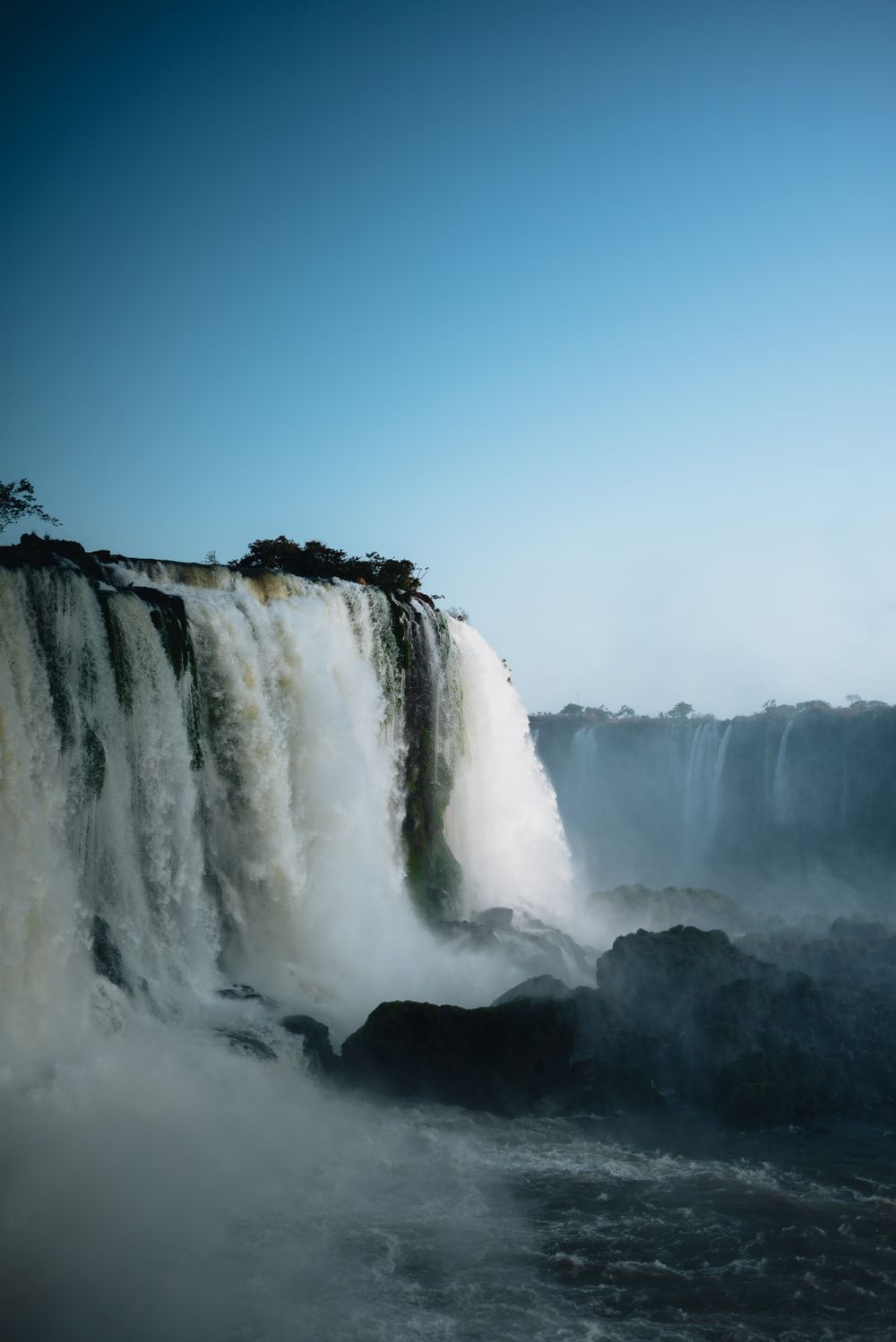
Take the park bus to its last stop and reach the Devil's Throat first: on the early buses the walkway can be nearly empty while the trail fills up.
View more → -
Iguaçu National Park
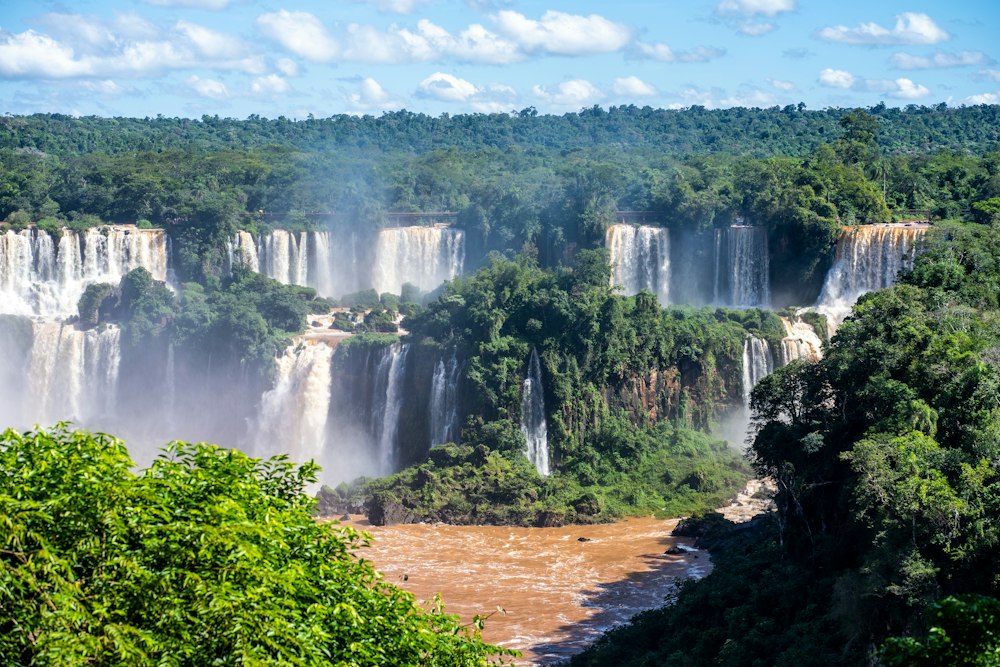
Subtropical rainforest runs for hundreds of square kilometres behind the falls, sheltering jaguar, tapir and the coatis that beg openly along the walkways. Shuttle buses inside the Brazilian park link the entrance to the trailheads, and a boat run goes in under the cataracts. Feeding a coati is banned and bites happen, so food belongs in a closed bag.
-
Marco das Três Fronteiras
An obelisk in Brazilian colours at the confluence of the Iguaçu and the Paraná, with the matching Argentine and Paraguayan markers standing in plain sight across the water. The site is laid out to be visited at sunset, and a sound and light show follows once the sky goes dark.
-
Parque das Aves
A private reserve opposite the national park gate holding well over a thousand birds of some 140 species, most of them rescued or seized from traffickers. Visitors walk inside the aviaries, so the toucans and macaws are at arm's length. An hour and a half covers it, and it works best early.
-
Trilha do Poço Preto
Nine kilometres of track through the Atlantic forest inside the national park, walked or cycled with a guide to a jetty on the Iguaçu above the falls, where boats run down to the islands. It has to be booked before arriving.
-
Belmond Hotel das Cataratas
The only hotel inside the Brazilian national park, a pink Portuguese colonial building of 1958 standing at the head of the falls trail. Guests walk that trail before the gates open and again once the day buses have gone, which is the whole argument for staying here. The park gate closes to day visitors in the late afternoon.
-
Cataratas do Iguaçu
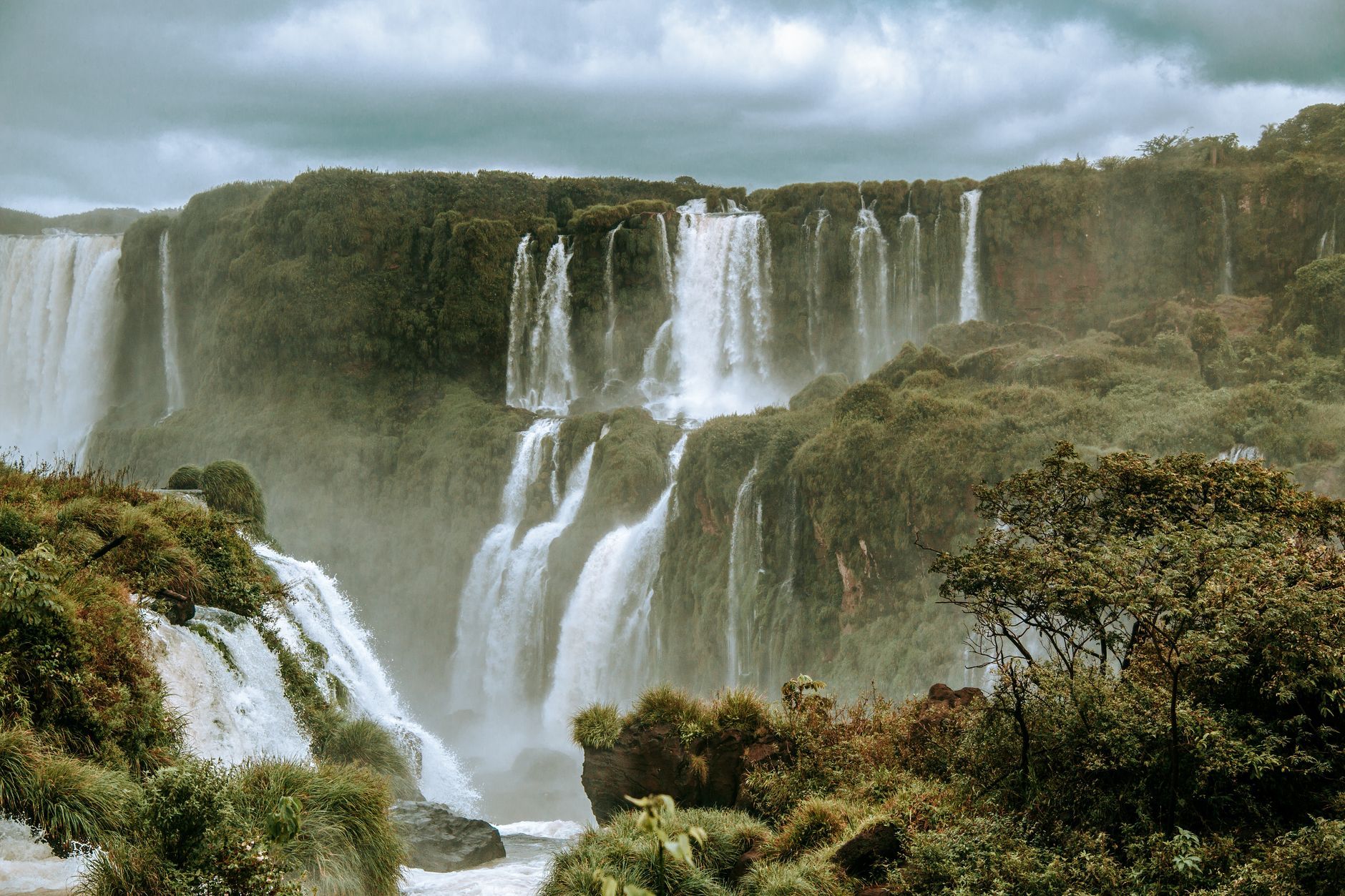
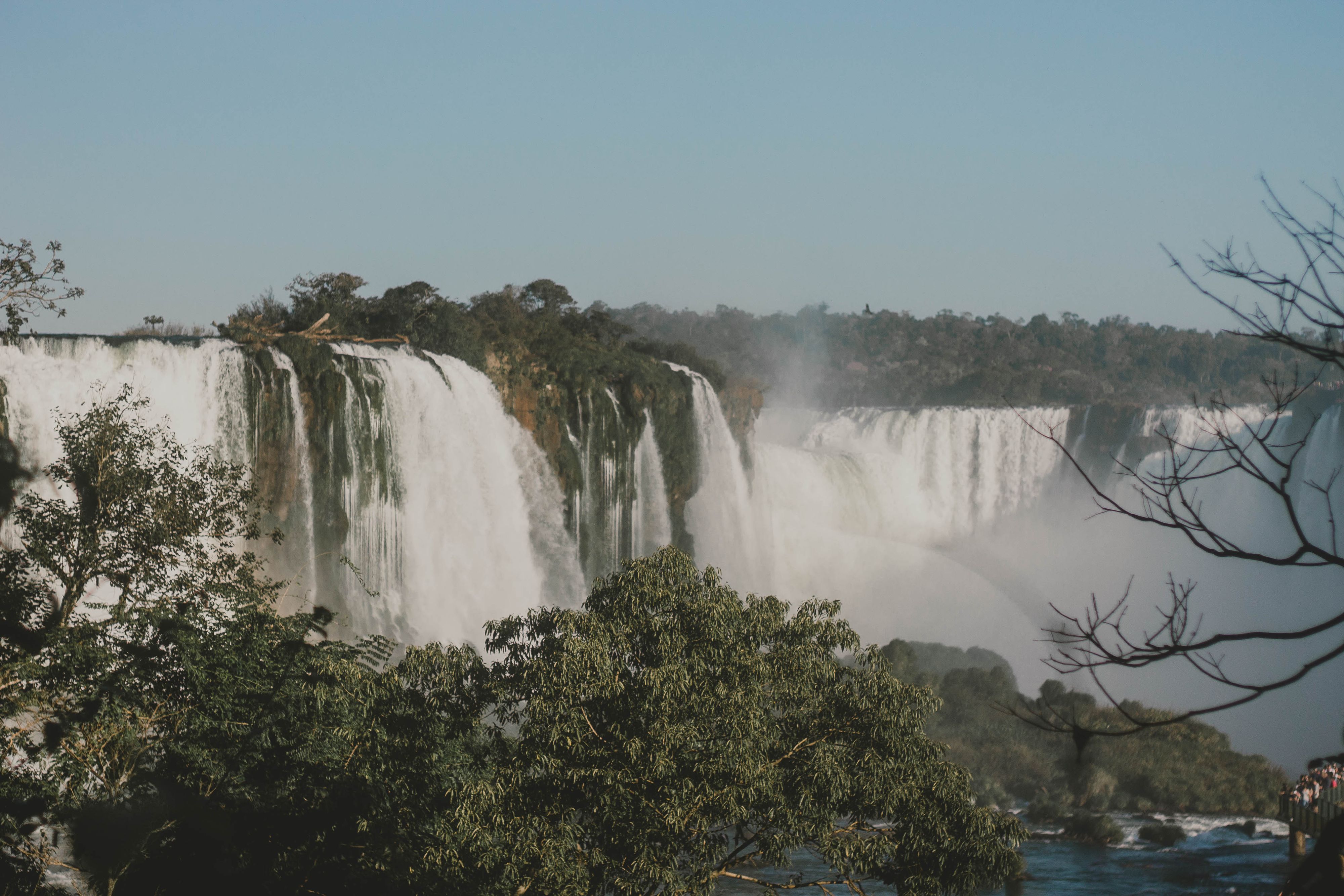
Some 275 separate drops spread across nearly three kilometres of the Iguaçu river on the Argentine border. The Brazilian bank gives the panorama rather than the close range: one path runs the length of the canyon with the whole cataract facing it.
-
Garganta do Diabo
The throat where fourteen falls converge into one U shaped drop of about eighty metres and roughly half the river goes over at once. A catwalk carries the Brazilian trail out into the spray beneath it, and nobody comes back dry.
-
Itaipu Dam
Built with Paraguay across the Paraná, this hydroelectric dam ranks among the largest generators of electricity anywhere and carries much of both national grids. Guided tours run along the crest and, on the technical option, inside the turbine hall. Passport identification is checked at the gate, and the floodgates open only in high water, a spectacle worth timing a visit around.
-
Parque Nacional do Iguaçu
The 185,000 hectare park that protects one of the last large stands of interior Atlantic forest, listed by UNESCO in 1986. Shuttle buses run from the visitor centre to the falls, and coatis, toucans and capuchins work the roadside. The walkway at the Garganta do Diabo soaks anyone who steps onto it.
-
Templo Budista Chen Tien
A Chinese Buddhist temple on a hillside north of the centre, built by the local Taiwanese community, with terraces of statues climbing to a seven metre seated Buddha. Entry is free and it is the quietest thing in the town.
-
Usina Hidrelétrica de Itaipu
The dam Brazil and Paraguay built together across the Paraná from 1975, eight kilometres of wall and twenty generating units, and one of the largest producers of hydroelectric power on earth. The tour crosses the crest and enters the machine hall.