-
Albufera
Lake · 4 hr
A wide, shallow freshwater lagoon south of the city, ringed by reeds and rice paddies and separated from the sea by a strip of pine woods and dunes. Herons, egrets and flamingos feed in the shallows. Take a flat-bottomed boat out at sunset, and in summer carry insect repellent.
-
Basílica de la Virgen de los Desamparados
Church · 30 min
Joined to the cathedral by a bridge over the street, this oval church holds the statue of the city's patron, nicknamed the little hunchback for the way she leans forward. Locals drop in through the day. In the Fallas the image is dressed in a giant mantle of flowers built over two days in the square outside.
-
Bioparc Valencia
Park · 3 hr
At the western end of the Turia gardens, this zoo recreates African landscapes, from savannah to a Madagascar forest, using moats and rock rather than visible bars between visitors and the animals. Allow half a day. Buy tickets online, arrive at opening in summer, and reach it by metro to Nou d'Octubre or along the riverbed park by bike.
-
City of Arts and Sciences
Landmark · 3 hr
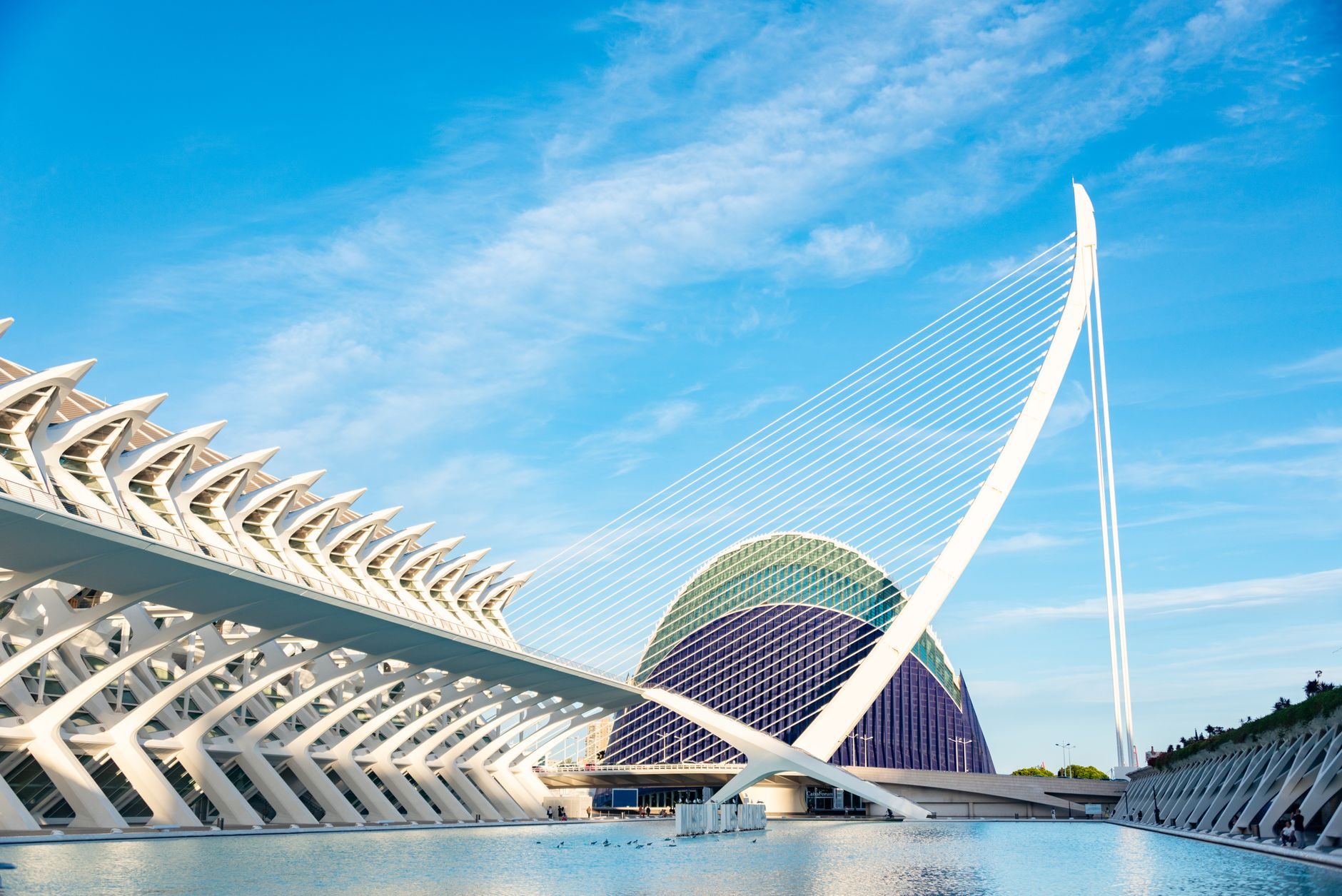
Gleaming white buildings by Santiago Calatrava and Félix Candela line shallow blue pools at the eastern end of the Turia gardens: an opera house, a science museum, an IMAX dome and an aquarium. Walking the outside is free and best at dusk, when the reflections light up. Combined tickets cover the paid parts if more than one appeals.
-
Colegio del Arte Mayor de la Seda
Museum · 30 min
Silk made Valencia rich, and this was the headquarters of the weavers' guild, restored with its original painted ceilings and floors of handmade tiles. Displays cover looms, silk costumes and the city's trade. Visitors get it almost to themselves, and it is a short walk from the Central Market.
-
Devesa del Saler
Beach · 3 hr
Between the Albufera and the sea, a protected strip of pine forest, dunes and undeveloped beach runs for several kilometres. Sandy trails cross it to the sand. It is the wildest beach within reach of the city, and buses from the centre stop along the coast road on their way to El Palmar.
-
El Carmen
Neighborhood · 2 hr
Twisting lanes in the north of the old town, between the two surviving gate towers, covered in murals and street art and lined with small bars. It is the liveliest part of the centre after dark, and at weekends the noise runs past two in the morning. By day it is quiet, and good for an unhurried walk between the Serranos and Quart towers.
-
El Palmar
Village · 3 hr
A village of fishermen and rice growers on an island in the paddies of the Albufera, reached by road and by a short bridge. Boats leave from its jetties from mid morning until dusk. Restaurants here cook paella and all i pebre, an eel stew, over wood fires, and lunch tables fill at weekends, so book ahead.
-
Estació del Nord
Landmark · 30 min
Still the working terminus for regional and commuter trains, this Modernista station beside the bullring is worth a look even without a ticket. Its ticket hall is lined with carved wood and tiled panels of oranges and orange blossom. Mosaics on the walls of the café spell out good wishes for a safe journey in several languages.
-
Gulliver Park
Park · 1 hr
In the Turia gardens near the City of Arts and Sciences lies a giant figure of Gulliver pinned to the ground, about seventy metres long, with ropes, ramps and slides running down his limbs and clothing. Children climb all over him. Entry is free, it is busiest at weekends, and adults are allowed on the slides too.
-
Hemisfèric
Museum · 1 hr
Shaped like a giant eye whose lid opens over a reflecting pool, this was the first building of the City of Arts and Sciences. Inside, a domed IMAX cinema and planetarium shows nature and space films. Screenings run at set times, so book a slot and fit the rest of the complex around it.
-
Iglesia de San Nicolás
Church · 30 min
From a narrow side lane it looks like nothing, but inside every surface of the vault is painted in restored Baroque frescoes, which is why the city calls it its Sistine Chapel. Entry is ticketed with an audio guide. It is closed on Mondays and opens only in the afternoon on Sundays.
-
IVAM
Museum · 1.5 hr
Valencia's modern art museum, on the edge of El Carmen, built around a large collection of the iron sculptor Julio González and changing shows of twentieth-century and contemporary work. Temporary exhibitions fill most of the building, so check what is on before planning a visit. It is closed on Mondays.
-
Jardí Botànic de la Universitat de València
Garden · 1 hr
A walled university garden west of the old town, with palm groves, cactus beds, a shaded fern house and an iron greenhouse. Cats sleep on the benches. Entry is ticketed. On a hot afternoon it is one of the coolest places in the centre.
-
Jardines del Real
Garden · 1 hr
Known locally as Viveros, these gardens stand on the grounds of a vanished royal palace on the north bank of the old riverbed. Shaded paths, a rose garden, fountains and a small natural science museum fill them. Families gather here at weekends, and the Fine Arts Museum stands at the southern gate.
-
L'Almoina
Archaeological Site · 30 min
Under a shallow pool of glass behind the cathedral lie the foundations of Roman Valentia: baths, a granary, a stretch of the main street and later Visigothic and Muslim layers on top. A walkway leads down among them. From the square above, the ruins can be seen through the water for free.
-
Lonja de la Seda
Landmark · 30 min
Built as the merchants' exchange, its main hall stands on spiralling stone columns that branch into the vault like palm trees. Gargoyles of monsters and drunkards line the outside. It is a UNESCO World Heritage Site opposite the Central Market, and on Sundays it opens only until two, so a weekend visit belongs in the morning.
-
Malvarrosa Beach
Beach · 3 hr
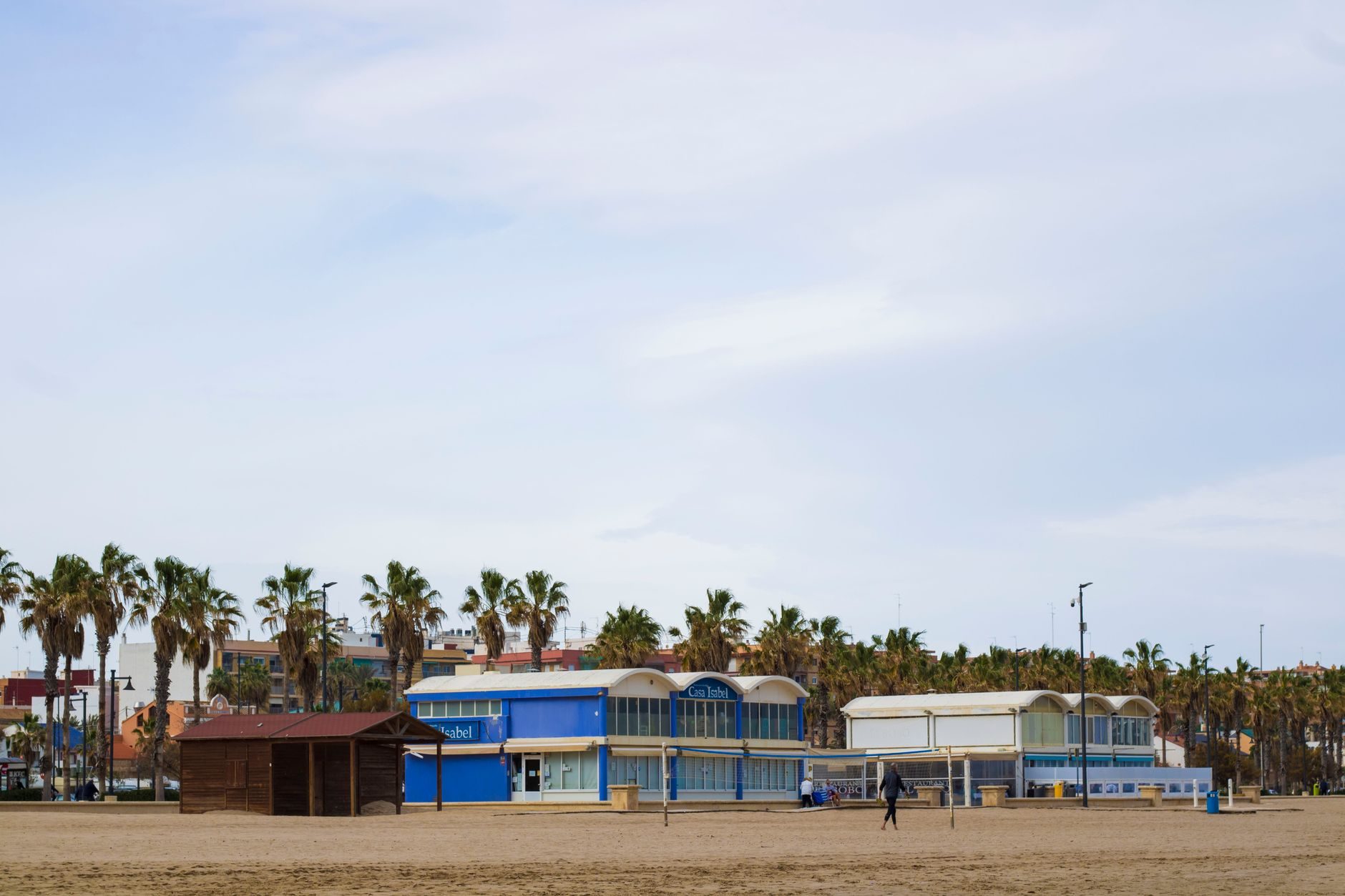
A long, wide stretch of fine sand on the city's edge, with a palm-lined promenade, lifeguards and showers in summer. Tram lines 4 and 6 stop just behind it. Weekdays outside July and August are calm; on summer weekends the sand fills from late morning, so arrive early or walk north towards Patacona for space.
-
Marina de València
Waterfront · 1.5 hr
Rebuilt for sailing races in the 2000s, the old inner harbour now has a waterfront promenade, a public swimming area, restaurants and the white Veles e Vents building with its stacked terraces. Its quays make a good walk at sunset. It lies at the southern end of the beaches, a short walk from El Cabanyal.
-
Mercado Central
Market · 1 hr
Under an iron and glass dome trimmed with Modernista tiles, hundreds of stalls sell fish, ham, rice, tiger nuts and the oranges of the surrounding plain. Come in the morning, when the stalls are full and the bar counters serve breakfast. It opens Monday to Saturday from early morning until mid afternoon and is closed on Sundays.
-
Mercado de Colón
Market · 30 min
An open Modernista market hall in the Ensanche, its brick arches covered in coloured tiles and ceramic oranges. The food stalls have given way to cafés and bars on two levels. It is a good stop for a glass of horchata in the afternoon, a few minutes' walk from the shopping streets around Colón.
-
Mercado de Ruzafa
Market · 30 min
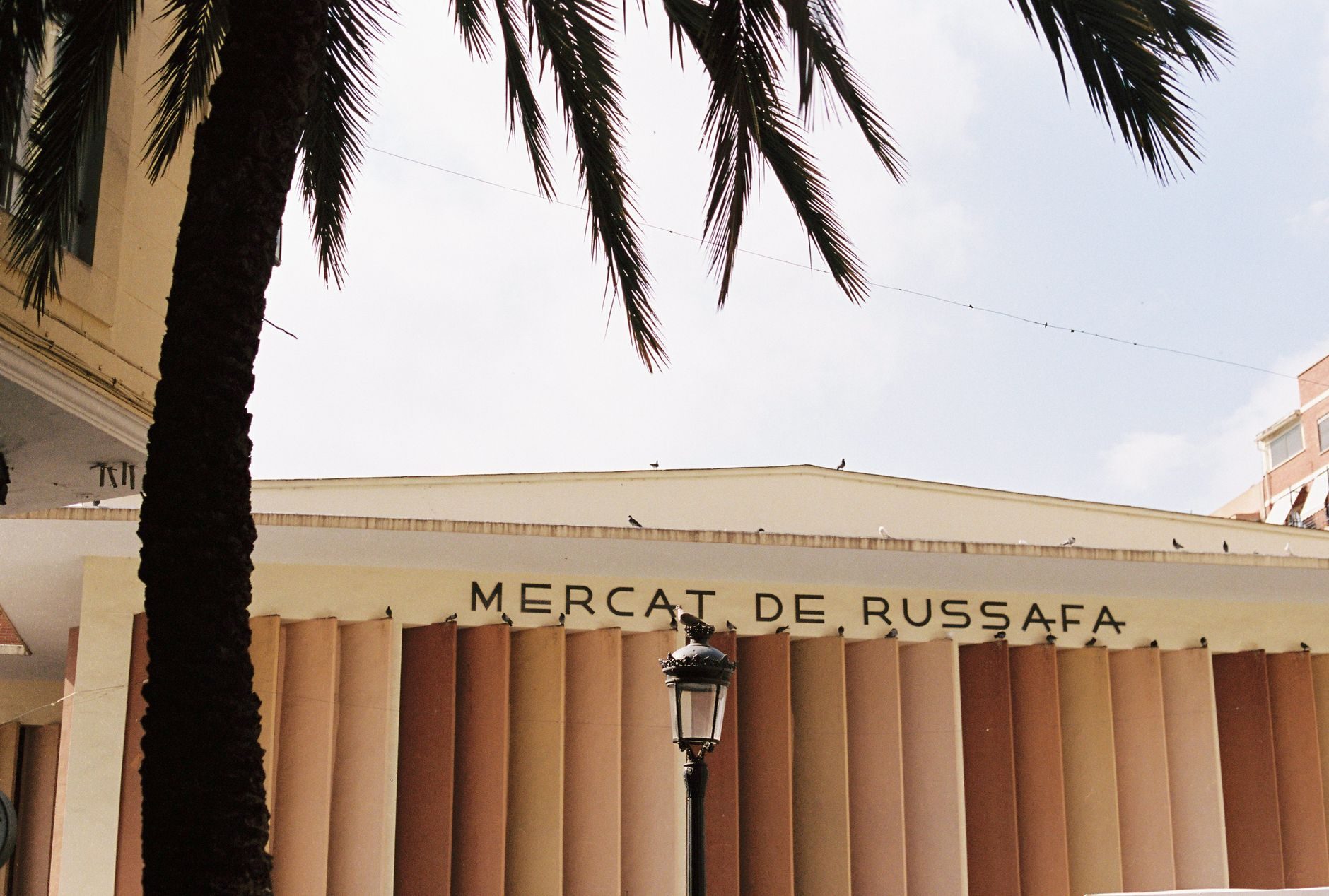
Painted in bright stripes of colour, this neighbourhood market hall in the middle of Ruzafa keeps a full set of fish, meat and vegetable stalls with few visitors among the shoppers. Small counters serve coffee and snacks. It is open in the mornings and closed on Sundays, so come early for a breakfast stop.
-
Micalet
Tower · 30 min
Octagonal and Gothic, the cathedral's bell tower is climbed by a single spiral of 207 worn stone steps with no lift. On a flat city the terrace at the top gives the widest view there is, across the domes and roofs to the sea and the mountains inland. Late afternoon has the softest light, and the bells ring on the hour.
-
Museo de Bellas Artes
Museum · 1.5 hr
Across the river from the old town beside the Jardines del Real, this gallery holds Valencian painting from the medieval altarpieces onwards, with works by Velázquez and Goya and rooms of Sorolla's sunlit beach scenes. Entry is free. It is quieter than any museum in the centre and closed on Mondays.
-
Museo Fallero
Museum · 30 min
Each year one figure from the Fallas is spared from the bonfire by public vote, and every one saved since the 1930s stands in this museum near the City of Arts and Sciences. The figures are satirical and often very funny. Outside March it is the closest look at what the festival builds.
-
Museo Nacional de Cerámica González Martí
Museum · 1.5 hr
Housed in the Palace of the Marqués de Dos Aguas, whose doorway is carved from alabaster into a riot of figures, water jars and palm fronds. Inside are gilded state carriages, a tiled Valencian kitchen and centuries of local pottery, with plates by Picasso. It is closed on Mondays and on Sunday afternoons.
-
Museu de les Ciències
Museum · 2 hr
A hall the length of a city block, ribbed in white concrete like a whale's skeleton, filled with hands-on science exhibits made for children to touch, push and run. Older visitors may find it thin. A Foucault pendulum and a chromosome tower are the standing exhibits, and the rest changes with temporary shows.
-
Oceanogràfic
Other · 4 hr
Europe's largest aquarium, spread across buildings built round a lake at the far end of the City of Arts and Sciences, with walk-through shark tunnels, beluga whales, an Arctic pavilion and a dolphin show. A visit takes most of a day. Buy timed tickets online in summer and on weekends, and come at opening to beat the queues.
-
Palau de les Arts Reina Sofía
Landmark · 30 min
Valencia's opera house, its white shell topped by a feathered steel crest, stands at the head of the City of Arts and Sciences. Guided tours run on most days, but the best way inside is a performance. The season runs from autumn to early summer, and tickets for the main productions go fast.
-
Patacona Beach
Beach · 3 hr
North of Malvarrosa, across the municipal line in Alboraya, the same sand continues with lower buildings behind it and fewer bathers. Beach restaurants line the promenade. Inland lies the farmland where tiger nuts grow for horchata, and the village of Alboraya is known for serving the drink fresh.
-
Plaza de la Virgen
Landmark · 30 min
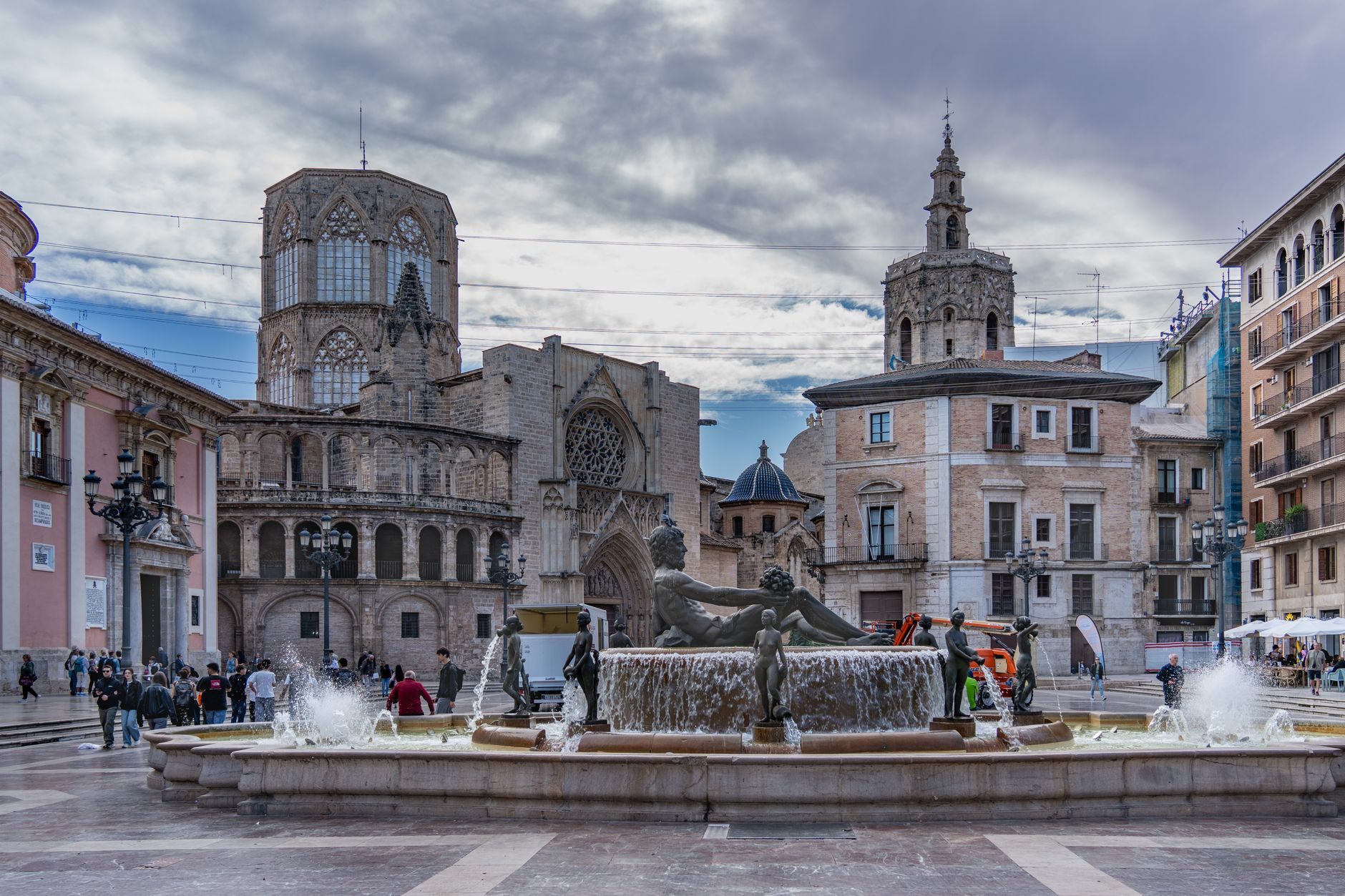
On the site of the Roman forum, this square is framed by the cathedral's Apostles door and the pink Basilica, with a fountain whose reclining bronze figure stands for the river Turia. Terraces line its edges. Arrive forty minutes early on a Thursday to see the Water Tribunal at noon, when the crowd is thickest.
-
Plaza del Ayuntamiento
Landmark · 30 min
Triangular, ringed by grand early-twentieth-century buildings and the town hall, this is the city's main square and the centre of the Fallas. Every day from the first to the nineteenth of March a mascletà, a deafening daytime barrage of firecrackers, goes off here at two in the afternoon. The rest of the year it is lined with flower stalls.
-
Plaza Redonda
Landmark · 30 min
A small circular square of nineteenth-century houses, entered through four narrow passages a short walk from the cathedral. Its stalls sell lace, embroidery, ceramics and haberdashery. On Sunday mornings a small market of stamps, coins and old postcards sets up in the middle, and the ring of balconies above makes a neat photograph from the centre.
-
Real Colegio del Patriarca
Museum · 1 hr
A Renaissance seminary around a cloister of white marble columns, with a small picture gallery that includes works by El Greco. A stuffed crocodile hangs inside the church door, a gift from a viceroy and the subject of local legend. Visits are by guided tour at set times, and it is closed on Sundays.
-
Sagunto Castle
Castle · 3 hr
Walls and towers run for nearly a kilometre along a ridge above the town of Sagunto, north of Valencia, with a restored Roman theatre on the slope below. Commuter trains from the North Station take about half an hour. Wear proper shoes for the uneven paths, carry water, and avoid midday in summer: there is almost no shade.
-
Torres de Quart
Monument · 30 min
Rounded towers at the western gate of the old city, still pocked with craters from cannon fire during the Napoleonic siege. Their steep stairs and terraces are open to visit and far less busy than Serranos. A visit combines easily with a walk through El Carmen and a stop at the botanical garden a short way west.
-
Torres de Serranos
Monument · 30 min
Twin towers that once guarded the main gate of the medieval walls, facing the old riverbed. Stairs and open terraces climb to the top, where the view runs over El Carmen to the cathedral and across the Turia gardens. Fallas opens here on the last Sunday of February with a proclamation from the battlements.
-
Turia Gardens
Park · 2 hr
After a flood in 1957 the river was diverted around the city, and its dry bed became a sunken park running nine kilometres from the Bioparc to the City of Arts and Sciences. Paths, orange groves, sports pitches and old stone bridges fill it. Hire a bike and ride its length; it is the easiest way to cross the city.
-
Valencia Cathedral
Cathedral · 1.5 hr
Three doors in three styles, Romanesque, Gothic and Baroque, open onto one church, each facing a different square. A side chapel holds an agate cup venerated as the Holy Grail. Entry is ticketed with an audio guide outside service times, and on Thursdays at noon the Water Tribunal sits outside the Apostles door on Plaza de la Virgen.