Things to do
18-
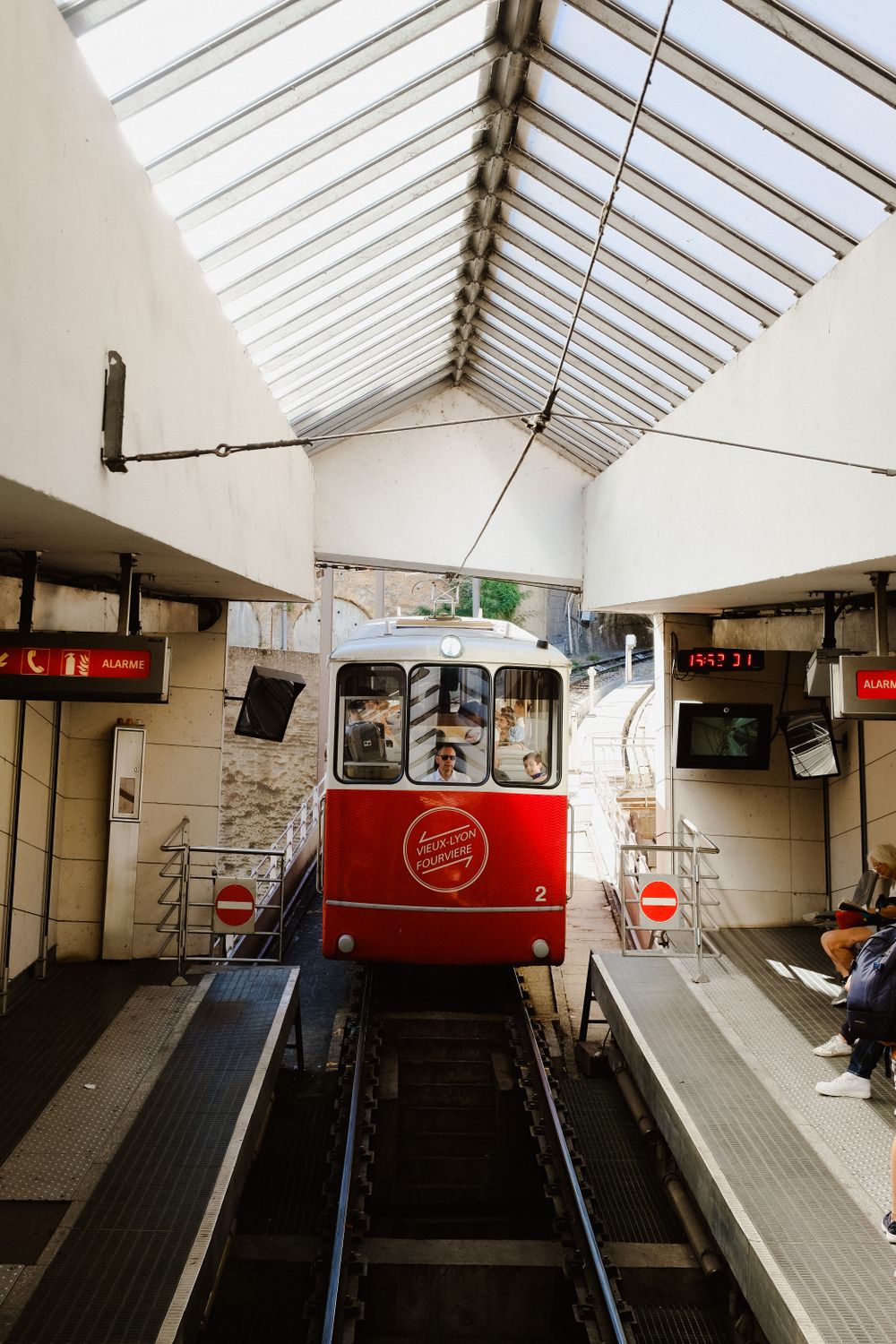
Artxanda Funicular
A short funicular ride climbs from the river near the Zubizuri bridge to the top of Mount Artxanda, a few minutes up the slope. The terrace at the upper station looks down over the whole valley, the Guggenheim and the river laid out below. Grill houses and a park share the hilltop, and the walk back down through the woods takes about forty minutes.
-
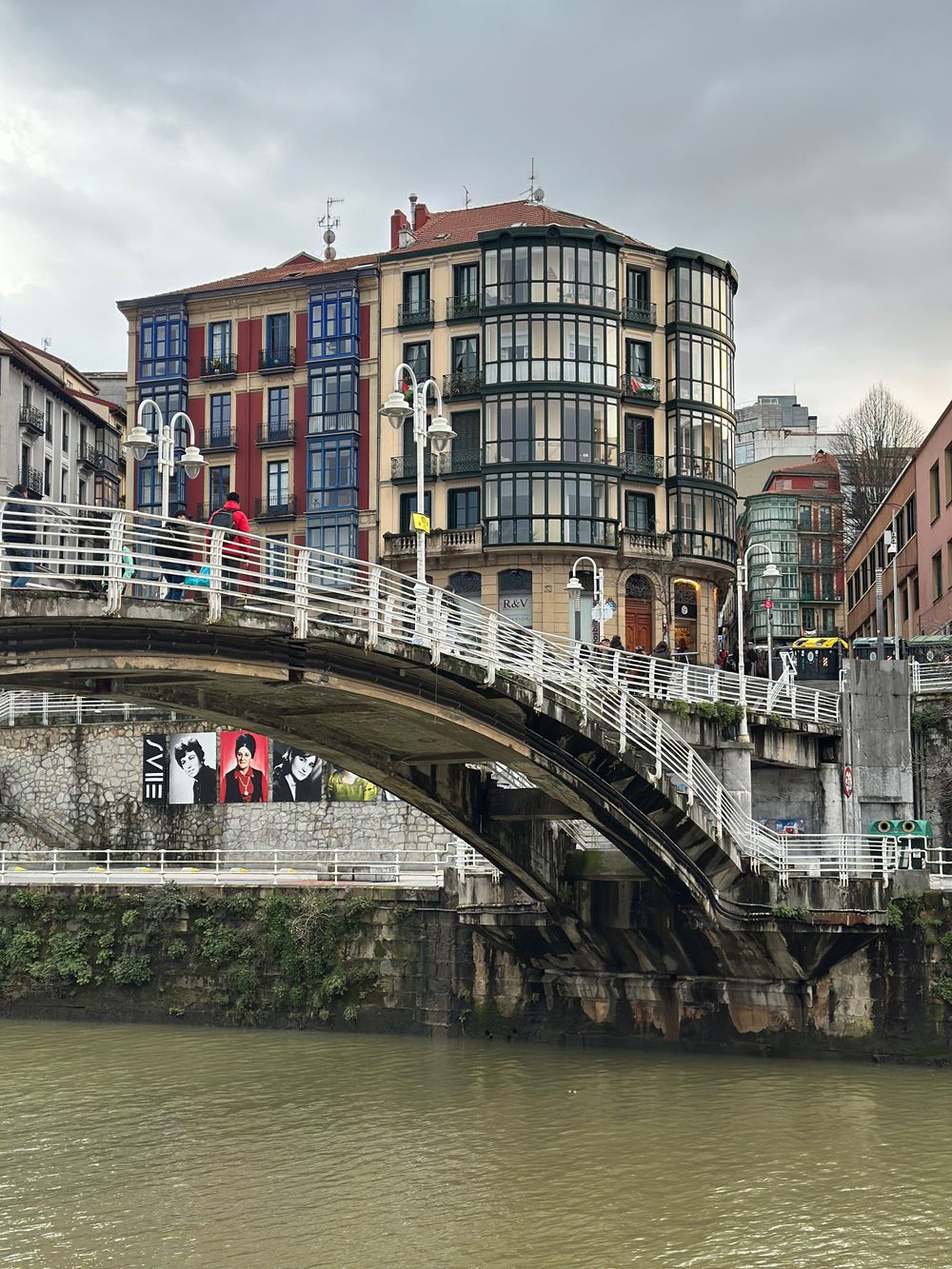
Bilbao La Vieja
Across the San Antón bridge from the old town, the oldest settled part of the city has become its liveliest quarter at night. Small galleries, studios, vintage shops and bars fill the streets around Calle San Francisco and Calle Dos de Mayo. Some streets nearer the railway are rough after dark, and the busier streets are the safer ones late at night.
-
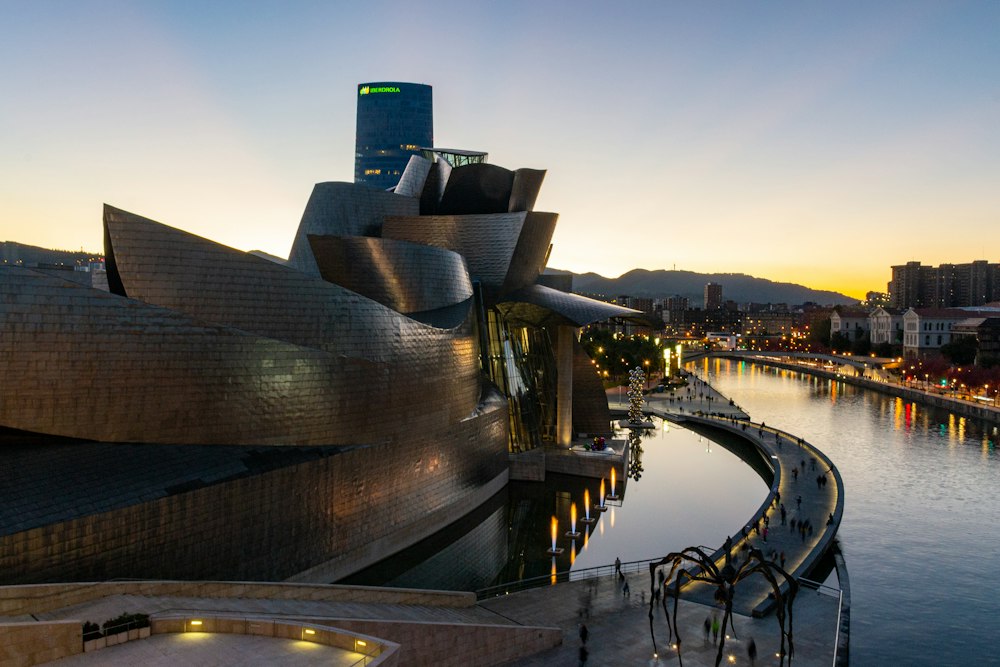
Guggenheim Museum
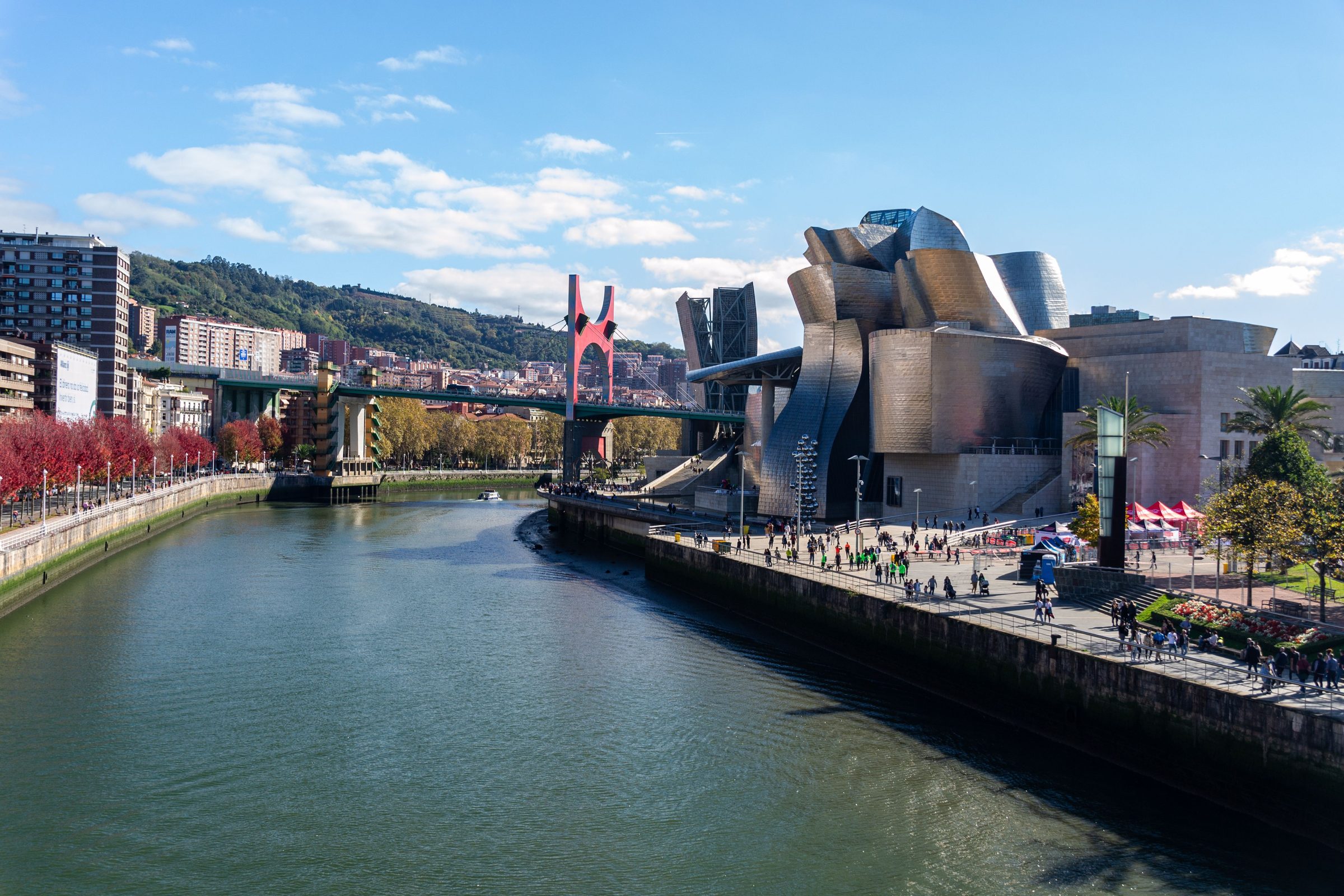
Frank Gehry's titanium building on the Nervión is the city's headline sight, and outside the Serra gallery the building itself is the main draw. Richard Serra's steel ellipses fill the long gallery permanently, while the rest rotates. Circling the exterior along the Nervión, past the spider and the flower terrier, is free and takes half an hour.
-
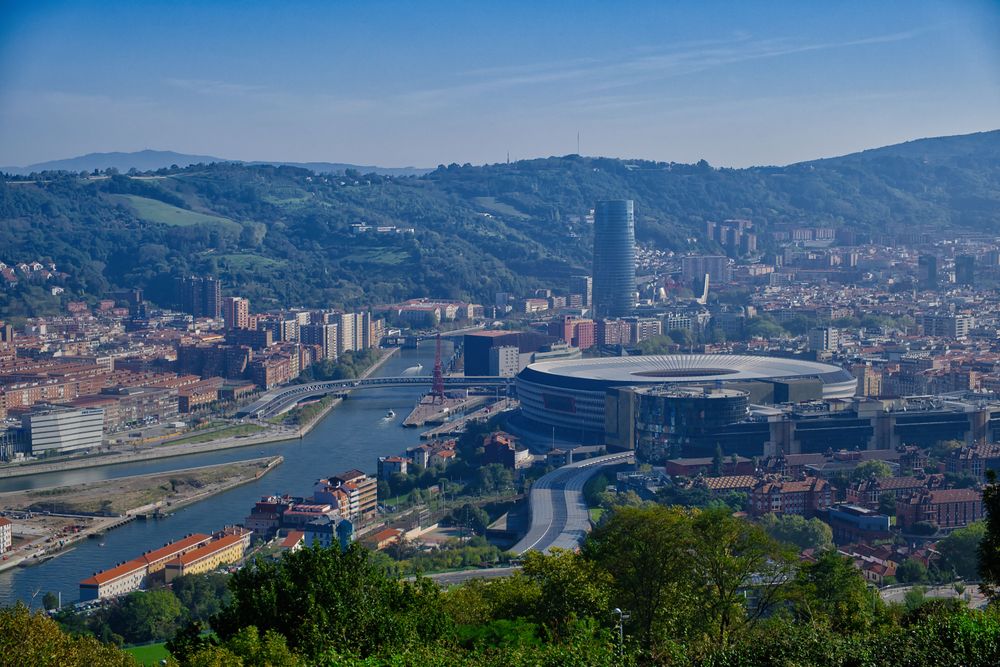
San Mamés Stadium
Home of Athletic Club, the club that fields only players born in the Basque Country or trained at Basque clubs. The stadium museum and the ground tour run on days without a match, and the bars on Calle Licenciado Poza fill hours before kick-off. Tickets for big matches sell out fast, while a tour can usually be booked a day or two ahead.
-
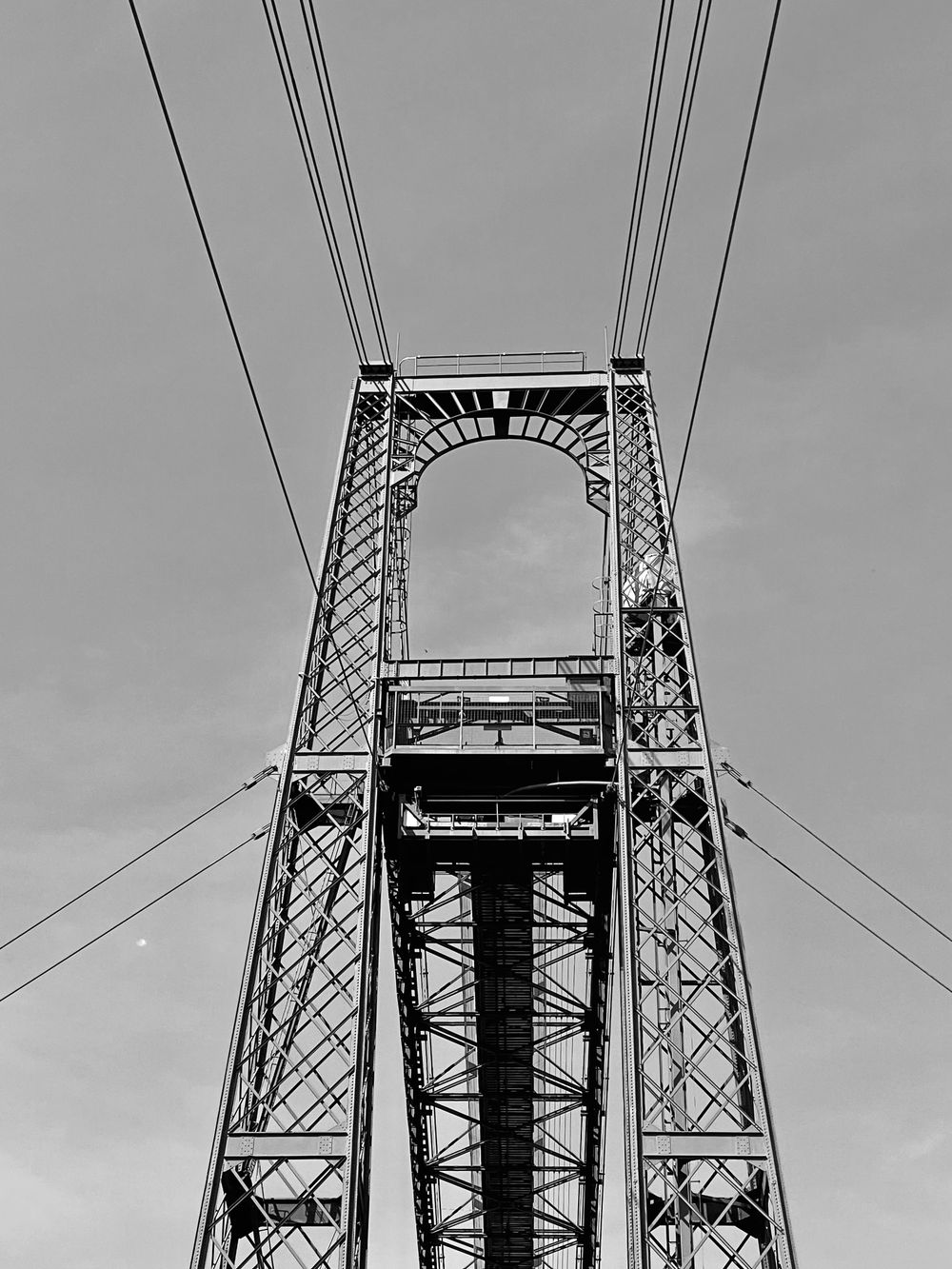
Vizcaya Bridge
Built in 1893 at the mouth of the estuary, it is the oldest transporter bridge in the world and a UNESCO World Heritage Site. A hanging gondola still carries cars and walkers between Portugalete and Getxo every few minutes by day and hourly through the night. A lift climbs to the walkway 45 metres up, a ticketed crossing with the whole estuary below.
-
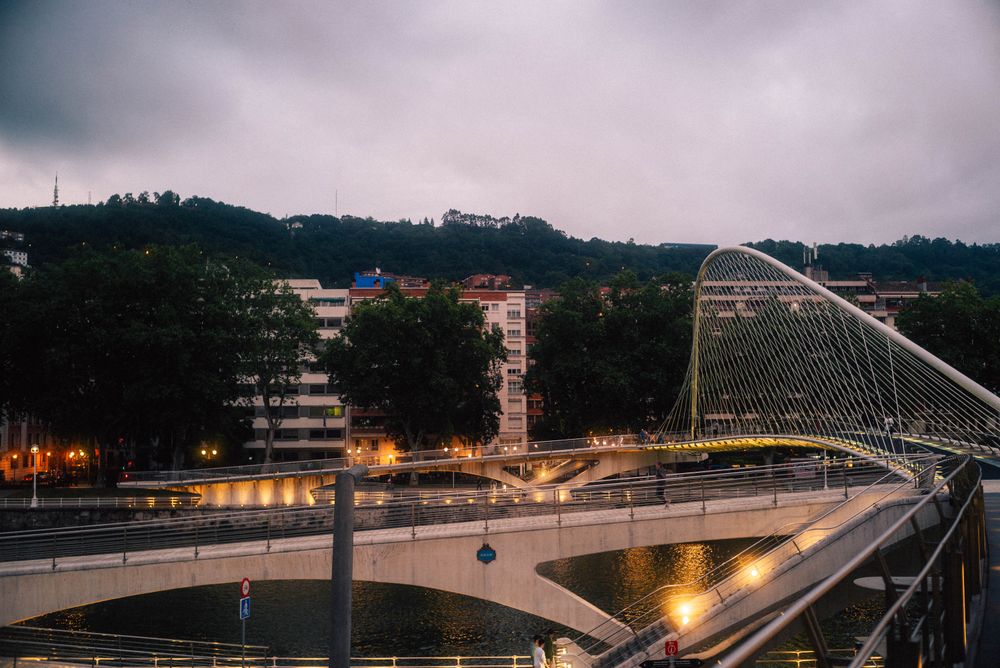
Zubizuri
A white footbridge by Santiago Calatrava, hung from a single leaning arch over the river between the Campo Volantín promenade and the Uribitarte bank. Its glass deck turned slippery in the rain, and a strip of rubber matting now covers most of it. It is the crossing on the riverside walk from the old town to the Guggenheim.
-
Azkuna Zentroa
An old wine warehouse turned into a cultural centre by Philippe Starck, with a cinema, a library and exhibitions inside the original brick shell. The ground floor is held up by 43 columns, each one different. From the atrium the glass bottom of the rooftop pool is visible overhead, with swimmers crossing it.
-
Basilica of Begoña
On the hill above the Casco Viejo, the basilica holds the figure of the Virgin of Begoña, the patron of the province, and the city's footballers come here after a cup win. The Mallona steps, more than three hundred of them, climb up from Plaza Unamuno past the old cemetery gate. The old lift tower on the hillside has been shut for years.
-
Bilbao Fine Arts Museum
A collection that runs from Flemish and Spanish masters, El Greco and Goya among them, to Basque painters of the last century, at the edge of Doña Casilda Park. A new wing designed by Norman Foster now sits over the old buildings. It is a ten-minute walk from the Guggenheim, and the two make a museum day on any day from Wednesday to Sunday.
-
Casco Viejo
Seven old streets behind the cathedral hold the pintxo bars that Basque eating is built on, counters loaded by seven in the evening and cleared before ten. Custom is a single bite and a small glass in each bar, then a move along the row. The Ribera market at the river end and the Sunday flower and bird stalls are the other draws.
-
Doña Casilda Park
A nineteenth century park in the Ensanche, laid out around a pond with ducks and swans, a pergola and a glass-roofed shelter of fountains. Its far edge opens onto the Fine Arts Museum, and the Guggenheim is a short walk across the road. It is the green space closest to the centre and the place for a quiet hour between museums.
-
Euskal Museoa
The Basque Museum, in a former Jesuit college in the Casco Viejo, tells the story of the Basque Country through fishing boats, farm tools, costume and the Basque language. It reopened in 2026 after a long restoration, with more rooms and many objects shown for the first time. A visit takes about an hour and a half, and the cathedral is a few streets away.
-
Itsasmuseum
The maritime museum stands on the site of the old Euskalduna shipyard, below the red Carola crane that is the last of the yard's machinery. Inside, the story of the estuary runs from the fishing fleets to the steamers built here. Outside, old boats sit in the dry dock, and it stands at the end of the riverside walk, past the Guggenheim.
-
Mercado de la Ribera
A covered market hall of 1929 on the river bank at the edge of the Casco Viejo, with fish, meat and vegetable stalls on the lower floors in the morning. Upstairs a food hall of pintxo counters stays open into the evening, with tables facing the water. The fish counters are fullest early in the day, and the upstairs bars are busiest at dusk.
-
Old Port of Algorta
A cluster of whitewashed fishermen's houses and steep lanes above a tiny harbour in Getxo, at the mouth of the estuary. It is a few minutes' walk from Algorta metro station, and a seafront path leads there from the Vizcaya Bridge past the villas above Ereaga beach. The small bars in the lanes serve pintxos and fish to a mostly local crowd.
-
Plaza Nueva
Arcaded and neoclassical, the square at the heart of the Casco Viejo is lined on all four sides with bars and cafés under its stone arches. On Sunday mornings a collectors' market of stamps, coins and old books fills the arcades. The bars here are among the busiest in the old town, and the quieter counters sit in the streets just off it.
-
San Juan de Gaztelugatxe
A stairway of 241 steps climbs a rocky islet on the Biscay coast to a small hermitage, joined to the mainland by a bridge. Access needs a free timed booking every day in summer and at spring and autumn weekends, and is open without one on other days. It is about an hour by bus or car, with a long descent to the bridge. Rough seas and orange weather alerts make the climb unwise.
-
Santiago Cathedral
Gothic and built on the pilgrim route along the northern coast, the cathedral stands in the middle of the Siete Calles and gives the old town its oldest skyline. Inside, a small cloister opens off the nave. Its scallop shells mark the Camino del Norte, and walkers with packs still pass the door on their way west towards Santiago de Compostela.