Things to do
8-
Burren National Park
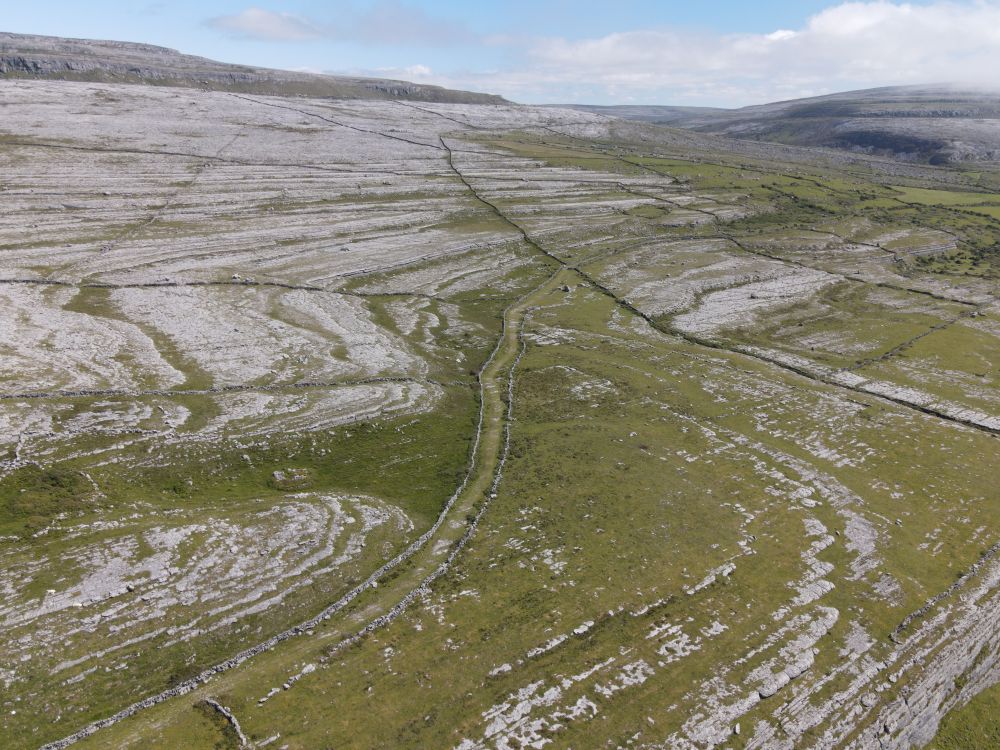
Fifteen square kilometres of limestone pavement, turlough and hazel scrub, the smallest of the national parks, where spring gentian and Mediterranean orchid grow within a metre of each other. There is no visitor centre in the park itself and the trailheads are at Mullaghmore.
-
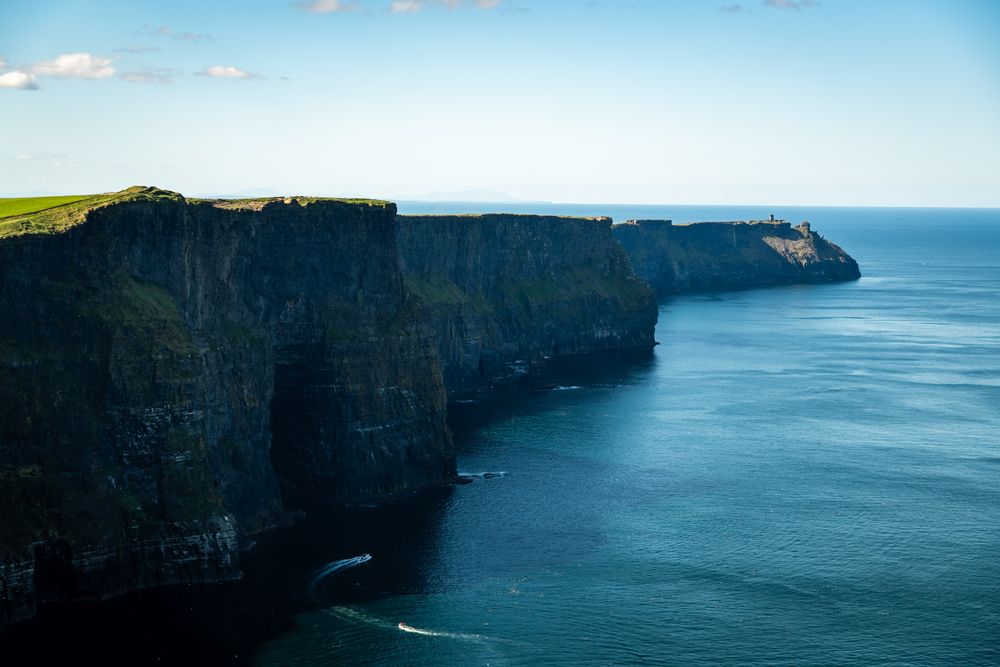
Cliffs of Moher
From the southern platform the whole wall of the cliffs runs away toward Hag's Head, with the Atlantic at its foot. Tour groups crowd the centre and the tower, and you have the far ends of both paths nearly to yourself.
View more → -
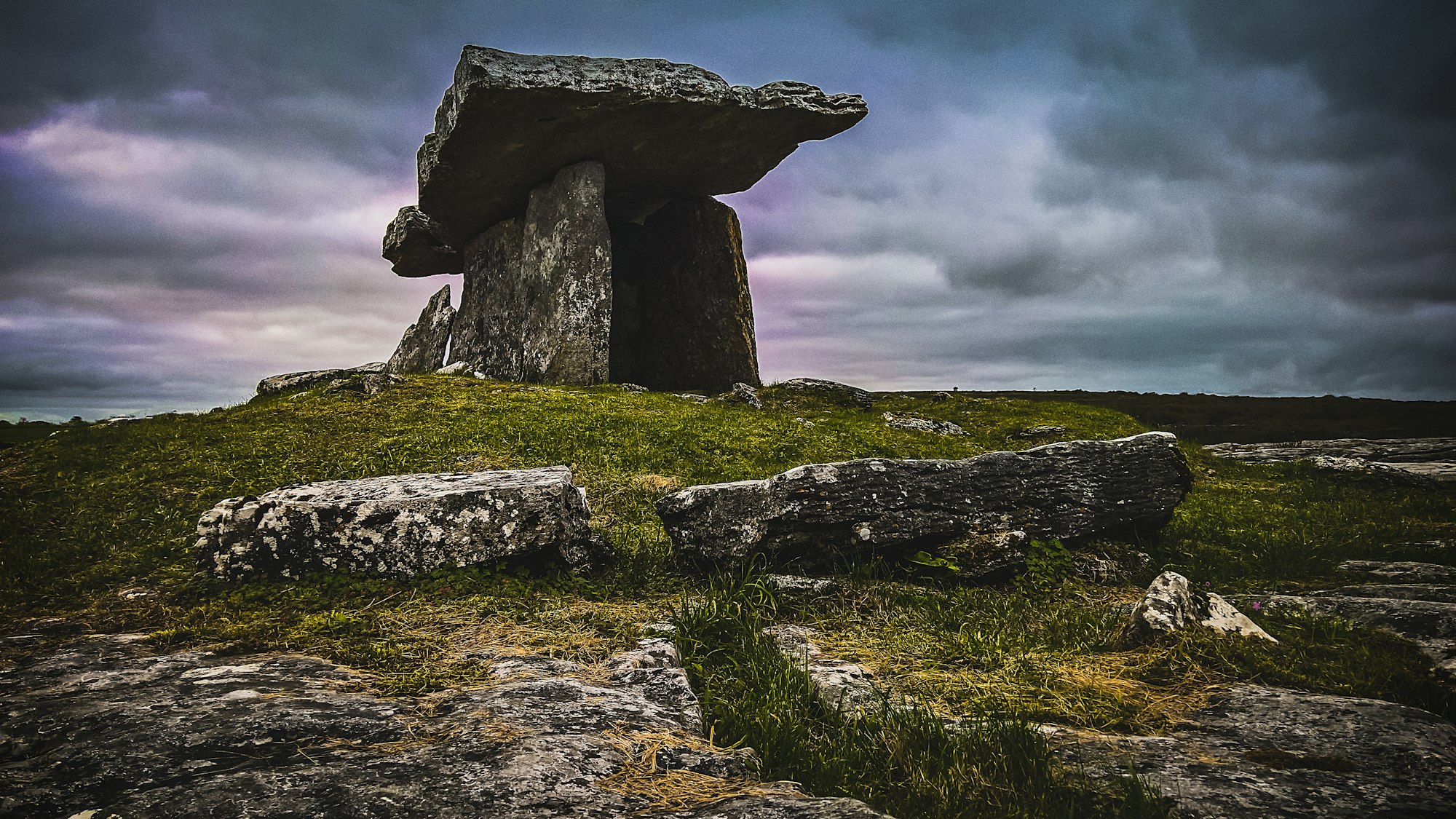
Poulnabrone Dolmen
A portal tomb on bare limestone pavement in the middle of the Burren, built about 3800 BC, where the remains of at least thirty-three burials were found under the capstone. It stands a hundred metres from the road with a boardwalk to it.
-
Aillwee Cave
A cave running a kilometre into the hill above Ballyvaughan with a frozen waterfall chamber and the hibernation hollows of brown bears, which have been extinct in Ireland for thousands of years. A birds of prey centre works from the same site.
-
Corcomroe Abbey
A Cistercian abbey of about 1195 in a fold of the northern Burren, roofless but with unusually fine carved capitals of local plants, and the tomb effigy of a king of Thomond in the chancel. It stands alone in a valley off the Bell Harbour road.
-
Doolin Cave
A show cave holding a free-hanging stalactite of over seven metres, the longest free-hanging stalactite in Europe, found by two English cavers in 1952. The descent is a hundred and twenty-five steps and the tour is guided and timed.
-
Fanore Beach
A sandy strand backed by a large dune system on the Black Head road, with a reliable beach break that the Clare surf schools use. The limestone terraces of the Burren run down almost to the sand behind it, and the car park fills on warm weekends.
-
Gregans Castle Hotel
A Georgian house under Corkscrew Hill looking over the Burren to Galway Bay, with no televisions in the rooms and a dining room that has held a reputation for thirty years. Tolkien stayed here and the landscape is claimed as a source for Mordor.