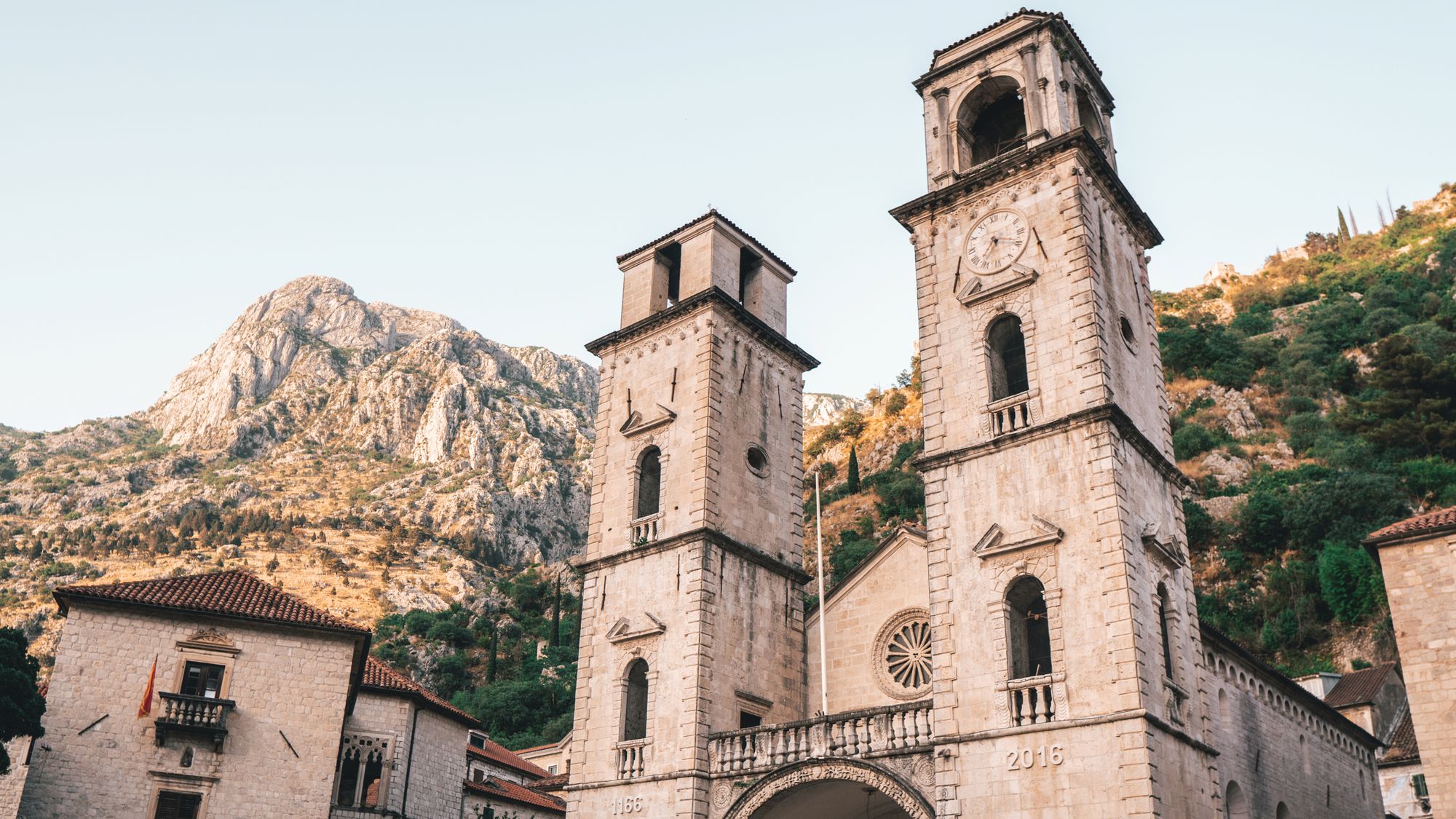
Worth the short walk from the Square of Arms, Kotor's cathedral holds the relics of Saint Tryphon, the town's patron, in a treasury upstairs above a carved stone canopy over the main altar.
Cathedral, Kotor. Meridian Dispatch.
Work on the present cathedral began in 1124 and ended in 1166, and it was consecrated on 19 June that year. That makes it older than Notre Dame in Paris. Earthquakes have scarred it since, and the quake of 1667 brought both bell towers down.
Because his relics are kept there. Tryphon, a martyr, became the city's patron after his relics were brought to Kotor on 13 January 809, and he still appears on the city's coat of arms. The relics rest upstairs in the treasury, in a silver-clad wooden casket.
Medieval frescoes, and a carved stone ornament above the main altar telling the life of Saint Tryphon. Fresco painters, stonecutters and goldsmiths added to the church over the centuries. The 1667 earthquake damaged it seriously, and the rebuilding that followed shaped the front seen today.
The Diocese of Kotor keeps the feast of Saint Tryphon, patron of the city and the diocese, on 3 February. After the pontifical Mass that morning, the saint's relics leave the treasury and are carried in procession through the streets of the Old Town.
The treasury, built in 1652, keeps the cathedral's silver and icons. Its most important piece is the reliquary of Saint Tryphon, made of wood and covered in silver in the 16th century, and a wooden crucifix given by a queen is kept there too. Stairs lead up to it.
Around an hour is enough for the nave, the altar canopy and the treasury. Time spent over the silver and icons upstairs can stretch a visit to two hours.
From the square, the front shows two bell towers joined at the top by a terrace, and the left one stands two metres shorter than the right. Both came down in the 1667 earthquake, and the left tower was never finished in the rebuilding.
Inside is a three-aisled basilica, and the nave runs straight to the main altar. Over the altar stands a stone ciborium, a canopy on columns, whose frieze shows scenes from the life of Saint Tryphon carved in shallow relief. Frescoes from the 14th century survive inside the church, and mosaics remain in places, many of them partly lost.
The relics upstairs are why the cathedral carries the saint's name, and they have been here since 809, when a storm turned their ship, bound for Dubrovnik, into the bay. The treasury keeps them in a reliquary of wood covered in silver. Beside it hangs a wooden crucifix given to the church by a queen.
Asking at the door comes first, since the ticket has covered both the church and the treasury. Then walk the nave to the main altar at the far end. Stop under the stone canopy there and read its carved frieze before you turn back.
Go up to the treasury after that and give it most of your time. The silver and the icons kept there are the reason to come, and the church below is quick to see by comparison.
If you are in Kotor in early February, the feast of Saint Tryphon brings his relics out of the treasury for a procession through the streets. Plan your days in Kotor round it.
On a day with three or more ships in, more than 8,000 passengers can be ashore in the old town. The busiest hours run from 10am to 4pm, and the nave and the treasury fill with them.
Pair it with the Maritime Museum Kotor, or with the Church of St. Nicholas for a second church in the old town.
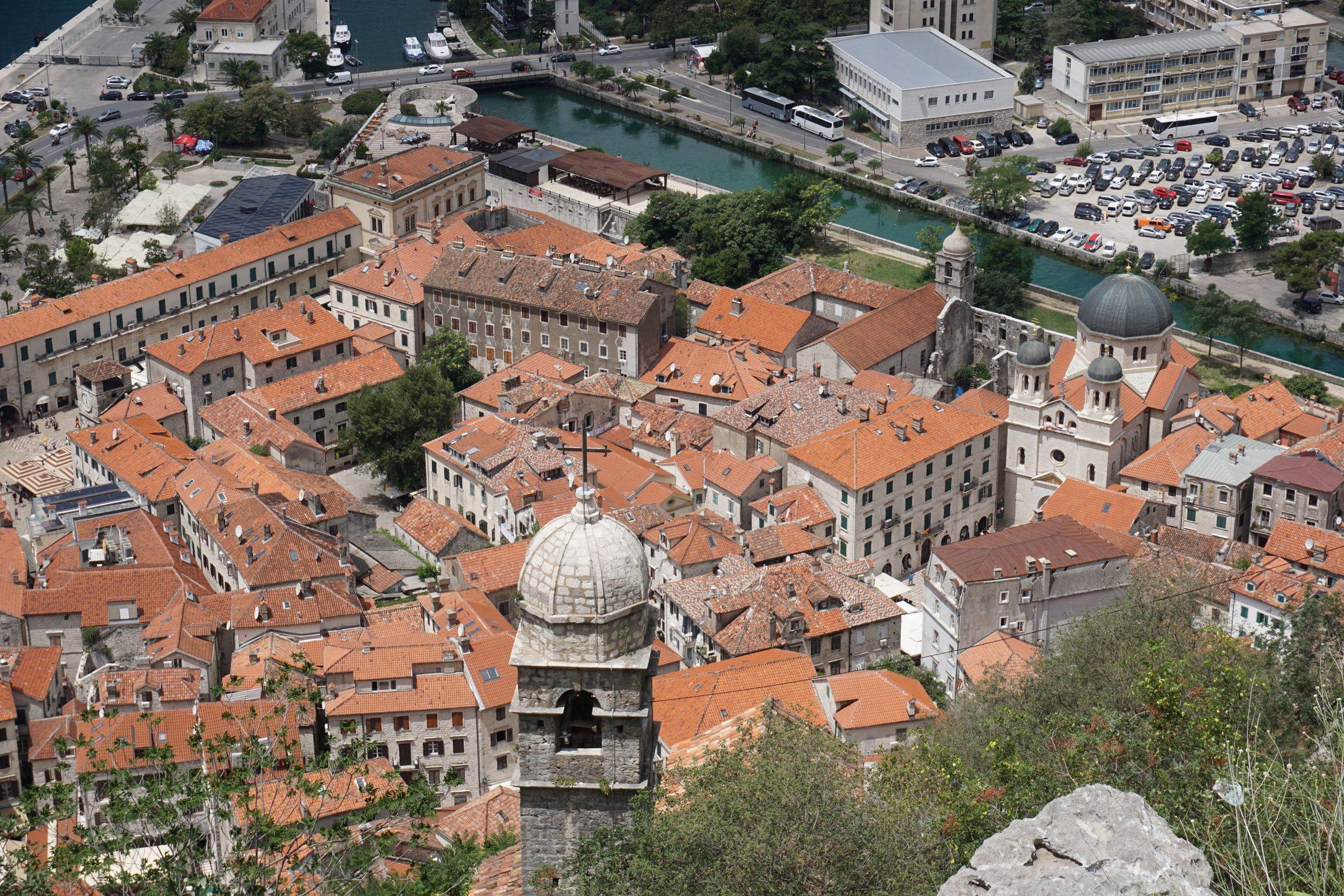
Kotor is a town for evenings: once the cruise ships sail, you have the lanes and squares inside the walls almost to yourself.
Read the Kotor guideExplore the rest of Kotor
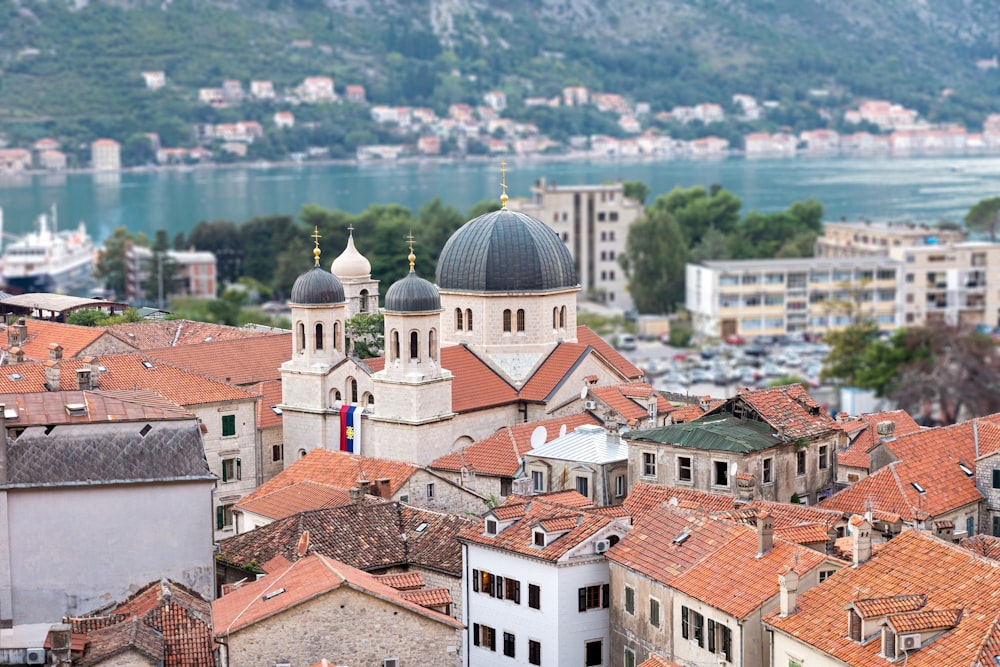
The principal Serbian Orthodox church of Kotor, completed in 1909 on the Piazza of St Luke, its twin towers rising over the north end of…
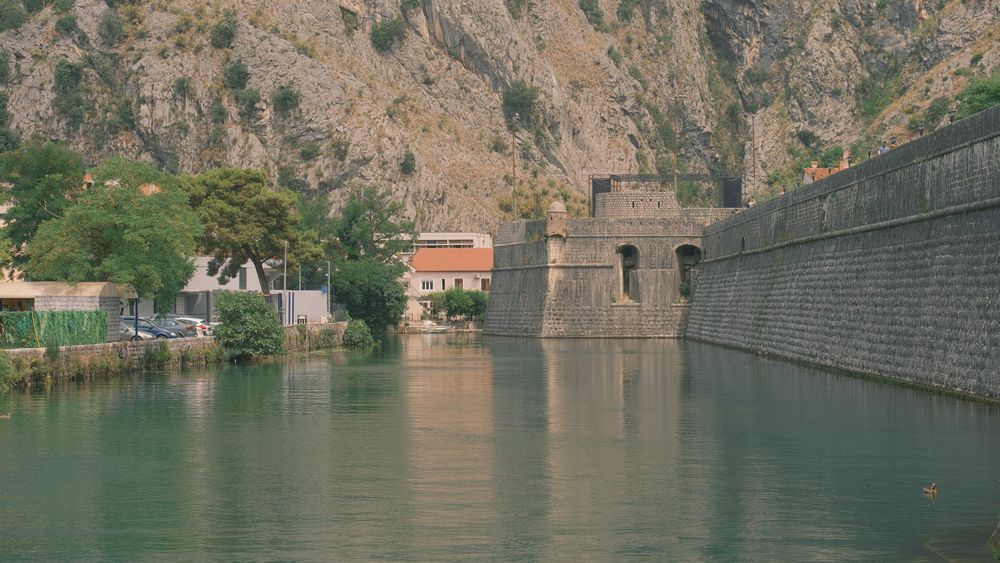
Venetian fortifications encircling Kotor's old town, built between the 9th and 19th centuries and restored in recent decades; accessible…
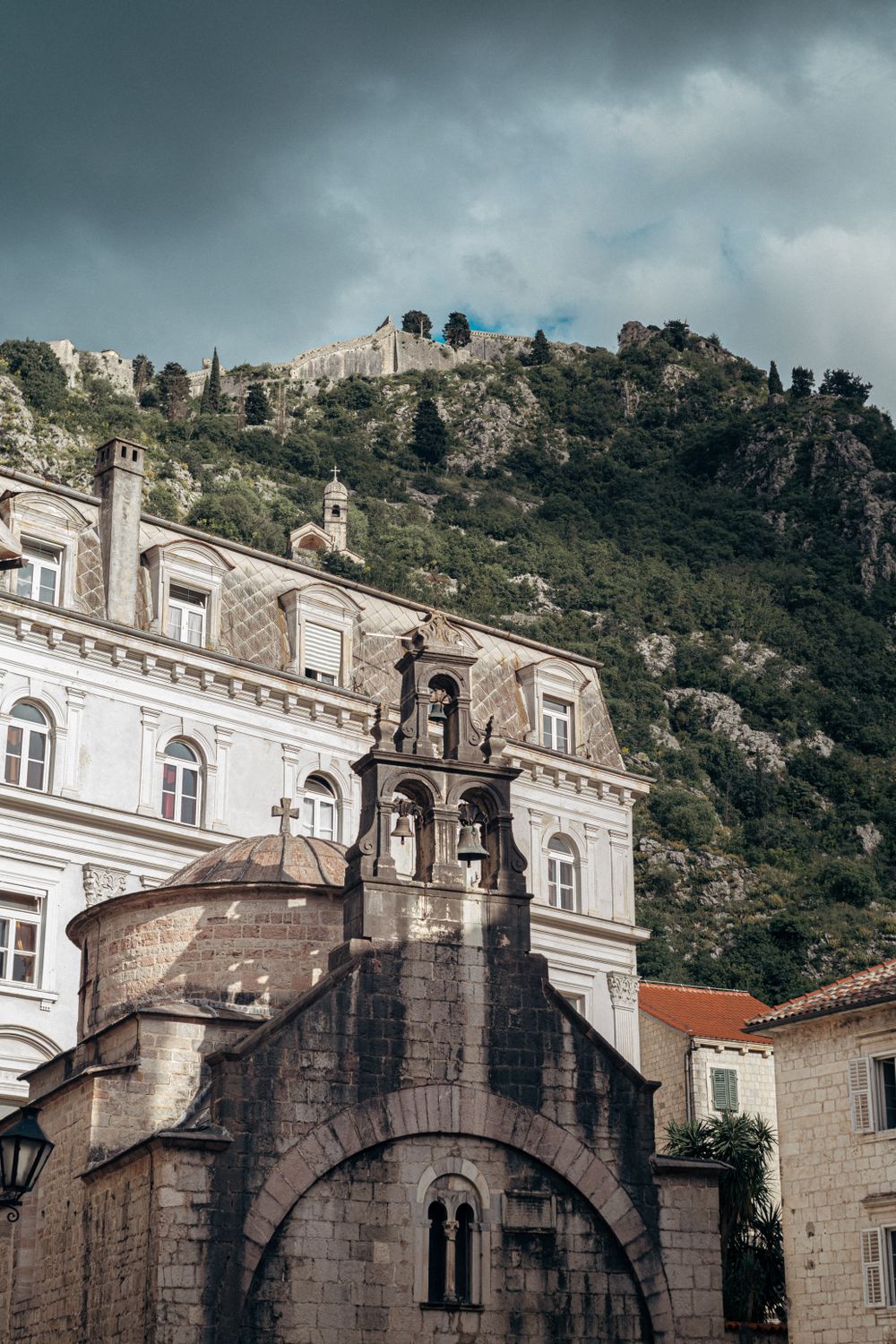
A small Romanesque church on St Luke’s Square in the old town of Kotor, with a dome over a single nave and a floor laid with tomb slabs. It…
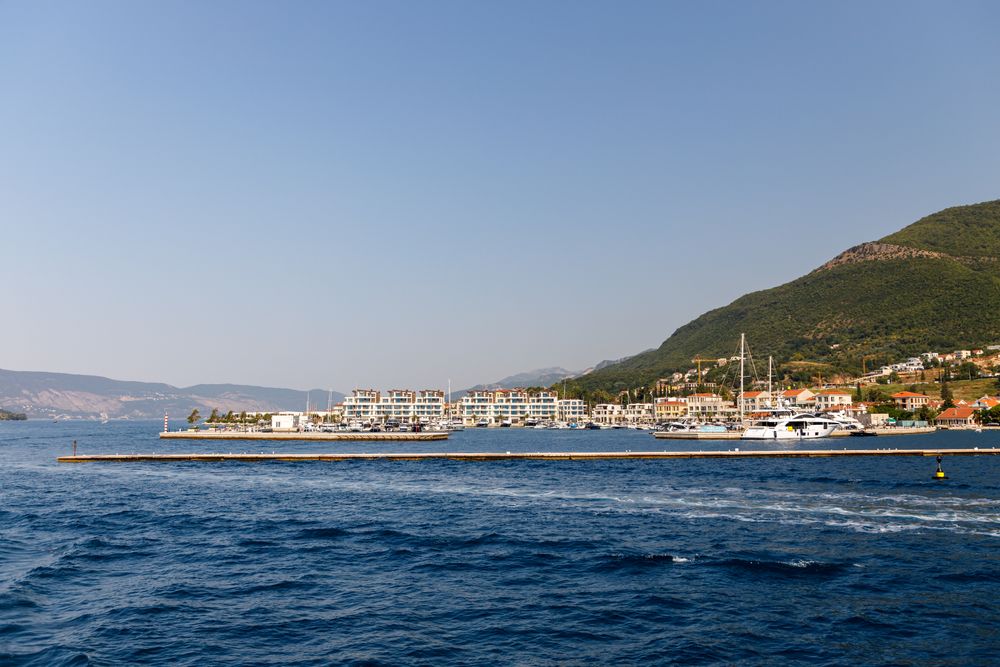
Tivat is the arrival town for the Bay of Kotor, with the international airport on its edge. Porto Montenegro, the superyacht marina, holds…
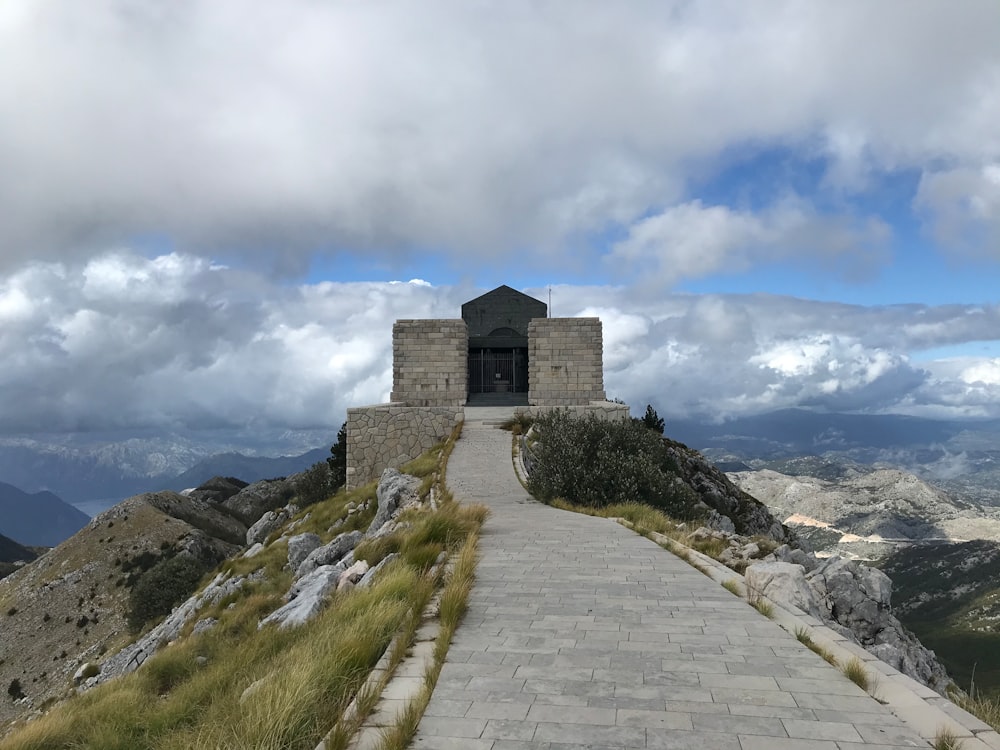
The mausoleum of Petar II Petrovic Njegos crowns Jezerski Vrh at 1,657 metres, reached by a tunnel and 461 steps from the summit car park.…
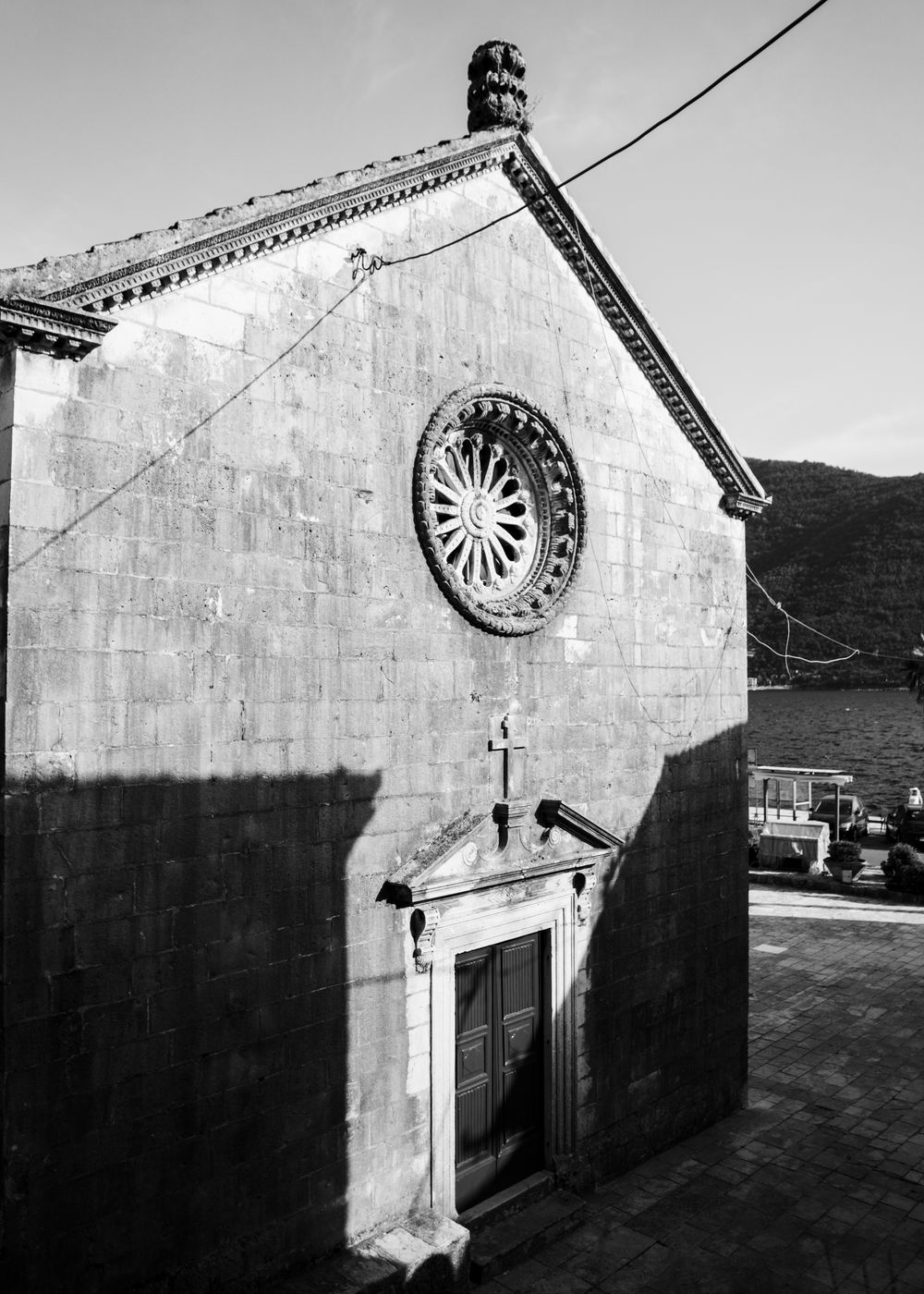
A Baroque parish church built in the 17th century and overlooking Perast's waterfront; notable for its bell tower and views across the Bay…
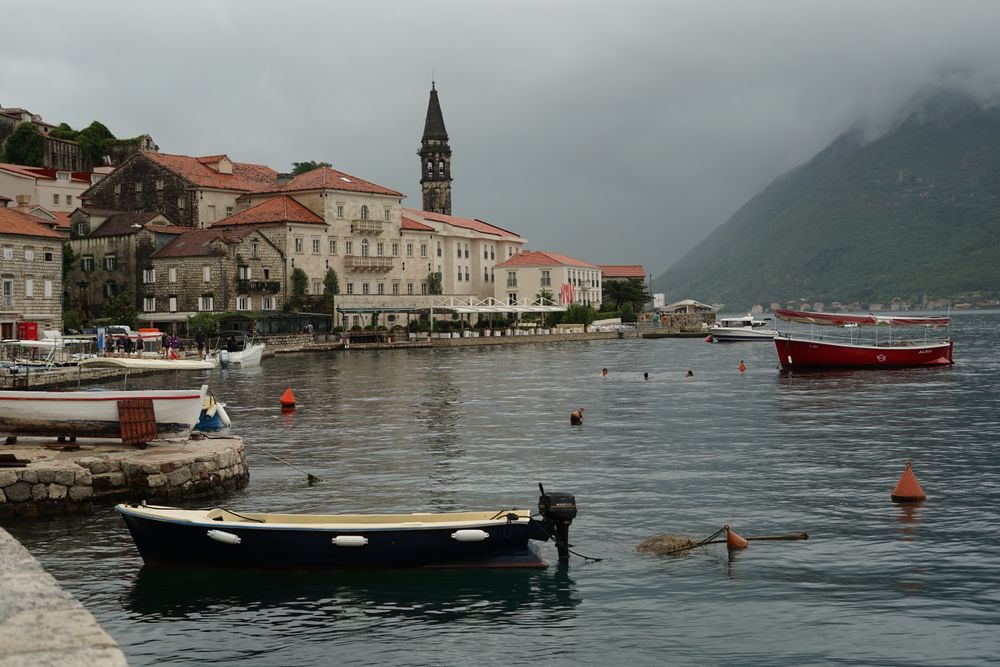
A single baroque street facing the narrows of the bay, built on the wealth of sea captains who once sailed for Venice. Stone palaces and…
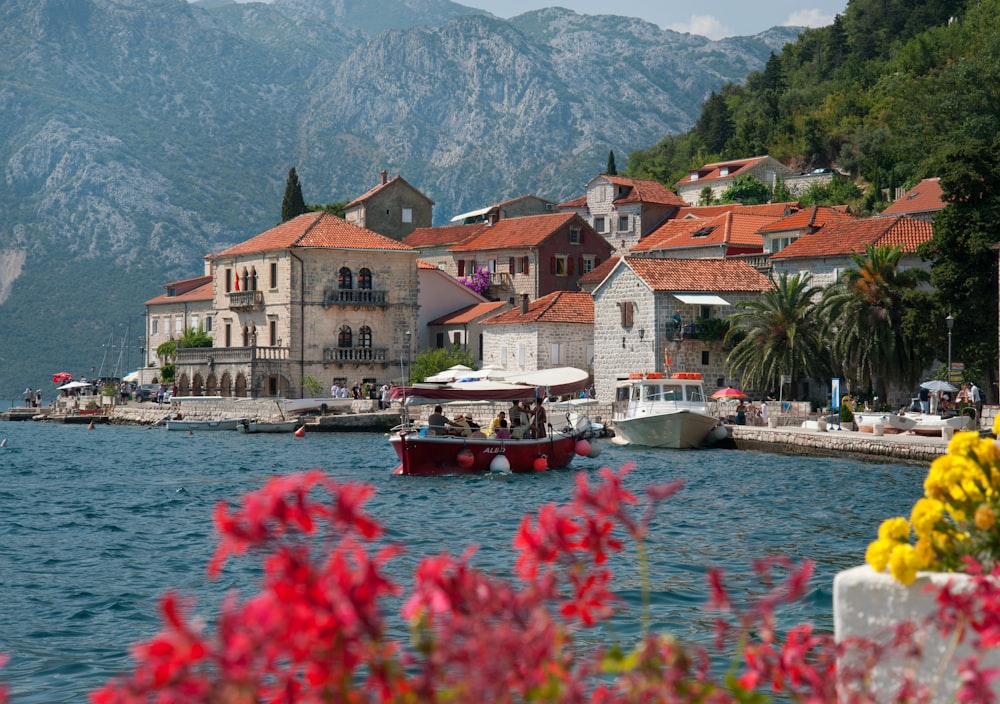
Perast contains some 17 baroque and Renaissance palaces built between the 16th and 18th centuries by wealthy sea captains and merchants.…
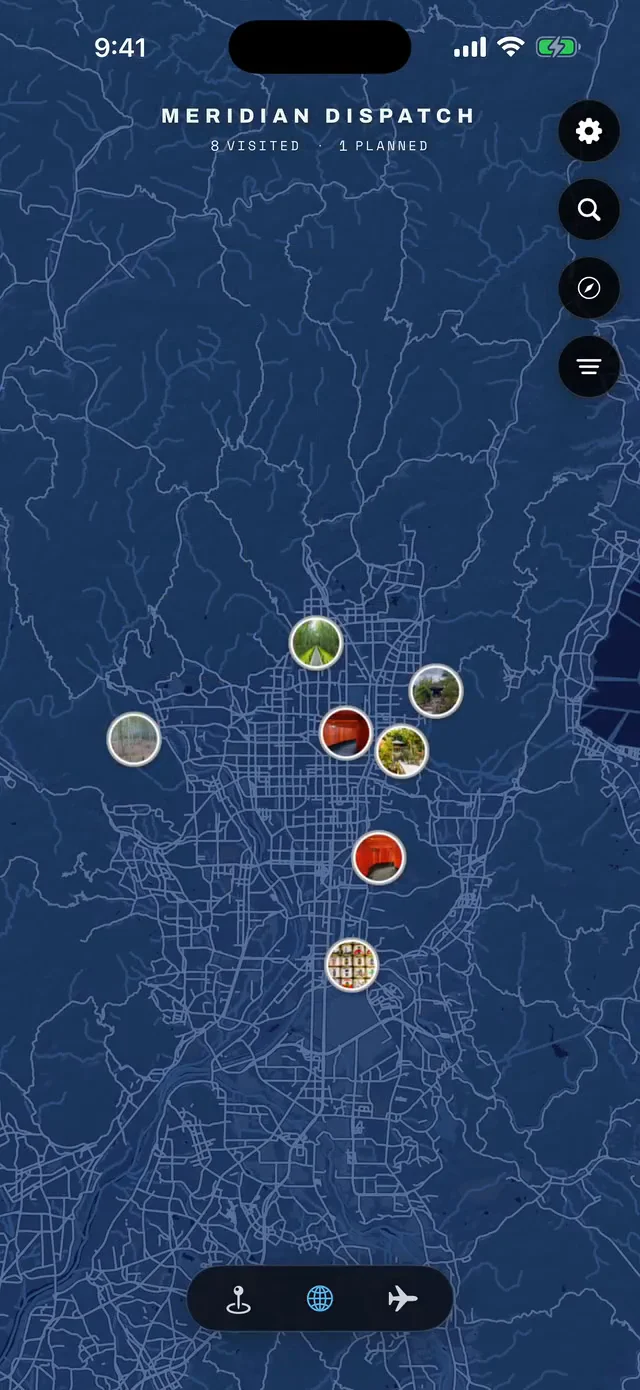
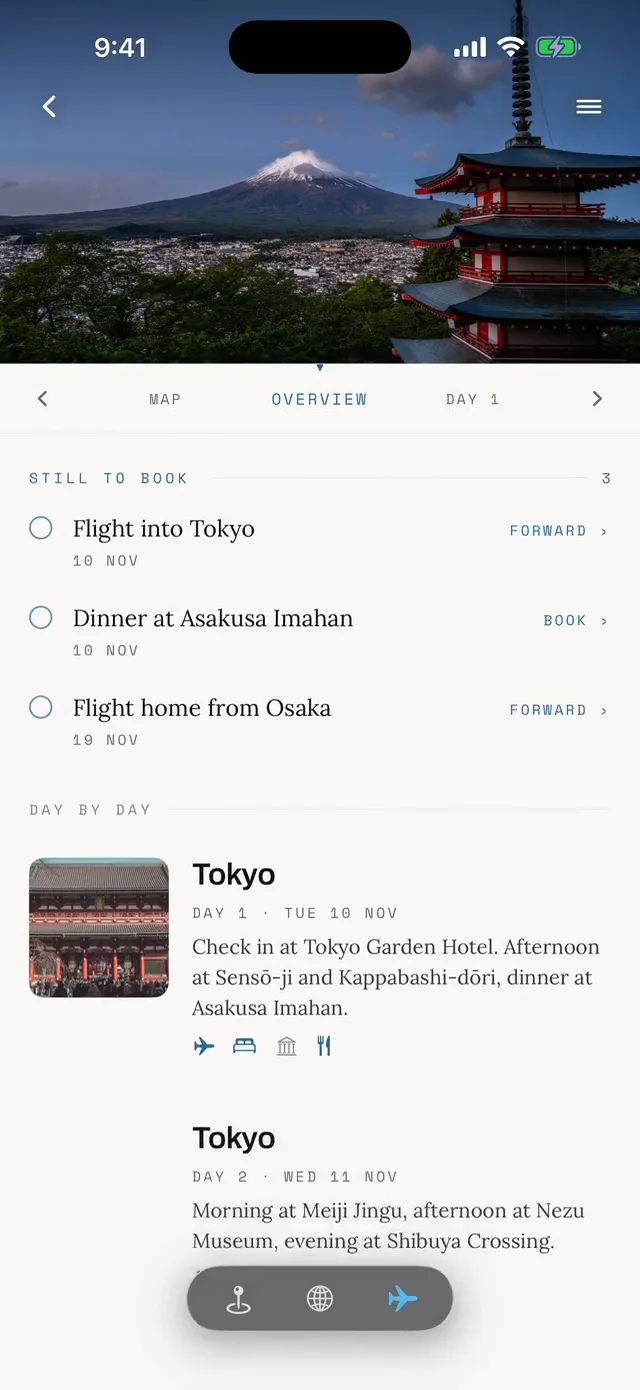

Save Cathedral of Saint Tryphon Kotor to your Montenegro trip in the Meridian Dispatch app and build the day around it, with the best of Kotor pinned on one map.
Download on the App StoreLast updated