Things to do
8-
Hassilabied
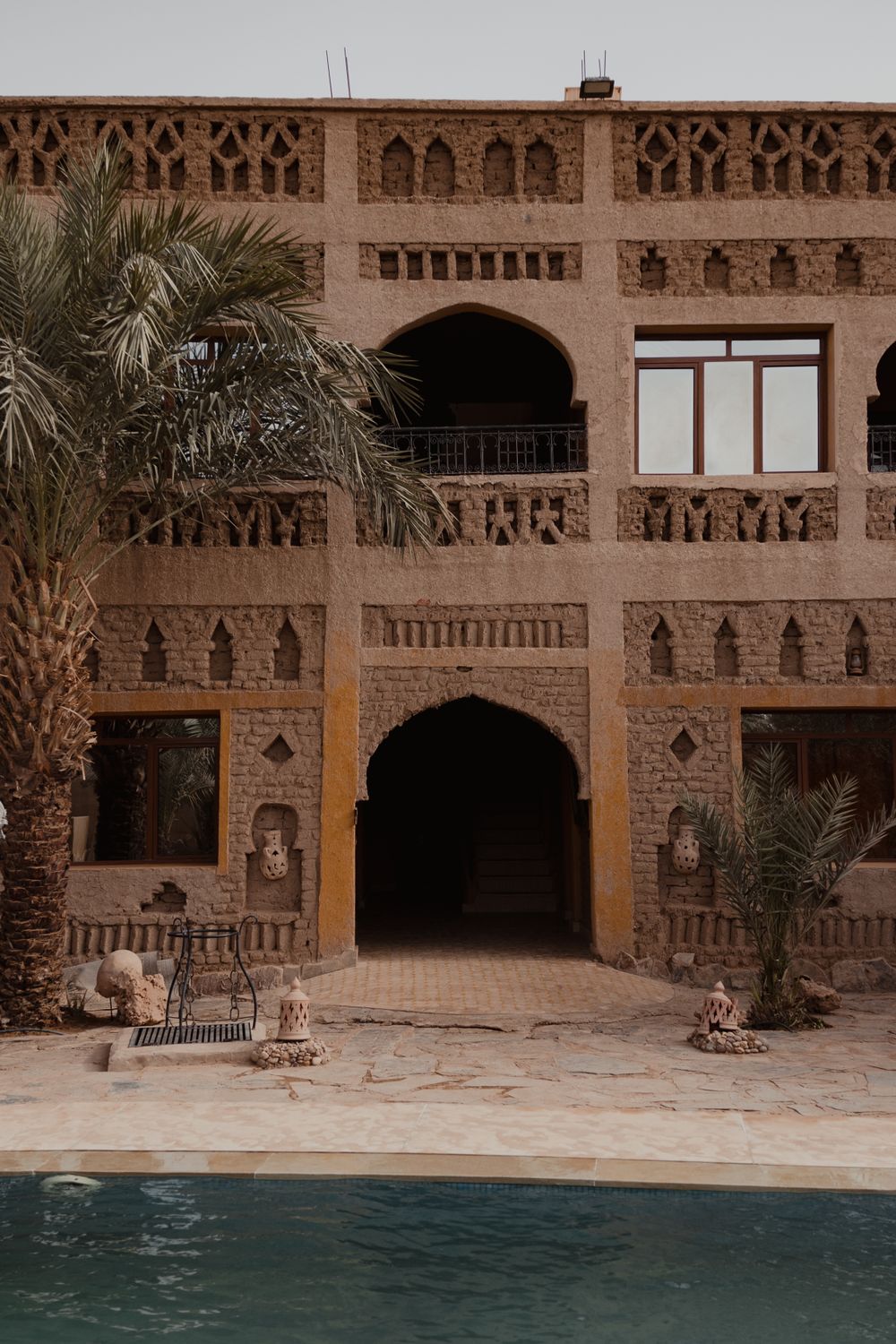
Earth houses and guesthouses line the western foot of the dunes in this village north of Merzouga, with the sand starting at the back walls. Camel trains for the evening camps leave from here as well. A short climb onto the first ridge at dawn shows the light crossing the erg, and the village is quiet once the convoys have gone.
-
Dayet Srij
Seasonal water fills this shallow lake west of Merzouga after rain, drawing flamingos and wading birds in good years. In dry years the bed turns to cracked clay and the lake vanishes from view. A track from the village reaches the shore, and early morning is the time for birds and still water.
-
Erfoud
Fossil workshops line the roadside in this town north of the dunes, cutting and polishing black marble shot through with marine creatures that lived when the Sahara was seabed. Quarries in the hills nearby can be visited. A date festival takes over the town in October, and the fuel and cash machines here are the last before the sand.
-
Erg Chebbi
Wind built this sea of orange sand into ridges that rise well above the stony plain around them, the tallest of them near the western edge. Camel trains leave in late afternoon for camps set between the dunes, returning after sunrise. Nights turn cold from November onward, and blown sand gets into cameras and bags.
-
Gara Medouar
A horseshoe of dark limestone cliffs rises from the stony plain northwest of Merzouga, a natural ring film crews have used as a set. Four wheel drive tours reach it on desert tracks, usually combined with nomad camps and fossil sites. A footpath climbs to the rim for a view over the hammada, with no shade on the way up.
-
Khamlia
Gnaoua musicians descended from sub-Saharan communities live in this small village south of the dunes, where daily sessions of drums, castanets and call and response are held in a plain concrete hall. Sessions last around an hour and run on request as much as on schedule. Tea is served, and a contribution is expected.
-
Rissani Souk
Three days a week the market fills with dates, livestock and hardware, and a donkey park handles the traffic at the gate. Medfouna, a stuffed flatbread baked in ash, is the thing to eat in the covered food section. The town was the cradle of the ruling Alaouite dynasty, and a mausoleum to its founder stands nearby.
-
Sijilmasa
Low earth mounds and broken walls outside Rissani mark the site of a medieval caravan city that traded gold and salt across the Sahara. Excavations have uncovered parts of a mosque and houses, though little stands above knee height. The site is open ground, and a guide from Rissani explains what the mounds were.