-
Charlottenburg Palace
Landmark · 3 hr
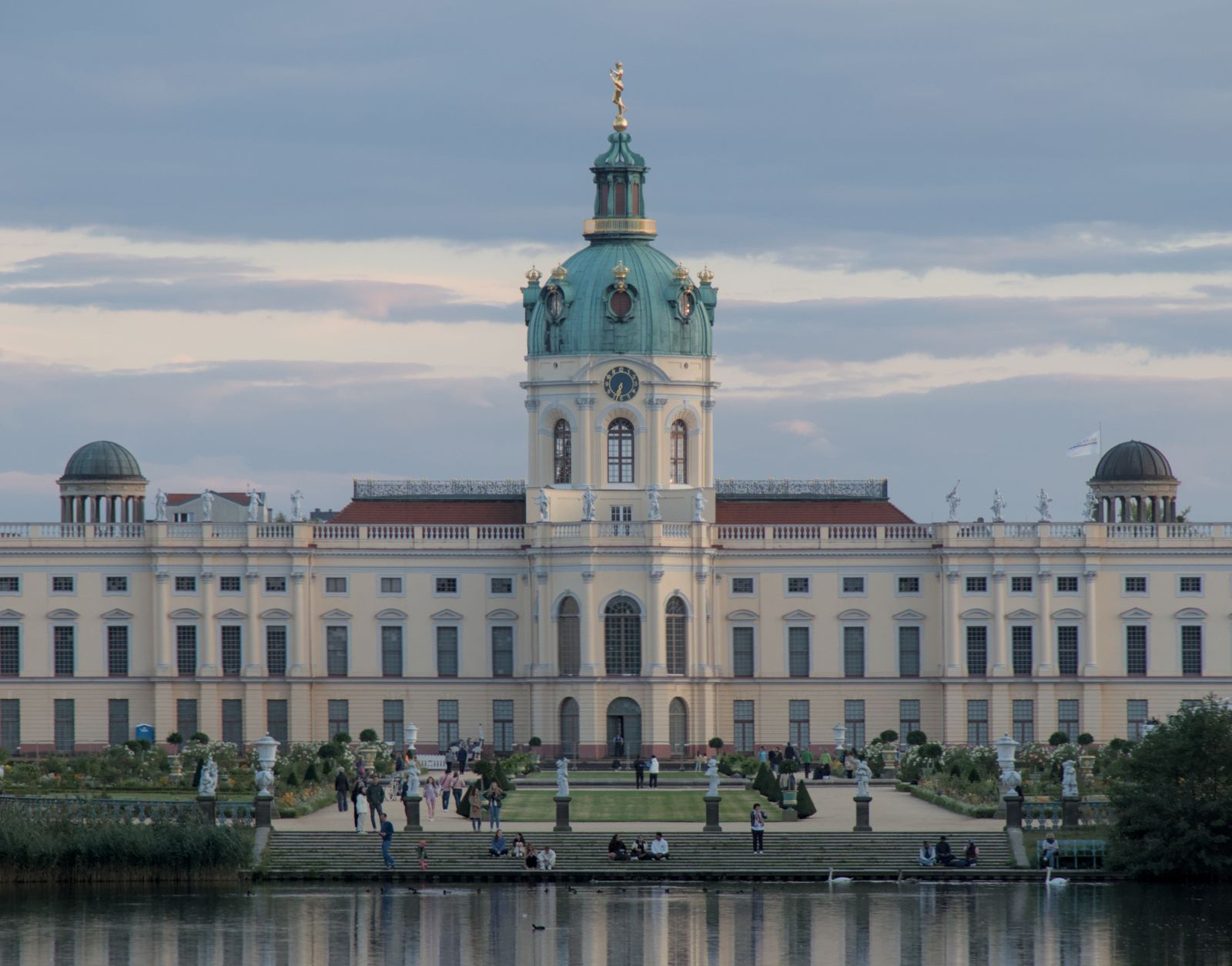
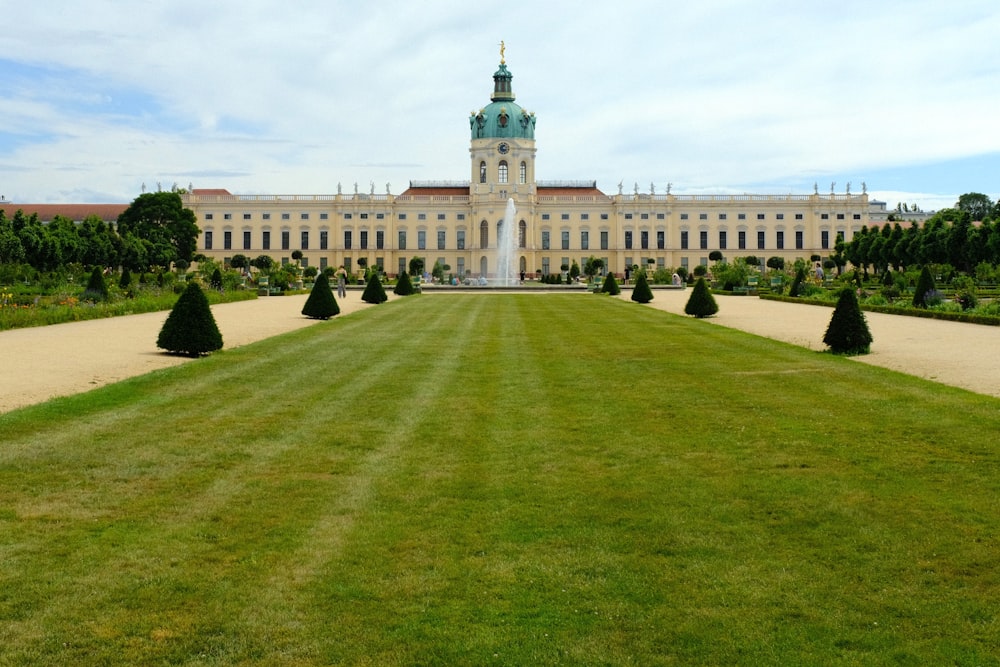
Berlin's largest palace ensemble splits into the Old Palace and the New Wing, seen on a self-guided visit or on a tour in German or English. Last admission is half an hour before closing. Out in the gardens, Queen Luise's mausoleum and Schinkel's New Pavilion stand along the paths, so leave time for a walk after the rooms.
-
Checkpoint Charlie
Landmark · 30 min
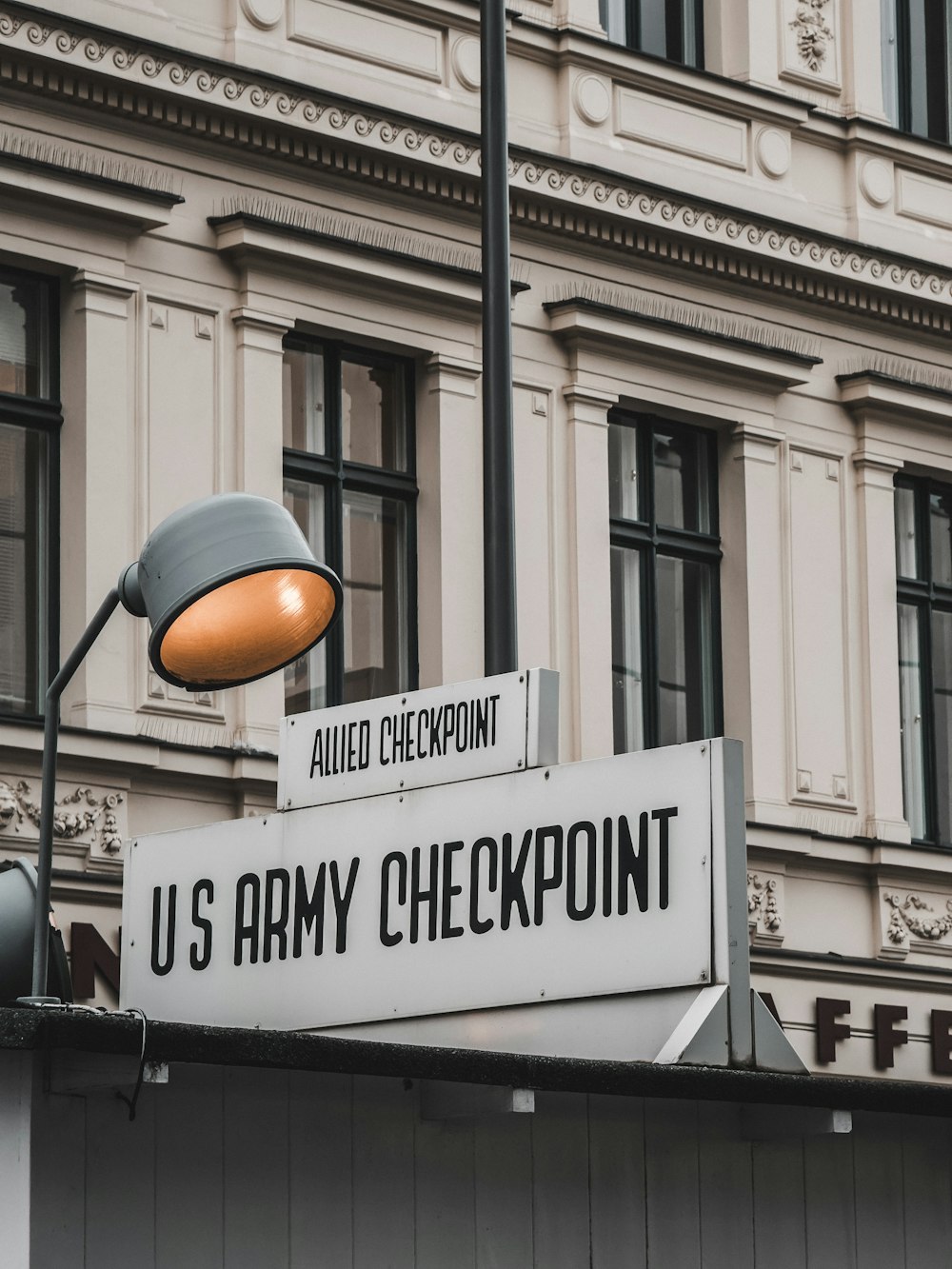
On the corner of Friedrichstraße and Zimmerstraße, a hut, a barrier, a flag and sandbags copy the Cold War border crossing that stood on this spot. The replica stands on an open street corner with no ticket, and it works as a quick photo stop on a walk along Friedrichstraße between Mitte and Kreuzberg.
-
Gendarmenmarkt
Neighborhood · 30 min
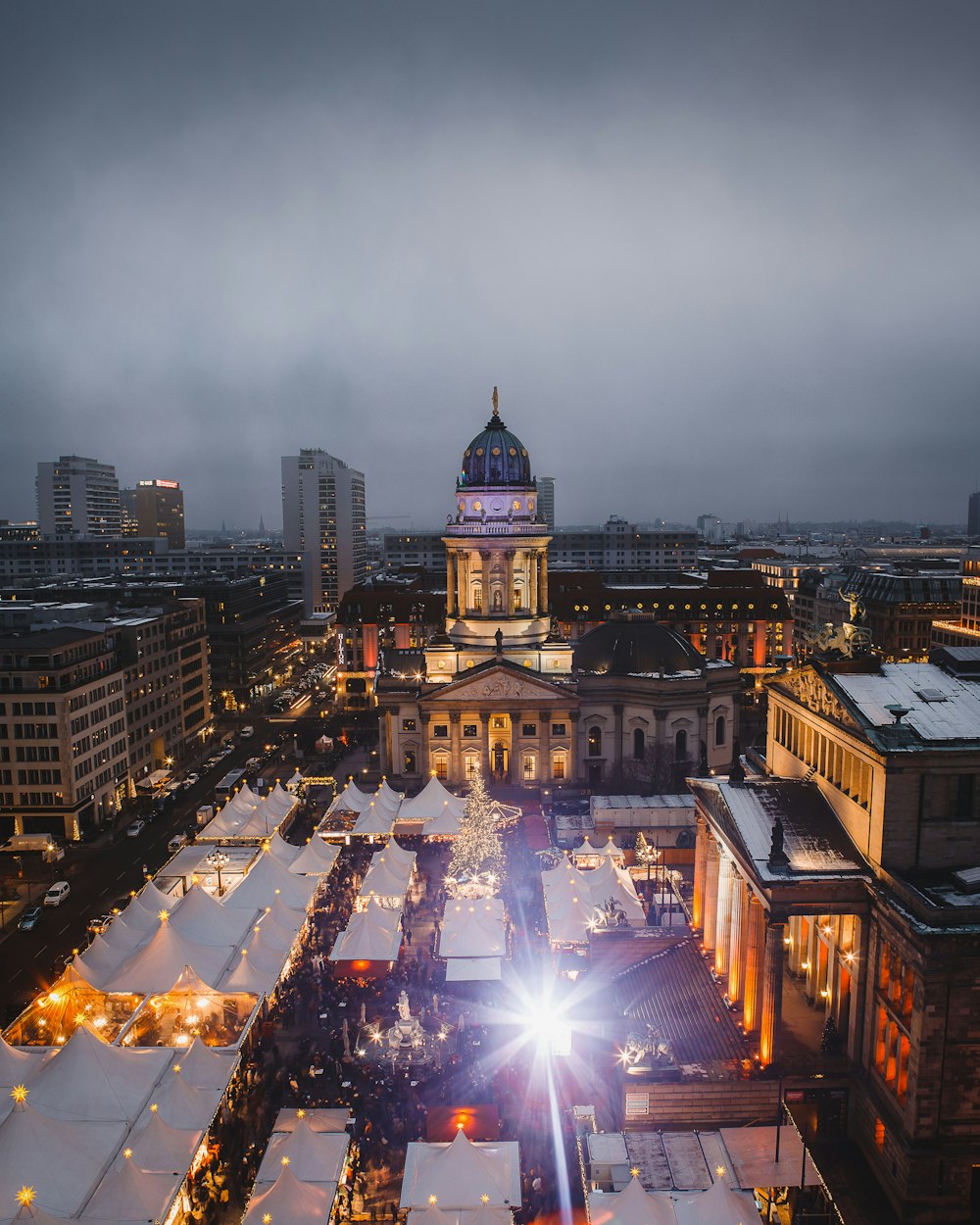
The Konzerthaus and two church buildings with towers stand together on Gendarmenmarkt, a square in Mitte. Around two years of renovation have left it fully barrier-free, with level paving for wheelchairs and pushchairs. The square is open to walk across with no ticket, and the Konzerthaus and both churches face onto it.
-
Kaiser Wilhelm Memorial Church
Cathedral · 30 min
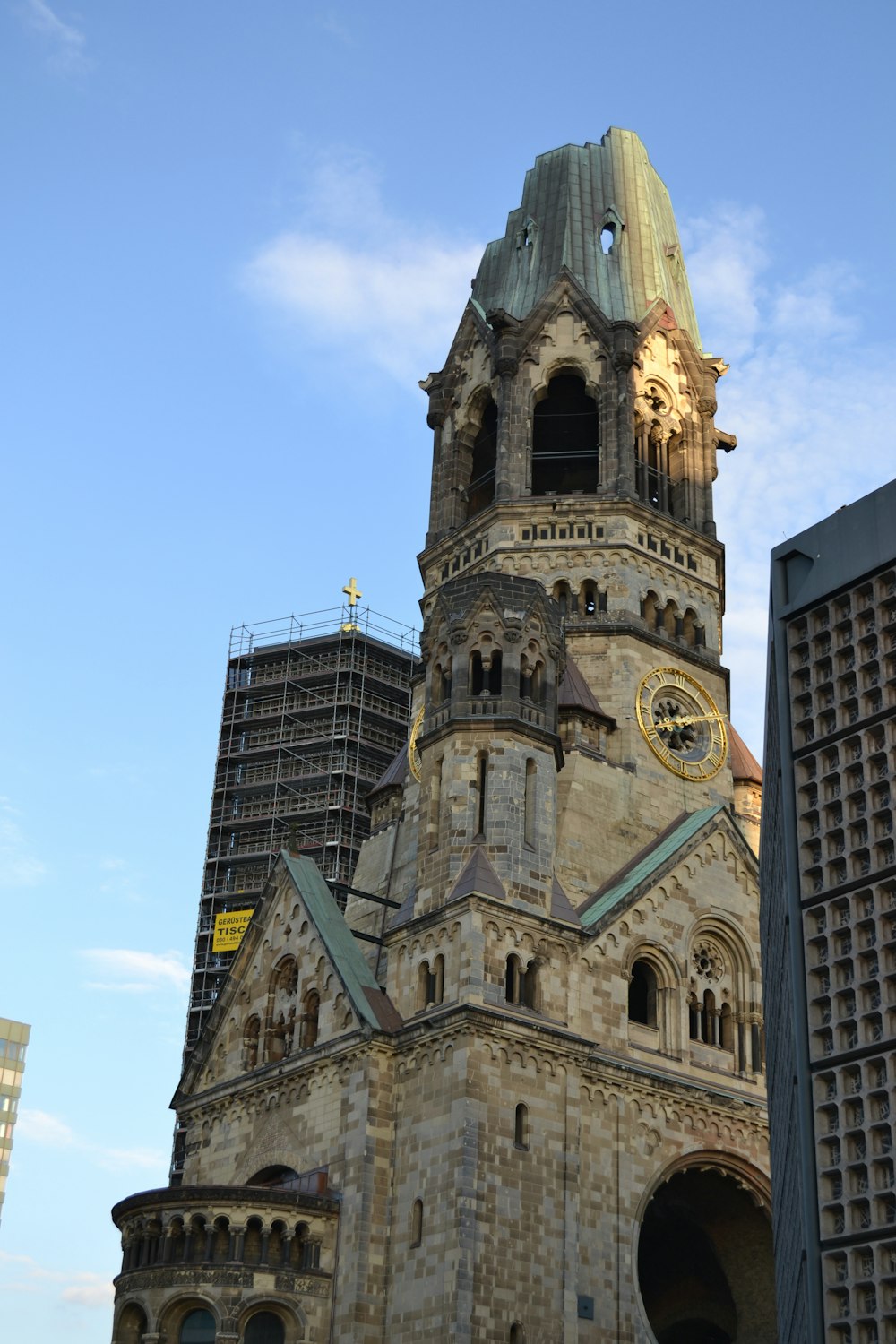
Among the shopping centres of City West on Breitscheidplatz, the ruin of a church destroyed in the war stands beside the modern church built next to it. Both can be seen in one short visit. The Kurfürstendamm runs past the square, so the church sits on any walk along it.
-
Potsdamer Platz
Neighborhood · 30 min
Restaurants, cinemas, theatres and shopping centres fill Potsdamer Platz, a district of modern high-rises on ground that lay empty with the Wall running through it until 1989. The U-Bahn and S-Bahn station here is also the stop for the Gemäldegalerie. The Topographie des Terrors is a short walk on, from the same station.
-
Tiergarten
Park · 1.5 hr
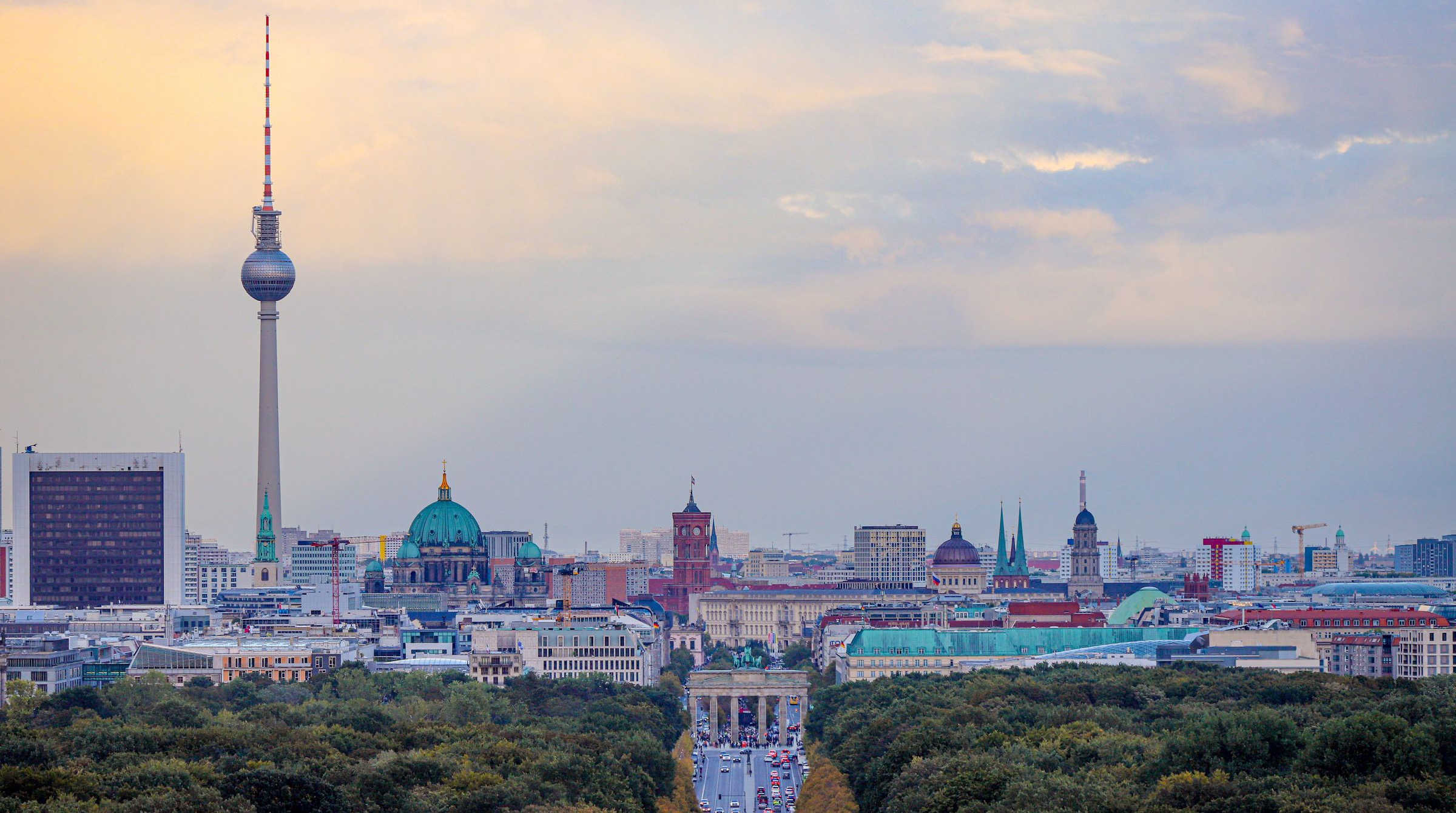
Woods, lawns and paths cover 210 hectares of the Tiergarten, the big park that opens west of the Brandenburg Gate. Paths lead through the trees to the Großer Stern roundabout and the Victory Column at its centre. The Reichstag sits on the park's edge, so the dome and a walk under the trees fit one afternoon.
-
Alexanderplatz
Landmark · 30 min
Regional trains, the S-Bahn, the U-Bahn, trams and buses all meet at Alexanderplatz, which makes it the main change in the east of the centre. The square itself is a pedestrian zone, busy day and night. Trams fan out from here across the former East, and the U5 runs out towards the Stasimuseum.
-
Berliner Dom
Cathedral · 1.5 hr
Four towers, a golden cross and a dome almost 100 metres high make Berlin Cathedral visible from far across the centre. The dome visit has a last admission at 5 pm, so the climb comes earlier in a Museum Island day. The cathedral is a short walk from the Altes Museum and the Lustgarten entrance.
-
Berliner Fernsehturm
Tower · 1.5 hr
From the observation deck of the TV Tower, the view runs 360 degrees over the Berlin skyline. Tickets are bound to a time slot, can be booked up to 90 days ahead and admit visitors only during that slot, with a short grace period. An online ticket avoids the ticket desk, though not the admission line.
-
East Side Gallery
Landmark · 1 hr
More than a hundred artists painted 1.3 kilometres of the former border wall after it fell, and the result is an open-air gallery on the Spree in Friedrichshain that stays open at all hours. The visitor centre on Mühlenstraße is the meeting point for guided tours and opens daily from 10 am to 5 pm.
-
Jüdisches Museum
Museum · 2.5 hr
The U1 and the U6 both run to Hallesches Tor, a short walk from the Jewish Museum Berlin. Reserving a time-slot ticket online keeps the wait at the door short. The museum closes on Mondays, and on Saturday 14 November 2026 as well, so a visit that week needs another day.
-
Tempelhofer Feld
Park · 2 hr
Between Kreuzberg, Neukölln and Tempelhof, the former airfield is now one of the world's largest inner-city parks, open ground of grass and old runway. Three main entrances and seven side entrances lead in from Tempelhofer Damm, Columbiadamm and Oderstraße. Pick the gate nearest the day's base, since the far side is a long walk across.
-
Berlin Wall Memorial
Monument · 1.5 hr
Along Bernauer Straße, a 70-metre stretch of the original Wall still stands with its watchtower, set in an open-air exhibition. The outdoor grounds are open daily from 8 am to 10 pm. A five-storey observation tower at the Documentation Center looks down on the preserved border fortifications, and the centre is closed on Mondays.
-
Brandenburg Gate
Monument · 30 min
Two rows of six Doric columns hold up the Brandenburg Gate, a 26-metre stone gate that was Berlin's first Greek revival building. There is no ticket and no barrier, so a walk through it takes a few minutes. The Reichstag and the Tiergarten are both a short walk away.
-
German Historical Museum
Museum · 2.5 hr
Only the Pei Building is open at the German Historical Museum while the Zeughaus and its permanent exhibition on German history are closed for renovation. Temporary exhibitions run there daily from 10 am to 6 pm. With the long history display off view, the visit is to whichever temporary exhibition is showing.
-
Museum Island
Museum · 5 hr
Five state museums share this island in the Spree in Mitte, and one Museumsinsel-Ticket covers every exhibition on it for a day. Online tickets go on sale up to four weeks ahead, and large special exhibitions may run on time-slot tickets. At one and a half to two hours a museum, two or three fill a day.
-
Reichstag Building
Landmark · 1.5 hr
From inside the glass dome on the Reichstag, the view runs down into the plenary hall where the Bundestag sits. The dome is free but needs registration in advance, and every visitor aged 16 or over shows the original photo ID used to register. Report to the Visitors' Service on Scheidemannstraße at least 15 minutes before the slot.
-
Alte Nationalgalerie
Gallery · 1.5 hr
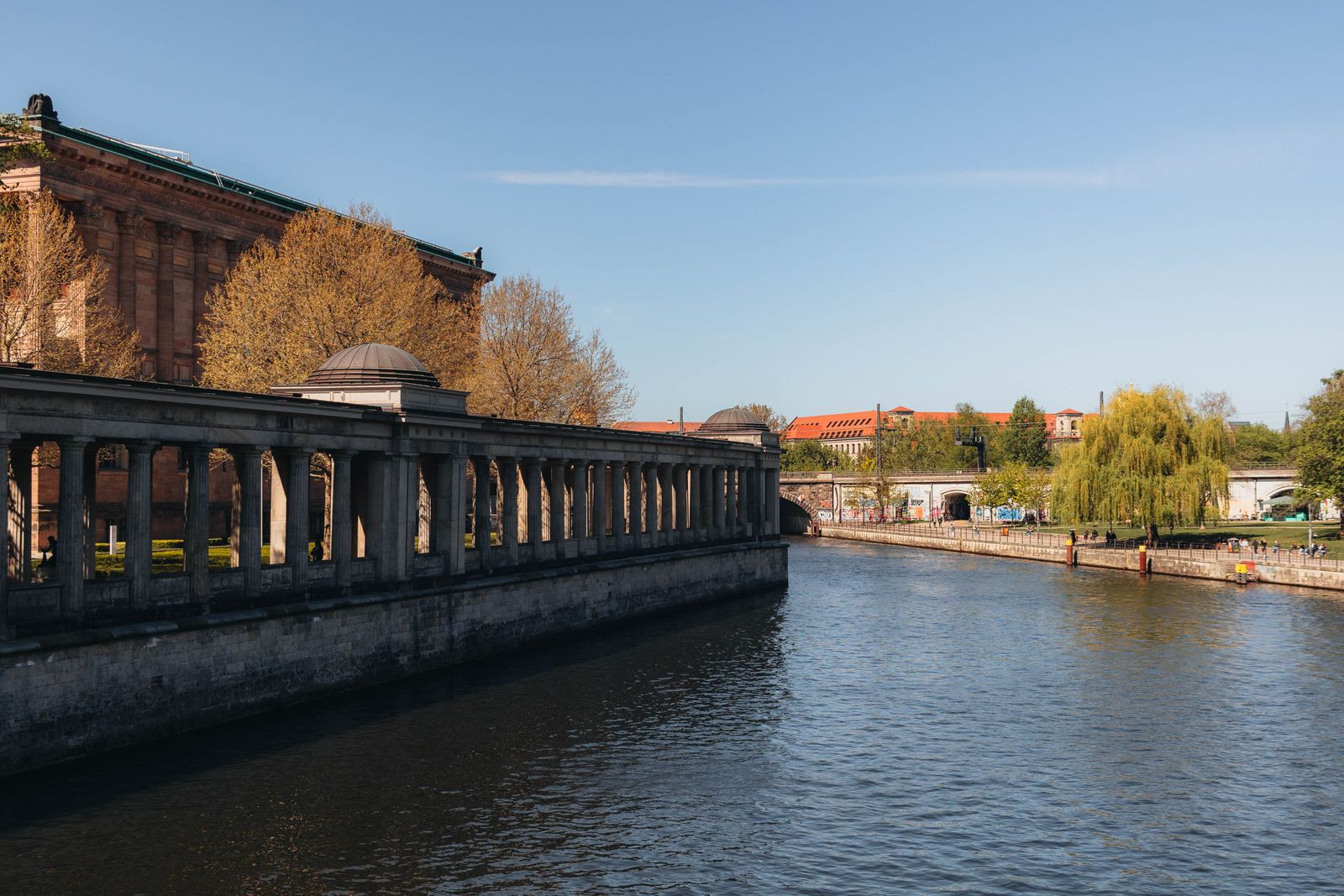
Impressionists, symbolists and post-impressionists from France and Germany hang in this nineteenth-century painting gallery on Museum Island. Its current display, Across Epochs, runs through the main rooms. Hours are 10 am to 6 pm, Tuesday to Sunday, and tickets can be booked online ahead of the visit.
-
Altes Museum
Museum · 1.5 hr
Greek, Etruscan and Roman art fills the Ancient Worlds display, entered from Am Lustgarten on Museum Island. It opens Tuesday to Sunday and closes on Mondays, with weekend hours running to 6 pm. Booking a day ticket online avoids the ticket counter, and trams stop at Am Kupfergraben and Hackescher Markt.
-
Berliner Philharmonie
Landmark · 2 hr
The Philharmonie is the concert hall of the Berliner Philharmoniker, and guided tours of the building show its architecture on days between performances. An evening concert by the orchestra is the other way inside. The Philharmonie bus stop also serves the Gemäldegalerie, so the gallery and the concert hall sit within a short walk of each other.
-
Bode-Museum
Museum · 1.5 hr
Entered from the Monbijoubrücke side of Am Kupfergraben, the Bode-Museum fills 61 halls with sculpture and Byzantine art. The interior foyer is free to walk into; the galleries need a ticket. Thursday hours run to 8 pm, which leaves an evening slot for one museum after a day elsewhere.
-
Denkmal für die ermordeten Juden Europas
Monument · 30 min
Peter Eisenman's Field of Stelae, a field of concrete blocks near the Brandenburg Gate, is open 24 hours a day, and the underground Information Centre beneath it is free to enter. A free guided tour in English runs on the first Sunday of each month at 2 pm. Walking in among the stelae takes a few minutes; the Information Centre takes longer.
-
Deutsches Technikmuseum
Museum · 3 hr
Berlin's technology museum spreads its permanent exhibitions, Rail Transport among them, across a large site by Anhalter Bahnhof on the S1, S2, S25 and S26. Weekend hours run from 10 am to 6 pm. The Photo Technology, Film Technology, Historical Brewery and Chemicals and Pharmacy rooms are closed for renovation until further notice.
-
Gedenkstätte Berlin-Hohenschönhausen
Monument · 2 hr
The former Stasi remand prison on Genslerstraße is now a memorial, and its buildings can only be seen on a guided tour. English tours run daily at 10.40 am, 12.40 pm and 2.40 pm, and the memorial is open every day. There is no way to walk the prison alone, so time the trip to one of those tours.
-
Gedenkstätte und Museum Sachsenhausen
Monument · 5 hr
The memorial at the former concentration camp in Oranienburg is free to enter, as are its museums, and an audio guide is the simplest way round for an independent visit. The S1 from Friedrichstraße reaches Oranienburg in about 45 minutes, then it is a walk of about 20 minutes or bus 804. Plan four and a half to six hours door to door.
-
Gemäldegalerie
Gallery · 2.5 hr
European painting from the 13th to the 18th century hangs in the Gemäldegalerie at the Kulturforum, a short walk from Potsdamer Platz station. A current exhibition, Surprising Encounters from Botticelli to Lempicka, runs alongside the permanent rooms. The gallery opens Tuesday to Sunday.
-
Hackesche Höfe
Landmark · 30 min
Eight linked courtyards run back from Rosenthaler Straße, with shops behind the street fronts. The courtyards open daily from 9 am to 10 pm, though the shops keep their own hours. S-Bahn, U-Bahn, trams and buses all stop at Hackescher Markt, a few steps from the entrance.
-
Hamburger Bahnhof
Gallery · 2 hr
Contemporary art fills the Hamburger Bahnhof, one of the Berlin state museums. Anyone up to the age of 18 gets in free. A day ticket is valid at any time during opening hours on its date, so there is no slot to keep and the visit can start whenever suits.
-
Humboldt Forum
Museum · 2.5 hr
Exhibitions, the Video Panorama and the Sculpture Hall fill the Humboldt Forum, with the panorama and the hall reached from the Schlüter Courtyard. It is open on Mondays, when the Museum Island museums are shut, and closed on Tuesdays; hours run from 10.30 am to 6.30 pm. U Museumsinsel on the U5 is the nearest station.
-
Kurfürstendamm
Landmark · 1.5 hr
Shops line the Ku'damm, the main street of City West, from department stores to boutiques, with smaller restaurants in the side streets off it. The boulevard is lit up for Christmas. The Kaiser Wilhelm Memorial Church stands on Breitscheidplatz among the shopping centres, so the ruin and the shops make one walk.
-
Markthalle Neun
Market · 1 hr
Thursday evenings bring Street Food Thursday to this historic market hall in Kreuzberg, from 5 pm to 10 pm. On other days it works as a market, with food made on site and craft and culture events alongside. Bus 140 stops at Wrangelstraße, close to the hall.
-
Mauerpark
Park · 2 hr
On Sundays the strip of the former Wall between Prenzlauer Berg and Wedding becomes a flea market of private sellers, open 10 am to 6 pm and free to walk round. From about 3 pm, April to October and only in dry weather, open-air karaoke runs in the stone amphitheatre. U8 Bernauer Straße is about five minutes away on foot.
-
Museum für Naturkunde
Museum · 2 hr
Dinosaurs from the Triassic, Jurassic and Cretaceous lead the displays at the natural history museum on Invalidenstraße, and Germany's largest mineral collection is on show as well. The museum's other halls cover the cosmos, the solar system and how species evolve. Entry is ticketed.
-
Neue Nationalgalerie
Gallery · 1.5 hr
Entry to the Neue Nationalgalerie is free on the first Thursday of each month from 4 to 8 pm. The gallery stands at the Kulturforum, where the Gemäldegalerie also hangs, so the two share a trip. Large special exhibitions may run on time-slot tickets, and those are worth booking ahead.
-
Neues Museum
Museum · 2 hr
Tickets and the coat check for the Neues Museum are in the James-Simon-Galerie, the shared entrance building on Museum Island. The bust of Nefertiti is the piece most visits are built on, among the Egyptian and prehistoric collections. U-Bahn Museumsinsel and S-Bahn Friedrichstraße or Hackescher Markt are the nearest stations, and a timed ticket bought online fixes the entry.
-
Pfaueninsel
Island · 3 hr
A small ferry crosses to Peacock Island, an island park with a small summer palace. Bus 218 runs from S Wannsee to the Pfaueninsel stop, though some trips use a historic bus that is not step-free. The summer ferry runs daily from 10 am, three times an hour, and in summer its last crossing to the island leaves at 5.15 pm.
-
Schlachtensee
Lake · 2 hr
Out in the south-west, Schlachtensee is ringed by a seven-kilometre boardwalk, an easy loop for a walk or a run. The S-Bahn stops at the station of the same name on the south shore, beside the Paul Ernst Park. Krumme Lanke, another of the south-western lakes, makes a second stop on the same trip.
-
Schloss Sanssouci
Palace · 5 hr
Frederick the Great's rococo summer palace stands at the top of a terraced park in Potsdam, an ABC-ticket ride from central Berlin. Visits go in at fixed times and the number of tickets per day is limited, so book a slot online. Plan four to five hours for the palace and the park, which is large.
-
Siegessäule
Monument · 1 hr
A spiral staircase of 285 steps climbs the Victory Column to a platform about 51 metres above the Tiergarten, under the gilded figure of Victoria. It stands on the Großer Stern roundabout in the middle of the park. The column has no lift, so the platform is not wheelchair accessible, and there is no toilet on site.
-
Stasimuseum
Museum · 2 hr
Haus 1 of the former Stasi headquarters now holds the Stasimuseum, near Magdalenenstraße station. It is open every day, from 10 am on weekdays and from 11 am at weekends and on public holidays. Take the U5 from Alexanderplatz and use the Ruschestraße exit; tickets are sold at the desk or online.
-
Teufelsberg
Viewpoint · 2 hr
Built on a hill of war rubble in the Grunewald, the former Cold War listening station stands 114 metres up, with a view across the city east to the TV Tower and the cathedral. The site is ticketed, and its exhibitions are included in the admission. Pair it with a walk in the surrounding Grunewald woods.
-
Topographie des Terrors
Museum · 1.5 hr
The documentation centre on the Nazi regime's terror opens daily from 10 am to 8 pm, later than the Museum Island museums, so it fits the end of a sightseeing day. Take the S-Bahn to Anhalter Bahnhof or Potsdamer Platz and walk from there. Checkpoint Charlie lies along the same walk.
-
Tränenpalast
Museum · 1 hr
Beside Friedrichstraße station on Reichstagufer, the Tränenpalast was a checkpoint hall between East and West Berlin and now holds an exhibition on the border crossing. Entry is free, and free guided visits last about an hour. Weekday opening is at 9 am, an hour earlier than at weekends.
-
Pergamonmuseum
Museum · 2.5 hr
Closed since October 2023 for construction work, the Pergamonmuseum on Museum Island reopens in part on 4 June 2027. Individual tickets are due on sale about six months before the reopening. Until then, the Altes Museum on the same island shows Greek, Etruscan and Roman art, and the island's other museums stay open.