Things to do
9-
Alte Brücke
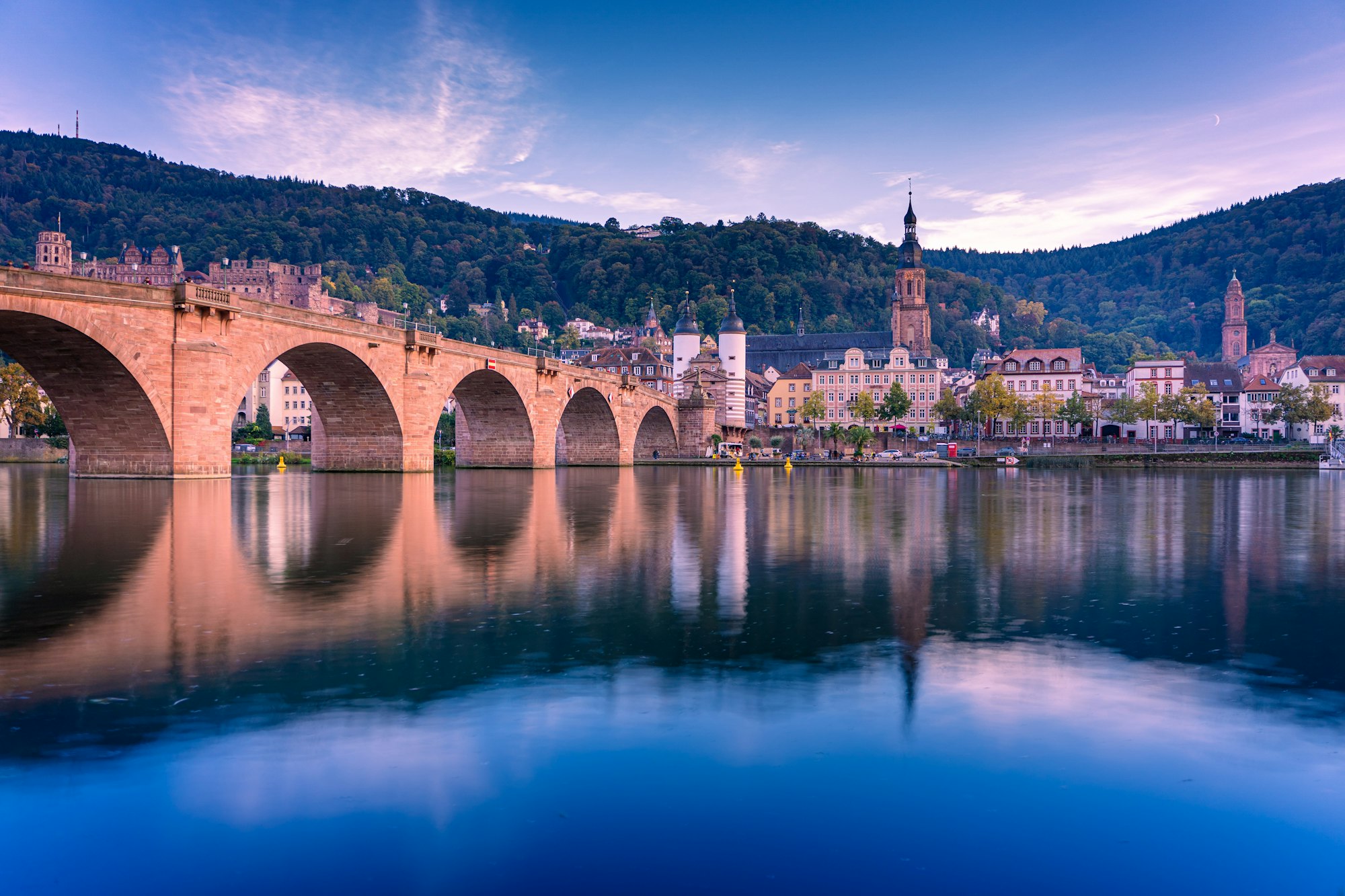
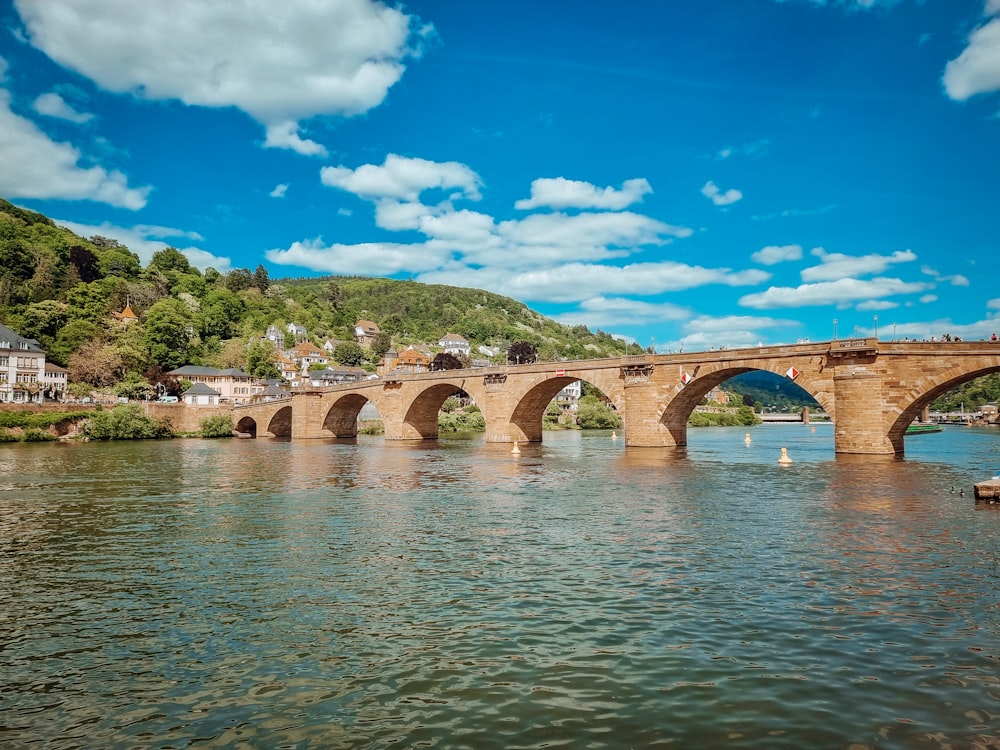
Nine sandstone arches of 1788, the ninth bridge on the site after eight wooden ones went in floods and ice, dynamited by the retreating German army in 1945 and rebuilt by the town by 1947. A brass monkey holding a mirror stands at the town end, a copy of a medieval figure warning the crosser to look at themselves.
-
Universitätsbibliothek Heidelberg
A red sandstone library of 1905 whose small museum shows the Codex Manesse, the great illuminated collection of Middle High German love poetry, returned from Paris in 1888 after three centuries away. Facsimile pages are on permanent display and the original appears rarely. Entry to the exhibition room is free.
-
Hauptstraße
A pedestrian street running one and a half kilometres through the old town, among the longest in Europe, from the Bismarckplatz to the corn market under the castle. Baroque fronts, student bars in the side lanes and the two old inns where Mark Twain and half the nineteenth century drank. It is busy all day.
-
Heidelberger Schloss
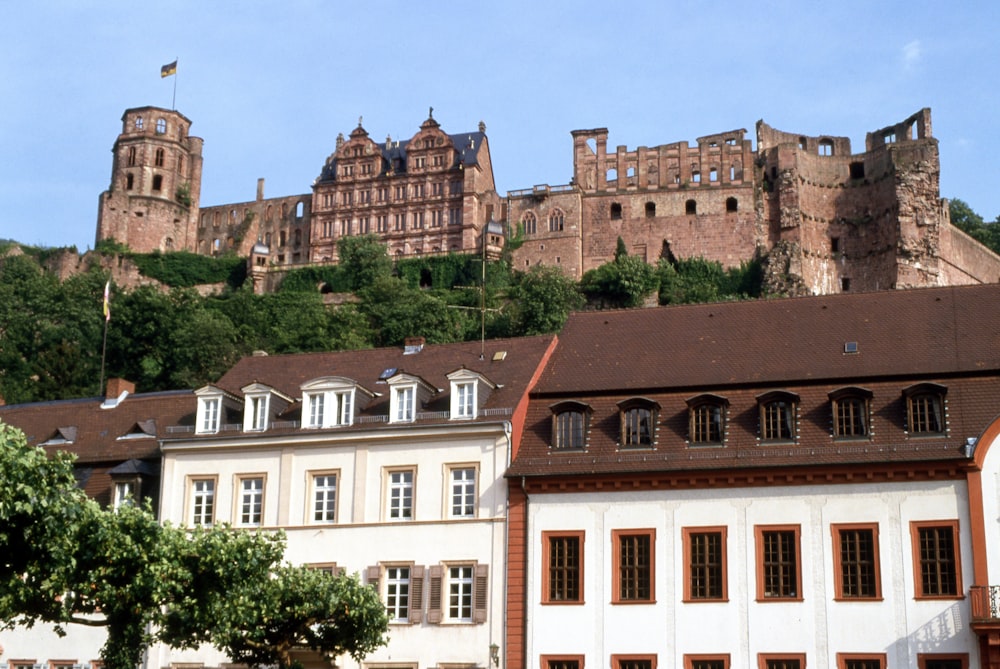
Red sandstone on the Königstuhl slope, built over four centuries, blown up by the French in 1689 and 1693 and hit by lightning in 1764, after which rebuilding was abandoned. A blown tower lies split open on the terrace. The cellar holds a cask of about two hundred and twenty thousand litres, filled three times in its life.
-
Heiliggeistkirche
The Gothic church on the market square, which held the Palatine library until it was carried off to the Vatican in 1622 as a war prize, where most of it remains. Catholics and Protestants shared it behind a dividing wall for two centuries until 1936. The gallery under the roof is open for the view.
-
Karzer
The university lock-up, used from 1778 to 1914 for students who fought duels, released pigs into lectures or insulted the watch, and a sentence here became a point of pride. They covered the walls and ceilings with silhouettes, verses and the dates of their terms. Two small rooms, ticketed with the old university museum.
-
Königstuhl
The wooded hill behind the castle at five hundred and sixty-eight metres, reached by a funicular that runs in two sections, the upper one using wooden cars from 1907 that are among the oldest still in service. A falconry, a fairy-tale park and paths into the Odenwald sit at the top.
-
Kurpfälzisches Museum
In a baroque townhouse on the main street, holding the cast of the Heidelberg jaw, an early human find of about six hundred thousand years old from a quarry nearby, and Riemenschneider's carved altar of the twelve apostles. Upstairs is Palatine painting and the romantic views that sold the ruin to the world.
-
Philosophenweg
A lane on the sunny north bank, climbing through vineyards and gardens where lemon and fig survive the winter, with the castle and the old roofs laid out opposite. Students and professors walked it to think, which is where the name comes from. The climb from the Schlangenweg steps is steep and takes twenty minutes.