Things to do
14-
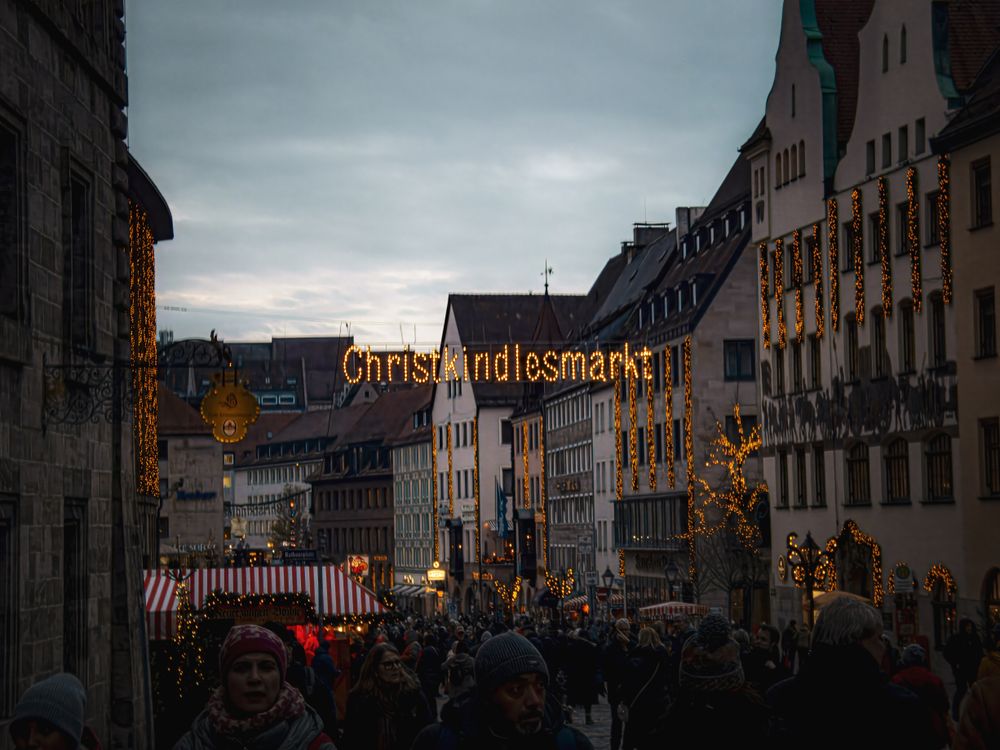
Nuremberg Christkindlesmarkt
Make it two visits: a midweek morning, when you have room to stop at the stalls, and an evening for the lights, when the lanes are packed. On 27 November, be in the Hauptmarkt by five for the opening.
View more → -
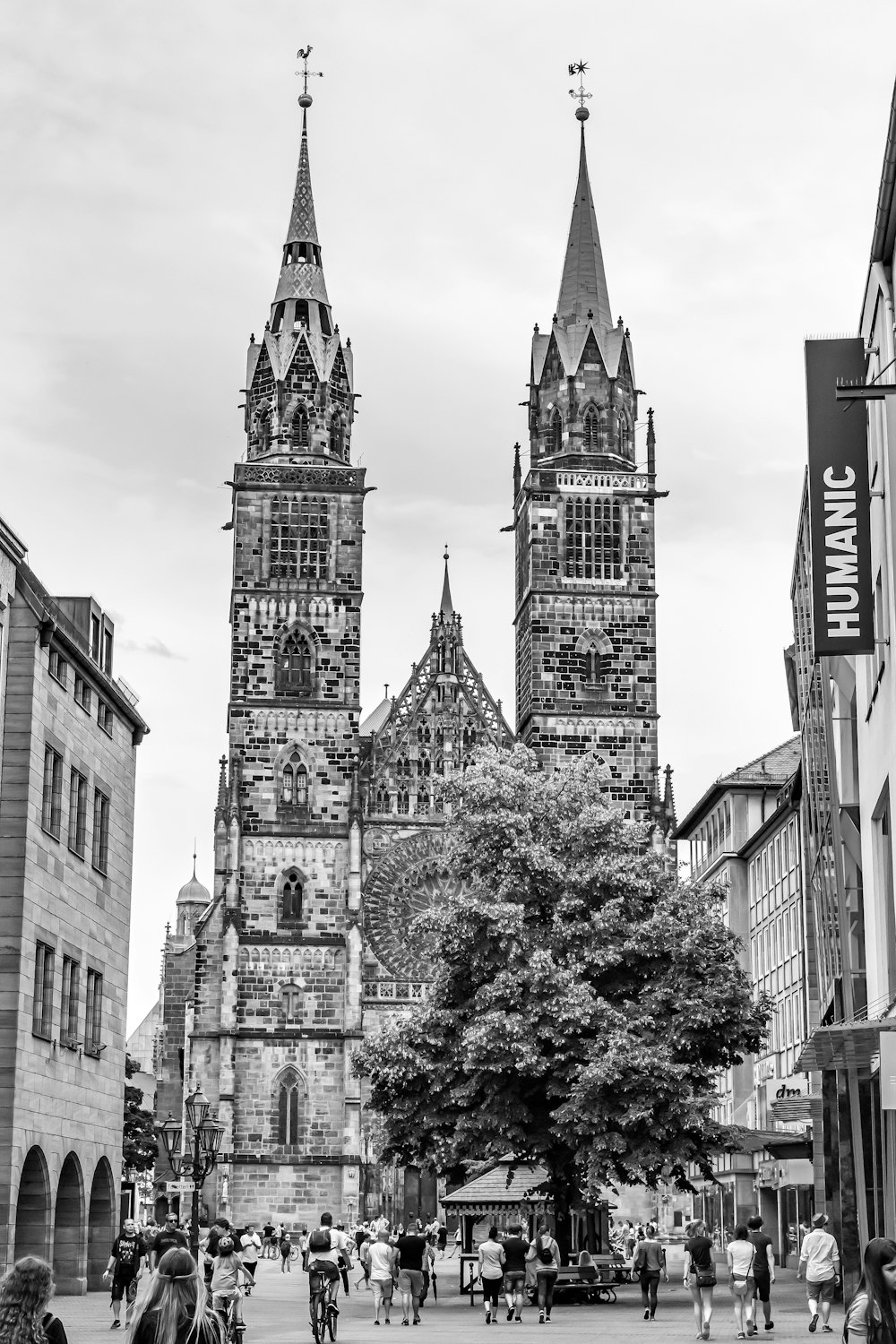
St. Lorenz
A Gothic hall church with a rose window nine metres across, holding Veit Stoss's Annunciation hanging in the choir on ropes and Adam Kraft's stone tabernacle rising twenty metres to a curl under the vault, carved so thin it bends. Both survived the war in a bunker. Free, and the light is best in the afternoon.
-
Albrecht-Dürer-Haus
The painter owned this half-timbered house from 1509 until his death in 1528 and it is the only artist's house of the period in northern Europe to survive. A working reconstruction of his printing press is demonstrated. Copies hang rather than originals, which are in the national museum ten minutes away.
-
Dokumentationszentrum Reichsparteitagsgelände
A glass shaft driven through the unfinished congress hall, built to hold fifty thousand and never roofed, housing an exhibition on how the rallies were staged and filmed. The Zeppelin field with its grandstand is a walk away across the grounds. The site is deliberately left decaying rather than restored or demolished.
-
Felsengänge
Cellars cut into the sandstone under the castle hill from the fourteenth century, because brewing rights required a cellar, and later linked into an air-raid shelter that also held art removed from the churches. Guided visits run hourly and the temperature underground sits near eight degrees. A brewery still uses part of it.
-
Germanisches Nationalmuseum
The largest museum of German-speaking cultural history, founded in 1852 around a Carthusian monastery, holding Behaim's globe of 1492, made before news of the Americas arrived, along with Dürer, Cranach and rooms of historic instruments. The approach runs down a street of columns carved with the articles of human rights.
-
Handwerkerhof
A walled yard of workshops beside the Königstor, built in 1971 for the city's five hundredth anniversary of Dürer's birth in a deliberately medieval manner. Pewterers, leather workers and a goldsmith trade in it. It was built as a visitor attraction in the manner of a medieval yard; the sausage stand in the corner is the genuine article.
-
Hauptmarkt
Charles IV cleared the Jewish quarter in 1349 to make this square, and the pogrom that came with it killed most of those living there, which the city now marks. A daily produce market runs on it and the Christkindlesmarkt takes it over for four weeks from late November. The clock figures perform at noon.
-
Henkersteg
The Hangman's Bridge, a footbridge over the Pegnitz at the western edge of the old town, dates from 1595. The Henkerhaus, the hangman's house at its end, is now a small museum. The crossing takes a few minutes, so fold it into an evening walk along the river.
-
Memorium Nürnberger Prozesse
Courtroom 600, where twenty-one leading Nazis were tried from November 1945, is still a working court, so it opens to visitors only when it is not sitting. The exhibition upstairs covers the trial, the defendants and the legal principles it established. Check the day before whether the room itself is accessible.
-
Nürnberger Burg
Every Holy Roman emperor between 1050 and 1571 held court in this castle on the sandstone ridge above the town. A double chapel separates ruler from retinue by floor level. The deep well is demonstrated by lowering a candle sixty metres, and the round tower gives the roofs of the whole old town.
-
Schöner Brunnen
A gilded stone spire of nineteen metres on the market square, made about 1396 and carrying forty figures of electors, prophets and heroes. The original stands in the national museum and this is a copy of 1903. A brass ring set in the railing is turned for luck, which is why it shines.
-
St. Sebald
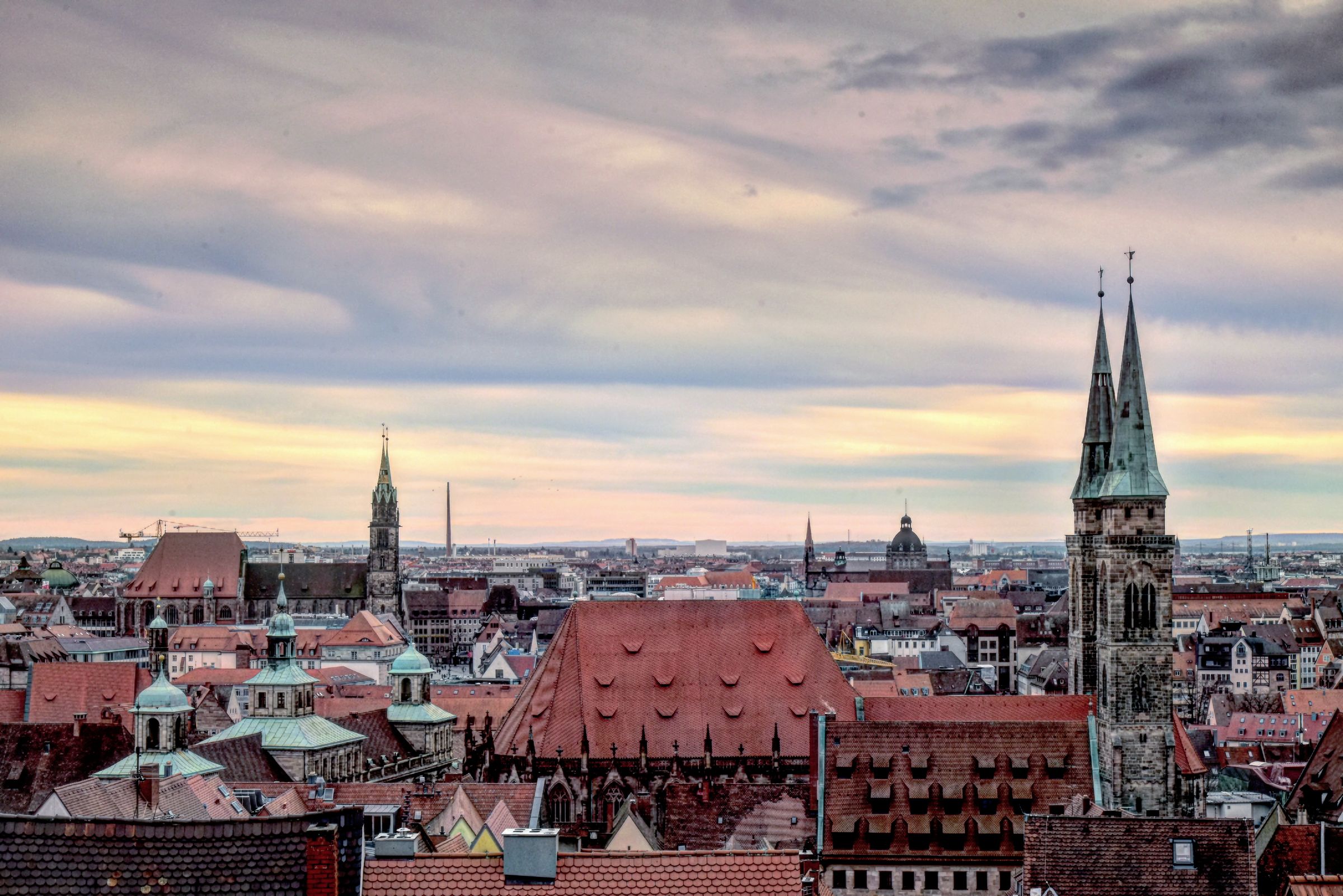
The older of the two great churches, Romanesque at the west end and Gothic at the east, where the city adopted the Reformation in 1525. Peter Vischer and his sons spent eleven years casting the bronze shrine of the city's patron saint, and put small self-portraits of themselves in working aprons on it.
-
Weißgerbergasse
A cobbled lane in the old town whose half-timbered houses were spared in the war. In Advent the houses are decorated for Christmas, and the lane makes an easy evening stroll after crossing the Henkersteg, a few minutes away.