Things to do
9-
Burg Rothenburg
An earthquake took the Hohenstaufen castle in 1356 and the ground became a public garden, laid out on the spur with the Tauber valley falling away on three sides. Only the chapel of Saint Blaise survives, now a war memorial. It is the quietest corner inside the walls and the place the sun sets from.
-
Doppelbrücke
Head down into the Tauber valley for this one. The Double Bridge crosses the river below the town, and walkers can cross on its top, but the bridge itself is seen best from the path along the valley floor. The valley paths are paved and signposted, and the climb back up to the walls is the hard part of the walk.
-
Franziskanerkirche
The oldest church in the town, consecrated in 1309, plain in the way a mendicant order required, and unusual for keeping its original rood screen dividing friars from congregation. Riemenschneider's Saint Francis altar is inside. It stands on the main street a minute from Saint James and almost nobody goes in.
-
Mittelalterliches Kriminalmuseum
A thousand years of European legal history over four floors, which sounds dry and is not: shame masks for gossips, a neck violin for quarrelling women, cages for bakers who sold short weight, and the case files that went with them. It is a serious museum about how justice was made visible in public.
-
Plönlein
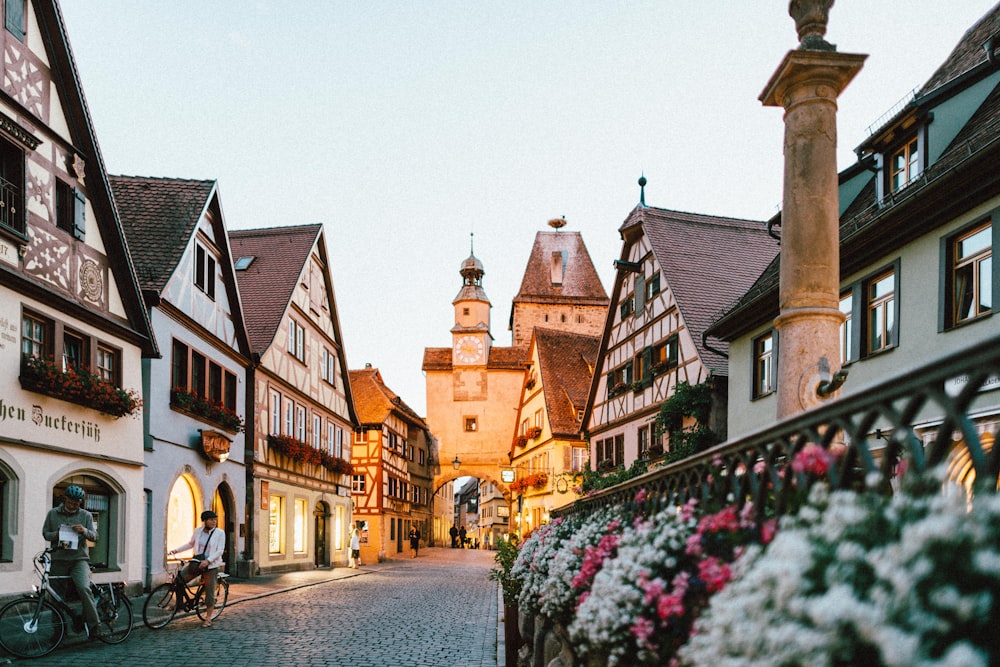
A yellow half-timbered house on a fork where one lane climbs and the other drops to a gate tower, with a second tower behind it, and the whole thing composed as if a set designer had done it. Disney copied it. The name means small square, and it is small: the crowd stands in the road.
-
Rathaus
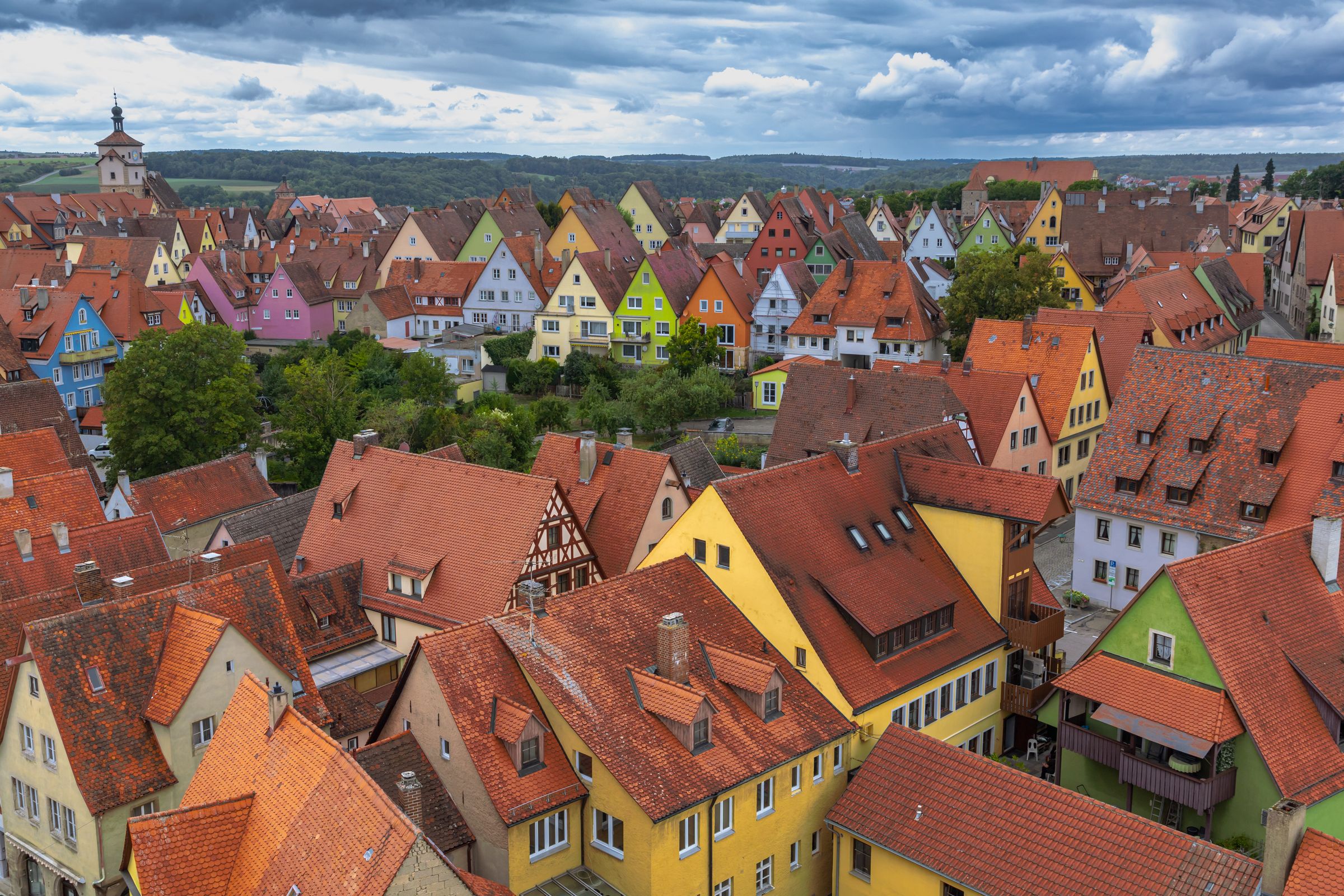
Two buildings joined at a right angle: a Gothic hall of about 1250 with a tower of sixty metres, and a Renaissance front of 1578 added after fire took the eastern half. Two hundred and twenty steep steps and a ladder reach the top of the tower, which is the view every photograph of the town is taken from.
-
Rothenburgmuseum
In a Dominican convent of 1258, with the kitchen left as it was, the oldest surviving in Germany. The town's collections follow: Jewish gravestones from the medieval community, a passion cycle of 1494 and the tankard from the Meistertrunk legend the clock figures still act out. Entered through the cloister.
-
Stadtkirche St. Jakob
A Gothic church of 1485 holding Tilman Riemenschneider's altar of the Holy Blood, carved in limewood between 1501 and 1504 and left unpainted, which was unusual and is why the faces read as they do. A rock crystal capsule above it was said to hold drops of Christ's blood, and the pilgrims paid for the building.
-
Stadtmauer
The wall circles the whole old town, with forty-two towers and six gates along it. A walkway runs along the top as a full circuit, with boards that explain the towers and gates. The Spital Bastion, at the end of the lane past the Plönlein, is one of its towers, reached by stairs.