Things to do
6-
Delphi Archaeological Museum
Beside the entrance to the ruins and essential to them. The bronze Charioteer, cast in the 470s BC to mark a victory in the games, stands in his own room, glass eyes intact and reins still in one hand. Other rooms hold a tall sphinx given by Naxos, two stiff archaic youths from Argos and the carved friezes of the Siphnian treasury.
-
Tholos of Delphi
A circular marble building of the early fourth century BC in the lower sanctuary of Athena, which pilgrims passed before reaching Apollo's. Three of its twenty outer columns were put back up in 1938, and that fragment has become the most photographed image of Delphi. Its purpose is unknown. The precinct lies below the main road, is free to enter and is often deserted.
-
Athenian Treasury
A small Doric building like a miniature temple, halfway up the Sacred Way, put up by Athens with spoils from the victory at Marathon. It was reassembled from its own fallen blocks in 1906, and is the only treasury standing to roof height. The walls are covered in inscriptions, among them two hymns to Apollo with musical notation, now kept in the museum.
-
Castalian Spring
In the ravine between the two great cliffs that overhang the site, a spring where every pilgrim, priest and the oracle herself washed before entering the sanctuary. Two fountain houses survive, one archaic beside the road and a later one cut into the rock face with niches for offerings. Rockfall has closed the upper basin for years. Water still runs at the roadside.
-
Hosios Loukas
A walled monastery on a quiet slope of Mount Helicon, about forty minutes by road from Delphi and the usual second stop on the drive from Athens. Its main church, built around 1011, keeps gold mosaics of the first rank: a Nativity, a Baptism, saints in the vaults. The hermit Luke, who foretold the recapture of Crete, lies in the crypt. UNESCO lists it jointly with Daphni and Nea Moni.
-
Temple of Apollo
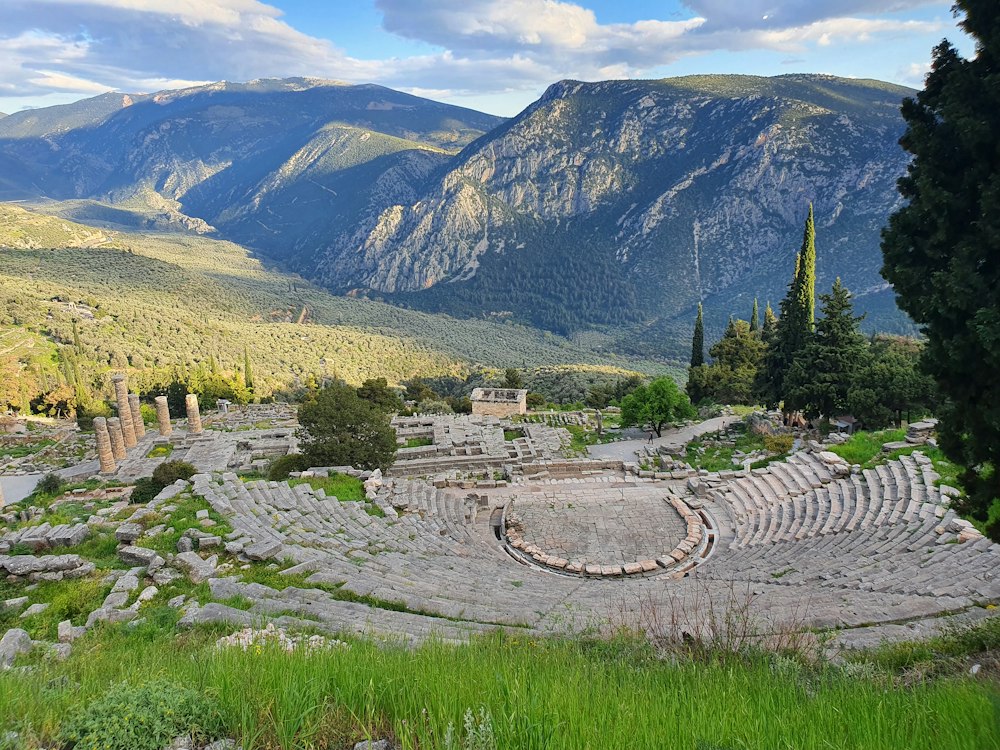
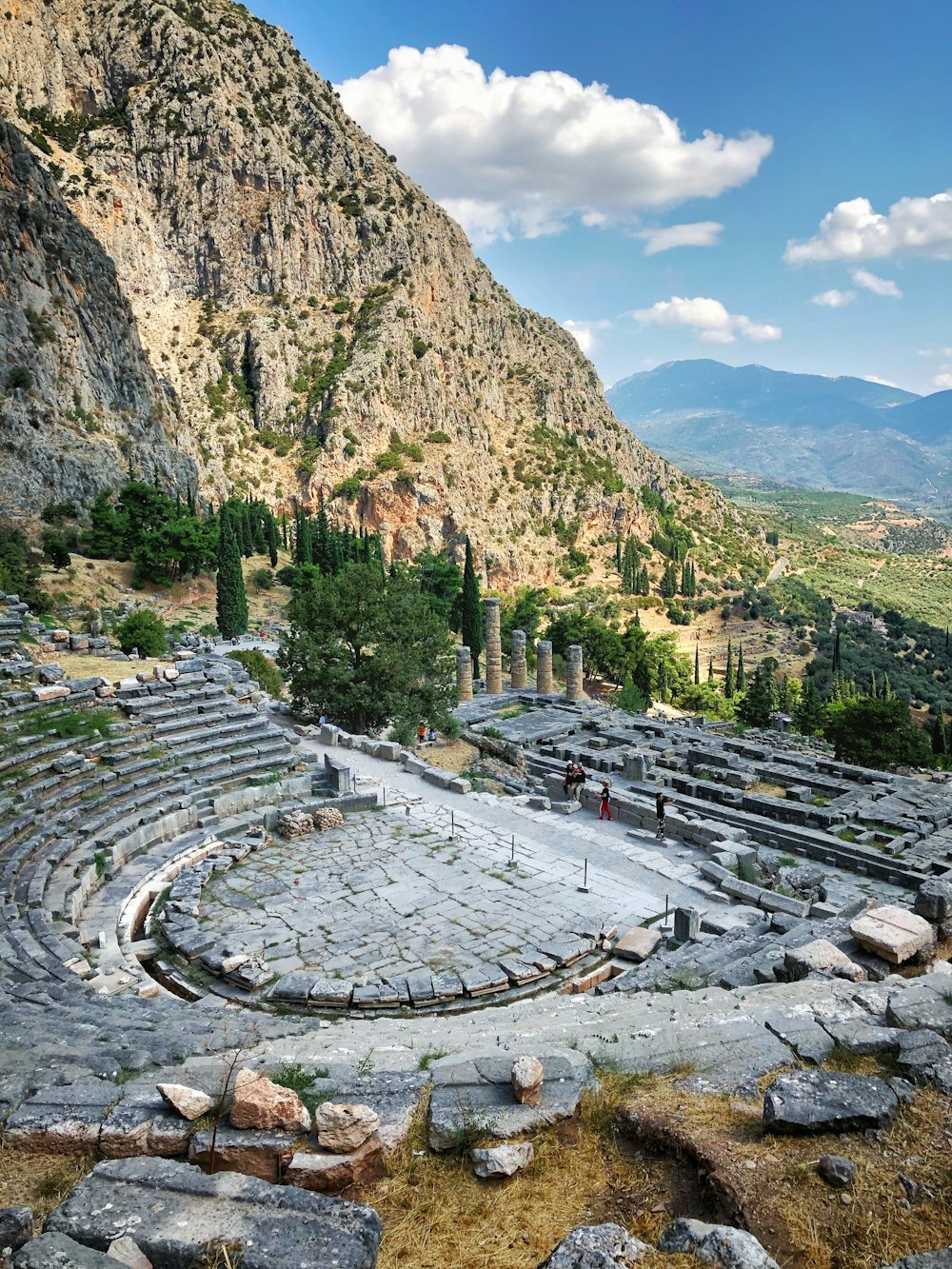
The heart of the sanctuary, where a priestess seated over a fissure delivered the god's answers in a trance and priests turned them into verse. Six columns of the fourth century BC temple stand again on its platform. The Sacred Way zigzags up to it between ruined treasuries, and the path goes on to a theatre and, higher still, a remarkably complete stadium. One ticket covers the site and the museum.