Things to do
9-
Palenque Archaeological Site
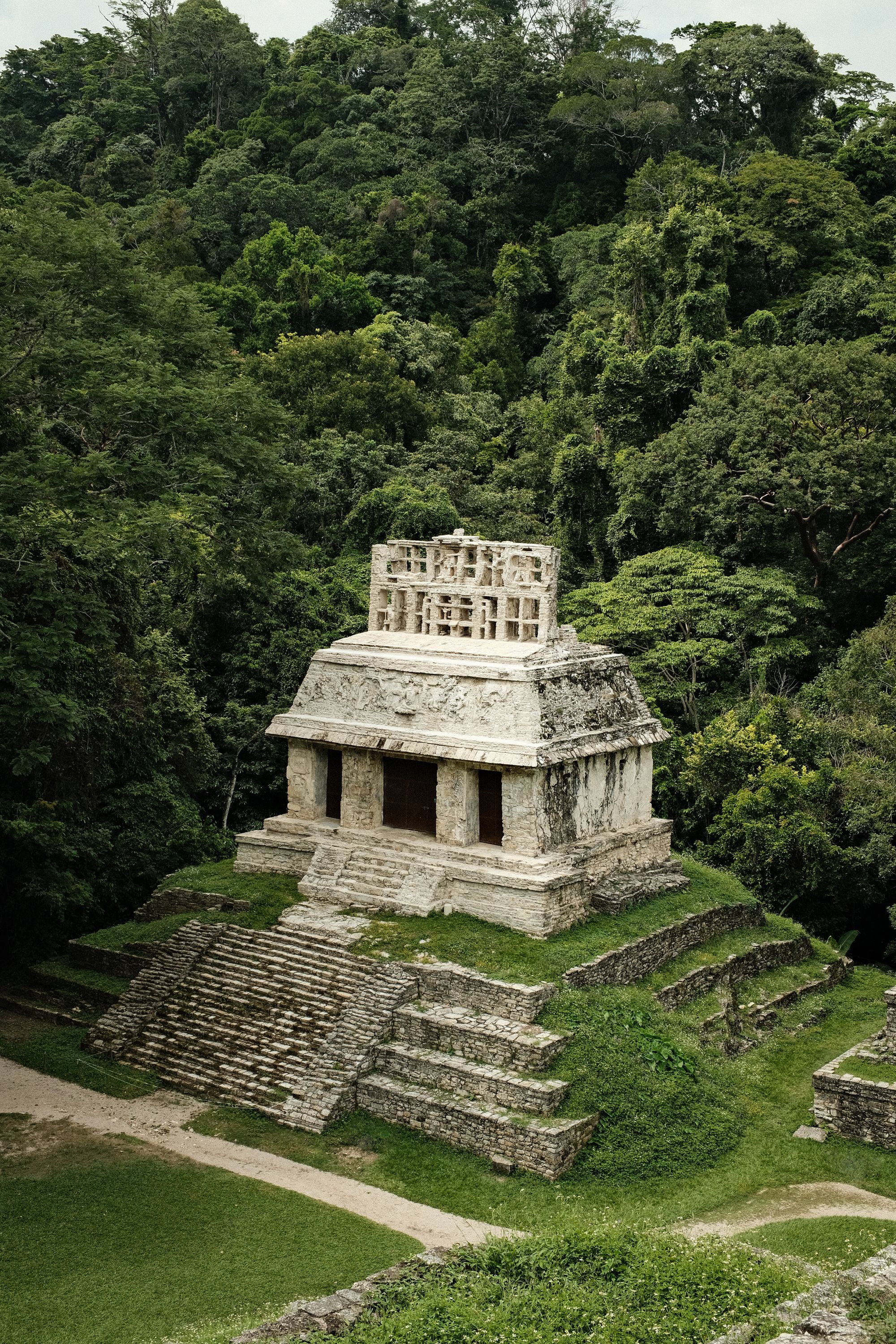
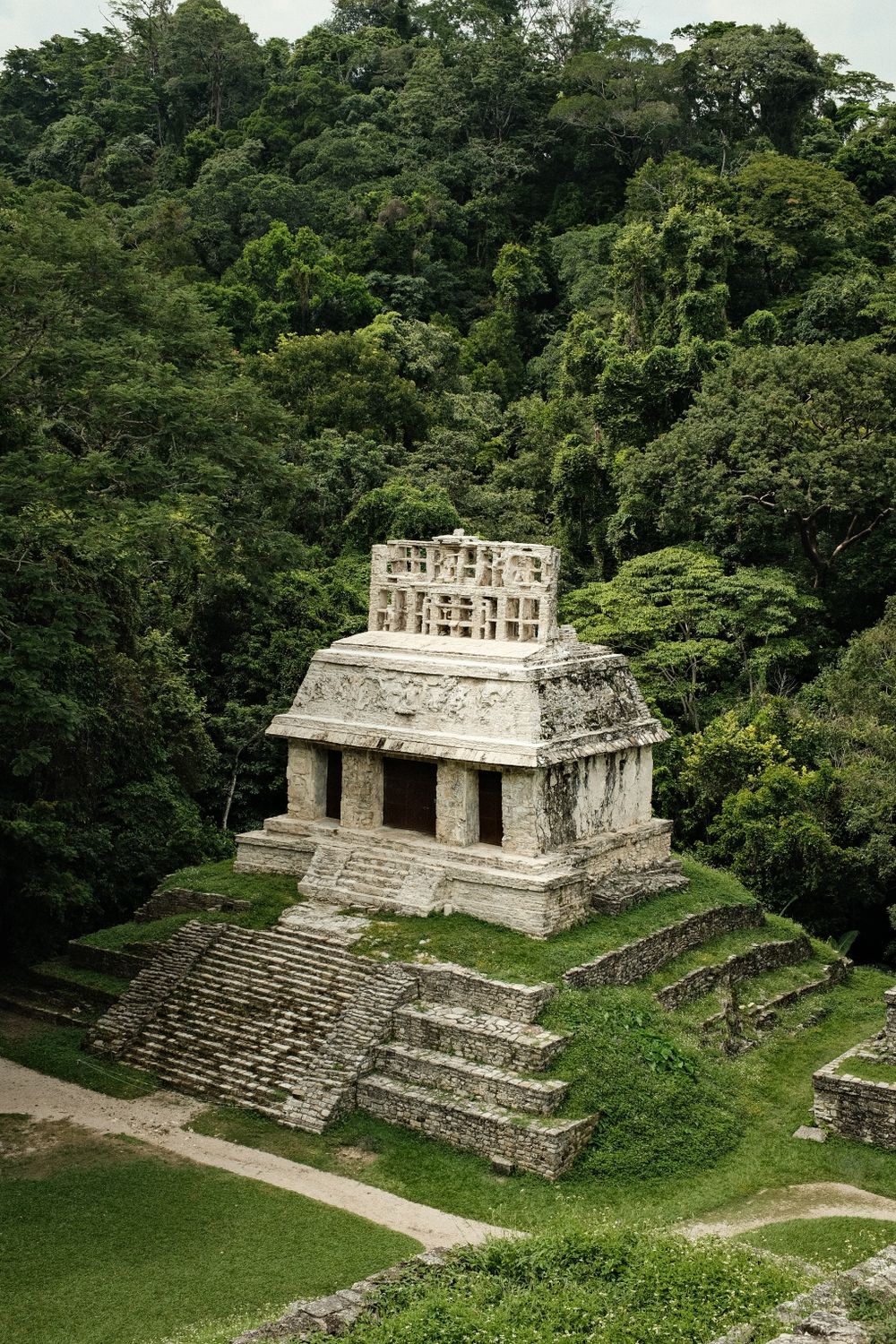
Classic Maya city at the forest edge, at its height in the seventh century under Pakal, whose tomb Alberto Ruz Lhuillier reached beneath the Temple of the Inscriptions in 1952. A square four-storey tower rises from the Palace. Most of the city is still under forest and unexcavated. Howler monkeys roar at dawn. Heat and coach groups both build by mid-morning, so avoid midday.
-
Agua Azul
Terraced cascades run for well over a kilometre down a staircase of travertine, the water carrying dissolved carbonate that gives it the blue of the name. Heavy rain turns it brown for days, so the dry months show the colour best. Marked pools are safe to swim; the current beyond them has drowned strong swimmers. The ejido that holds the land charges at the gate.
-
Bonampak
Three small rooms on the acropolis of this Lacandón forest site hold Maya murals of a battle, the judgement of captives and a court celebration, painted in reds and blues that still carry detail. The rest of the site is a broad plaza with a carved stela of the ruler Chan Muwan. Private vehicles stop at the community checkpoint, where Lacandón vans continue to the ruins.
-
Cascadas de Roberto Barrios
Community-run cascades in an ejido roughly half an hour from town, down a rough side road that keeps the coaches away. Limestone shelves make a chain of turquoise pools, several deep enough to jump into, with rope swings and worn chutes between them. Local boys act as guides for a tip. Slippery rock and no railings: sandals with grip matter more here than at the signposted falls.
-
Hotel Chan-Kah
Stone and wood cabins scattered through jungle gardens on the road between town and the ruins, with a large pool among the trees. Monkeys and toucans pass through the canopy. The location puts the archaeological site minutes away by taxi or colectivo, while the town centre is a short ride in the other direction.
-
Misol-Ha
Twenty kilometres south of town, a single column of water drops around thirty metres into a green round pool ringed by jungle. A ledge path runs behind the curtain and into a short cave, and walkers come out wet. Swimming is allowed when the flow is low. Cabins stand under the trees. Half an hour covers it, which makes it the natural first stop on the road to Agua Azul.
-
Museo de Sitio
Down the hill from the ruins, a single-storey museum holds the carved panels, stucco heads and jade lifted from the tombs, with the glyph texts translated. A reproduction of Pakal's sarcophagus lid stands in its own hall; the original limestone remains in the crypt where it was found. Walking down through the forest from the upper gate arrives here, a good order for a site day.
-
Toniná
A whole hillside near Ocosingo was terraced into this Maya acropolis, seven platforms stacked into a pyramid that climbs higher than the Temple of the Inscriptions at Palenque. Stucco friezes and carved captives line the terraces, and a site museum sits at the foot. Few buses stop, so most visits fall on the road between Palenque and San Cristóbal, with a car or tour.
-
Yaxchilán
Reached only by river, this Maya city sits on a loop of the Usumacinta on the Guatemalan border, and launches from Frontera Corozal take about forty minutes downstream. Temples and palaces rise from the forest above the bank, with carved stone lintels and roof combs still in place. Howler monkeys and spider monkeys move through the canopy. Most visits pair it with Bonampak on a long tour from Palenque.