Things to do
9-
Acueducto de Querétaro
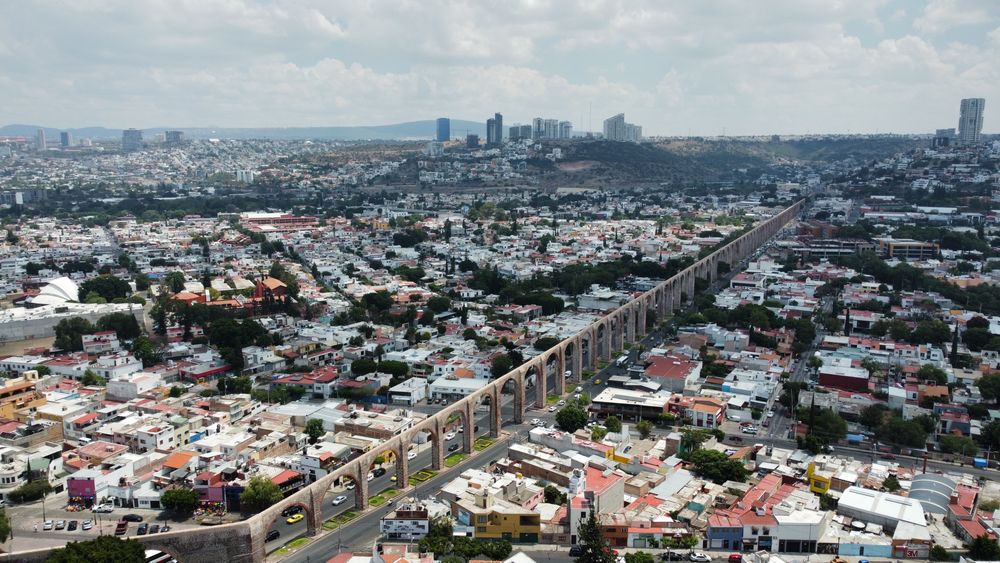
Rose-coloured arches cross the eastern edge of the city for over a kilometre, finished in the eighteenth century to bring spring water into the centre. The tallest stand near the Los Arcos roundabout, and a mirador on the Calzada de los Arcos looks along the full line. The arches are lit at night. It sits a short taxi ride or a long walk from the main plazas.
-
Museo de Arte
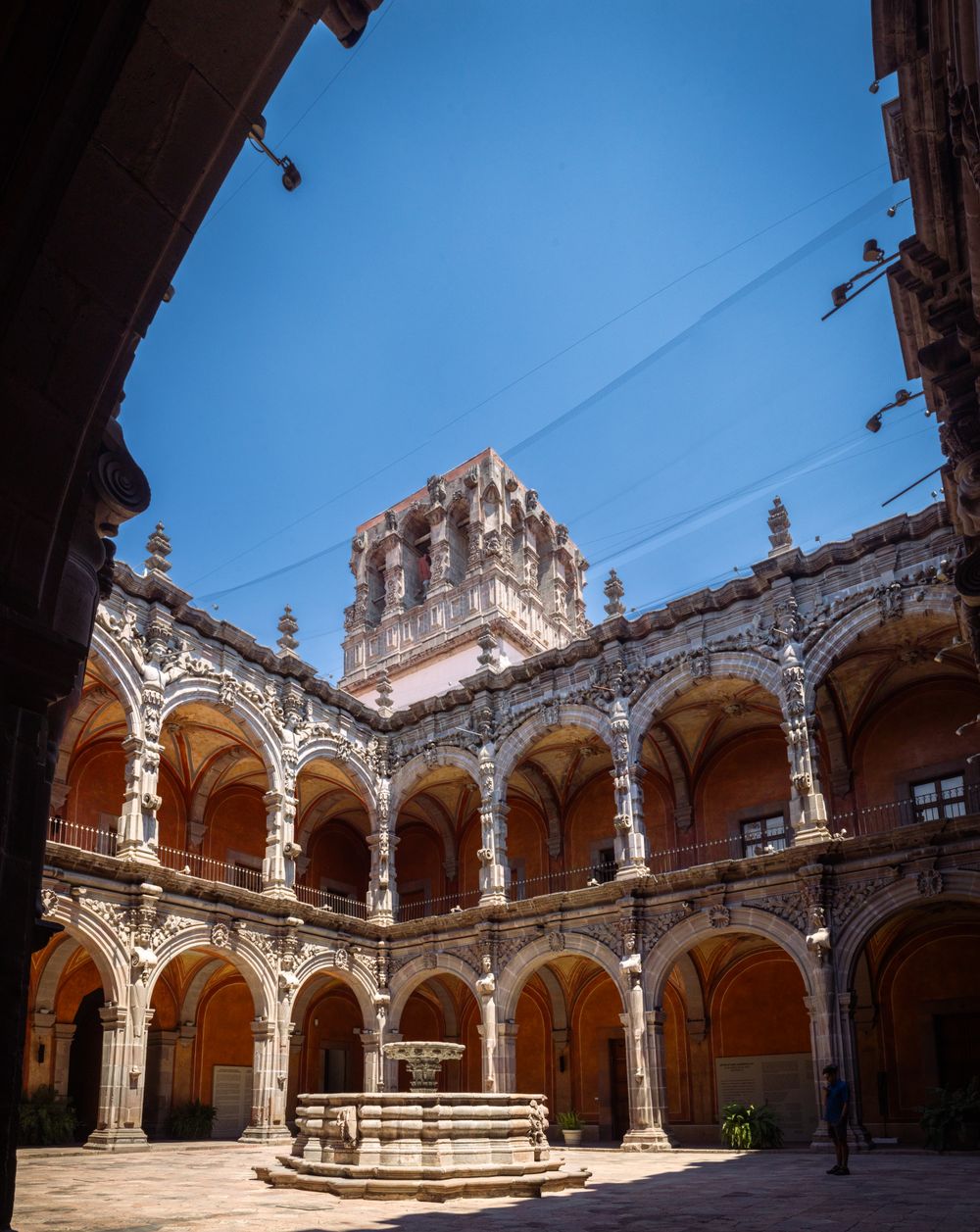
Carved stone figures with grimacing faces, masks and gesturing hands crowd the arches of the Baroque cloister in this former Augustinian convent. The upper and lower galleries hold European and Mexican painting from the colonial period, along with changing exhibitions. The cloister alone deserves the visit. It stands a block from the Plaza de Armas and closes on Mondays.
-
Peña de Bernal
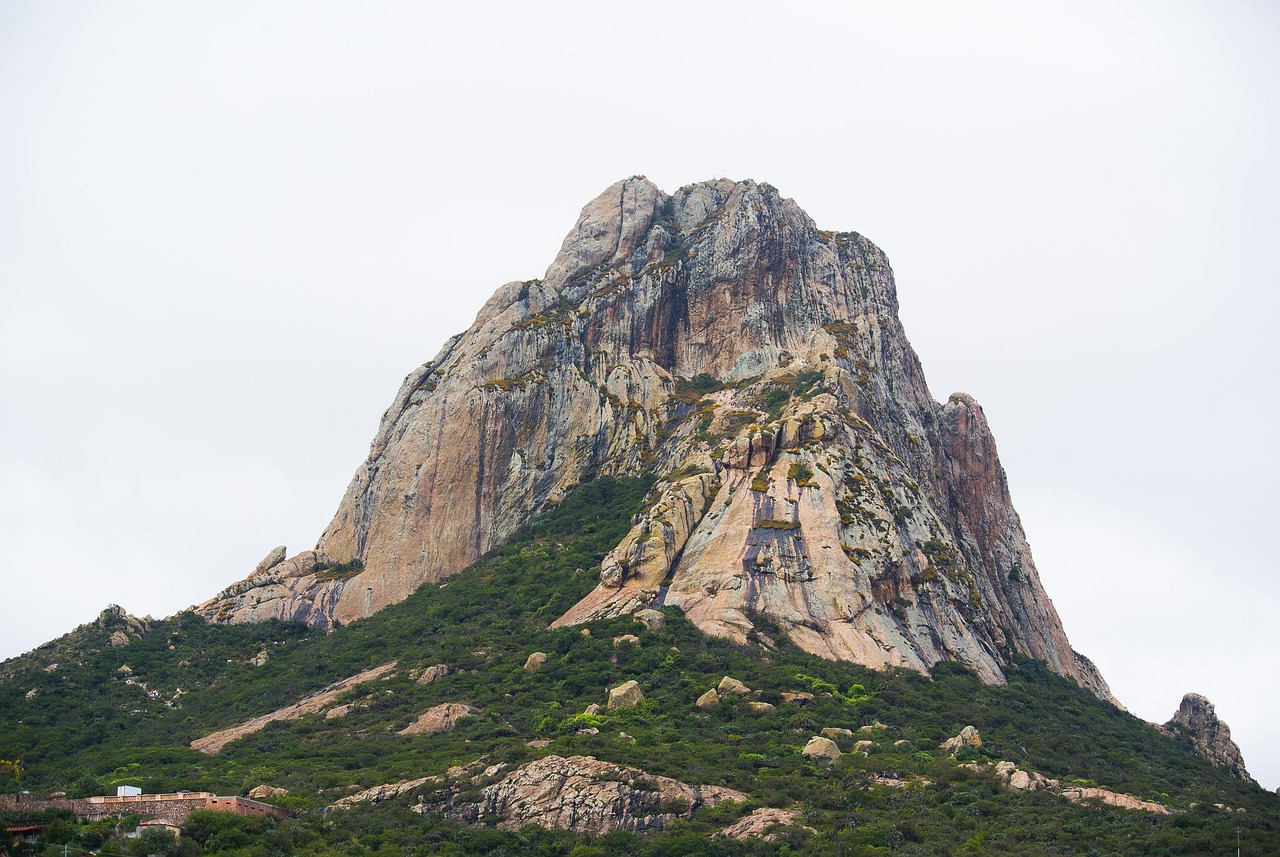
A single tower of rock rears hundreds of metres over the village of Bernal, about an hour northeast of the city by road. A path climbs the lower flank, open to walkers; the summit itself is for climbers with ropes. Below, the village has cobbled streets and stalls selling gorditas. Weekends are busy, and the climb is hot by midday.
-
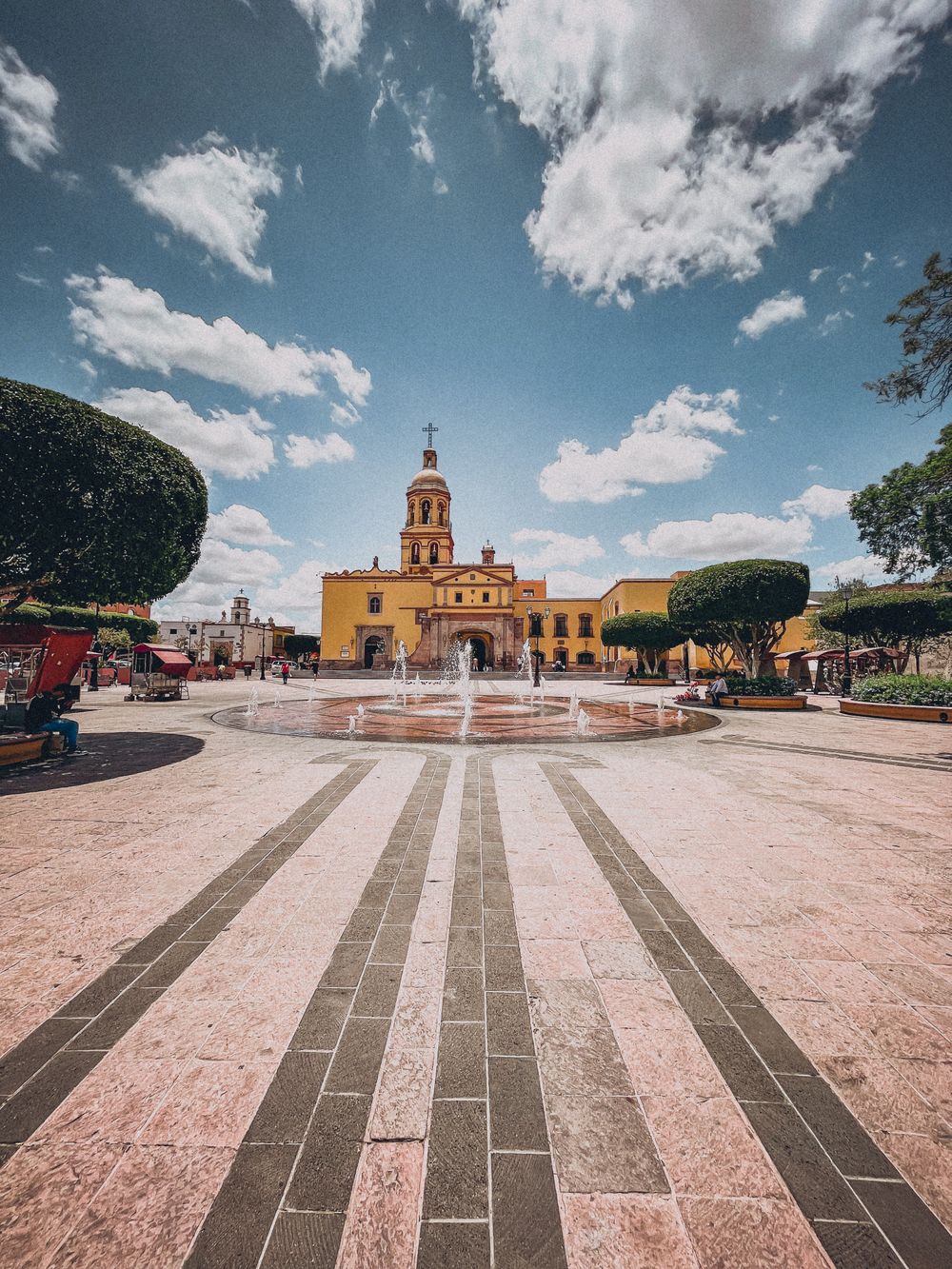
Templo y exconvento de la Cruz
Franciscan missionaries ran their college for the northern missions from this convent on the Sangremal hill, and the emperor Maximilian was held here before his execution. Guided tours show his cell, the old cisterns and a garden tree whose thorns grow in the shape of small crosses. Tours are in Spanish and follow the convent's own schedule.
-
Casa de la Marquesa
An eighteenth century mansion on Calle Madero, built with a Mudéjar-style patio of carved arches and tiles, now runs as a hotel. Rooms are furnished with antiques and open onto the courtyard. It stands a block from the Museo de Arte and the Neptune fountain. Rooms vary widely in size and style, from small doubles to suites off the patio.
-
Cerro de las Campanas
A giant stone statue of Benito Juárez tops this hill on the western side of the centre, where the emperor Maximilian was shot by firing squad in 1867. A small memorial chapel built by the Austrian government marks the spot below. The rest is a wooded park with paths and a site museum. It sits next to the university campus, a short taxi ride from the Plaza de Armas.
-
Museo Regional
The cloisters of the Franciscan convent beside the Jardín Zenea hold the state's main history collection, from pre-Hispanic finds of the Sierra Gorda to colonial painting and the table at which the 1848 treaty with the United States was ratified. The arcaded patios are cool and shaded. Allow an hour or more. Closed on Mondays.
-
Templo de Santa Clara
A plain facade on the Jardín Zenea hides one of the most elaborate Baroque interiors in Mexico, with gilded altarpieces covering nearly every wall and the nuns' choir set high above the nave. The church once served a wealthy convent of Poor Clares. The light inside is dim. Free to enter outside service times, a few minutes from the Neptune fountain.
-
Templo de Santa Rosa de Viterbo
Huge scrolled buttresses painted in ochre and white brace the outside of this eighteenth century convent church, giving it a profile unlike any other in the city. Inside, gilded altarpieces climb the walls and a carved pulpit is inlaid with ivory. A short walk southwest of the centre. Open for mass and visits, with quiet expected during services.