-
Centro Cultural Las Condes
Landmark · 1 hr
Built in the middle of the nineteenth century as the main house of the chacra El Rosario, a two storey rectangle for the Varas Solar family, it was declared a historic monument in 1981. The Las Condes cultural corporation took it over the following year, cut galleries into the rooms and kept the park around them. Exhibitions rotate through Chilean painting, photography and design, and no ticket is needed.
-
Cerro Manquehue
Viewpoint · 4.5 hr
An eroded volcano of about 20 million years, Manquehue reaches 1,638 metres at the point where Vitacura, Lo Barnechea and Huechuraba meet, and it is the highest thing standing on the valley floor rather than part of the range behind it. Mañkewe is Mapudungun for place of condors. The path from the Vía Roja gate climbs steeply on loose ground and takes roughly four hours up and down, which is why it is walked early in summer.
-
Park · 2 hr
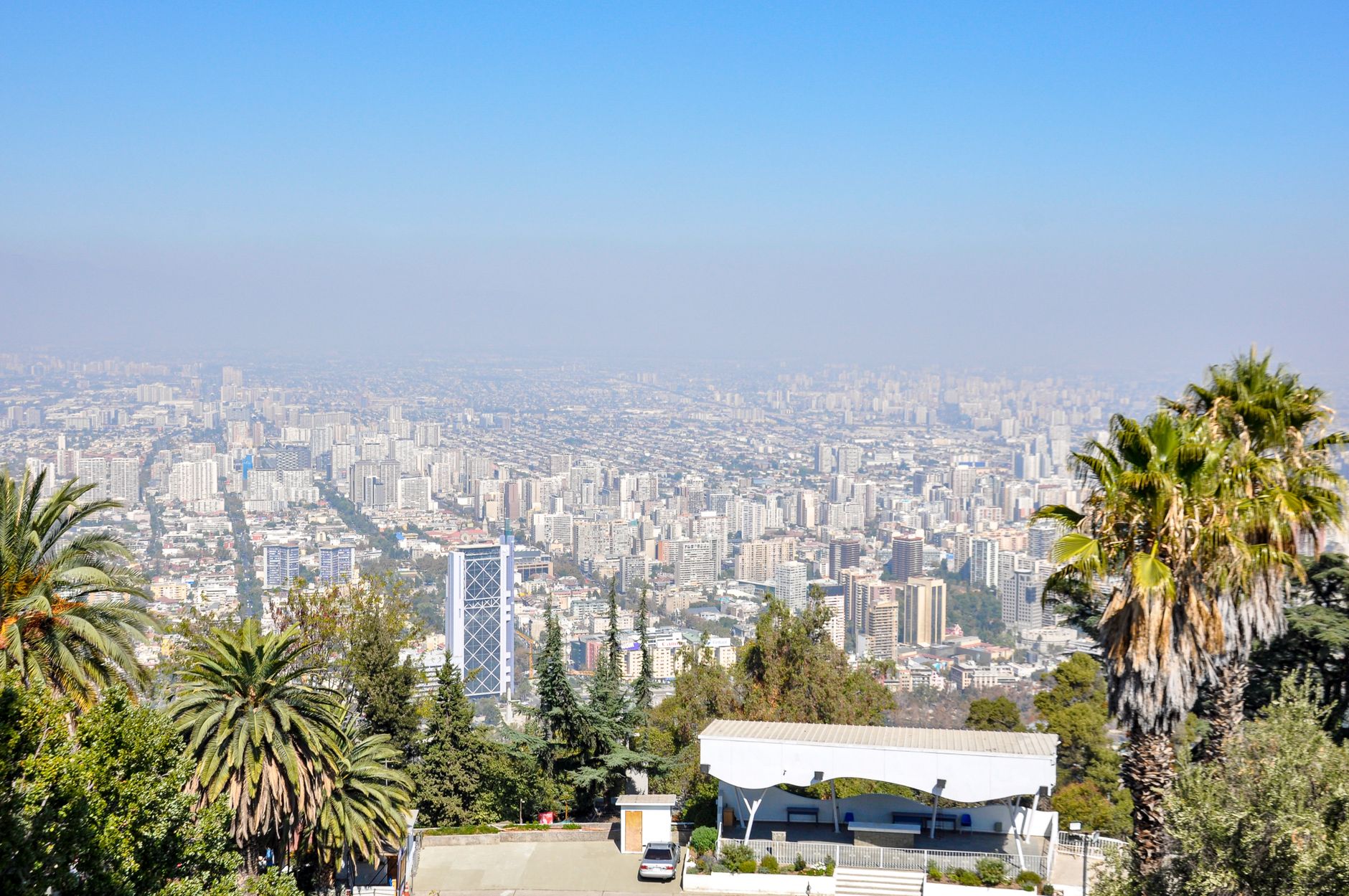
Worth the ride up to stand beneath the white Virgin you see from all over Santiago, with the whole valley spread around her and a planted pine forest on the slopes below.
View more →
-
Estadio Nacional Julio Martínez Prádanos
Landmark · 1.5 hr
Gate 8 of the north stand has been left unrestored, a block of seats that stays empty at every match under the line 'un pueblo sin memoria es un pueblo sin futuro'. The stadium was used to hold political prisoners after the coup of 1973, and the ground was later declared a historic monument. It opened in 1938 and staged the World Cup final.
-
Tower · 1.5 hr
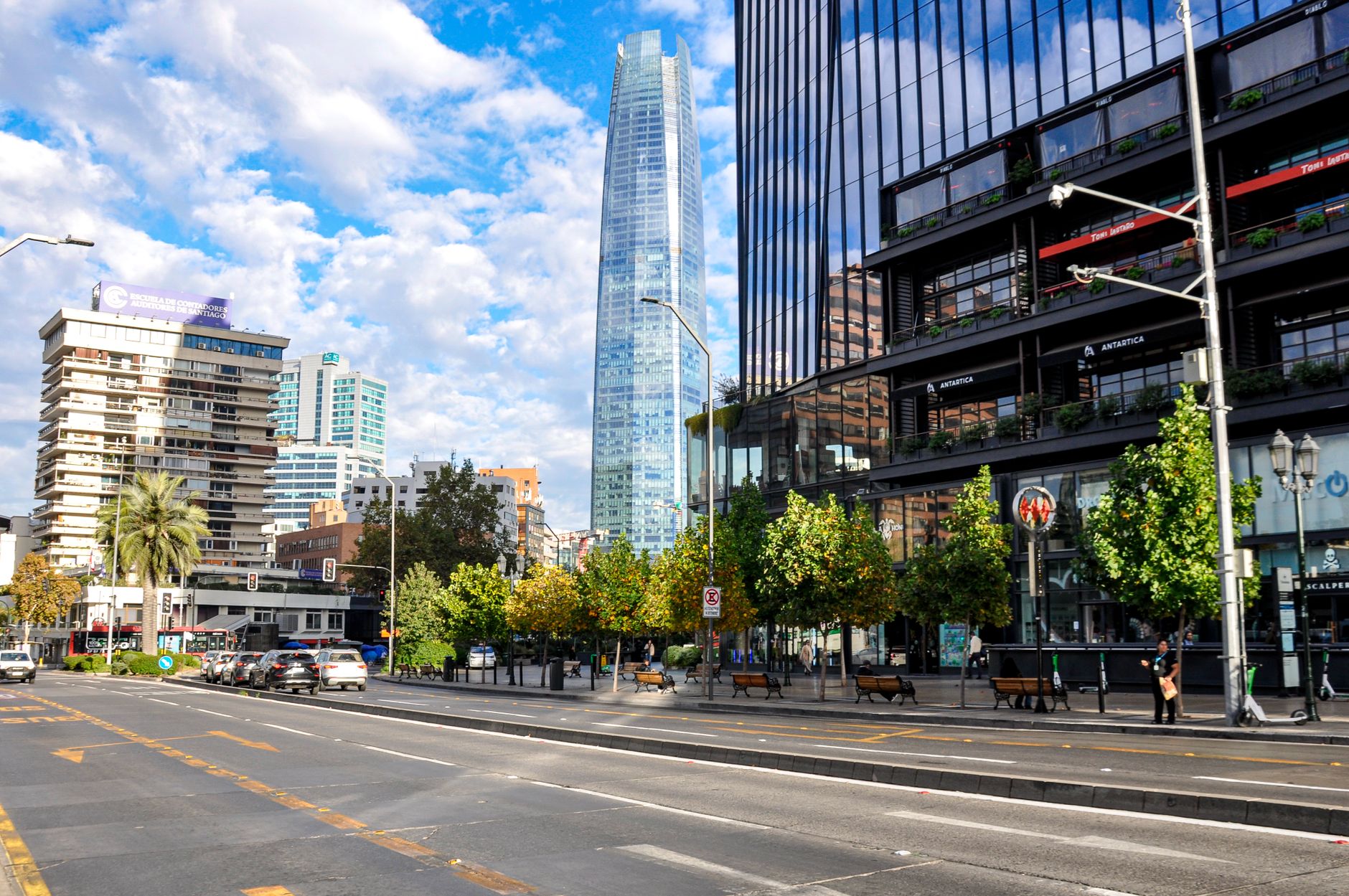
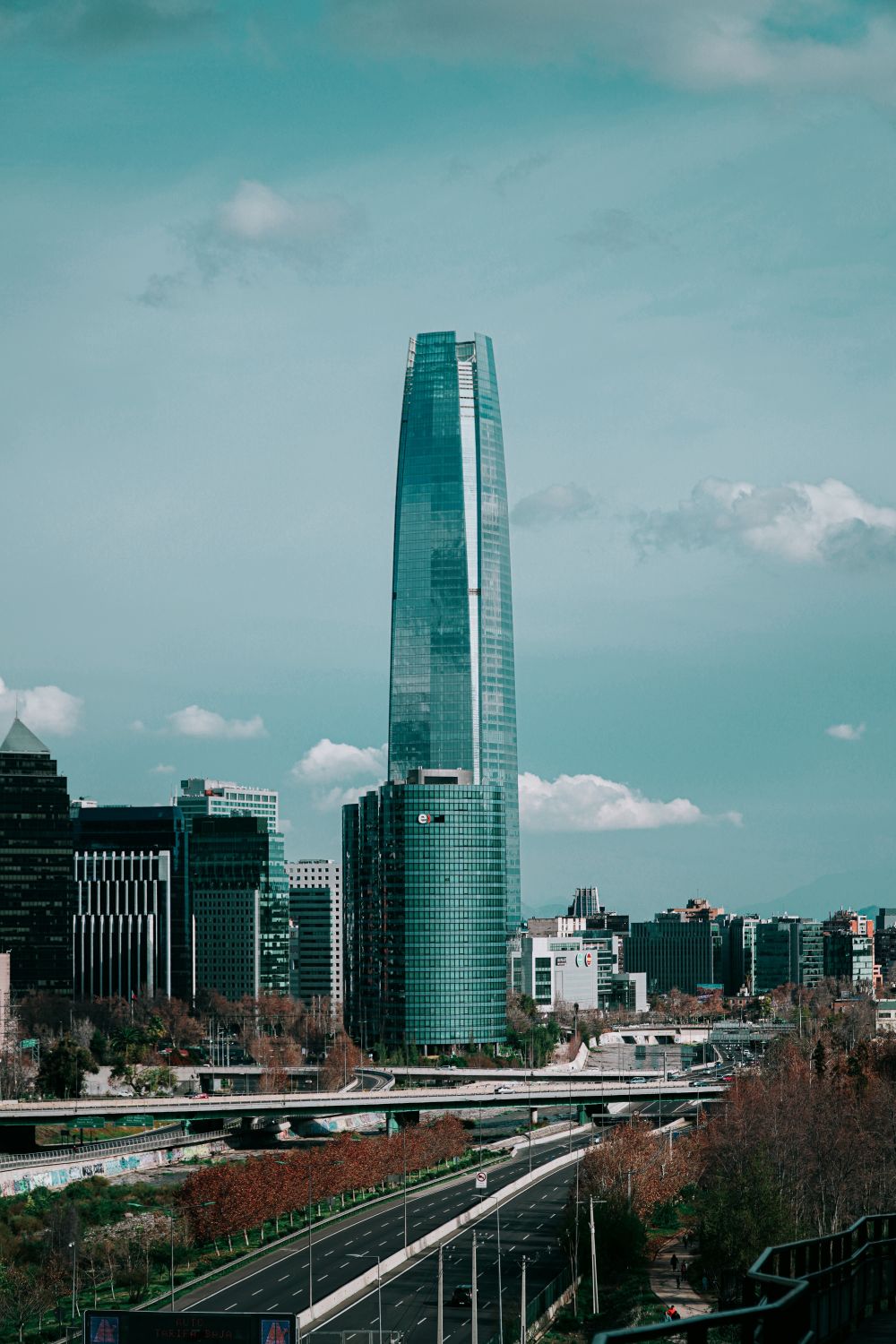
Three hundred metres up, on an open-air deck at the top of the tallest building in South America, you have the whole of Santiago spread below you in one slow turn.
View more →
-
Las Condes
Neighborhood · 2 hr
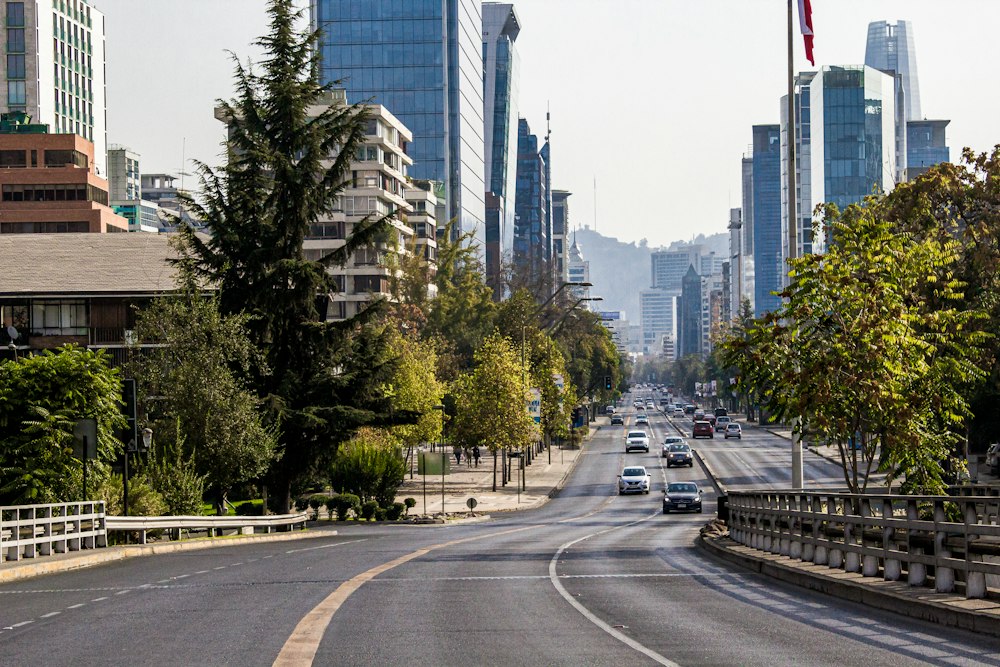
Glass towers around El Golf mark the moneyed eastern half of Santiago, with residential streets rising behind them toward the Andes foothills and kitchens that serve later than those downtown. Line 1 of the metro runs the length of Avenida Apoquindo and ends at Los Dominicos, so the whole commune is one train from the historic centre. A base here trades colonial architecture for green space and a short run to the ski roads.
-
Palace · 1.5 hr
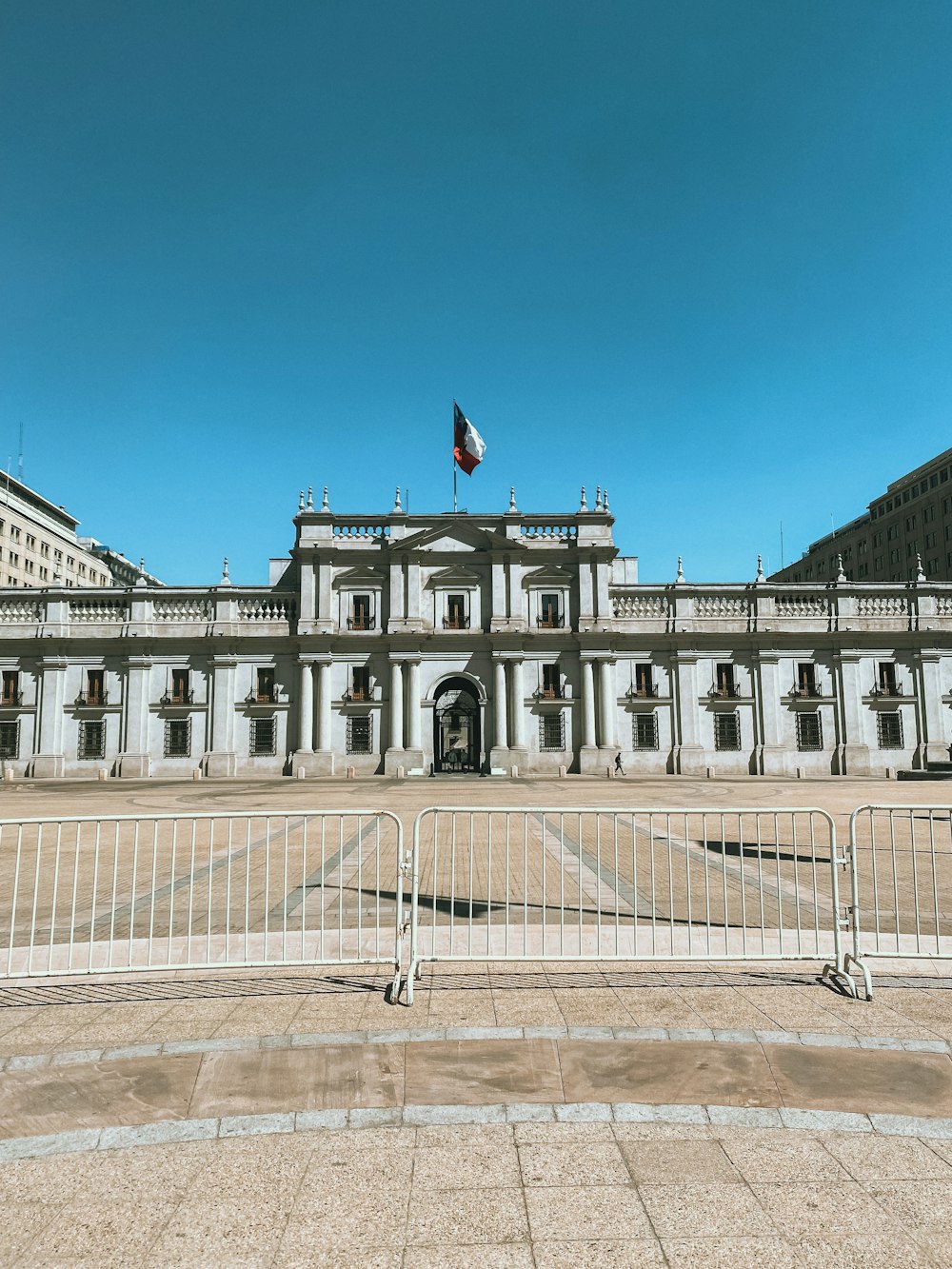
By mid-morning on guard-change days, you can stand on Plaza de la Constitución as mounted Carabineros and their band march a new detachment to the palace that is still the seat of Chile's government.
View more →
-
Barrio Brasil
Neighborhood · 2 hr
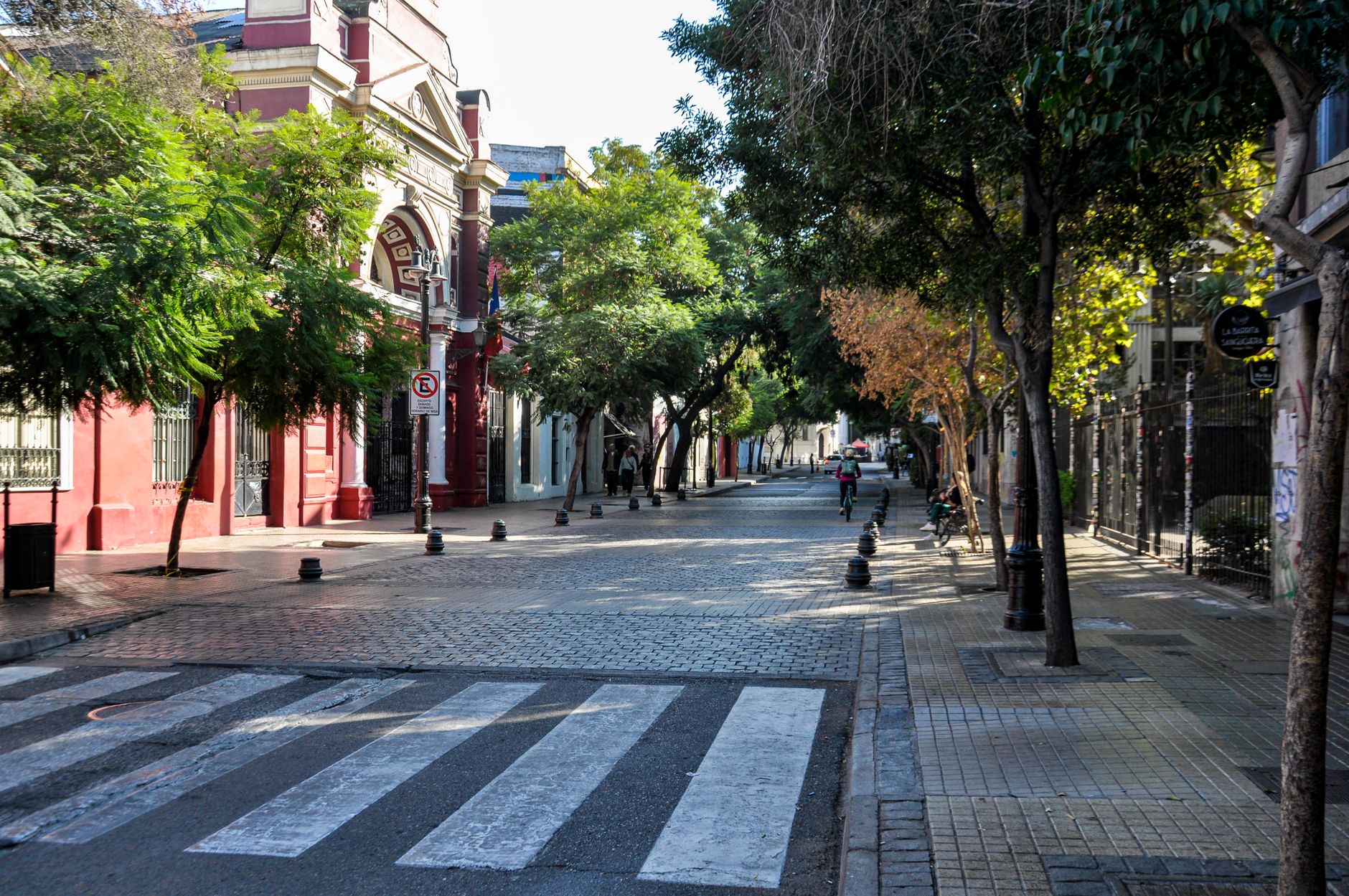
A neighbourhood campaign won protection for these streets as a zona típica in 2009, after the mansions around Plaza Brasil had spent decades in decline. They went up for lawyers and merchants early in the twentieth century, and several now house faculties of the Universidad Alberto Hurtado. Cumming station on Line 5 sits at the eastern edge.
-
Barrio Italia
Neighborhood · 2 hr
Italian artisans settled the streets around Avenida Italia and filled them with furniture workshops and upholsterers, trades that held the area into the late twentieth century. Those same workshops and their patios now carry cafés, antique dealers and small design shops, spread across the boundary between Providencia and Ñuñoa. The Italian embassy stands within the same few blocks, and Plaza Guillermo Francke marks the Ñuñoa side.
-
Barrio Patronato
Quarter · 1 hr
Textile wholesalers fill the grid between Avenida Recoleta and calle Loreto, north of Avenida Santa María, in a quarter built up by Arab immigrant traders. Chinese, Korean and Taiwanese importers now keep shops alongside the older Palestinian families, and the food counters follow the same mix. Trade runs hardest on weekday mornings.
-
Catedral Metropolitana
Cathedral · 30 min
Begun in 1748 by Bavarian Jesuit builders and finished under the Italian architect Joaquín Toesca, this is the fifth cathedral raised on the same corner of the Plaza de Armas. Three naves run under a barrel vault to a marble altar, and the doors stay open through the day between Masses.
-
Cementerio General
Landmark · 1.5 hr
Bernardo O'Higgins opened the burial ground in 1821, and it now covers eighty six hectares. Almost every Chilean head of state lies inside it, along with the Memorial del Detenido Desaparecido y del Ejecutado Político, unveiled in 1994. The avenues are wide enough to be walked as streets, and the Recoleta gate has a map.
-
Centro Cultural Gabriela Mistral
Landmark · 1 hr
Built in under a year for a United Nations trade conference, the building opened in 1972 and was seized after the coup the following year, when the junta governed from it under the name Edificio Diego Portales. Fire destroyed much of the structure in 2006. The rebuild reopened as a cultural centre with ten halls and open plazas on three sides.
-
Centro Cultural Matucana 100
Landmark · 1.5 hr
Warehouses raised around 1907 for the state supply service, sited midway between the Mapocho and Central railway stations, were handed to the theatre director Andrés Pérez and his Gran Circo Teatro after years standing empty. The halls now carry theatre, dance, music, cinema and a long gallery of contemporary art at Avenida Matucana 100. It anchors the Santiago Poniente cultural circuit, eleven institutions along the same avenue since 2008.
-
Cerro Santa Lucía
Park · 1 hr
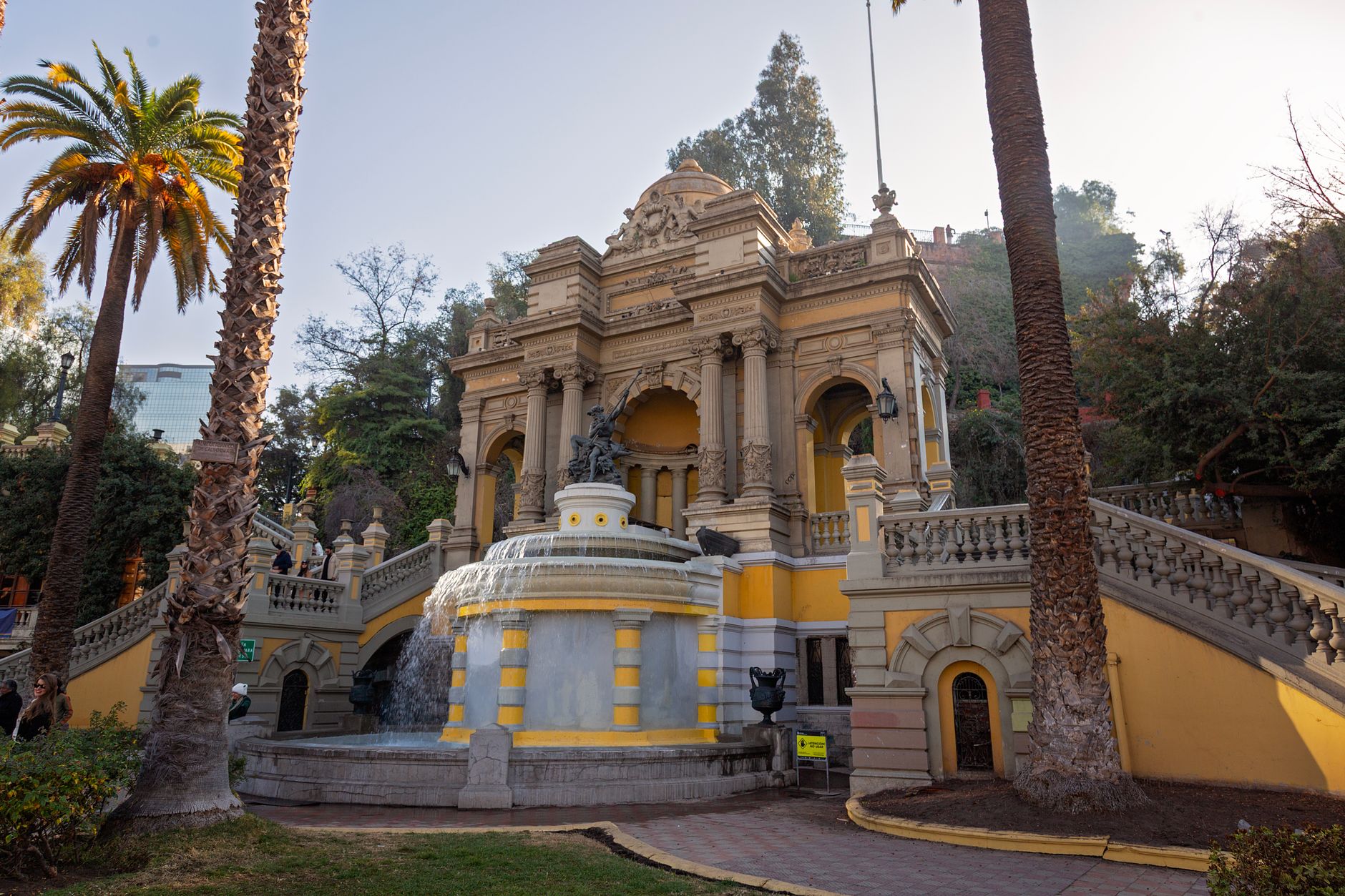
A rocky outcrop landscaped into terraces, staircases and stone balconies in the 1870s, standing on the site where Santiago was founded in 1541. The climb to the upper battery takes about fifteen minutes from the Alameda gate, and the park closes in the early evening.
-
Iglesia de San Francisco
Church · 30 min
Completed in 1618 on the site of a chapel the earthquake of 1583 brought down, the stone nave and transept make this the oldest building in Chile with a known construction date. The small carved Virgen del Socorro that Pedro de Valdivia carried in 1541 remains on the high altar. The convent alongside holds Cusco school canvases of the life of Saint Francis.
-
Iglesia de San Saturnino
Church · 30 min
Saturninus is the saint invoked in Santiago against earthquakes, and the Gothic revival church that carries his name stands on one side of Plaza Yungay. An archbishop's decree set it on the ground of a city prison, and Teodoro Burchard finished the work in 1887. Brick walls carry a central nave and two aisles on wooden piers, repaired after the earthquakes of 1985 and 2010.
-
La Chascona
Museum · 1.5 hr
The house Pablo Neruda built for Matilde Urrutia on the Bellavista slope in 1953, laid out like a ship in separate blocks climbing the hill and named for her unruly hair. Ransacked after the 1973 coup and restored by the Neruda foundation, it is visited by audio guide and closes on Mondays.
-
Mercado Central
Market · 1 hr
A wrought iron hall cast in England and raised over the fish trade in 1872, still selling congrio, reineta and picorocos on ice under its roof. Trading is done by early afternoon, so the morning is the only time the hall reads as a market instead of a dining room.
-
Museo Artequin
Museum · 1 hr
Iron, steel and zinc cast in France to a design by Henri Picq made the pavilion Chile sent to the Paris Universal Exposition of 1889. It was dismantled, shipped to Valparaíso and reassembled at the Quinta Normal, and it has held the Artequin since 1992. The collection is photographic reproductions of European painting, hung low and labelled for children.
-
Museo Chileno de Arte Precolombino
Museum · 2 hr
Set in the 1805 Real Aduana building a block off the Plaza de Armas, the collection covers four thousand years of Andean and Mesoamerican work, with a basement gallery given entirely to the cultures of Chile. It closes on Mondays, and the Chinchorro mummies are the part that earns an extra half hour.
-
Museo de la Memoria y los Derechos Humanos
Museum · 2 hr
A copper and glass box beside Quinta Normal park documenting the human rights violations of the 1973 to 1990 dictatorship through testimony, court files, newspaper front pages and the last radio broadcast from La Moneda. Entry is free, most signage is in Spanish, and the audio guide at the desk carries the English.
-
Museo de la Moda
Museum · 1.5 hr
The building was a family house first, raised for the Yarur textile dynasty by Sergio Larraín and Carlos Bolton, with gardens by Luis Nakagawa. Jorge Yarur Bascuñán opened it as a fashion museum in 2007, and the holdings run to some sixteen thousand pieces, among them the Gaultier cone corset Madonna wore on the Blond Ambition tour. Displays rotate, so the house is the one fixed exhibit.
-
Museo Ferroviario
Museum · 1 hr
Steam locomotives stand in the open air across two hectares of the Quinta Normal, twenty two of them declared national monuments. The state railway lent the first in 1980, several of those saved by workers at the old San Bernardo shops, and the museum opened four years after that. Four English carriages built for the Antofagasta to Bolivia line arrived in 2025, one being fitted out as the café.
-
Museo Histórico Dominico
Museum · 1 hr
Two centuries of collecting by the Dominican order produced the objects held here, inside the former convent beside the Recoleta Dominica church. The Centro Patrimonial opened in the cloister in 2005, under a loan agreement signed with the order. The heritage library in the same courtyard keeps one of Chile's largest religious and scientific book collections, and no ticket is needed for either.
-
Museo Nacional de Bellas Artes
Museum · 1.5 hr
A centenary building of 1910 in the Parque Forestal, iron and glass under a dome shipped from Belgium, holding the national collection of Chilean painting and sculpture from the colonial period onward. The contemporary art museum of the university shares the same roof, and both close on Mondays.
-
Museo Nacional de Historia Natural de Chile
Museum · 1.5 hr
The skeleton of a sei whale hangs in the central hall, which is why the institution is known in Santiago as the museo de la ballena. Chile's oldest museum was founded in 1830 and moved into this building, raised by the French architect Paul Lathoud for the International Exposition of 1875. The collections run from Atacama mummies to Chilean fauna, and no ticket is needed.
-
Museo Ralli
Museum · 1.5 hr
Harry Recanati, a banker who left the family business to collect, set up five museums on the same model and opened the Santiago one in Vitacura in 1992. Dalí, Magritte, Miró, De Chirico and Leonora Carrington hang in white rooms around a courtyard, alongside a complete set of Dalí's sculptures and a wing of Latin American painting. No ticket is needed, and it closes on Mondays.
-
Palacio Cousiño
Palace · 1.5 hr
Luis Cousiño and Isidora Goyenechea, whose money came from the Lota coal mines and Chañarcillo silver, commissioned Paul Lathoud in 1870 and were installed by 1882. Twelve salons run along Calle Dieciocho, with Italian majolica floors, a mirrored ballroom modelled on Versailles and the original Erard grand piano. Fire took the upper floor, so the guided tour covers the ground floor only.
-
Palacio Pereira
Palace · 30 min
Lucien Hénault's last Chilean commission before he returned to France, this neoclassical mansion was begun in 1872 for the lawyer and wine grower Luis Pereira Cotapos. It stood derelict for decades until the state bought it and Cecilia Puga's restoration was completed in 2020. The Constitutional Convention worked in the new annexe, and the halls now hold the heritage service and its exhibitions.
-
Parque Balmaceda
Park · 30 min
A 24 metre obelisk and Samuel Román's monument to President José Manuel Balmaceda stand at the western end, on the Providencia bank of the canalised Mapocho. Underneath the lawns a small museum holds the Tajamares del Mapocho, the colonial stone dykes that once kept the river off the city. The Condell footbridge and a municipal library in the café literario sit at the other end.
-
Parque Bicentenario
Park · 1.5 hr
The Mapocho's south bank carries thirty hectares of lawn, two artificial lagoons and some four thousand trees, more than a thousand of them native quillay, patagua and Chilean palm, laid out by Teodoro Fernández. Black necked swans nest on the southern lagoon. The paths join the riverside cycleway that runs back toward the centre.
-
Parque Forestal
Park · 1 hr
The ground was won from the Mapocho when the river was canalised through the centre at the end of the nineteenth century. Just under 172,000 square metres of it run about a kilometre east to west with no fence at any point, from the Bellas Artes building to Plaza Baquedano. Shade is continuous along the whole length, which matters in a Santiago January.
-
Parque Natural Aguas de Ramón
Park · 5 hr
The walk to the Salto de Apoquindo waterfall covers seventeen and a half kilometres there and back and takes most of a day, while the Salto del Peumo loop nearer the gate is done in about two hours. The park runs along the foothills on the boundary of La Reina and Las Condes, and the association that manages it registers every walker at the entrance. Entry is ticketed.
-
Parque Quinta Normal
Park · 1.5 hr
Founded in 1841 as the Quinta Normal de Agricultura, a teaching estate named after the École Normale in Paris, the park covers about 35 hectares inside a perimeter fence. Four museums stand within the walls, among them natural history and the railway collection, and a nineteenth century iron glasshouse survives near the Matucana side. The Santiago municipality has administered it since 1969, although the ground lies against the Quinta Normal commune.
-
Plaza de Armas
Landmark · 30 min
The square laid out by Pedro de Valdivia in 1541 and still the point from which distances in the country are measured, ringed by the cathedral, the central post office and the old royal court. Chess boards and street portrait painters fill the benches from mid morning, and two Metro lines meet beneath it.
-
Pueblito Los Dominicos
Market · 1.5 hr
Adobe walls and straw roofs, copied from a Chilean country village, hold more than 160 craft workshops along dirt lanes behind the church of San Vicente Ferrer. Silversmiths set lapis lazuli, which Chile mines in the Coquimbo cordillera, beside work in copper, wool, leather, wicker and combarbalita stone. The church and its grounds became a national monument in 1983, and Metro Line 1 terminates at the gate.
-
Vega Central
Market · 1 hr
Fruit and vegetables from the Central Valley arrive overnight at this market on the north bank of the Mapocho, which handles roughly four percent of Santiago's produce trade. Construction began in 1895 on Agustín Gómez García's initiative and the solid warehouses were finished in 1916. The comedores along the edge of the sheds feed the traders and open early.
-
Viña Concha y Toro
Landmark · 4 hr
The Casona El Llano went up in 1875 as a summer house for Melchor Concha y Toro, with a garden around it by Guillaume Renner, who also laid out what is now Parque O'Higgins. Bordeaux cuttings followed: Cabernet Sauvignon, Sauvignon Blanc, Semillon, Merlot and Carmenère. The tour takes in the cellar a rumour put the devil in, which is where Casillero del Diablo got its name, and it is booked ahead.
-
Viña Cousiño Macul
Landmark · 2 hr
Vines have grown on this ground since Luis Cousiño bought the Hacienda Macul in 1856, and seven generations of one family have held it since without selling out. French engineers cut the cellar in 1872 for Isidora Goyenechea, stone footings under brick vaults, and it still holds the old oak. Cabernet Sauvignon is the house grape, with Merlot, Riesling and the Finis Terrae blend beside it.